Best Jams for a Charcuterie Board (Flavor Pairings That Actually Work)

The best jams for a charcuterie board balance sweet, savory, and spicy flavors. Options like fig, apricot, cherry, raspberry, pepper jams, onion jam, and quince paste pair differently with cheeses and meats like brie, goat cheese, cheddar, and prosciutto. Choosing the right jams adds contrast and helps the board feel cohesive instead of cluttered.

Content may contain affiliate links. When you shop the links, we receive a small commission at no cost to you. Thanks for supporting my small business.
Jam is one of those things that's easy to overlook when you're building a charcuterie board. It's small, it usually comes in a jar, and it's tempting to grab whatever you already have and call it good.
But the right jam can change how everything else on the board tastes. It cuts through rich cheeses, balances salty meats, and gives crackers something worth paying attention to. Even one well-chosen jam can make the whole board feel more complete.
Over time, I've found that it's not about having a lot of jams, it's about choosing a few that actually work with what's on the board. When the flavors make sense together, the board comes together easily and people keep coming back for another bite.
At a Glance: Best Jams for a Charcuterie Board
_______________________
The right jams bring balance to a charcuterie board by adding sweet, savory, or spicy contrast alongside cheeses and cured meats.
Popular charcuterie jams
• Fig jam
• Apricot jam
• Cherry jam
• Raspberry jam
• Pepper jam
• Onion jam
• Quince paste
Pairs well with
• Brie and soft cheeses
• Goat cheese
• Aged cheddar
• Prosciutto and other cured meats
Why jams matter
• Add sweet and savory contrast
• Complement different cheeses and meats
• Help the board feel balanced instead of cluttered
Summarize and Save this content on:
Jump to:
- At a Glance: Best Jams for a Charcuterie Board
- Why jam belongs on a charcuterie board
- Best jams for soft cheeses
- Best jams for hard and aged cheeses
- Best jams for charcuterie boards with prosciutto
- Best pepper jams for charcuterie boards
- Best neutral jams for crowds
- Jam, jelly, preserves, spreads and relish: What to buy for a charcuterie board
- My go-to jams for charcuterie boards
- Cheese + jam pairing guide for charcuterie boards
- How to serve jam on a charcuterie board
- Frequently asked questions
- Let us help you build a beautiful board
Why jam belongs on a charcuterie board
Jam adds brightness to a charcuterie board. It offsets salty meats, complements creamy cheeses, dips and gives crackers and bread something a little more interesting to work with. Even one small bowl can change how the entire board tastes.
The goal isn't to add a lot of jams. It's to choose a few that bring contrast and help everything else shine.
Best jams for soft cheeses
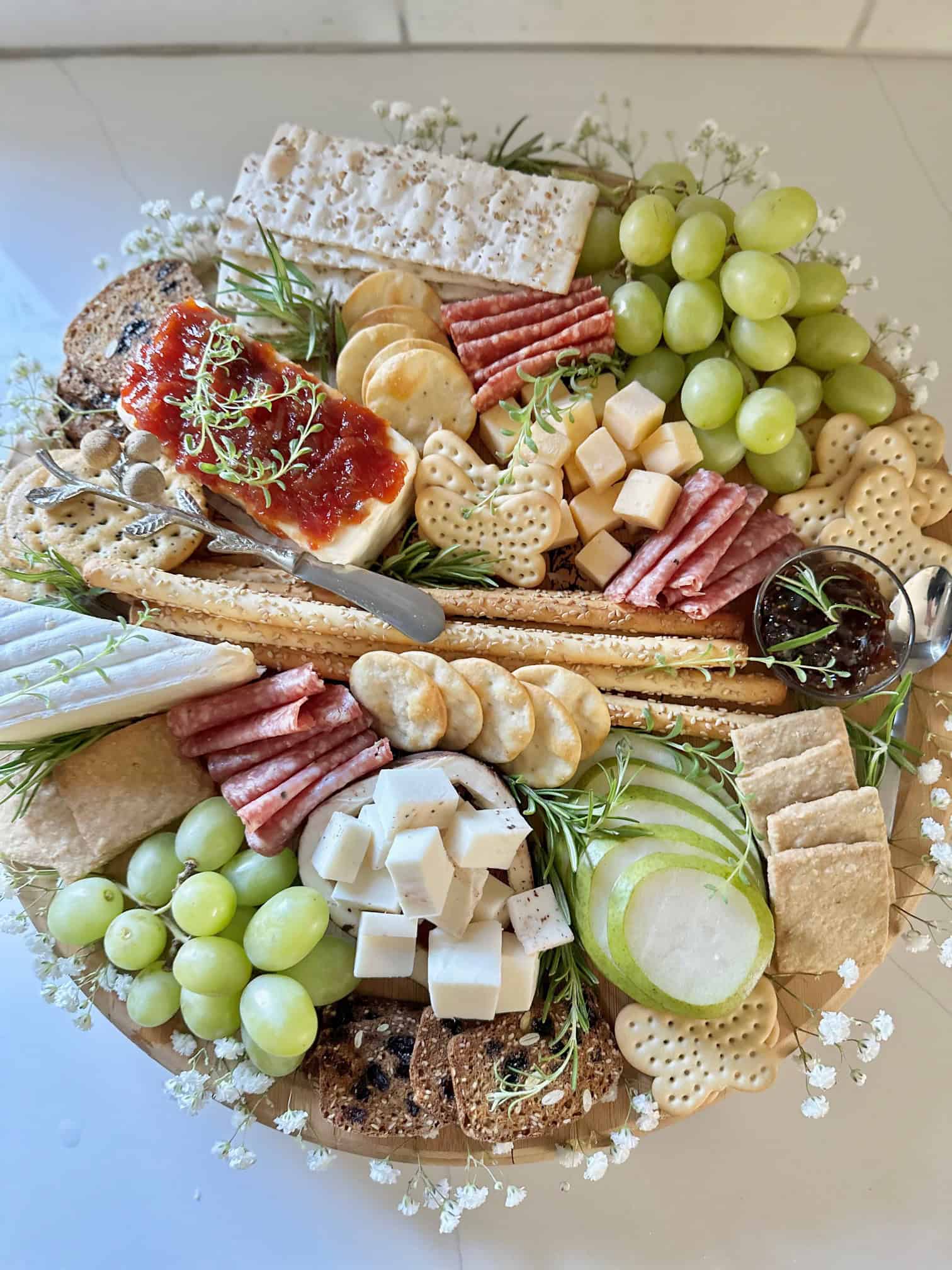
Soft cheeses like brie, goat cheese, and whipped cheeses pair best with fruit-forward jams that aren't overly sweet. These kinds of jams add contrast without overpowering the cheese.
Some of my go-to options include fig jam, apricot jam, and raspberry or mixed berry preserves. They bring just enough sweetness and work beautifully with crackers or crostini, especially alongside creamy cheeses.

Best jams for hard and aged cheeses
This is a question I get often: What kind of jam actually works with sharper cheeses?
Hard and aged cheeses tend to be saltier, nuttier, or more intense in flavor, so they pair best with jams that have a little more depth. These cheeses can handle richer, more concentrated jams without getting lost.
Cherry preserves, blueberry jam, and savory or lightly sweet onion jams are great options here. They balance the sharpness of the cheese and add contrast without overwhelming it.
I especially like these pairings when the board includes aged cheddar, parmesan, or other firm cheeses. The combination feels bold but balanced, and it's usually one of the first areas of the board people gravitate toward.
Tip: Traditional options like quince paste also work beautifully with aged cheeses, offering a firmer, less sweet contrast that feels classic on a charcuterie board.

Best jams for charcuterie boards with prosciutto
Prosciutto is a delicate, salty, and thinly sliced meat, which means it pairs best with jams that add sweetness without overpowering it. The goal is balance. You want something that complements the saltiness of the meat, not competes with it.
Fig jam is a classic pairing for a reason. It's lightly sweet with enough depth to stand up to cured meats. Cherry preserves work beautifully here as well, especially with sharper cheeses nearby. I also like jams with a subtle balsamic or wine note, which add richness without tipping too far into sweetness.
These pairings work especially well when prosciutto is folded or layered on the board and served alongside or on creamy cheeses. A small spoonful of jam on a cracker with prosciutto is one of those combinations that feels simple but thoughtful.
Best pepper jams for charcuterie boards
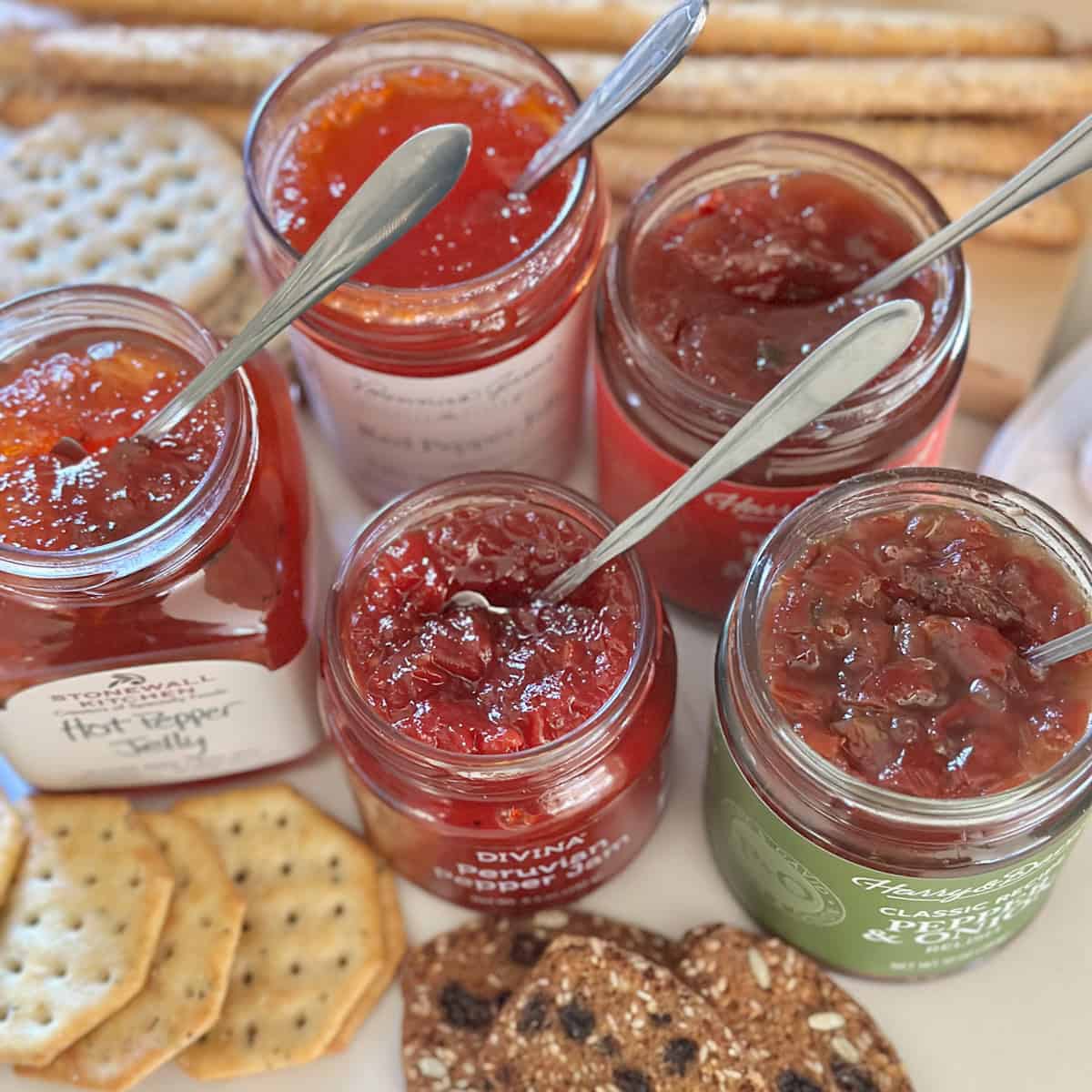
Pepper jams bring a sweet-heat element that works especially well on charcuterie boards. They add contrast and a little excitement without needing much space or quantity.
These jams pair beautifully with cream cheese, brie, and savory dips and spreads. The heat cuts through rich, creamy textures, while the sweetness keeps everything balanced. I almost always include pepper jam when I know guests enjoy bolder flavors.
A small amount goes a long way here. One small bowl or spooned over a block of cream cheese is usually plenty to make an impact.

Best neutral jams for crowds
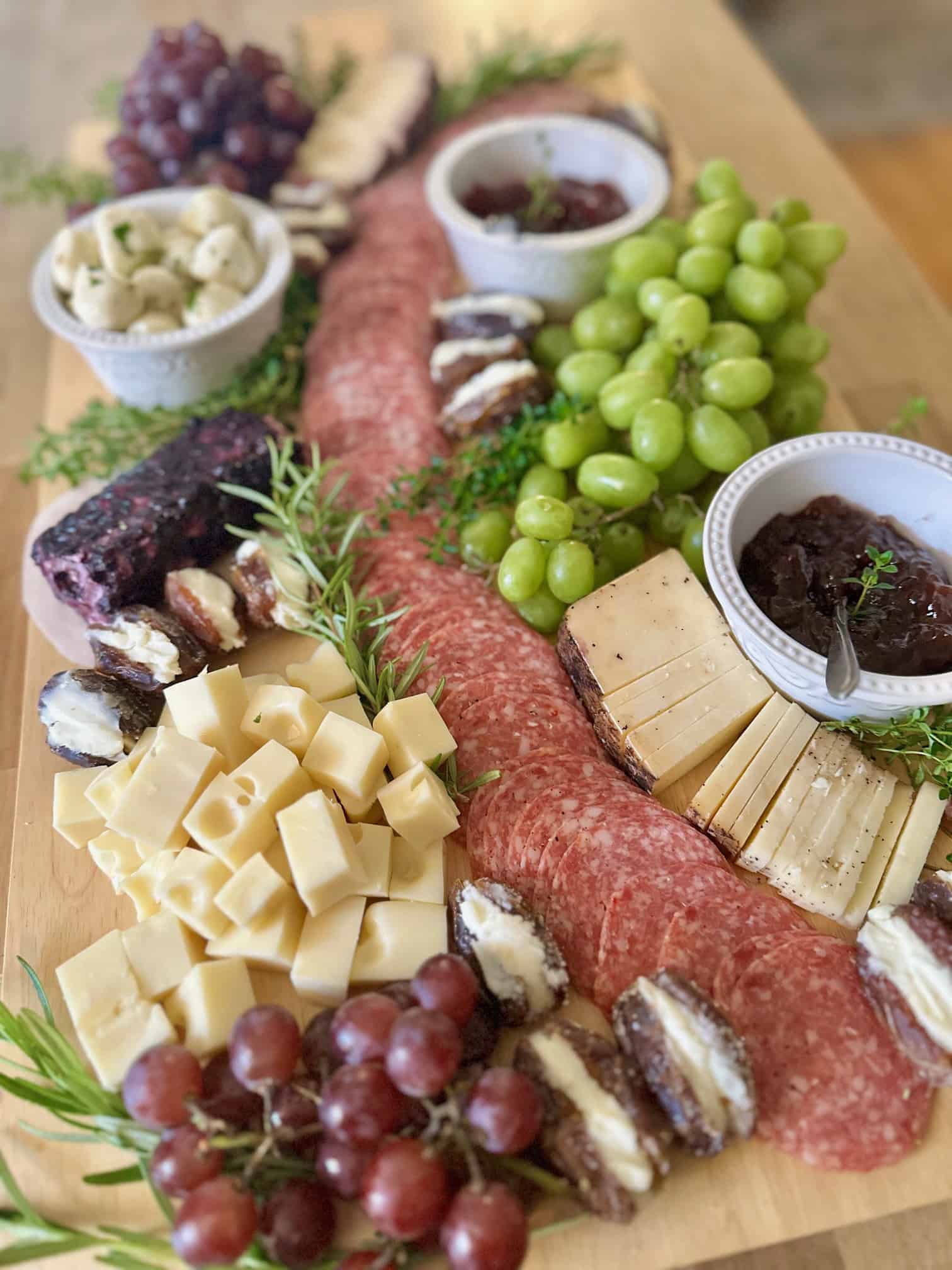
Every charcuterie board benefits from at least one familiar, crowd-pleasing option. These are the jams that work with almost everything and make the board feel approachable.
Strawberry jam, mixed berry jam, and honey or honey-based spreads are easy choices here. They pair well with a wide range of cheeses, work with both sweet and savory elements, and tend to be the first to disappear once people start grazing.
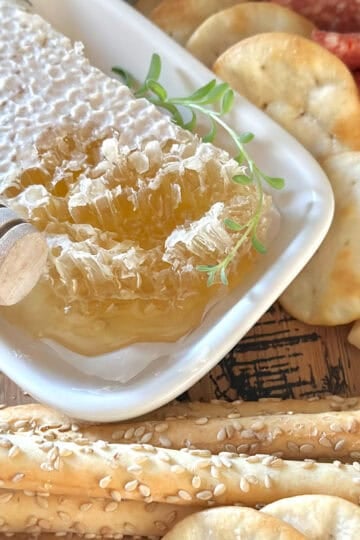
Note: Honey isn't a jam, but it's a classic charcuterie pairing. It works especially well with soft cheeses like brie, goat cheese, and ricotta, adding sweetness without overpowering the board. A small drizzle or honeycomb piece goes a long way.

Jam, jelly, preserves, spreads and relish: What to buy for a charcuterie board
When I'm shopping for jam for a charcuterie board, I don't always head straight to the jelly aisle. More often than not, I find the best options near the good cheese section. That's where the jams, preserves, and spreads meant for cheese boards tend to live, and they're usually better balanced and less sugary.
If you're standing there wondering what to grab, it helps to understand the difference between what you're looking at.
Jam, jelly, preserves, or relish: how to know what to buy
- Preserves are usually my first choice for charcuterie boards. They're fruit-forward, not overly sweet, and tend to pair well with both soft and aged cheeses. Look for fig, apricot, cherry, or berry preserves with simple ingredient lists.
- Jam works well too, especially when it's lightly sweet and not syrupy. These are great for soft cheeses and crowd-friendly boards, but I skip anything that feels more like dessert.
- Jelly can work, particularly pepper jelly or classic fruit jellies, but texture matters. I prefer jellies with a little structure rather than very loose, gelatinous ones.
- Relishes or savory spreads, like onion jam or wine-forward spreads, are great with sharper cheeses and cured meats. These add depth and contrast without adding too much sweetness.
When in doubt, I look for options that lean balanced rather than bold. If a label promises intense sweetness or heavy spice, it usually overwhelms the cheese. Clean, simple flavors are more versatile and easier to pair across the board.
This is where a few trusted brands or cheese-counter finds can really simplify things. You don't need a lot, just a couple of well-chosen options that work with what you're serving.

My go-to jams for charcuterie boards
These are brands and styles I consistently reach for because they pair well with cheese, feel appropriate for entertaining, and are easy to work into different boards.
Fruit-forward preserves
For soft cheeses and general pairing, I look for fig, apricot, cherry, or berry preserves that aren't overly sweet. Brands like Bonne Maman and Dalmatia are easy to find and work well with both creamy and aged cheeses.
Shop Fruit-forward preserves:

Pepper jams
When I want a little heat on the board, classic pepper jams are my go-to. I look for versions that balance sweetness and spice rather than leaning too sugary. Stonewall Kitchen makes a few dependable options that pair beautifully with cream cheese and brie.
Shop pepper jams:
Savory jams and relishes
For sharper cheeses and cured meats, savory spreads like onion jam or wine-forward relishes are great to have on hand. These are often found at cheese counters or specialty grocery stores and add depth without overpowering the board.
Shop savory jams and relishes:
Cheese + jam pairing guide for charcuterie boards
| Type of Cheese | Flavor Profile | Best Jam Pairings | Why It Works |
|---|---|---|---|
| Brie & Camembert | Creamy, mild | Fig, apricot, raspberry | Sweetness and acidity cut through the richness |
| Goat Cheese | Tangy, fresh | Cherry, blueberry, honey | Bright flavors complement the tang |
| Cheddar (aged) | Sharp, salty | Apple butter, fig, onion jam | Sweet and savory balance the sharpness |
| Gouda (aged) | Nutty, caramelized | Apricot, cherry, pepper jam | Enhances the natural sweetness |
| Blue Cheese | Bold, funky | Honey, pear, fig | Sweetness tames the intensity |
| Gruyère | Savory, nutty | Onion jam, cherry preserves | Savory-on-savory with a touch of sweetness |
| Manchego | Firm, salty | Quince paste, fig jam | Classic sweet-salty contrast |
| Parmesan | Salty, umami | Honey, balsamic cherry jam | Just enough sweetness without masking flavor |
How to serve jam on a charcuterie board
I usually serve jam in small bowls with their own spoons to keep the board neat and flavors separate. Placing them near cheeses and crackers makes pairing feel natural and intuitive.
Some jams also work beautifully served directly over a block of cheese, especially cream cheese or brie. It's an easy way to create a focal point on the board without adding extra dishes.
If space is tight, jam can always live on a small side plate or board. It keeps things from feeling crowded and makes serving easier once people start grazing.
Tip: Jam can be served cold or at room temperature, but letting it sit out briefly makes it easier to spoon and helps the flavors come through a bit more.

Shop charcuterie supplies here:
Frequently asked questions
Fig jam is one of the most versatile options, but the best choice depends on what else is on the board. Fruit-forward jams work well with soft cheeses, while deeper flavors like cherry or onion jam pair better with aged cheeses.
Think contrast. Mild, creamy cheeses pair well with brighter, fruit-forward jams, while sharper or saltier cheeses can handle richer, more concentrated flavors. The goal is balance, not matching flavors exactly.
One to three jams is usually plenty. A small mix of a fruit-forward jam, a pepper jam, and a neutral option keeps the board balanced without overwhelming it.
Yes! Jams work beautifully spooned over cream cheese or brie and can create a simple focal point on the board without adding extra dishes.
Quince paste is a firm, sliceable fruit paste that's traditionally served with aged cheeses. It's less sweet than jam and used more like a cheese accompaniment than a spread.
Let us help you build a beautiful board
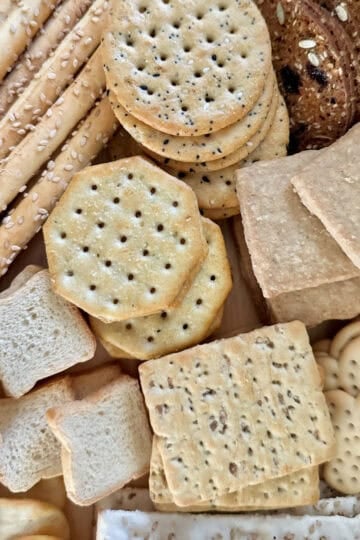

Jam may be a small part of a charcuterie board, but when it's chosen thoughtfully, it makes everything else shine. The right jams balance rich cheeses, complement salty meats, and give crackers something worth lingering over.
You don't need a long list or anything complicated. A few well-paired options go a long way toward making a board feel complete and inviting. Trust your taste, lean into contrast, and don't be afraid to include something a little special. That's often what people remember most.
Happy hosting, friends!