What to Put on a Charcuterie Board (Beyond Cheese and Meat)

A great charcuterie board includes a mix of cheeses, cured meats, crackers or sliced baguette, and a few simple extras that add color and contrast. Fresh fruit, olives or pickles, nuts, and a small bowl of jam or honey help balance salty flavors and fill empty spaces so the board looks full and intentional. The best boards combine different textures and flavors, including creamy, crunchy, sweet, and briny.
Content may contain affiliate links. When you shop the links, we receive a small commission at no cost to you. Thanks for supporting my small business.
Charcuterie boards are supposed to look effortless. But somehow we all end up standing over one like it's a high-stakes art project.
Making boards pretty is one of my favorite things, and the secret is this. You don't need to buy more cheese. You need a few smart extras that add color, texture, and that finished look that makes people hover before they even grab a cracker.
This is not a checklist. It's a way of thinking that helps you build a board that looks full, balanced, and intentional every single time.
At a Glance: What to Put on a Charcuterie Board (Beyond Cheese and Meat)
_______________________
A great charcuterie board includes more than just cheese and cured meats. A few thoughtful additions bring color, texture, and flavor contrast while helping the board feel full and balanced.
Board essentials
• Crackers or sliced baguette
• Fresh fruit
• Olives or pickles
• Nuts
• Jam or honey
Simple additions that elevate the board
• Fresh herb sprigs like rosemary or thyme
• Flowers for color and visual interest
• Citrus slices or grapes for brightness
Why these extras matter
• Balance salty flavors with sweet and briny contrast
• Add color and natural texture
• Fill empty spaces so the board looks abundant and intentional
• Create a mix of creamy, crunchy, sweet, and savory elements
Summarize and Save this content on:
Jump to:
- At a Glance: What to Put on a Charcuterie Board (Beyond Cheese and Meat)
- Think in finishing touches, not more food
- Small bowls make everything look better
- One briny or pickled element for contrast
- Fruit that softens the board and adds color
- Nuts for texture and warmth
- Dips, jellies, and honey (How to place them)
- Small bites that feel special
- Fresh herbs as a styling tool
- Fresh flowers on a charcuterie board (When it makes sense)
- Quick fixes for common charcuterie board problems
- Add these last (Trust me)
- Tools that make a charcuterie board easier to enjoy
- Where crackers fit in
- Frequently asked questions
- Get your charcuterie on with these helpful guides
Think in finishing touches, not more food
A charcuterie board can have all the right ingredients and still look a little off. That usually happens when everything is the same color, the same shape, or the same texture all grouped together.
The easiest fix is to think like a stylist for two minutes. Add contrast. Add height. Break up the board with small groupings and a few accents that fill the empty pockets without piling more on. Once you start paying attention to texture and visual balance, your boards stop feeling crowded or flat, and they start looking intentional.
Small bowls make everything look better
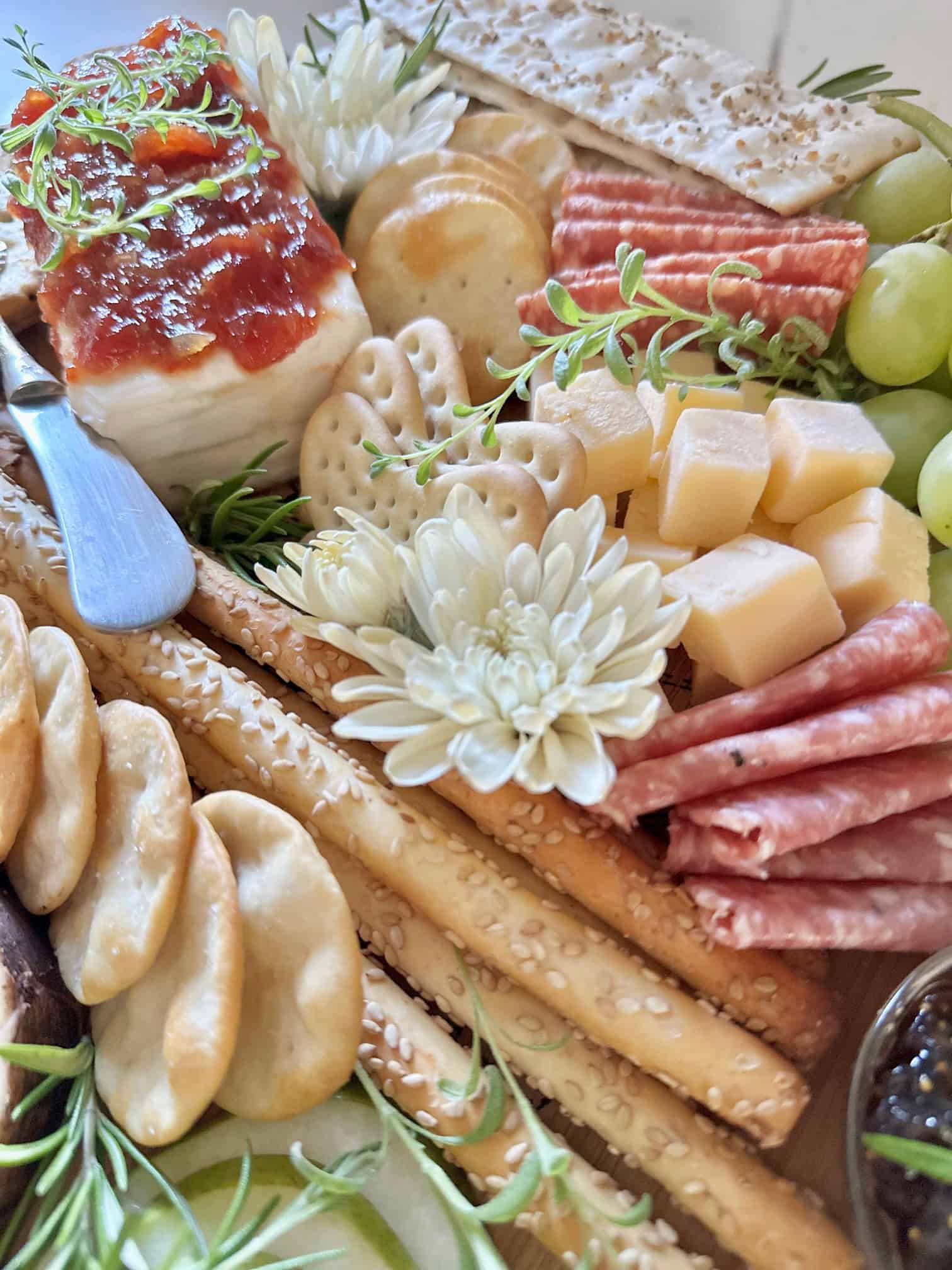
Small bowls keep wet, briny, or sticky items from spreading across the board. Olives, pickles, honey, jam, and dips can easily leak or smear, and once that happens the whole board starts to look messy.
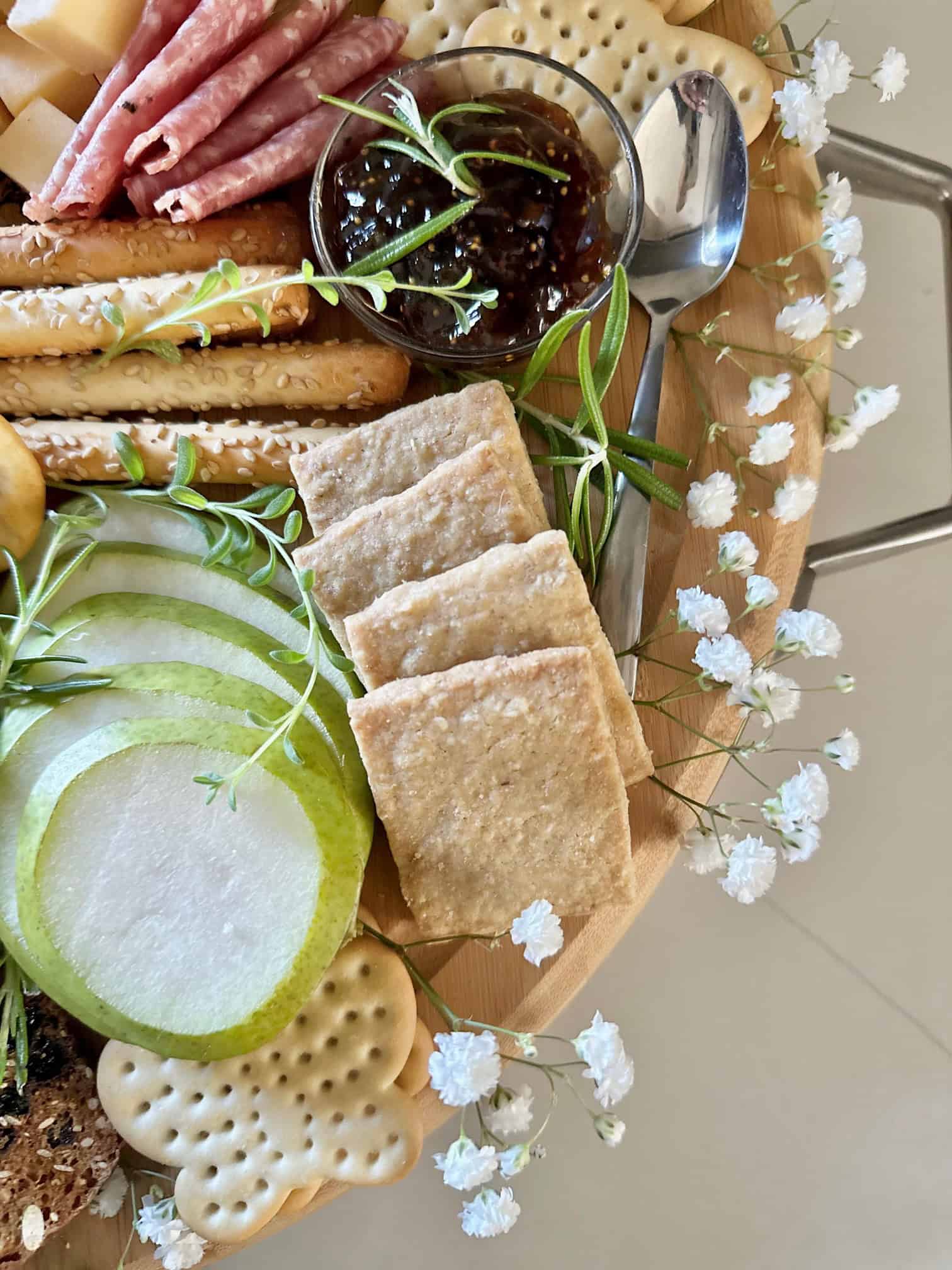
They also add height and structure, which makes the board feel styled instead of scattered. Even one or two small bowls gives your eye a place to land and helps break up all the flat ingredients.
Small bowls make serving easier too. Guests know exactly where to scoop, and you can add a little spoon or spreader so no one has to awkwardly dig in with a cracker.
I use small bowls for olives, pickles, nuts, jam, honey, and dips almost every time. It keeps the board clean, makes it easier to eat, and instantly makes everything look more intentional.
One briny or pickled element for contrast
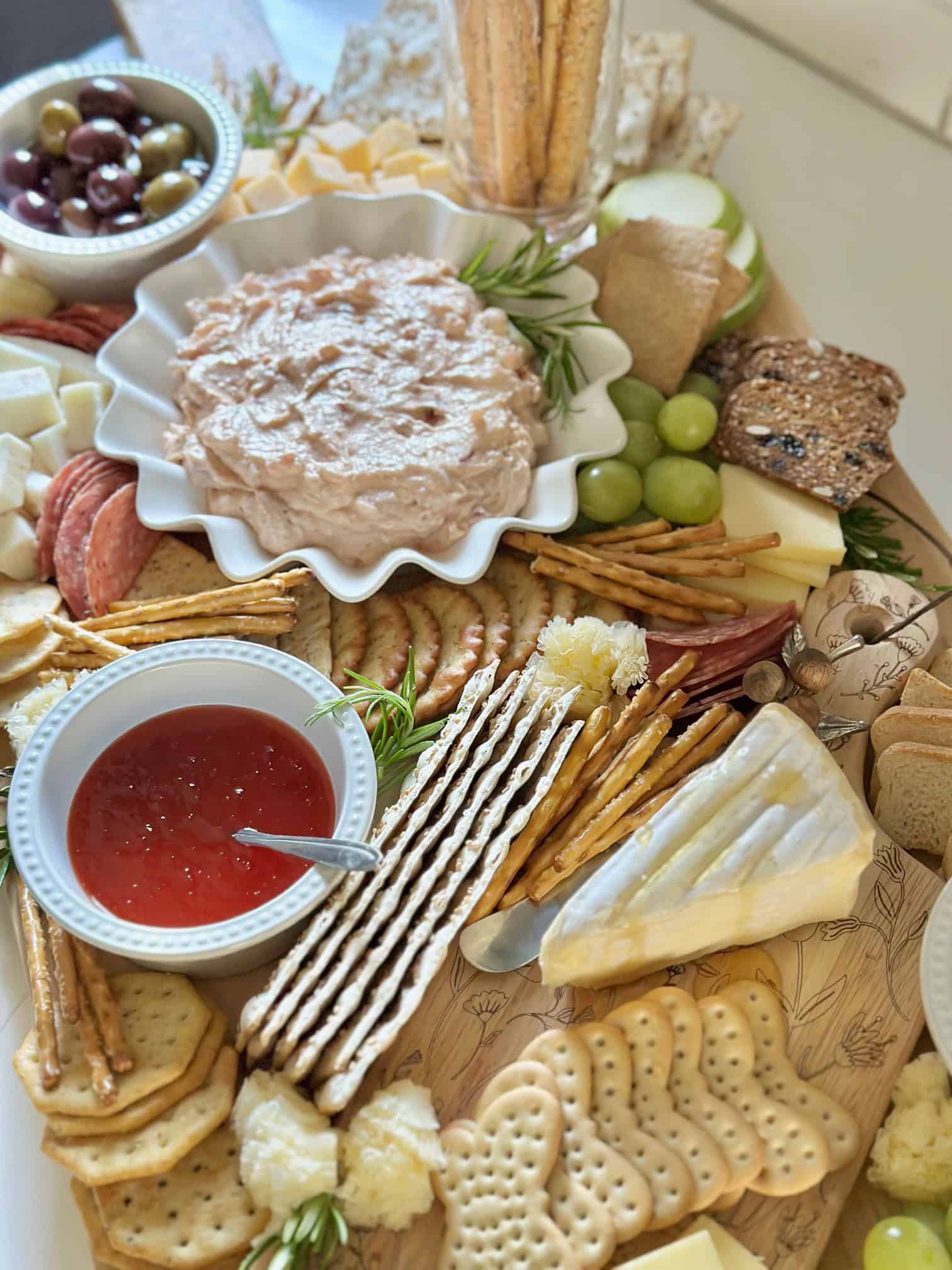
A briny element is one of the easiest ways to balance a charcuterie board. It cuts through rich cheeses and salty meats and keeps the whole board from feeling too heavy.
You only need one briny item, not five. Olives, pickles, cornichons, or marinated vegetables all do the same job, so pick your favorite and let it be the supporting character.
For the cleanest look, serve it in a small bowl so it stays contained and does not make the rest of the board slippery.

Fruit that softens the board and adds color
Fruit is what makes a charcuterie board feel fresh. It softens all the salty and savory ingredients, adds color, and instantly makes the board look more inviting.
You usually only need one fruit element to get the effect, so you do not have to overdo it. The real secret is how you place it. Thin slices, halves, or small clusters almost always look more intentional than a big pile.
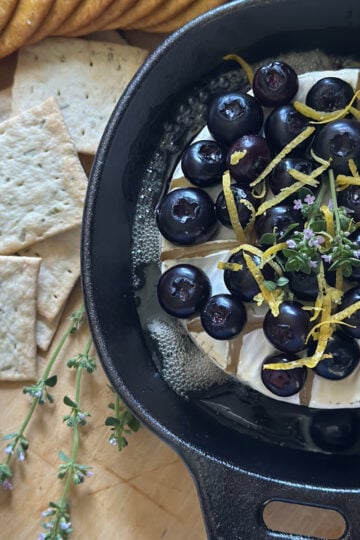
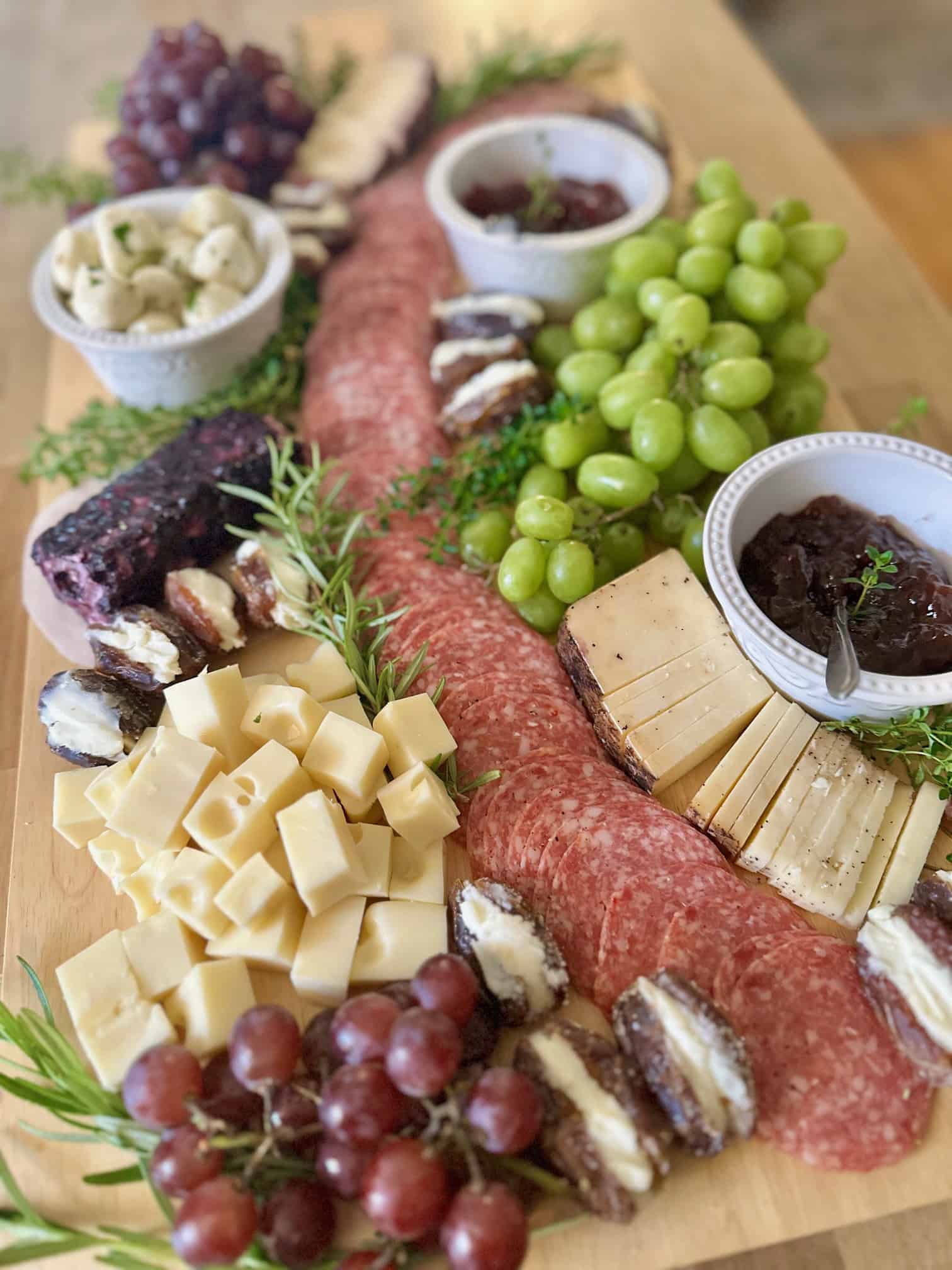
Some of my favorite fruits to use are strawberries, grapes, figs, pears, blueberries, and blackberries.
Nuts for texture and warmth
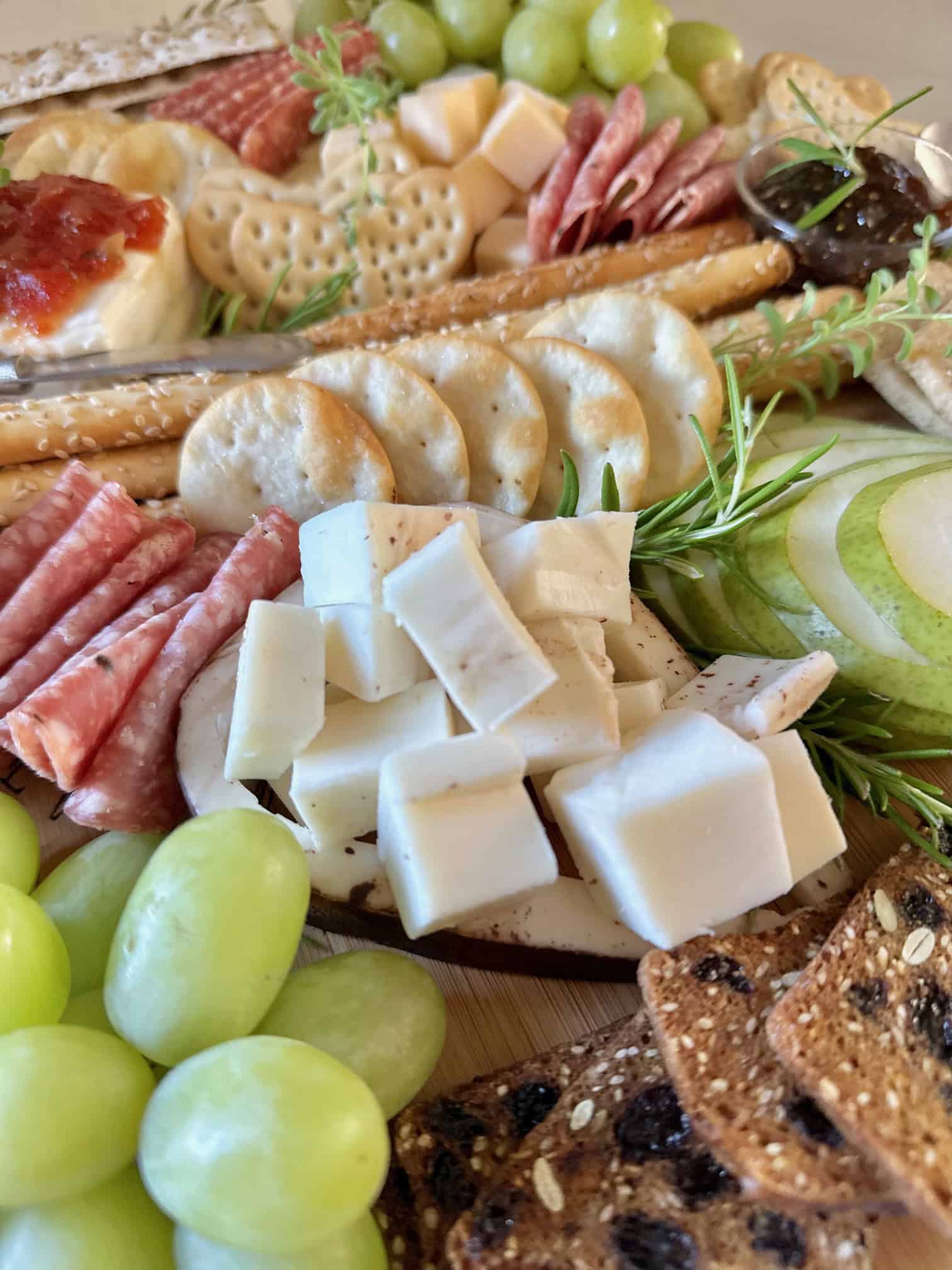
Nuts add crunch, texture, and that little bit of cozy warmth that makes a charcuterie board feel complete. They also fill small gaps beautifully without taking over the board.
Always choose shelled nuts for ease, since nobody wants to work for their snack. Candied nuts are especially good if you want that sweet and savory balance.
You can cluster nuts directly on the board in small piles, or place them in a small bowl to keep everything neat and easy to grab.

Dips, jellies, and honey (How to place them)
Spreads should always go in small bowls. It keeps the board clean, makes serving easier, and prevents sticky ingredients from smearing across everything else.
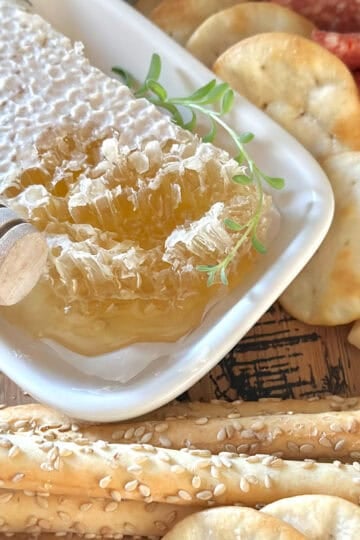
Honey, jam, and jelly are some of the easiest ways to add shine and depth to a board. A small bowl of honey looks beautiful, and it pairs especially well with creamy cheeses like brie and goat cheese. You can also use infused honey, like hot honey or herb-infused honey, if you want something a little more interesting.
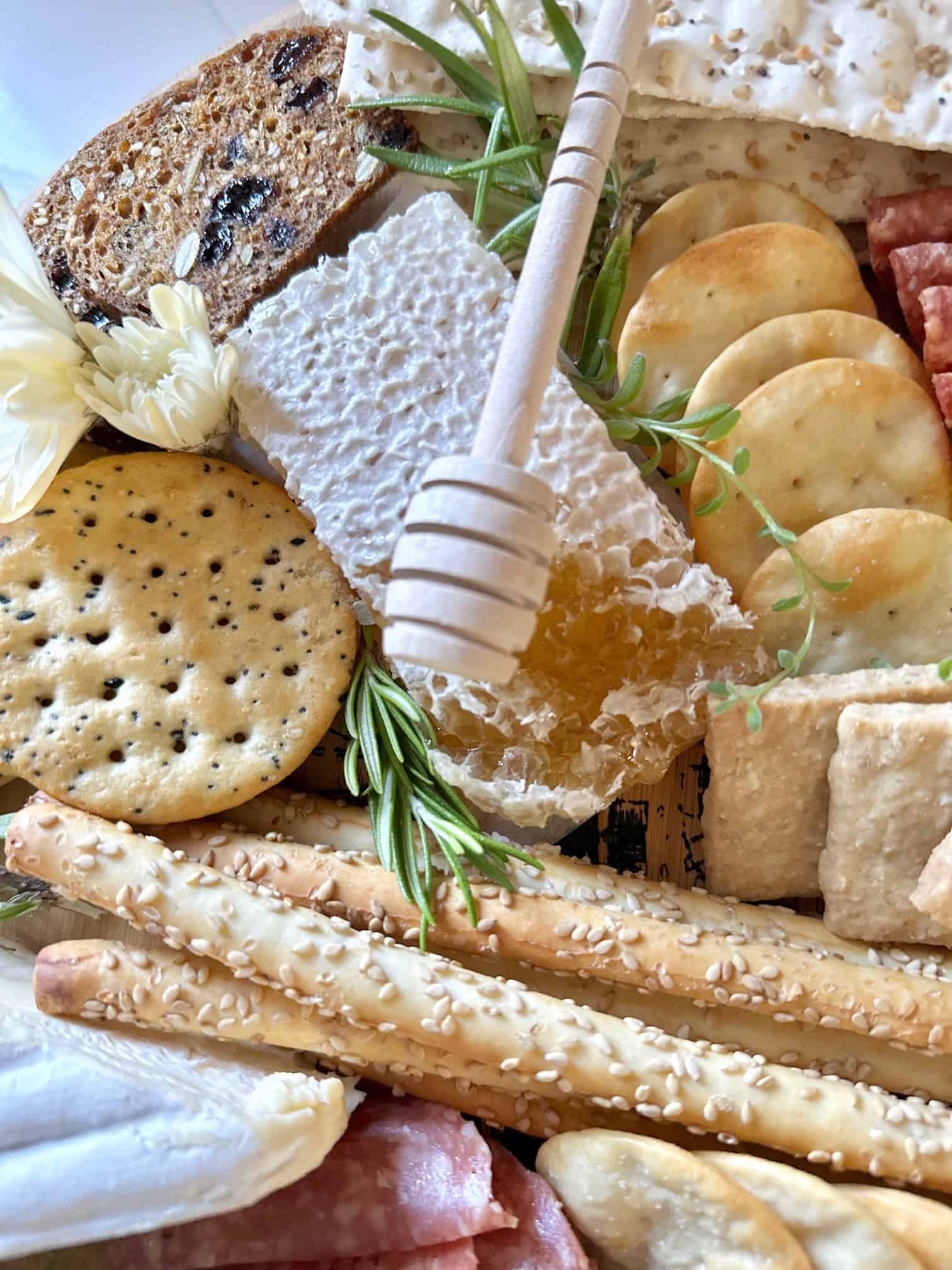
Honeycomb is another favorite add-on, but it is best served on a small dish or a square of parchment paper. It can look dry on the outside, but once you slice into it the honey starts to seep out, so protecting the board makes a big difference.
No matter what you choose, add a spoon or spreader so guests know exactly what to do. These elements should feel like accents, not anchors, just enough to elevate the board without taking it over.
Small bites that feel special
This is where you can make a board feel a little more elevated without adding a lot of work. A few small bites tucked into the empty spaces instantly make everything look more curated.
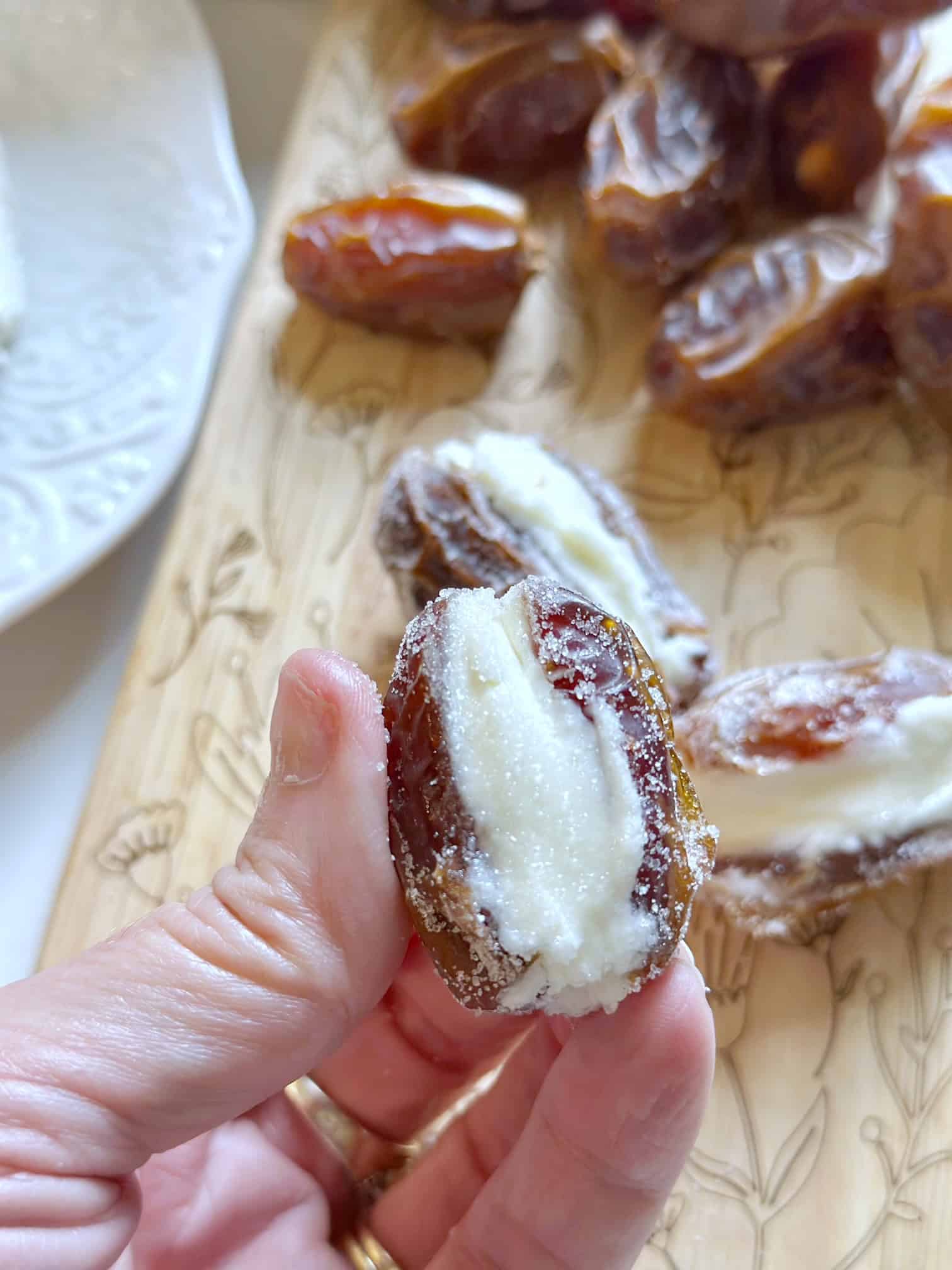
Some of my favorite options are stuffed dates, mini mozzarella balls, cornichons, chocolate covered almonds, and marcona almonds.
Fresh herbs as a styling tool
Culinary herbs act like greenery, not garnish. They add movement, height, and freshness, and they're one of the easiest ways to make a board look finished without adding more food.
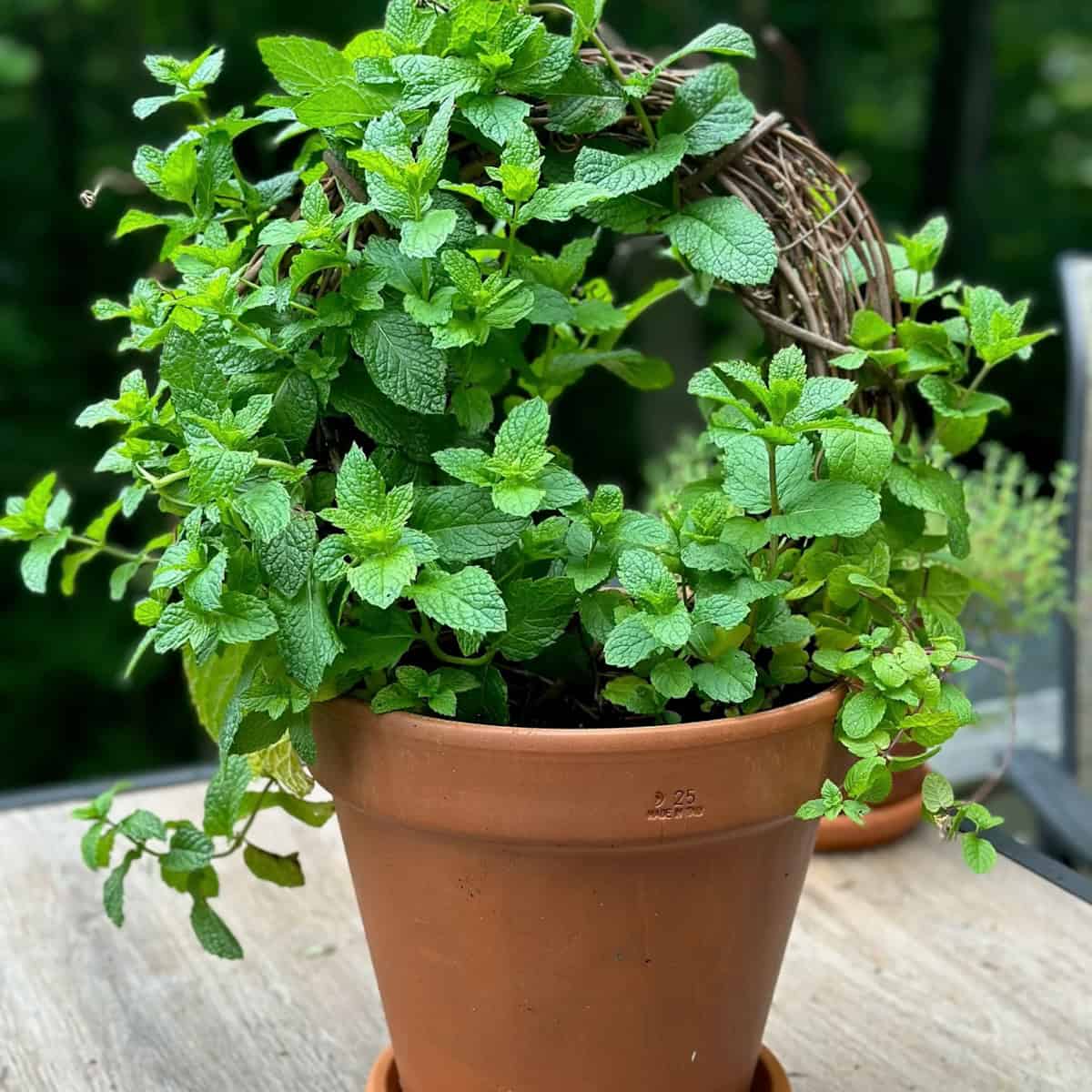
In the summer, I love using herbs straight from my garden, especially thyme, rosemary, and lavender. A few whole sprigs tucked into open spaces instantly makes everything feel more intentional and pretty.
The key is to use herbs the same way you'd use greenery in a vase. Tuck them in around bowls, weave them between clusters, and let them soften the edges of the board. Some herbs hold up better than others, so choose sturdy sprigs that will stay fresh looking while people snack.
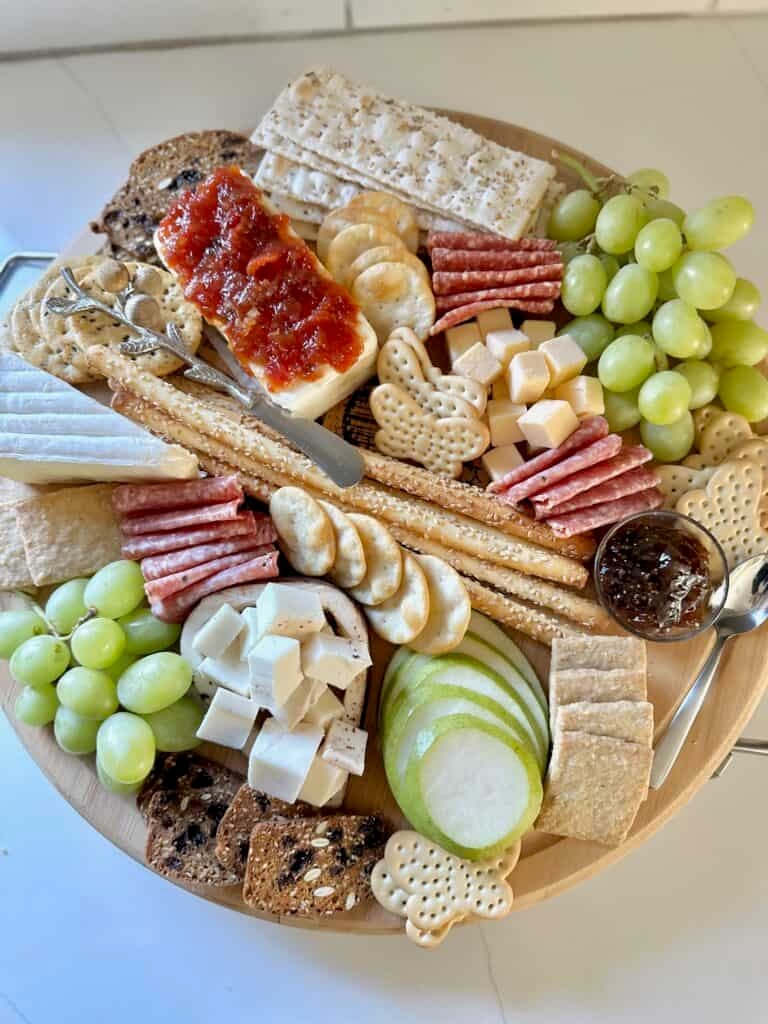
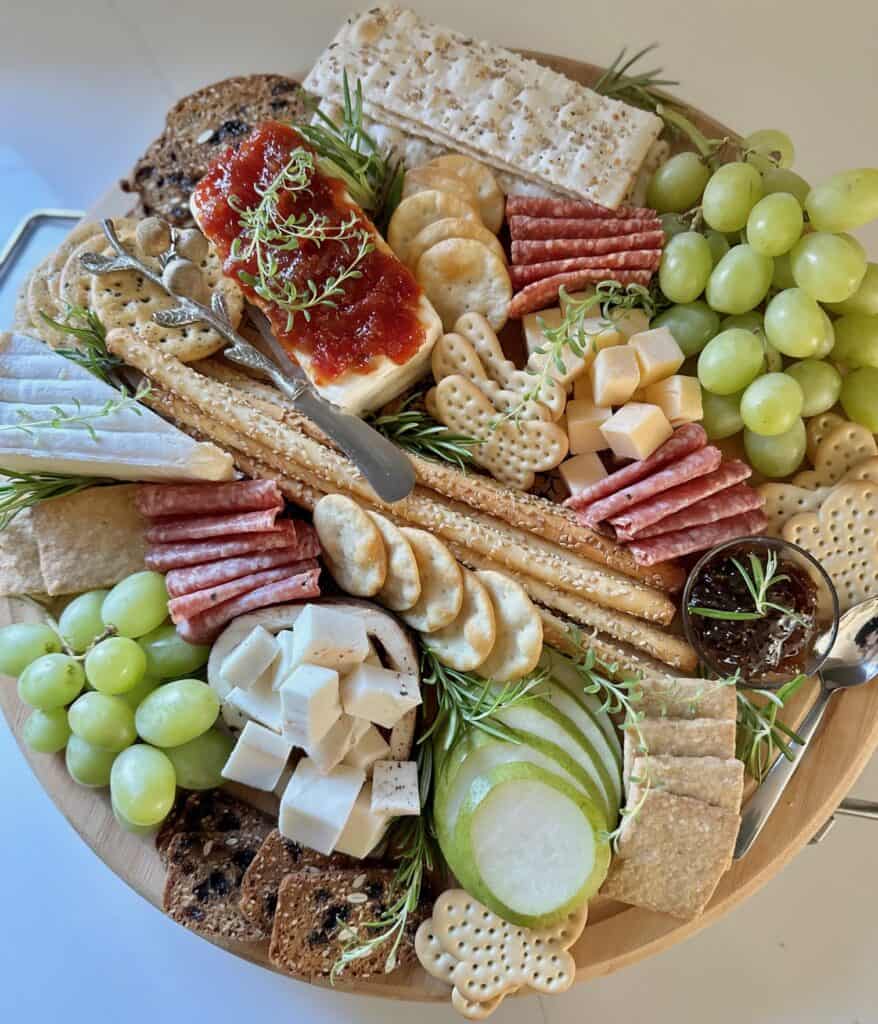
To show you how much herbs can change the look of a board, I'm sharing a quick before-and-after of the exact same charcuterie board, first without herbs and then with them added in.
Fresh flowers on a charcuterie board (When it makes sense)
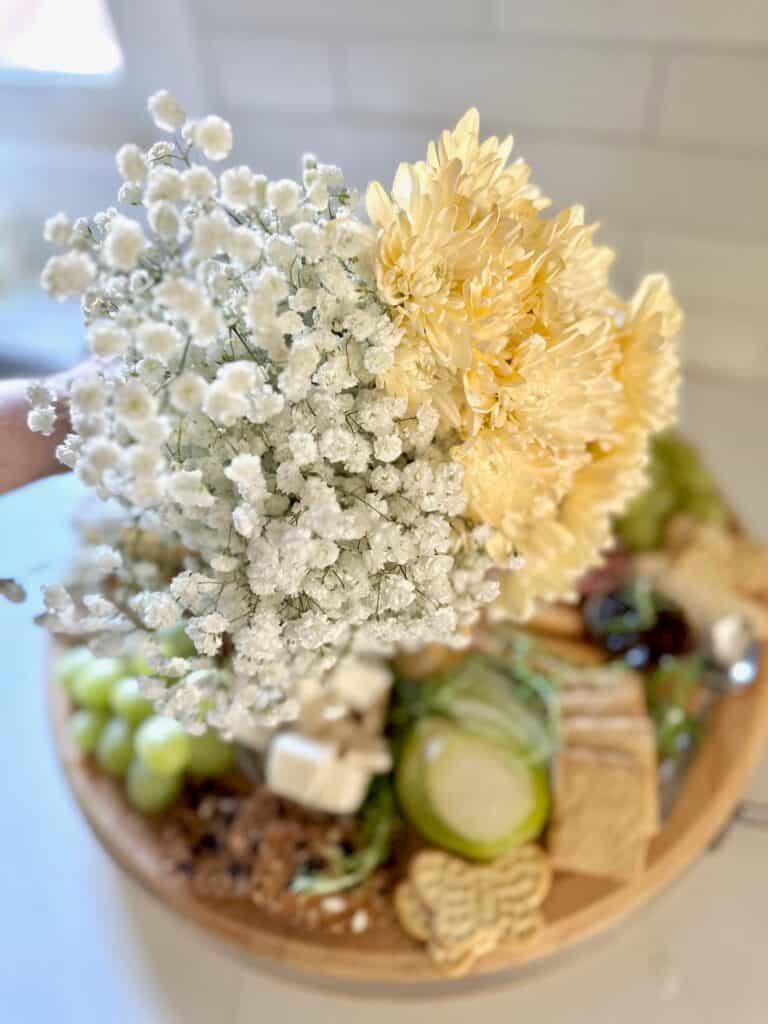
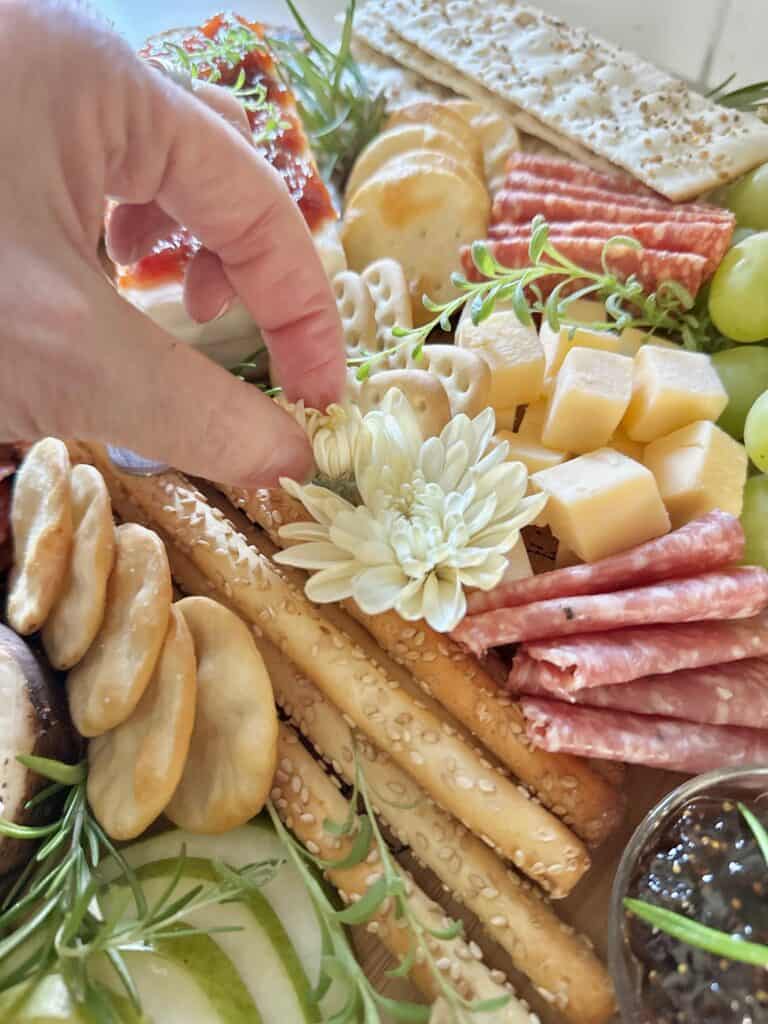
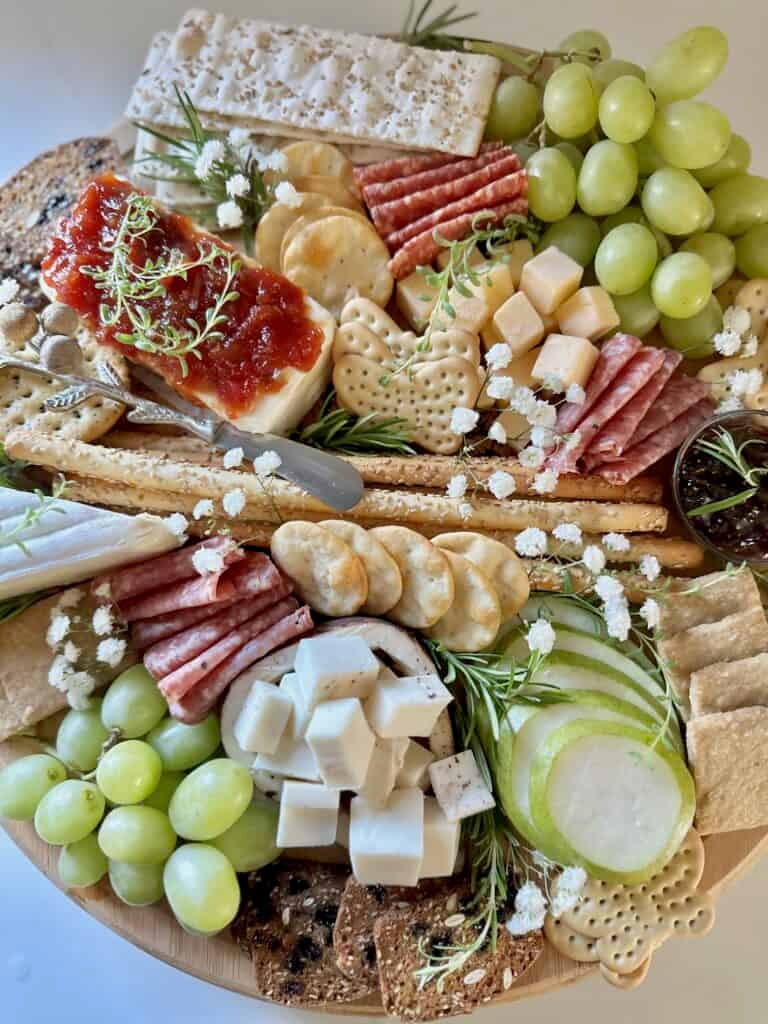
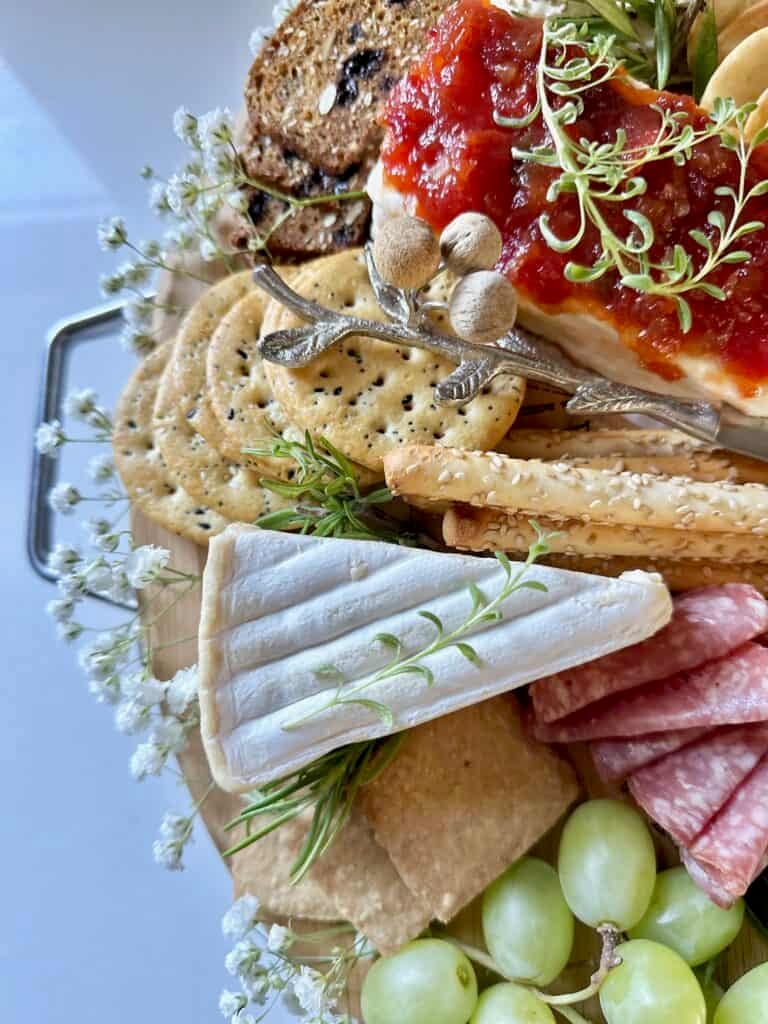
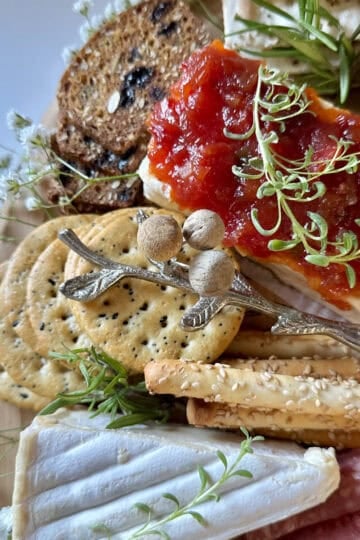
Flowers are not necessary, but they are a beautiful option for special occasions or anytime you want your board to feel a little more elevated. They add softness and texture, and they instantly make the whole board look styled, my favorite!
Edible flowers are lovely when they're in season, but you do not need them. Simple non-edible blooms work beautifully too, as long as you use them thoughtfully and keep them away from anything wet or spreadable.
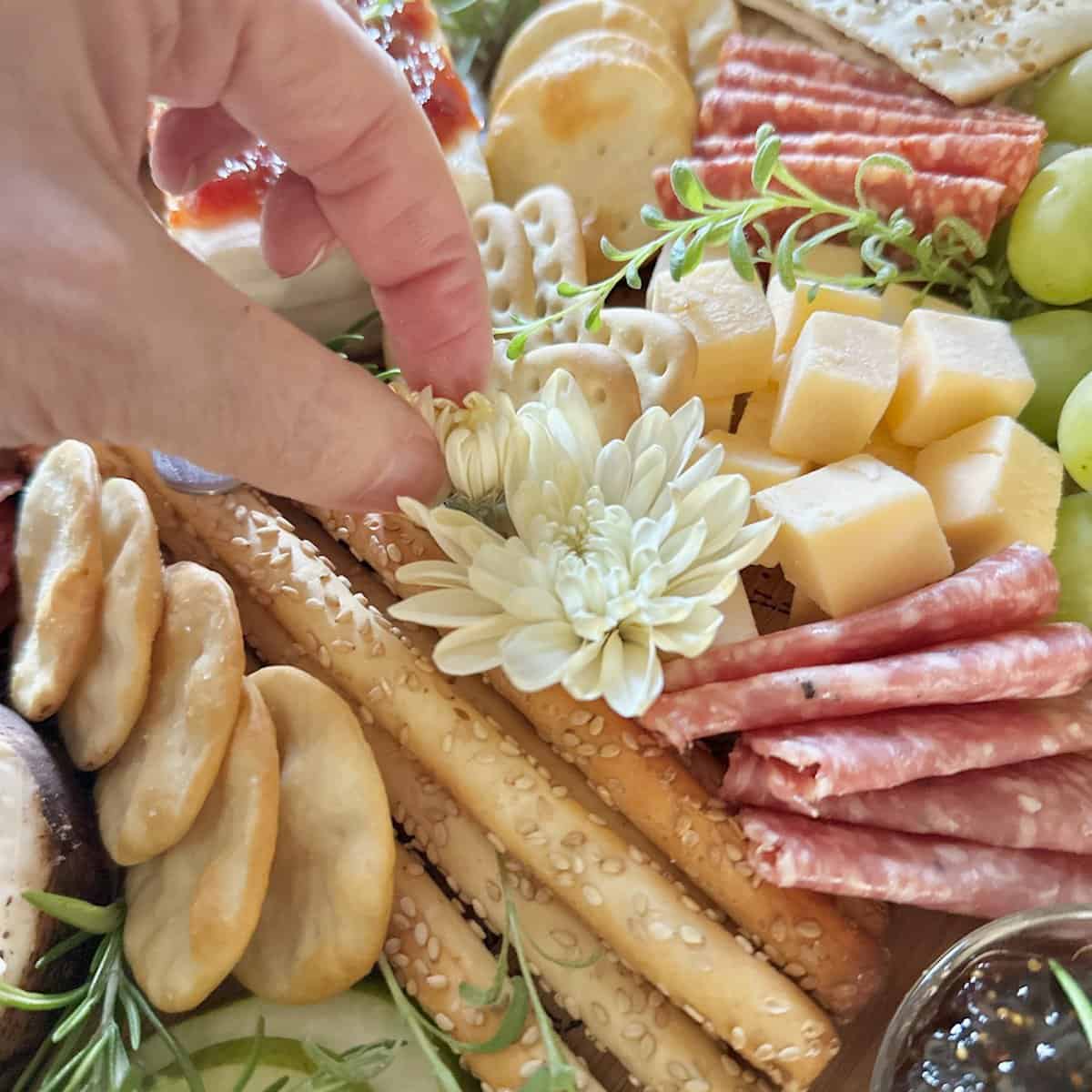
My best tip is to keep it simple. Stick with just one type of flower per board since a charcuterie board already has a lot going on. Typically it's texture and freshness your looking for, not color. Choose flowers that tuck in easily or lay nicely across the edge, like carnations, mums, or roses. If you want something lighter, filler flowers like baby's breath or wax flowers are perfect.
To show how much these little finishing touches matter, I'm sharing a quick progression of the same board, starting plain, then adding herbs, and finally adding fresh flowers.
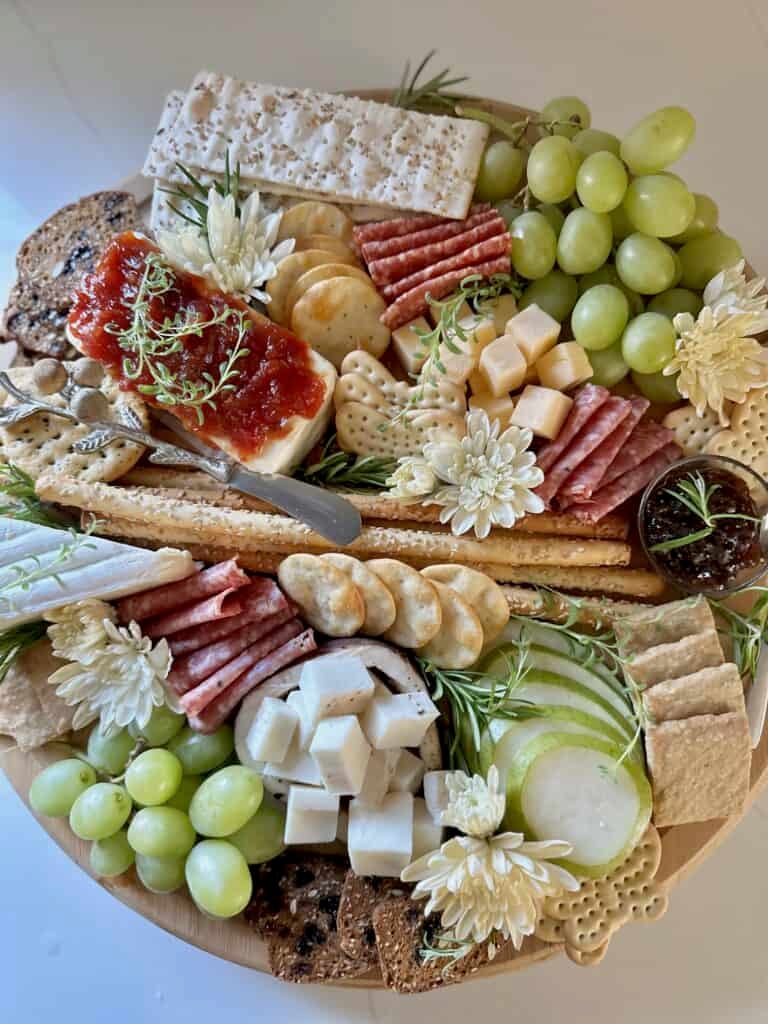
Tip: Grocery store flowers work great for charcuterie boards. I usually grab a small bunch the day before, give the stems a fresh cut, and keep them in water overnight so they look their best. When it's time to style the board, I mostly use the flower heads, not long stems, so they tuck in easily and don't fight for space on an already busy board.
Fresh flower gallery


Quick fixes for common charcuterie board problems
You're standing over your board thinking something is off, but you can't quite put your finger on it. Don't worry, it happens. These quick fixes will pull everything together fast.
If your board looks too flat
Add height with breadsticks, whole herb sprigs, or a small bowl.
If your board needs more color
Bring in fruit, herbs, or flowers for contrast.
If everything looks too heavy
Add something fresh or briny to lighten it up.
If the board feels unfinished
Tuck in herbs or add one intentional accent like honey or flowers.
Add these last (Trust me)
Herbs and flowers should always be added at the last minute. They're what makes a board look fresh and pretty, but they're also the first thing to wilt and look tired.
Freshness is visual just as much as it is practical. Even a beautiful board can start to feel a little sad if the herbs look limp or the flowers are drooping.
If you want your board to have that clean, just-put-together look, wait until the end to tuck in your herbs and blooms. Timing matters just as much as placement.
Tools that make a charcuterie board easier to enjoy
The easiest way to make a charcuterie board feel more inviting is to make it easy to eat. A few small tools help guests serve themselves without hesitation.
- Cheese knife or spreader
- Small spoon for honey, jam, or dips
- Small fork or tongs for olives and pickles
- Cocktail picks or toothpicks for small bites
- Small serving knife for slicing cheese (if needed)
- Extra napkins and small plates nearby (always a good idea)
Shop charcuterie tools

Shop everyday boards
Where crackers fit in
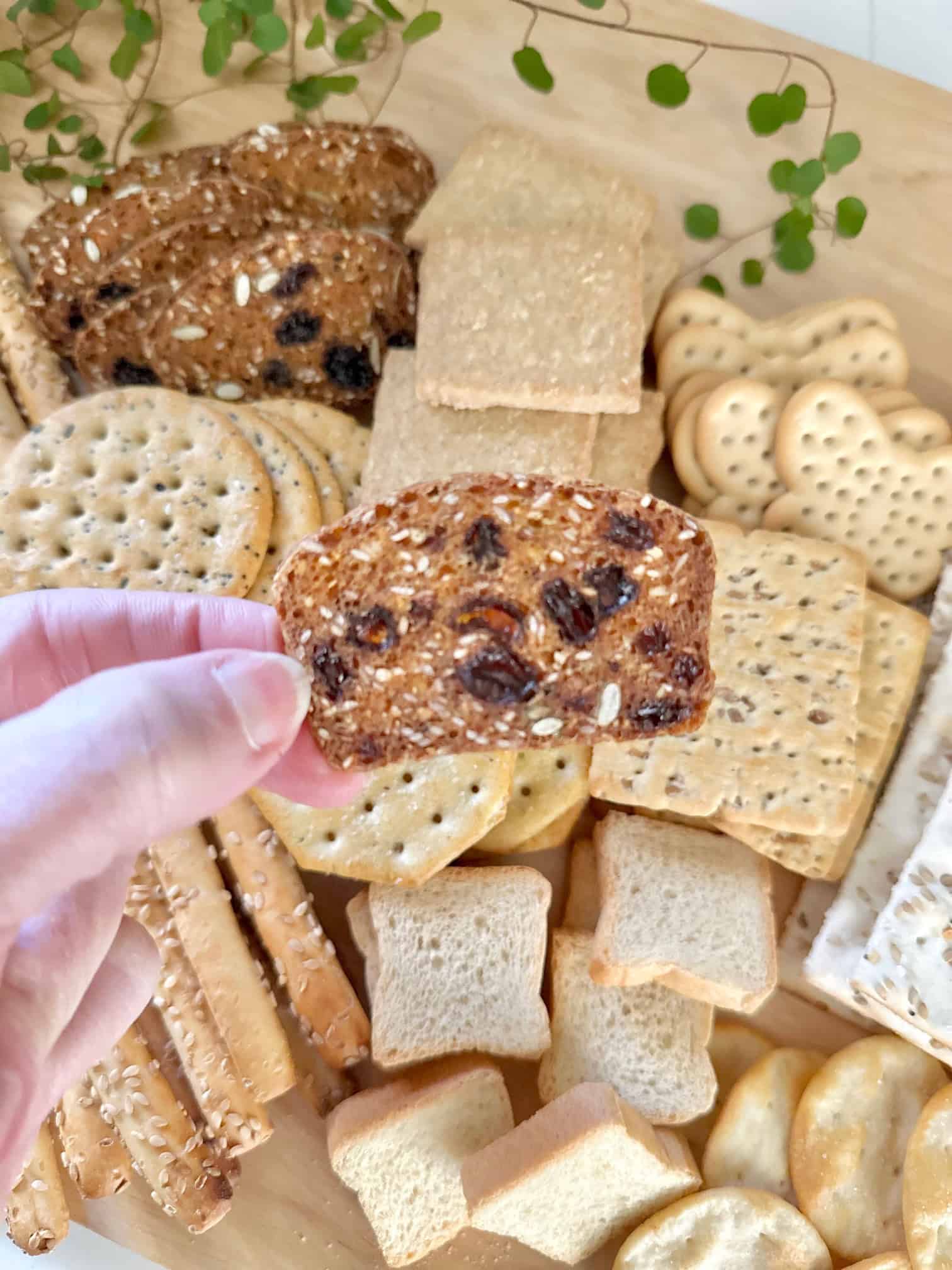
Crackers are essential on any charcuterie board, but they deserve their own conversation. The right crackers do more than "sit there." They balance soft cheese, hold up to dips, and give the board structure.
Shape and texture matter just as much as flavor. A thin cracker can be perfect for a sharp cheese, while a sturdier cracker is better for spreads, soft cheeses, and anything sticky.
If you want help choosing the best crackers for your board, I have a full guide here: Best Crackers for Charcuterie.
Frequently asked questions
The 3-3-3-3 rule is a simple formula for building a balanced board using four categories: 3 cheeses, 3 meats, 3 crunchy items (like crackers or bread), and 3 extras (like fruit, olives, nuts, jam, or honey). It keeps the board from feeling random and helps it look full without overdoing it.
Five things to avoid on a charcuterie board are overcrowding it so guests cannot grab anything easily, using only soft cheeses without sturdy crackers, skipping utensils for sticky or spreadable items, adding fruit that is too wet and makes crackers soggy, and forgetting something fresh or briny to balance rich and salty flavors.
A charcuterie board should include a mix of cheeses, cured meats, crackers or bread, and a few simple add-ons like fresh fruit, something briny (like olives or pickles), something crunchy (like nuts), and one sweet element like jam or honey to balance everything out.
The five basics for a simple charcuterie board are cheese, cured meat, crackers or bread, fruit, and one extra like olives, nuts, jam, or honey. Even with just these five categories, the board can look complete and feel intentional.


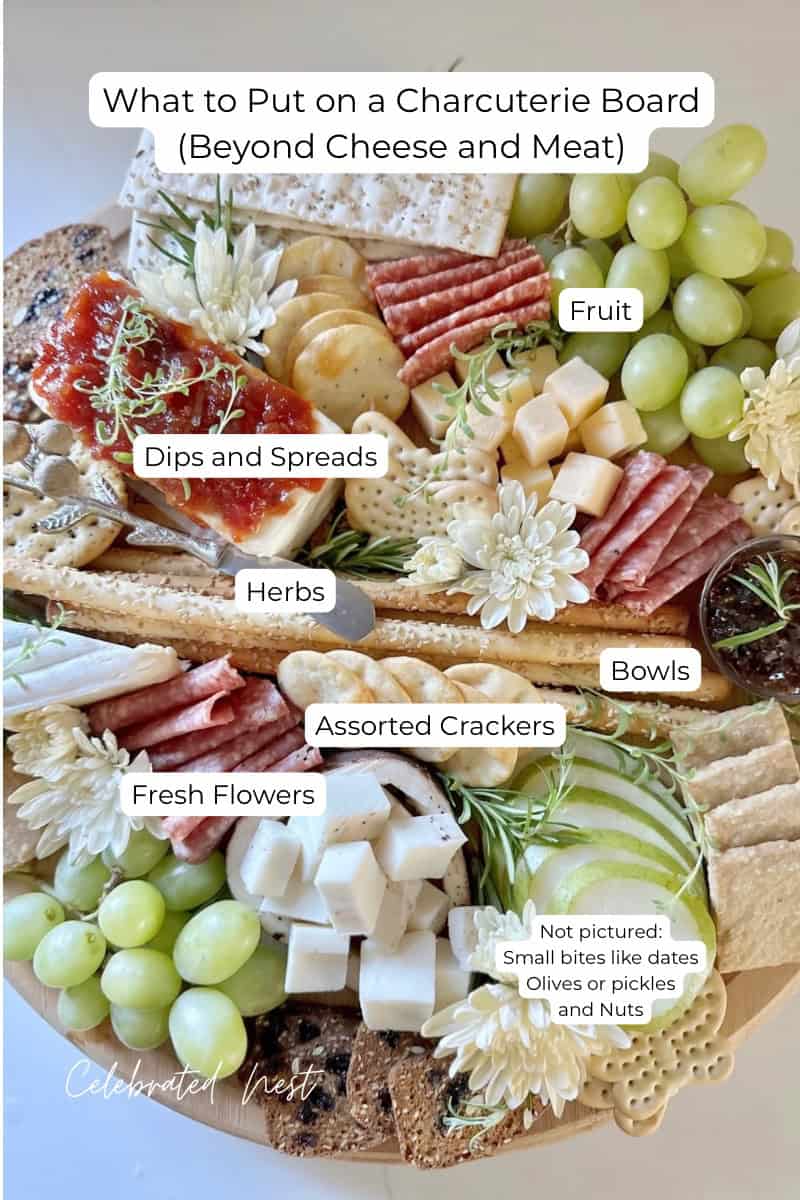
You don't need to load up your cart with more cheese to make a charcuterie board feel impressive. A few thoughtful extras, one briny element, one fruit, something crunchy, and a couple of finishing touches can completely change the look of the whole board. The best boards feel full, balanced, and easy for people to snack from without overthinking it.
And if you're standing there rearranging grapes like it's a high-stakes art project, just know you're not alone. That's half the fun.
Happy arranging, friends!