
Boards for Charcuterie: Styles, Sizes, Shapes, and Materials

The best boards for charcuterie are chosen based on material, size, shape, and how you plan to use and store them. Wooden boards like maple, acacia, and olive wood are the most versatile for everyday use, while marble and stone boards offer a decorative option for serving. Choosing the right size matters more than most people expect, especially when entertaining. This guide focuses on how to choose the right charcuterie board before you ever think about what goes on it.
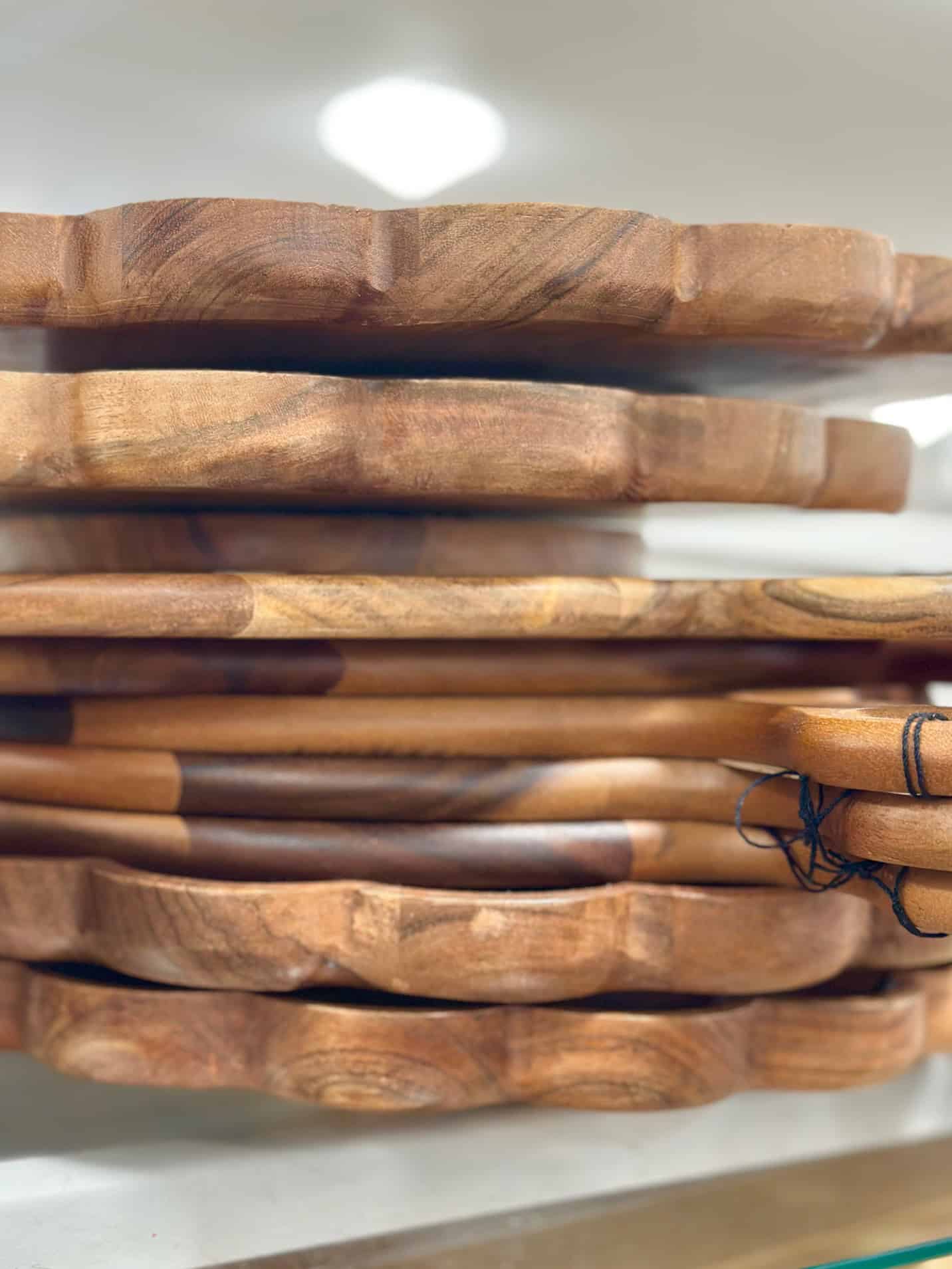
Content may contain affiliate links. When you shop the links, we receive a small commission at no cost to you. Thanks for supporting my small business.
Everybody loves a good charcuterie board. It's the kind of thing that instantly makes a gathering feel thoughtful and inviting, whether it's a casual night in or a table set for guests.
But when it comes time to actually buy one, things get confusing fast. A quick search usually turns up advice about cheeses, meats, and how to arrange everything, while the board itself gets treated like an afterthought. In reality, the board you choose matters more than most people realize.
This guide breaks down the sizes that actually work, the materials that hold up over time, and the styles that make sense for how you entertain and store things at home. If you've ever bought a board that felt too small, too heavy, or just awkward to use, you're in the right place.
Once you have the right board, everything else becomes easier.
Is this post about food charcuterie ideas?: Nope. This post is about charcuterie boards as in the serving boards themselves, including styles, sizes, shapes, and materials. If you want ideas for what to put on a charcuterie board, I'll link my favorite recipes and board guides at the bottom.
At a Glance: Choosing Boards for Charcuterie
_______________________
This guide focuses on the serving boards themselves, not the food arranged on them. A charcuterie board refers to the wooden, marble, or stone board used to present meats, cheeses, and accompaniments.
What this guide covers
• Types of charcuterie serving boards
• Best materials like maple, acacia, olive wood, and marble
• Board sizes for everyday use or entertaining
• Shapes that work best for presentation and storage
Common charcuterie board materials
• Maple or hardwood boards
• Acacia wood boards
• Olive wood boards
• Marble or stone boards
Why the board matters
• Determines how much food you can serve
• Affects presentation and layout
• Influences durability and storage
This article helps you choose the right serving board for charcuterie before deciding what foods to arrange on it.
Summarize and Save this content on:
Jump to:
- At a Glance: Choosing Boards for Charcuterie
- What to look for when choosing boards for charcuterie
- Charcuterie board sizes and what they're best used for
- Charcuterie board size guide
- Charcuterie board shapes, from round to rectangular and specialty styles
- The best materials for charcuterie boards and how they compare
- Practical things to consider before buying a charcuterie board
- The best boards for charcuterie by type and use
- Charcuterie boards vs. cheese boards and how they differ
- Frequently asked questions
- Looking for ideas to serve on your charcuterie board?
What to look for when choosing boards for charcuterie
Why the board itself matters more than most people think
When people think about charcuterie, the focus almost always goes straight to the food. But the board is what everything sits on, and the wrong one can make serving feel awkward, crowded, or impractical.
A board that's too small fills up fast. One that's too heavy never gets pulled out. And one that's hard to store often ends up shoved in a cabinet and forgotten. Choosing the right board makes the entire experience easier from the start.
How the right board affects serving, storage, and everyday use
The board you choose impacts more than just how things look on the table.
- Serving: The right size and shape give food room to breathe instead of feeling piled on.
- Storage: Oversized or bulky boards need a place to live when they're not in use.
- Ease of use: Lightweight boards get used more often than heavy, hard-to-handle ones.
- Longevity: Materials and finishes affect how well a board holds up over time.
A good charcuterie board should feel easy to grab, easy to use, and easy to put away.
The main things to consider before buying a charcuterie board
Instead of thinking about brands or trends first, it helps to start with a few practical questions.
- Size: Will this be used for casual grazing, small gatherings, or entertaining?
- Shape: Do you prefer round boards, rectangular boards, or long boards for spreading things out?
- Material: Wood, marble, and stone all look different and behave differently in real life.
- Practicality: How heavy is it, where will it be stored, and how often will you realistically use it?
Once you have these basics in mind, choosing the right board becomes much more straightforward.
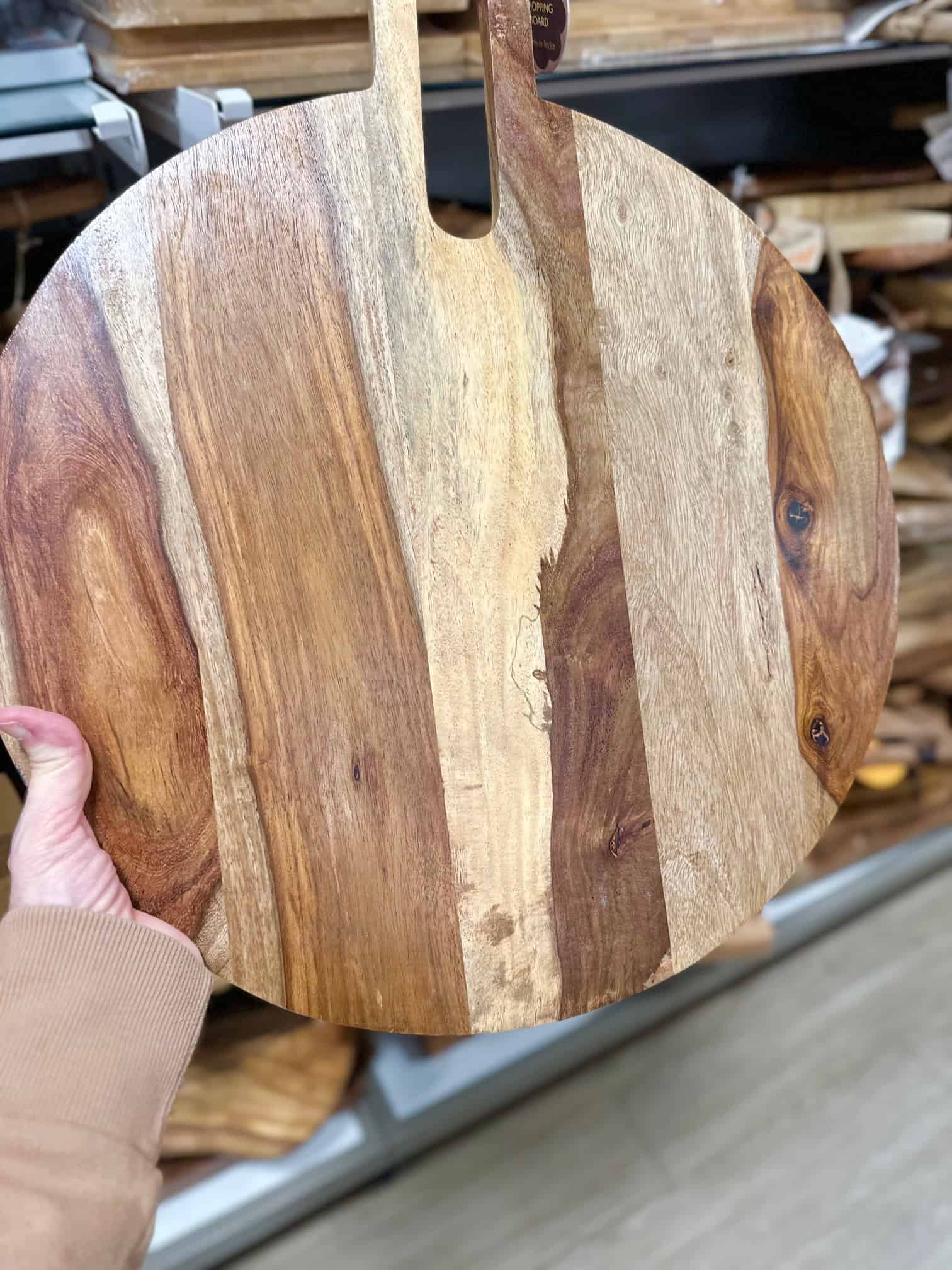
Charcuterie board sizes and what they're best used for
Small boards for casual grazing or everyday use
Small boards are great for simple, everyday moments. Think a little nibble before dinner or setting out a few items to enjoy without making it feel like a production.
- Best for light grazing or a handful of items
- Easy to grab, easy to clean, easy to store
- Often the boards people reach for most often
Small boards work especially well when you're serving just a few cheeses, crackers, honey or snacks and don't want everything spread too thin.
Medium boards for small gatherings
Medium boards are the most versatile option and a good choice if you entertain occasionally.
- Ideal for small groups or casual get-togethers
- Enough space to spread things out without crowding
- Large enough to look generous without feeling oversized
If you're only buying one board, this size tends to be the safest and most useful place to start.
Large or long boards for entertaining and parties
Large boards and long serving boards shine when you're hosting and want everything visible and easy to access.
- Best for parties and larger groups
- Allows food to be spaced out instead of piled up
- Works well on kitchen islands, dining tables, or buffets
These boards make a statement, but they do require a little planning when it comes to storage.
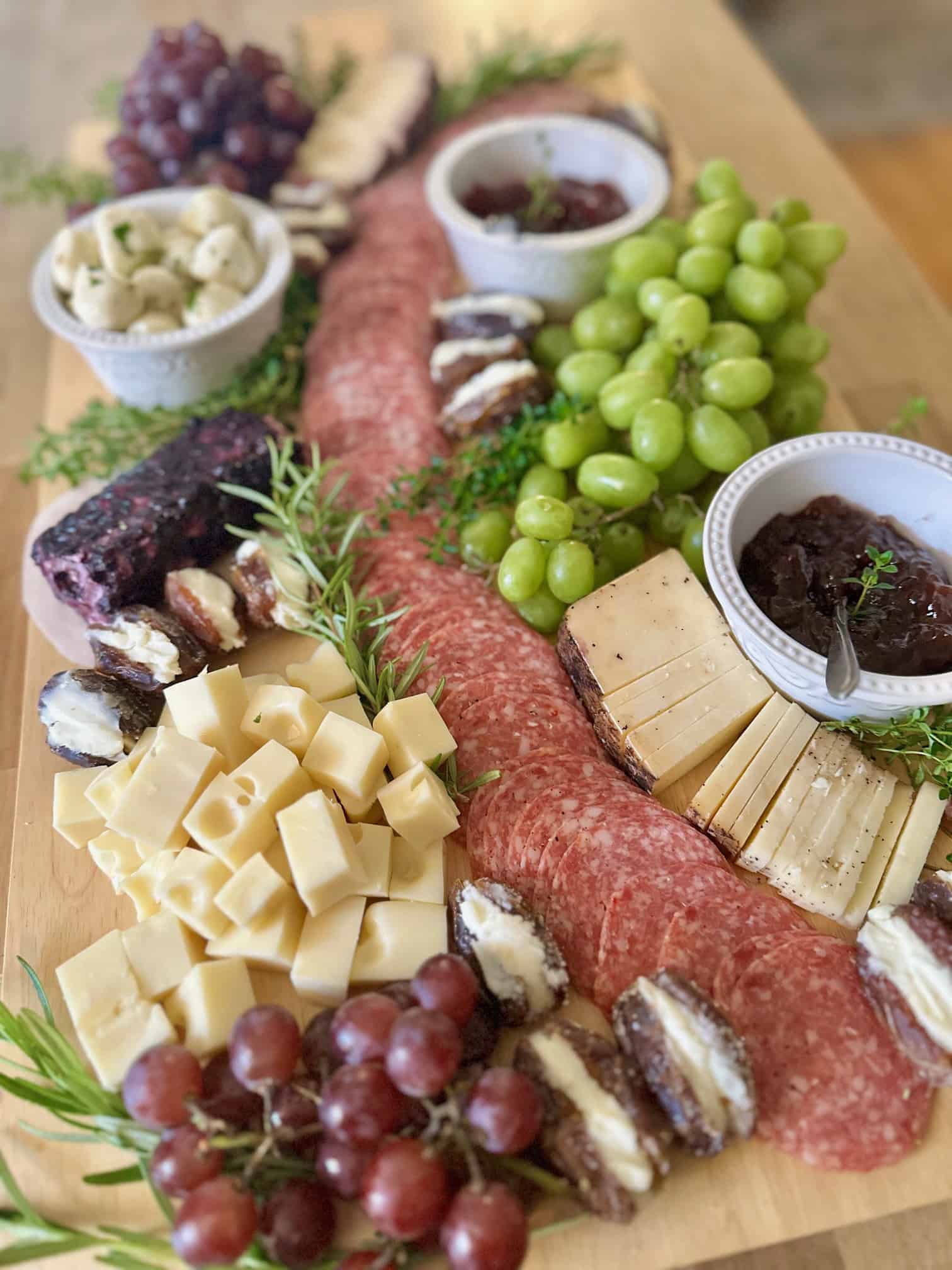
A quick, practical tip: If your board is on the smaller side, don't feel like everything has to fit. Crackers, bread, and even nuts can live in a basket or tray alongside the board. On the flip side, when I'm working with a larger board, I tend to pile crackers and breads directly onto the board, along with dips, honeycomb, extra herbs for garnish or small bowls of nuts, jam, or olives. It helps fill the space and makes the whole spread feel generous and abundant.
Why most people buy boards that are too small
One of the most common mistakes is choosing a board that looks fine on its own but fills up immediately once food is added.
Boards often feel bigger in the store or online than they do once you start using them. A slightly larger board than you think you need usually works better and feels less cramped in real life.
How space and storage should factor into size choice
Before buying a board, it helps to think about where it will live when it's not in use.
- Will it fit in a cabinet or pantry?
- Can it be stored vertically or leaned against a wall?
- Is it light enough to move easily?
The best size is one that works for how you entertain and fits comfortably into your storage space, so it gets used instead of tucked away.
Charcuterie board size guide
| Board Size | Typical Dimensions | Best Use |
|---|---|---|
| Small board | 8-10 inches | Casual grazing for 2-4 people, everyday use |
| Medium board | 10-15 inches | Small gatherings, serving 6-10 people |
| Large board | 16-24 inches | Entertaining, parties, and larger groups |
| Long or oversized board | 24 inches or longer | Buffets, holidays, and serving a crowd |
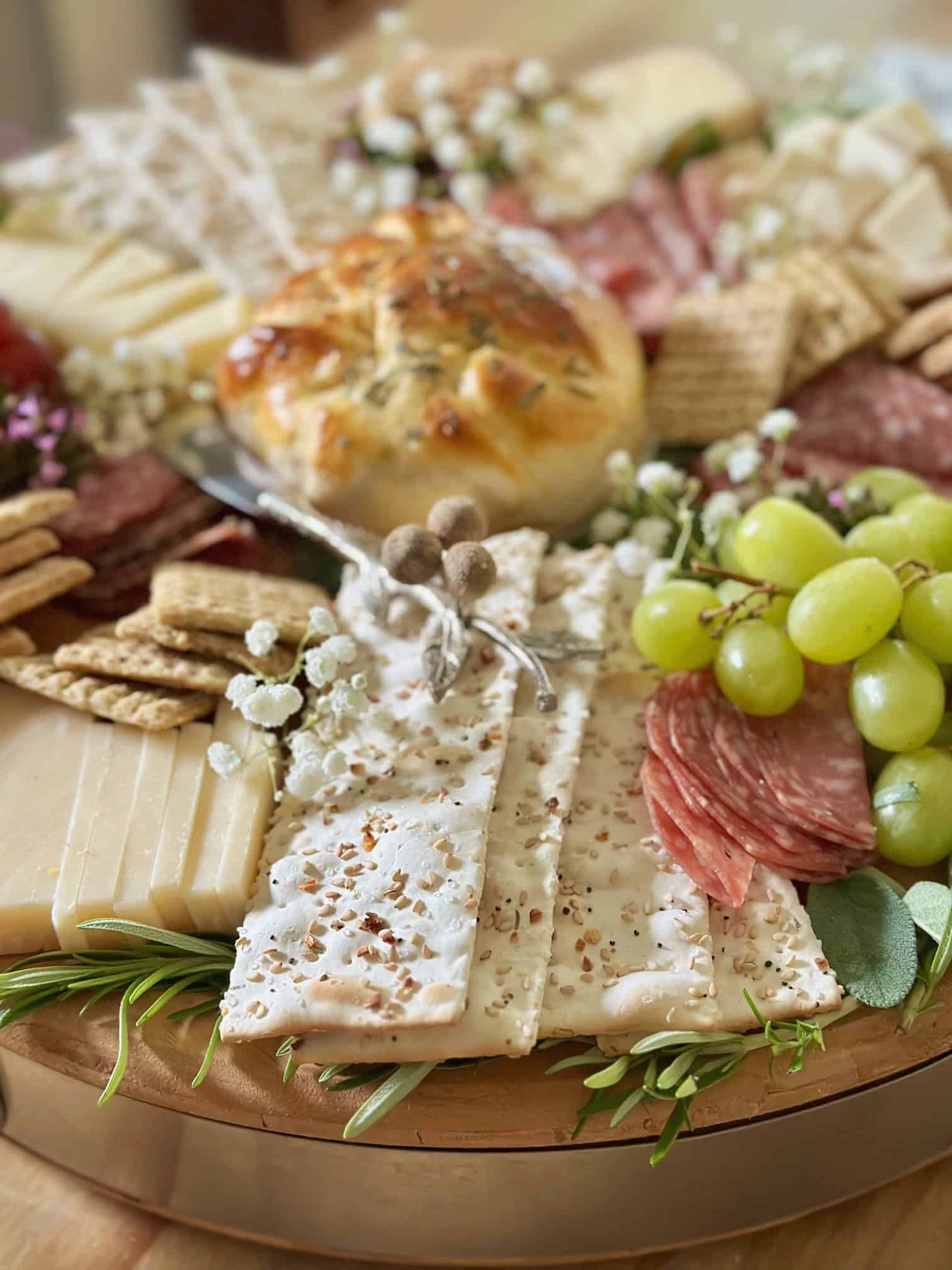
Charcuterie board shapes, from round to rectangular and specialty styles
The shape of a charcuterie board affects more than just how it looks. It plays a big role in how food fits, how easy it is to serve from, and how often you actually reach for that board when you're entertaining.
Round boards and when they make sense
Round boards are great for smaller spreads and casual grazing. They work well for a simple mix of cheeses, meats, and a few accompaniments, especially when the board is sitting in the center of a table or coffee table. Because there are no corners, food feels balanced and approachable, but space fills up quickly. For that reason, round boards tend to work better for everyday use than for larger gatherings.
Rectangular and long boards for spreading things out
Rectangular and long boards are the most versatile option, especially if you entertain regularly. They give you room to spread items out, create sections, and add variety without everything feeling crowded. Long boards work particularly well on kitchen islands or buffet tables, where guests can gather along both sides and help themselves.
Paddle-style boards and boards with handles
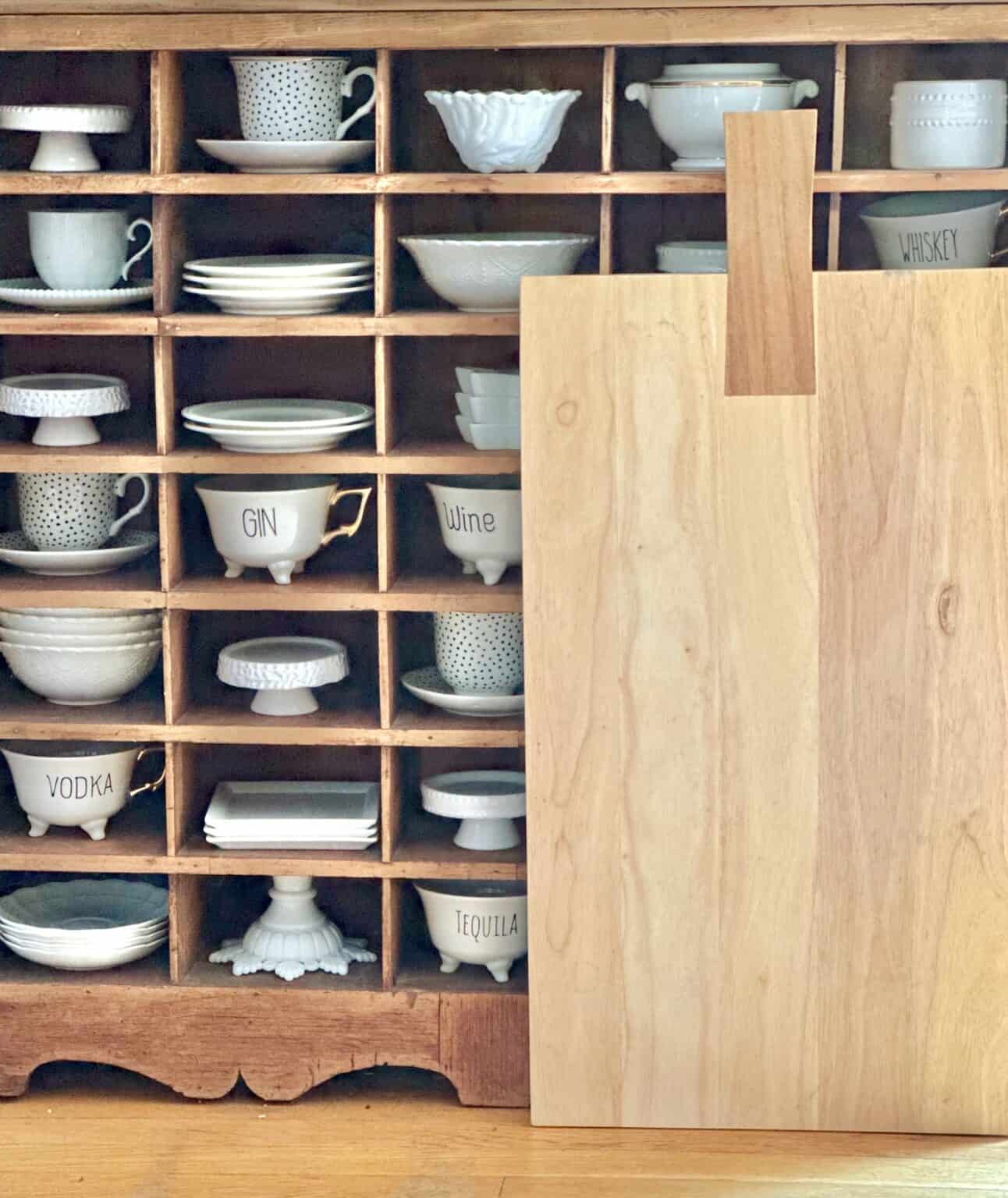
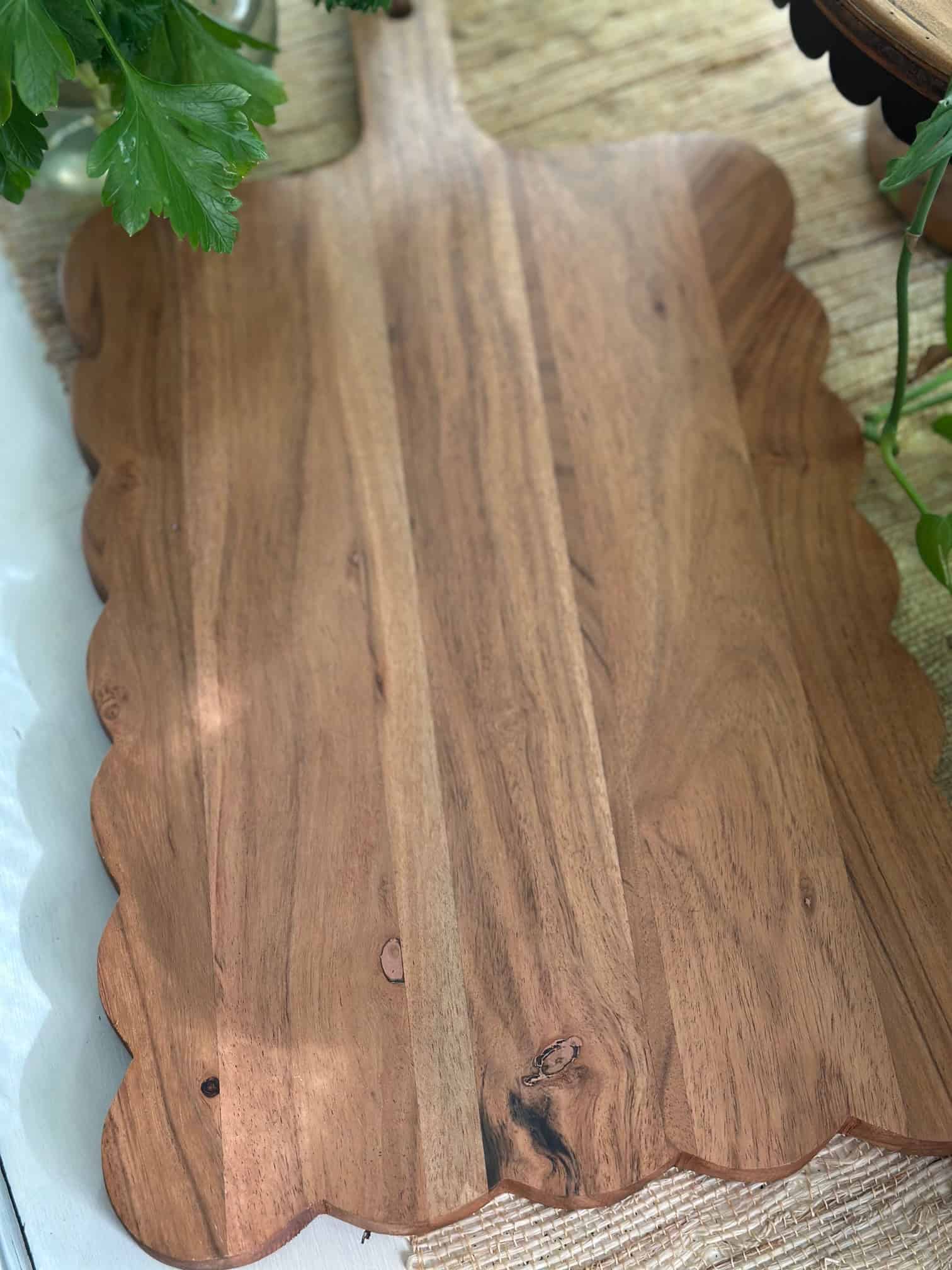
Paddle-style boards and boards with handles are practical and easy to serve from. I have a large paddle-style board that I pull out for bigger gatherings like my Thanksgiving pie board, and I love both the look of it and how easy it is to carry from the kitchen to wherever we're entertaining. These boards tend to be a bit narrower, which makes them great for pairing with another board or using when you want something substantial but still manageable.
Specialty shapes and when they're worth having
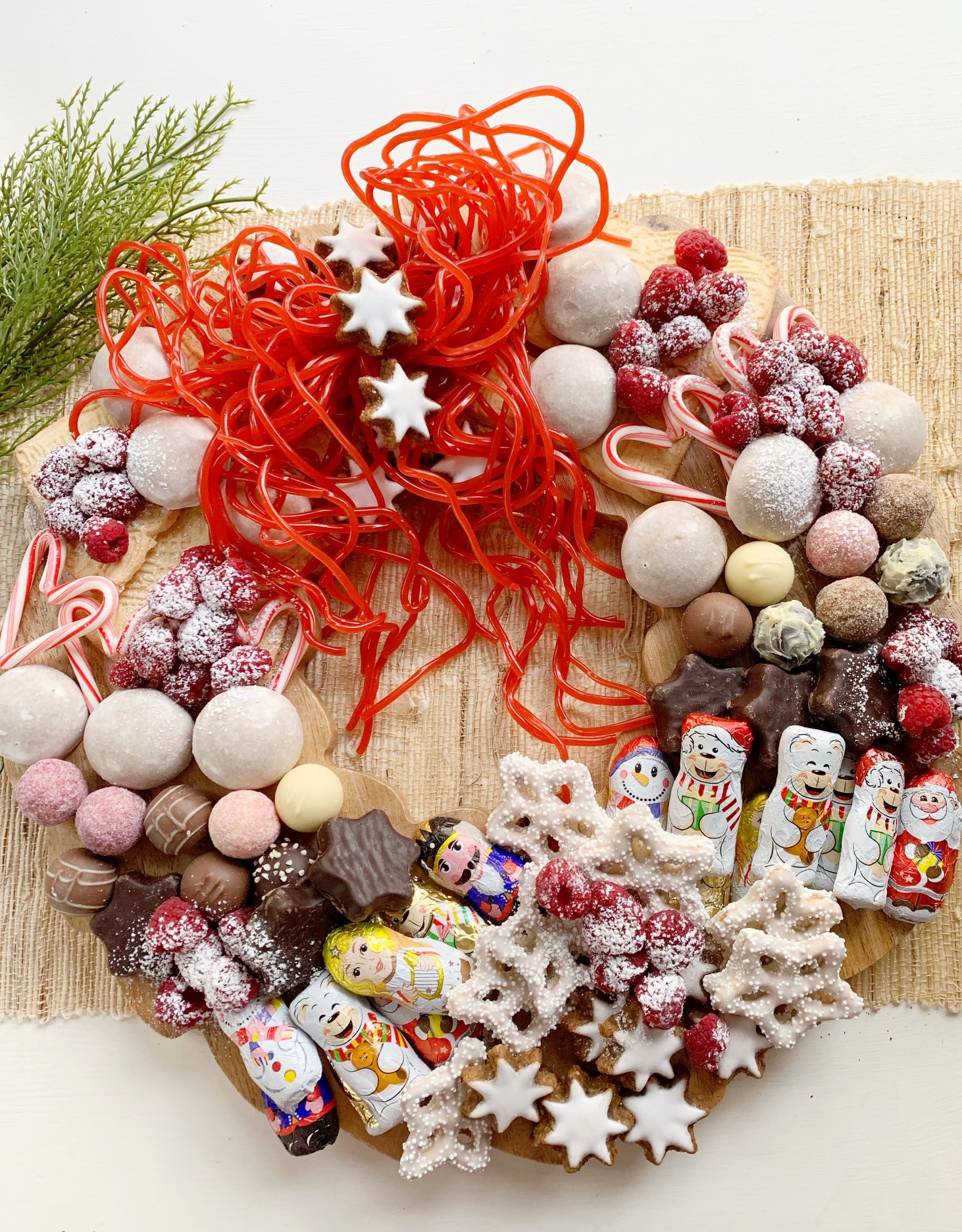
This is where personal taste really comes in. I'm a sucker for shaped boards, and I do have a few, including a wreath-shaped board and a snowman that come out during the holidays. Specialty boards are fun and festive, but they're usually best used alongside a more traditional board rather than on their own. They shine for specific occasions, but they're not always the most practical choice for everyday entertaining.
Why shape affects how food fits and how the board is used
Different shapes naturally guide how you arrange food. Corners and long edges make it easier to create sections and neat rows, while round boards encourage a looser, more organic layout. Choosing the right shape helps prevent overcrowding and makes serving easier for guests, which is really the goal of a great charcuterie board.
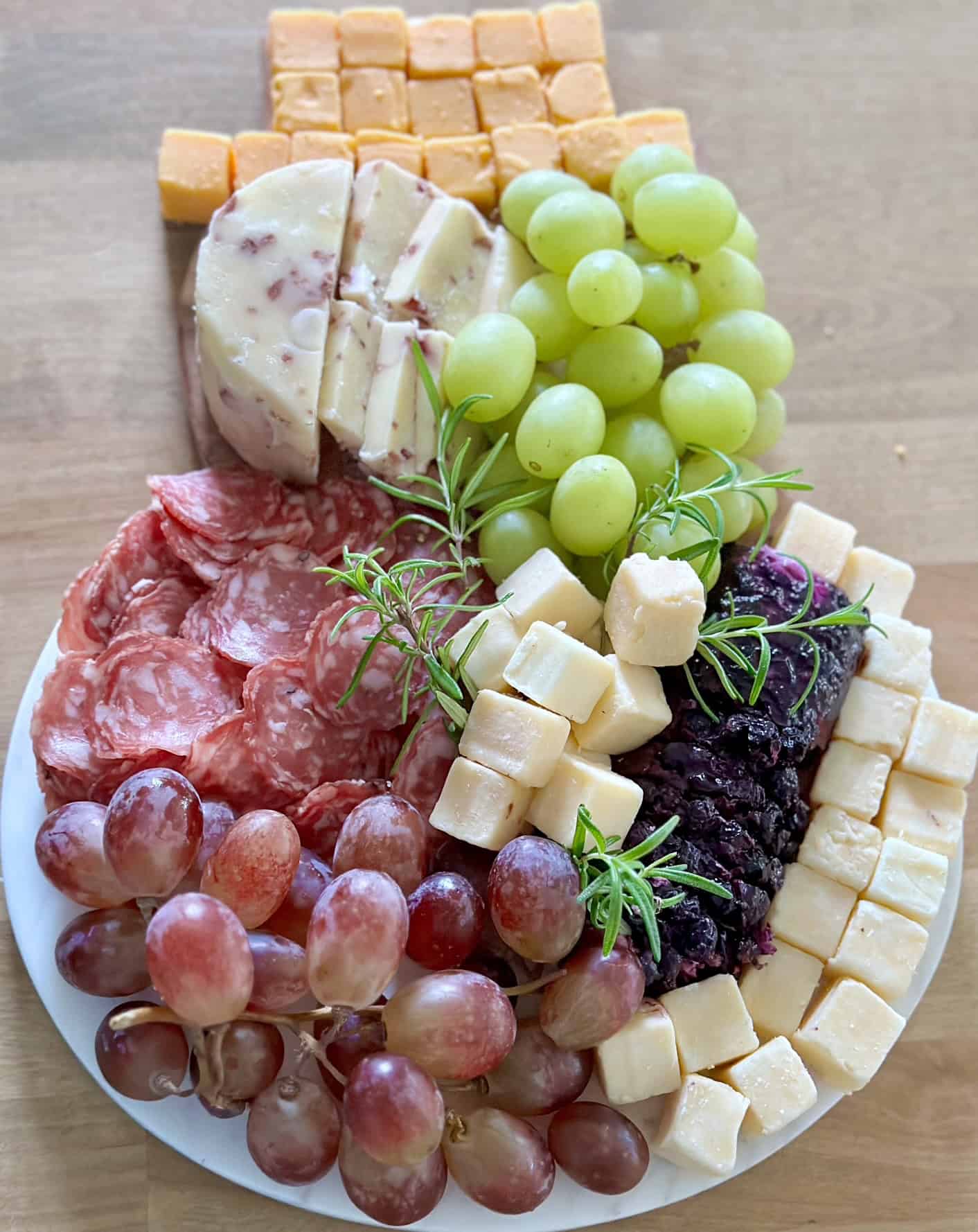
The best materials for charcuterie boards and how they compare
The material of a charcuterie board affects how it looks, how it performs, and how much care it needs over time. Some materials are better for everyday use, while others are more decorative or best saved for specific occasions.
Wooden boards and why they're so popular
Wooden charcuterie boards are the most common choice, and for good reason. They're durable, versatile, and work well for both casual and dressed-up spreads. Popular woods like maple, acacia, and olive wood are dense enough to hold up to regular use while still being gentle on knives.
Wood boards also feel warm and inviting, which makes them a natural fit for entertaining. They handle a mix of cheeses, meats, fresh fruit, and crackers easily, and they tend to age well with proper care. This is usually the best all-around option if you're only buying one board.
Marble and stone boards as decorative serving options
Marble and stone boards are often chosen for their look rather than everyday practicality. They're beautiful, heavy, and naturally cool, which can be helpful for soft cheeses or oozy cheeses that you want to keep from warming too quickly.
That said, marble boards are heavier and more fragile than wood. They're best used as serving boards rather than cutting surfaces and tend to work well for smaller spreads or special occasions. Many people use them as accent pieces alongside a larger wooden board.
Slate and other materials, with pros and cons
Slate boards offer a sleek, modern look and are often used for cheese boards where labeling is helpful, since some can be written on with chalk. They're visually striking but can chip more easily and aren't ideal for cutting.
Other materials like ceramic or melamine are lightweight and easy to clean, making them appealing for casual use or households with kids. While they may not have the same warmth as wood, they can be practical options depending on your specific needs.
Weight, durability, and everyday usability
When choosing a board, weight matters more than people expect. Heavier boards feel substantial but can be awkward to move, store, or wash. Lighter boards are easier to grab and use but may slide more on the table.
Durability also varies by material. Wooden boards hold up well over time, while stone and slate require more careful handling. Thinking about how often you'll use the board, and where you'll store it, can help narrow the best choice.
How material choice affects cleaning and care
Cleaning and care are closely tied to material. Wooden boards should be hand-washed and occasionally oiled to keep them from drying out. Marble, slate, and ceramic boards are easier to wipe clean but may stain or scratch if not handled gently.
Choosing a material that fits your comfort level with care and maintenance makes it much more likely that the board will actually get used, not just stored away.
Practical things to consider before buying a charcuterie board
Before you click "add to cart," it helps to think about how a charcuterie board will actually live in your home. The most beautiful board in the world isn't very useful if it's awkward to store, heavy to move, or too precious to use.
Storage realities in real kitchens
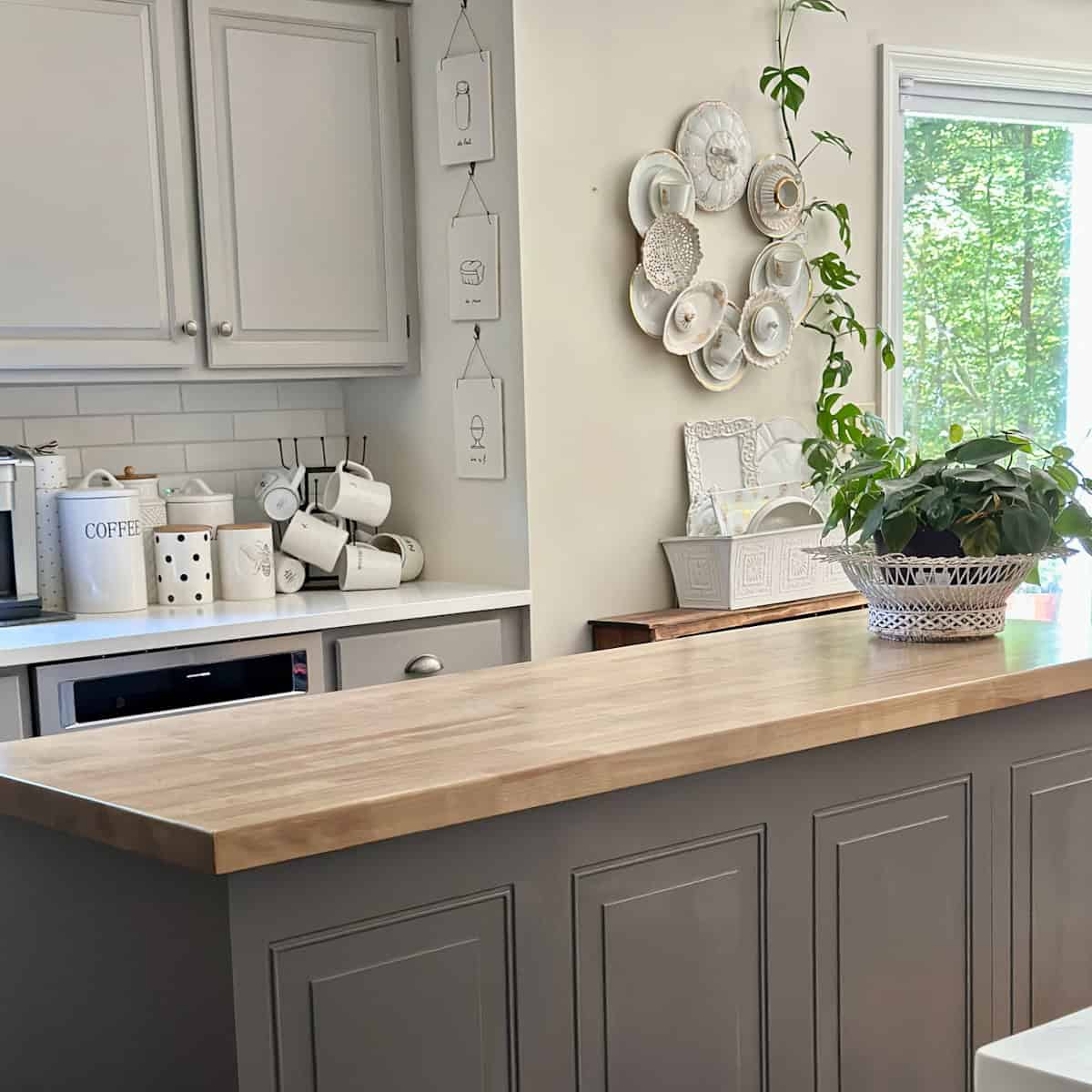
Storage is one of the most overlooked considerations when buying boards. I like to lean smaller and medium boards against my backsplash, where they're easy to grab and double as decor. Others hang nicely on hooks at the end of a kitchen island, which keeps them visible and accessible.
Larger boards need a bit more thought. My oversized paddle-style board lives on our dining room buffet when it's not in use, and it actually functions as a tray for plants most of the time. Thinking about where a board will live when it's not being used makes a big difference in how often you'll reach for it.
Weight and how often you'll actually use the board
Heavier boards can feel luxurious, but they're not always practical. If a board is too heavy to comfortably carry, wash, or move from room to room, it's less likely to become a regular part of your entertaining routine.
Lighter boards tend to get more everyday use, while heavier statement boards are better suited for special occasions. Having a mix, or choosing one that balances weight and durability, often works best.
Cleaning, oiling, and long-term care
Every material comes with its own care requirements. Wooden boards should be hand-washed and periodically oiled to keep them from drying out or cracking. Stone, marble, and slate boards are easier to wipe clean but can be more prone to chipping or staining if handled roughly.
Being honest about how much maintenance you're comfortable with helps narrow down the best choice quickly.
Using parchment paper or doilies to protect boards from staining
One simple trick I use often is lining boards with parchment paper or butcher paper, especially when serving softer cheeses, spreads, or anything oily. It protects the surface from staining while still letting the board frame the presentation, which is helpful if you're using lighter wood or a board you want to keep looking fresh.
For dessert boards, paper doilies work beautifully. They add a decorative layer, keep sweets like my stuffed dates from sticking or marking the board, and make cleanup easy. It's a simple way to protect your boards while still keeping everything looking intentional and polished.
Choosing boards you'll use often, not just admire
It's easy to be drawn to boards that look beautiful online, but the best charcuterie board is one you'll actually use. Boards that are easy to store, easy to clean, and easy to carry tend to get pulled out again and again.
If a board fits naturally into how you live and entertain, it becomes a go-to piece instead of something that stays tucked away.
The best boards for charcuterie by type and use
There isn't one "best" charcuterie board for everyone. The right board depends on how you entertain, how often you use it, and what kind of spreads you tend to serve. These are the main categories worth considering, along with what each one does best.
Best wooden boards for everyday use and entertaining
Wooden boards are the most versatile and practical option for most homes. They work well for everything from casual grazing to fuller spreads with meats, cheeses, fresh fruit, and crackers. A good wooden charcuterie board feels sturdy without being too heavy and can be dressed up or down depending on the occasion.
Most of the boards I reach for again and again fall into this category. They're forgiving, easy to style, and appropriate for almost any type of gathering.
Shop everyday wood boards here:

Marble charcuterie boards to consider for serving and display
Marble boards are often chosen for their look, and they really do shine when presentation matters. The naturally cool surface is especially nice for soft cheeses and oozy cheeses, and they're easy to wipe clean after serving.
That said, marble boards tend to be heavier and more decorative than practical. I like them best as serving boards or layered alongside a larger wooden board rather than as the only board on the table.
Shop marble boards here:
Best large boards for hosting and parties
If you entertain often, having at least one larger board makes a big difference. Long or oversized boards give you room to spread things out, offer more variety, and avoid the crowded look that happens when everything is squeezed onto a small surface.
These boards work especially well on kitchen islands or buffet tables, where guests can gather along both sides and help themselves.
Large boards for entertaining:
Best budget-friendly or starter charcuterie boards
You don't need to spend a lot to get started with charcuterie. Many budget-friendly boards work just as well for everyday use and smaller gatherings. Simple wooden cutting boards or bread boards often double beautifully as serving boards.
This is also a great category if you're building a collection slowly or want a few extra boards on hand for layering and overflow.
Budget-friendly board options here:
What makes a charcuterie board worth splurging on
Some boards are worth spending a little more on, especially if they're going to be used often. Thicker boards tend to feel more substantial and stay put on the table. Quality wood and a good finish help boards age well over time. Features like juice grooves or finger grip cutouts can also make a board more functional, depending on how you plan to use it.
If you find a board that fits your space, your storage, and your entertaining style, it's usually worth the investment.
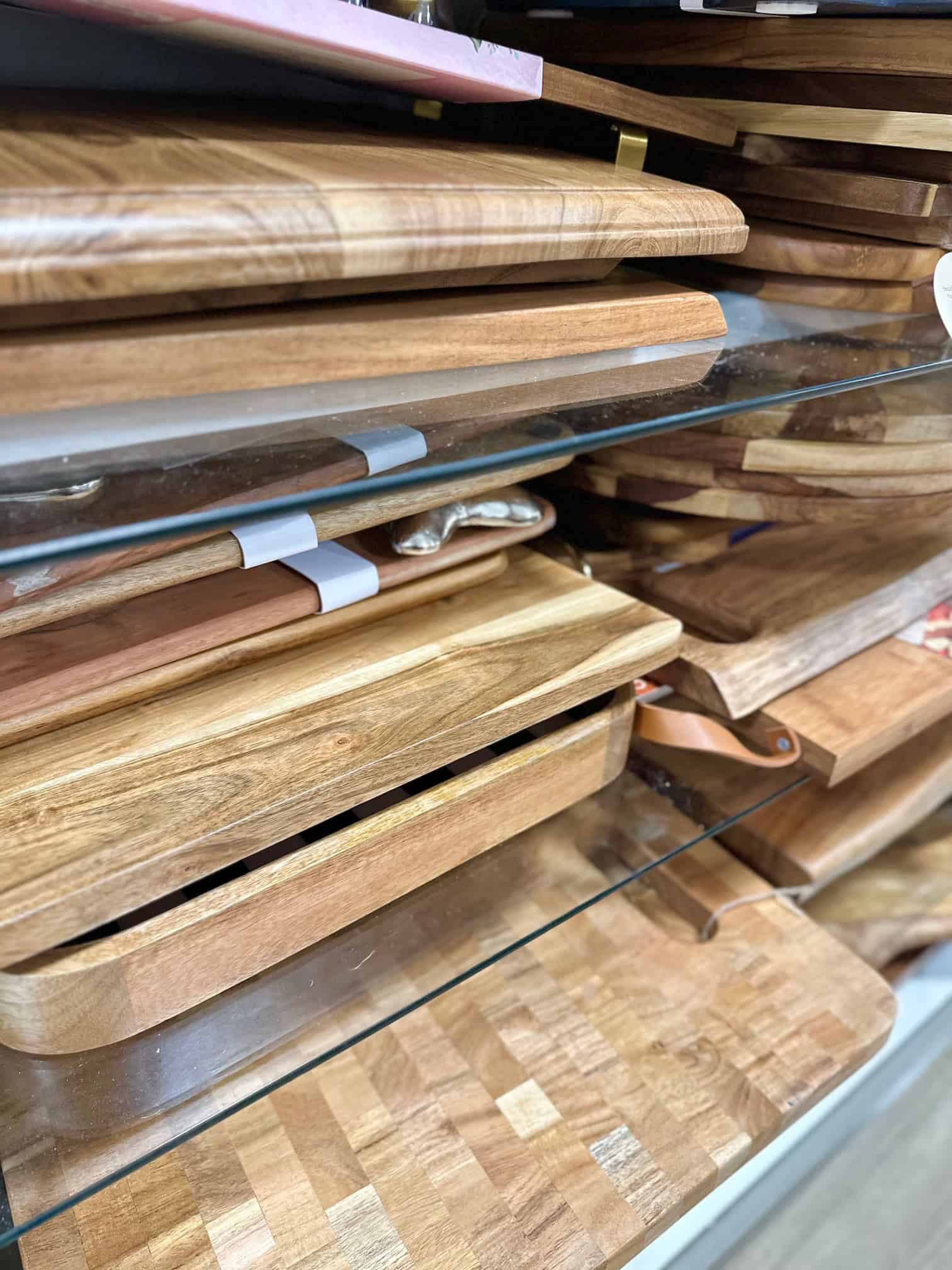
A note on shopping in person vs. online: While online shopping is convenient, many of my favorite charcuterie boards have come from browsing in person. HomeGoods, in particular, is a favorite of mine. Our store has an entire aisle dedicated to charcuterie boards, with a great mix of shapes, sizes, materials, and styles. It's a fun place to find unique boards you might not think to search for online.

Charcuterie boards vs. cheese boards and how they differ
If you've ever wondered whether there's a real difference between a charcuterie board and a cheese board, you're not alone. The terms are often used interchangeably, and in many homes, they mean essentially the same thing.
How the terms are commonly used
Traditionally, a charcuterie board refers to cured meats and savory accompaniments, while a cheese board focuses primarily on cheeses. In practice, though, most people use the term charcuterie board to describe any board that holds a mix of meats, cheeses, spreads, fruit, and crackers.
Because of that, the language has shifted. What used to be a strict distinction is now more of a general category for grazing boards of all kinds.
When the distinction actually matters
The distinction really only matters in a few specific situations. If you're hosting something very formal, working in a culinary setting, or shopping for a specialty board designed for a single purpose, the terminology may come into play.
For everyday entertaining at home, the difference is mostly semantic. The board itself doesn't care whether it's holding cheese, meat, or a combination of both.
Why many boards work for both purposes
Most well-designed boards work equally well as charcuterie boards or cheese boards. Size, shape, and material matter far more than the name attached to the board. A flat surface with enough room to spread things out will serve both purposes beautifully.
That's why many people end up using the same boards again and again, regardless of what they're serving. A good board is simply a good board, no matter what you put on it.

Frequently asked questions
The best charcuterie board is one that fits how you entertain. For most homes, a wooden charcuterie board is the most versatile option because it works for meats, cheeses, crackers, and fruit, and it's durable enough for frequent use. Size, shape, and ease of storage often matter more than choosing a "perfect" board.
Hardwoods like maple, acacia, and olive wood are excellent choices for charcuterie boards. They're dense, durable, and less likely to absorb moisture or odors. These woods also hold up well over time with proper care, making them ideal for both everyday use and entertaining.
The size you need depends on how many people you're serving. Small boards work well for casual grazing or a few people, while medium boards are better for small gatherings. For parties or larger groups, a long or oversized board gives you room to spread things out and avoids overcrowding.
Yes! You can absolutely use a cutting board as a charcuterie board. Many wooden cutting boards double beautifully as serving boards, especially for casual spreads. Just be sure it's clean, dry, and free of deep knife marks if you're serving softer cheeses or spreads.
To protect a charcuterie board from staining, line it with parchment paper when serving oily foods, soft cheeses, or spreads. For dessert boards, paper doilies are a great option. Regular oiling also helps protect wooden boards and keeps them looking their best over time.
The best finish for a charcuterie board is a food-safe oil or wax, such as mineral oil or a beeswax blend. These finishes protect the wood without creating a hard coating, which helps prevent cracking and staining while keeping the surface safe for serving food. Avoid varnishes or sealers that aren't food-safe.
Looking for ideas to serve on your charcuterie board?




Choosing the right boards for charcuterie doesn't have to feel complicated. A few well-chosen boards that fit your space, your storage, and the way you actually entertain will take you much further than chasing whatever looks trendy online.
Whether you're serving a simple weeknight snack or hosting a full gathering, the right board helps everything feel easier and more intentional. Start with what works for your home, add pieces as you go, and remember that the best boards are the ones you reach for again and again.
Entertaining should feel doable, not stressful, and the right board makes all the difference.
Happy entertaining, friends!







Oh my goodness, your boards look amazing, yum!
Thank you Ann!