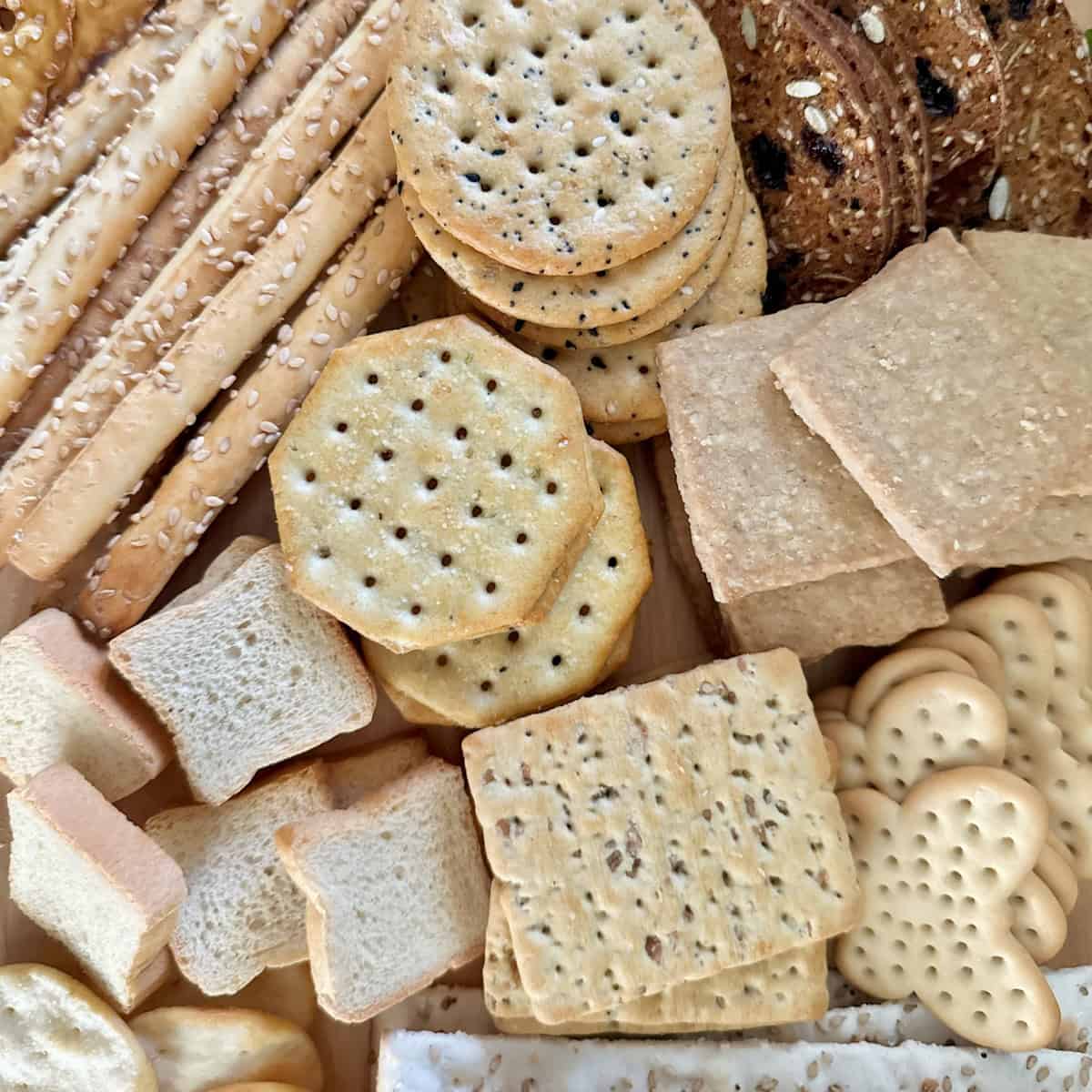
Crackers for Charcuterie Boards (How to Choose Crackers That Make a Board Look Finished)

Whether you're building a full charcuterie board or a simple cheese board, the way you choose crackers makes a big visual difference. Classic options like water crackers, seeded or whole-grain crackers, artisan flatbreads, buttery crackers, breadsticks, and crostini all serve different purposes on a board. Beyond flavor, crackers add height, structure, texture, and contrast, helping the board feel balanced and finished. Choosing a thoughtful mix of shapes and styles ensures your crackers complement soft and firm cheeses while keeping the presentation visually interesting from start to finish.

Content may contain affiliate links. When you shop the links, we receive a small commission at no cost to you. Thanks for supporting my small business.
When it comes to building a charcuterie board, crackers are often treated as an afterthought. Something to grab quickly, fill a gap, and move on. But crackers play a much bigger role than simply holding cheese.
When I think about a charcuterie board, my focus often goes straight to the visual side of it. The colors, the shapes, the textures, and how everything works together on the board. Crackers are a big part of that. They add height, structure, contrast, and rhythm, helping the board look balanced instead of flat or cluttered.
In this post, I'll cover the best types of crackers to use on a charcuterie board, so if you're looking for reliable options, you'll find them here. I'll also walk through how different cracker shapes, textures, and styles affect the overall look of a board. Choosing crackers with both function and presentation in mind is what makes a charcuterie board look finished.
At a Glance: Crackers for a Charcuterie Board
_______________________
The right crackers do more than hold cheese. They add structure, texture, and visual balance to a charcuterie board while complementing different cheeses and meats.
Popular cracker options
• Water crackers
• Seeded or whole-grain crackers
• Artisan flatbreads
• Buttery crackers
• Breadsticks
• Crostini
What crackers add to a board
• Height and structure
• Texture and crunch
• Flavor contrast
• Visual variety
Why a mix works best
Using several shapes and styles helps crackers pair well with both soft and firm cheeses while keeping the board visually interesting from start to finish.
Summarize and Save this content on:
Jump to:
- At a Glance: Crackers for a Charcuterie Board
- How to think about crackers on a charcuterie board
- Crackers that add height to a charcuterie board
- Crackers that add structure and clean lines
- Crackers that soften the look of a board
- Crackers that add texture and color
- My non-negotiables when choosing crackers
- Should crackers go on the board or on the side?
- Pretty matters, but so does function
- Easy shortcuts for quick charcuterie boards
- Best crackers for charcuterie boards by use
- How crackers fit into a well-styled charcuterie board
- Frequently asked questions
- More charcuterie and entertaining ideas
How to think about crackers on a charcuterie board
Instead of looking for one "best" cracker, it helps to think in terms of variety. Crackers play different roles on a charcuterie board, and using a mix creates a more balanced and visually interesting result.
Shape, texture, and color matter just as much as flavor. Long crackers and round crackers, light and dark tones, crisp and rustic styles all work together to guide the eye around the board. This contrast keeps the arrangement from feeling flat or repetitive.
When crackers are chosen with intention, they help create movement and structure across the board. They connect cheeses, meats, dips , honey and other accompaniments, making the entire spread feel cohesive instead of scattered.

Crackers that add height to a charcuterie board
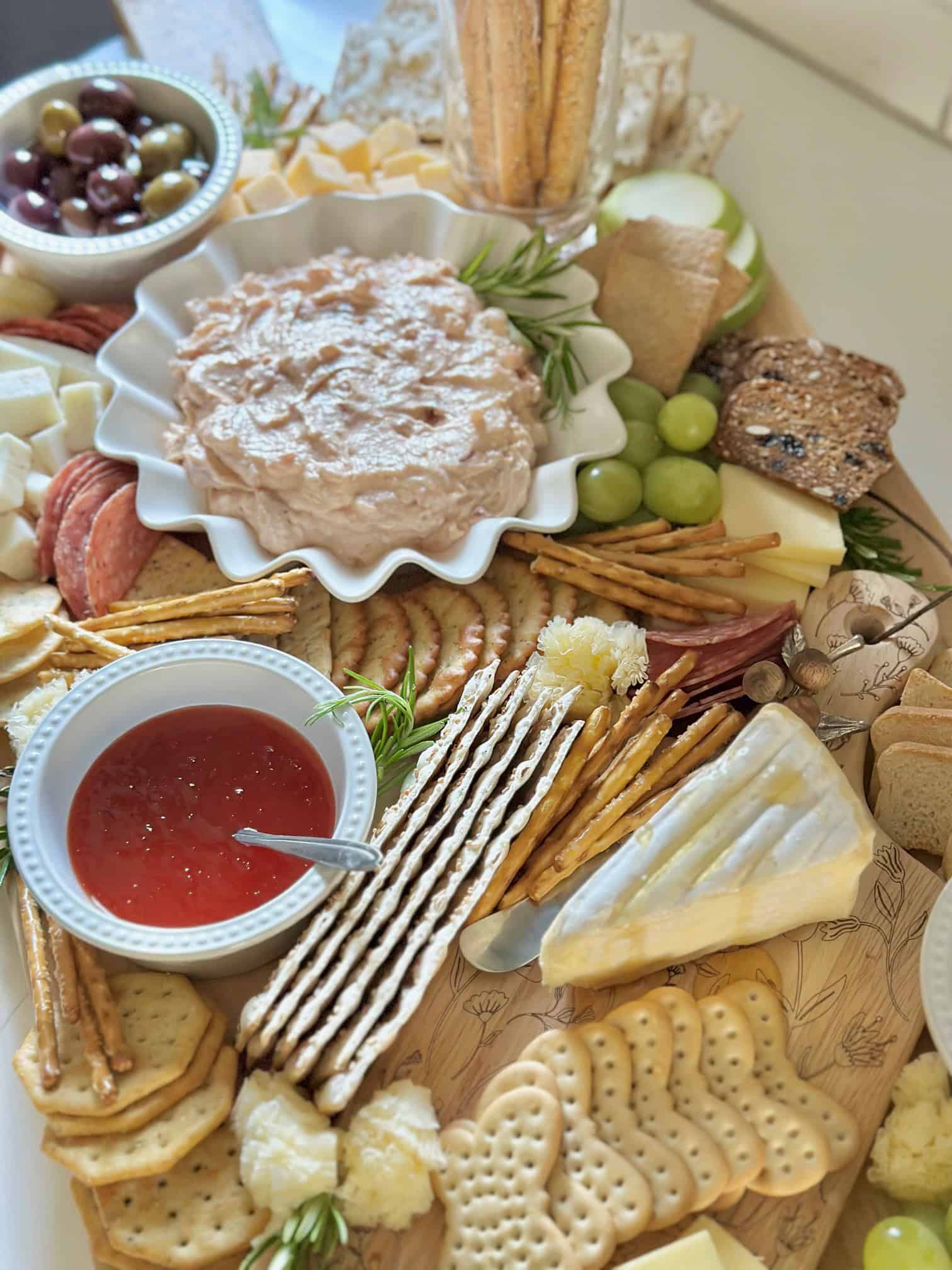
When I'm putting together a charcuterie board, one of the first things I think about is how to keep it from looking flat. I want some length, some lift, something that pulls the eye across the board instead of letting everything sit at the same level.
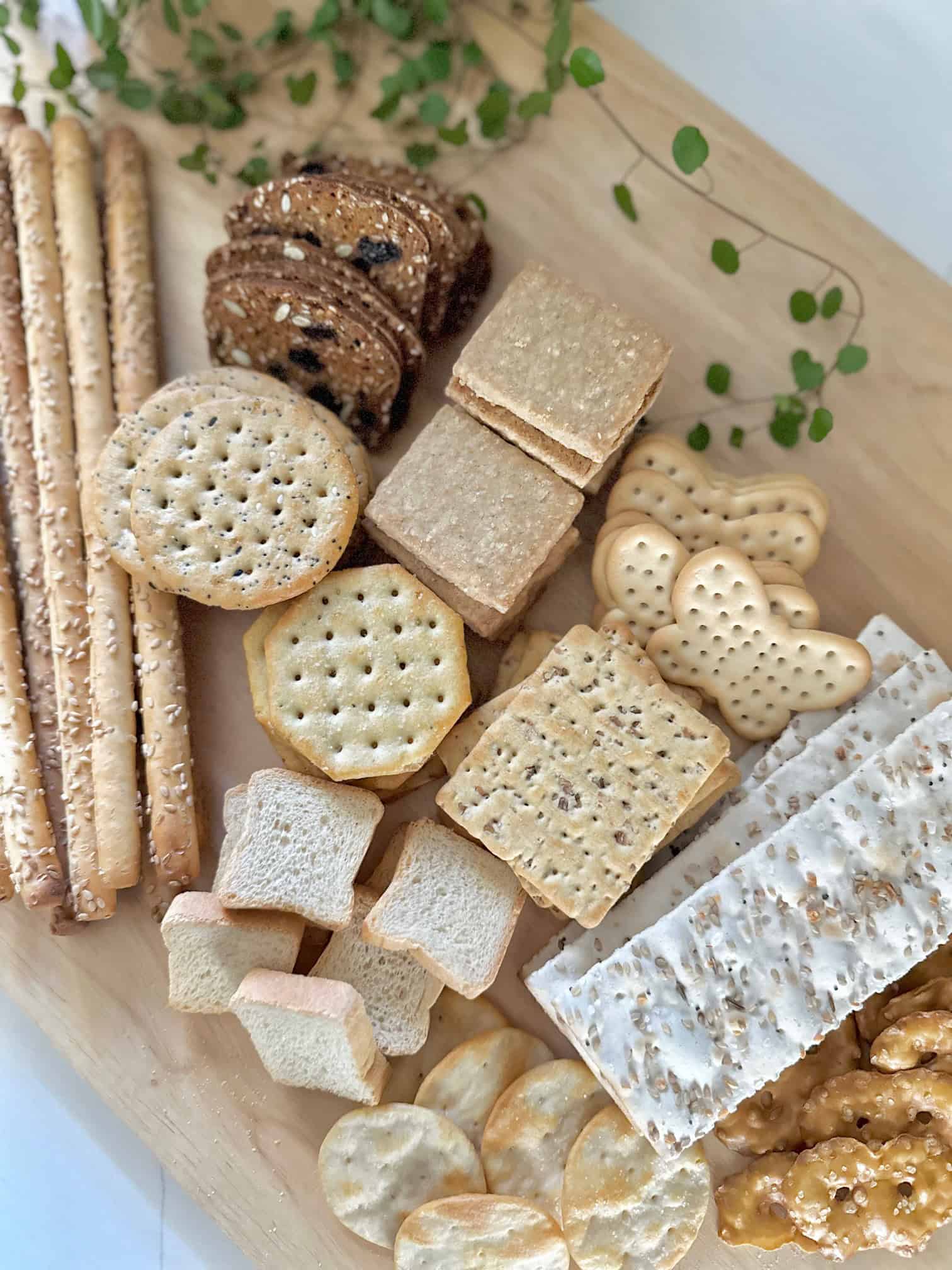
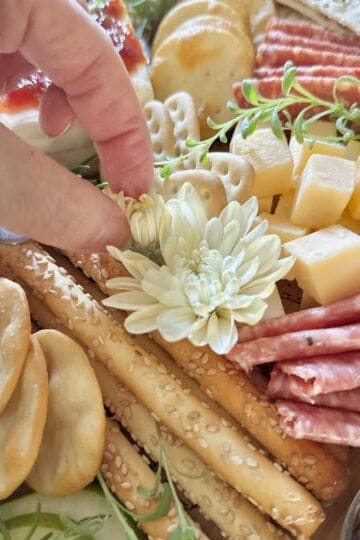
Breadsticks are an obvious choice here. Even when they're laid down instead of standing upright, their length adds movement and helps break up all the round cheeses and soft spreads. I usually angle them or layer them slightly so they feel intentional and not just dropped on at the end.
Lately, though, I've been reaching for pretzel sticks, and honestly, I love the look they give a board. I always group them together. One pretzel stick tucked under an apple isn't doing much visually, but a small cluster instantly adds height, texture, and contrast. Plus, who doesn't love a pretzel? They have a more relaxed, approachable feel than breadsticks, add that long, linear element without feeling fussy, and they hold up well with cheeses, dips, and spreads.
These longer crackers do a lot of visual work without taking up much space, which is especially helpful once people start serving themselves and the board begins to shift. A little height and length goes a long way toward keeping everything looking intentional. When I'm shopping for crackers, I always make sure at least one longer option makes it into the cart.
Crackers that add structure and clean lines
Some crackers are there to bring a little order to the board. These are the ones I reach for when I'm working with soft or spreadable cheeses and want things to feel grounded instead of messy.
Square crackers, rectangular crispbreads, and thin, firm crackers with clean edges do a great job anchoring the board. Their straight lines balance out wedges of cheese, rounded crackers, and looser elements like fruit or nuts. Visually, they add structure and help keep the board from feeling too organic or chaotic.
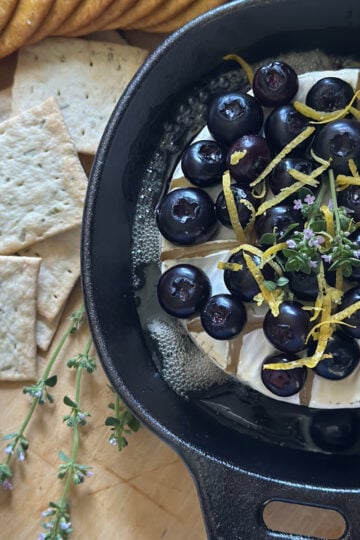
I also love how well these crackers stack. Neat rows or slightly staggered stacks create instant order, especially next to whipped cheeses, brie, or anything in a small bowl or spreadable. Just as important, these firmer crackers don't crumble the second you add cheese, which makes them practical as well as good-looking.
When a board needs a little polish or feels like it's missing something solid, adding a few clean-lined crackers usually fixes it.

Crackers that soften the look of a board
After I add crackers with clean lines and structure, I almost always want something that softens everything back up. Too many straight edges can make a charcuterie board feel stiff, even when the food itself is beautiful.
That's where round and oval crackers come in. Their curves balance sharp cheese wedges and stacked crispbreads and instantly make the board feel more relaxed. I also love crackers with uneven or slightly handmade-looking edges. They bring in a casual, inviting feel that keeps the board from looking over-styled.
These are the crackers that make people want to reach in and start grazing. They loosen things up visually and make the whole board feel warmer and more approachable.

Crackers that add texture and color
This is where a charcuterie board really starts to come to life. Crackers aren't just there to be neutral. They're an easy way to add contrast, depth, and a little visual interest without doing anything complicated.
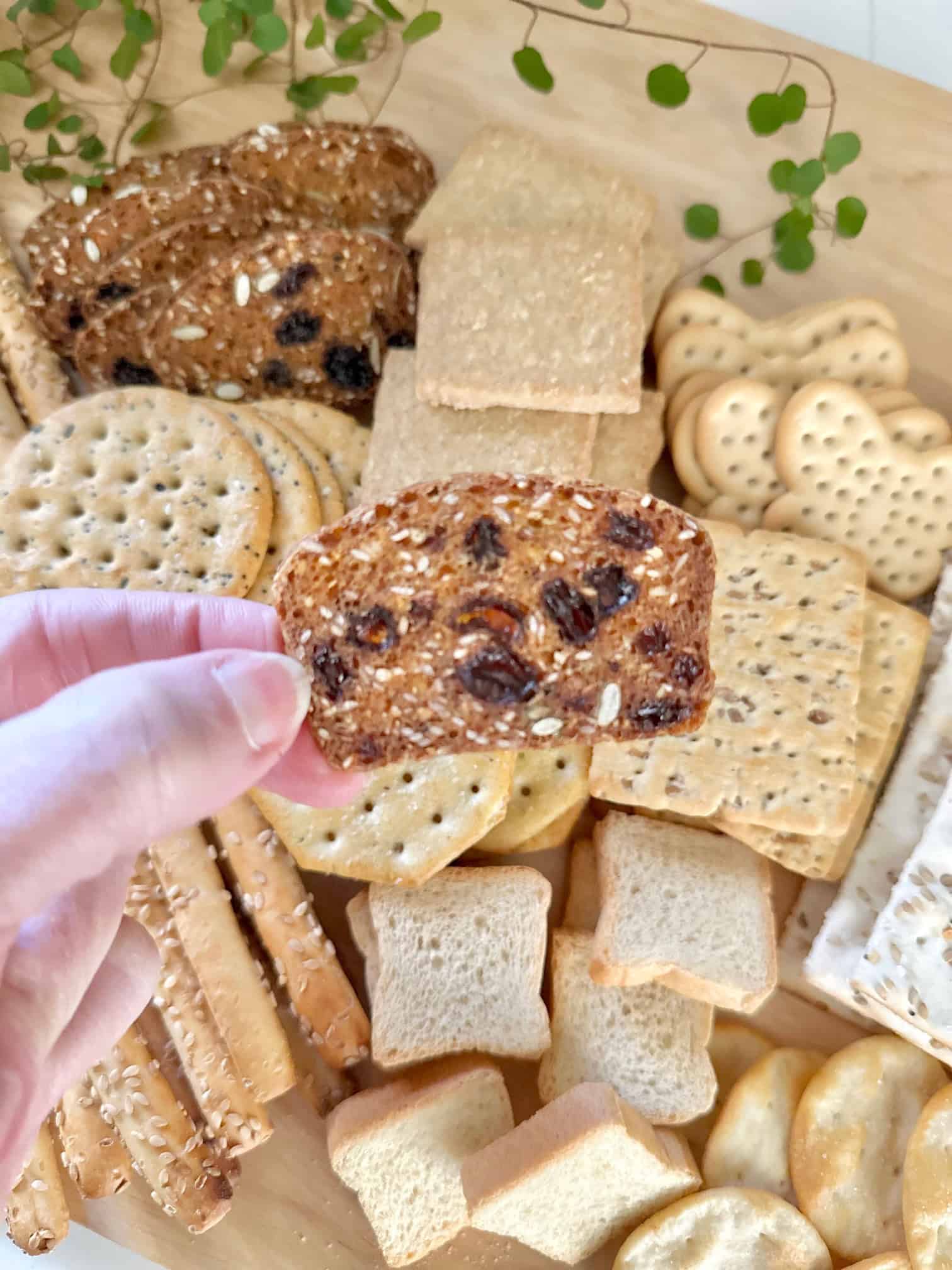
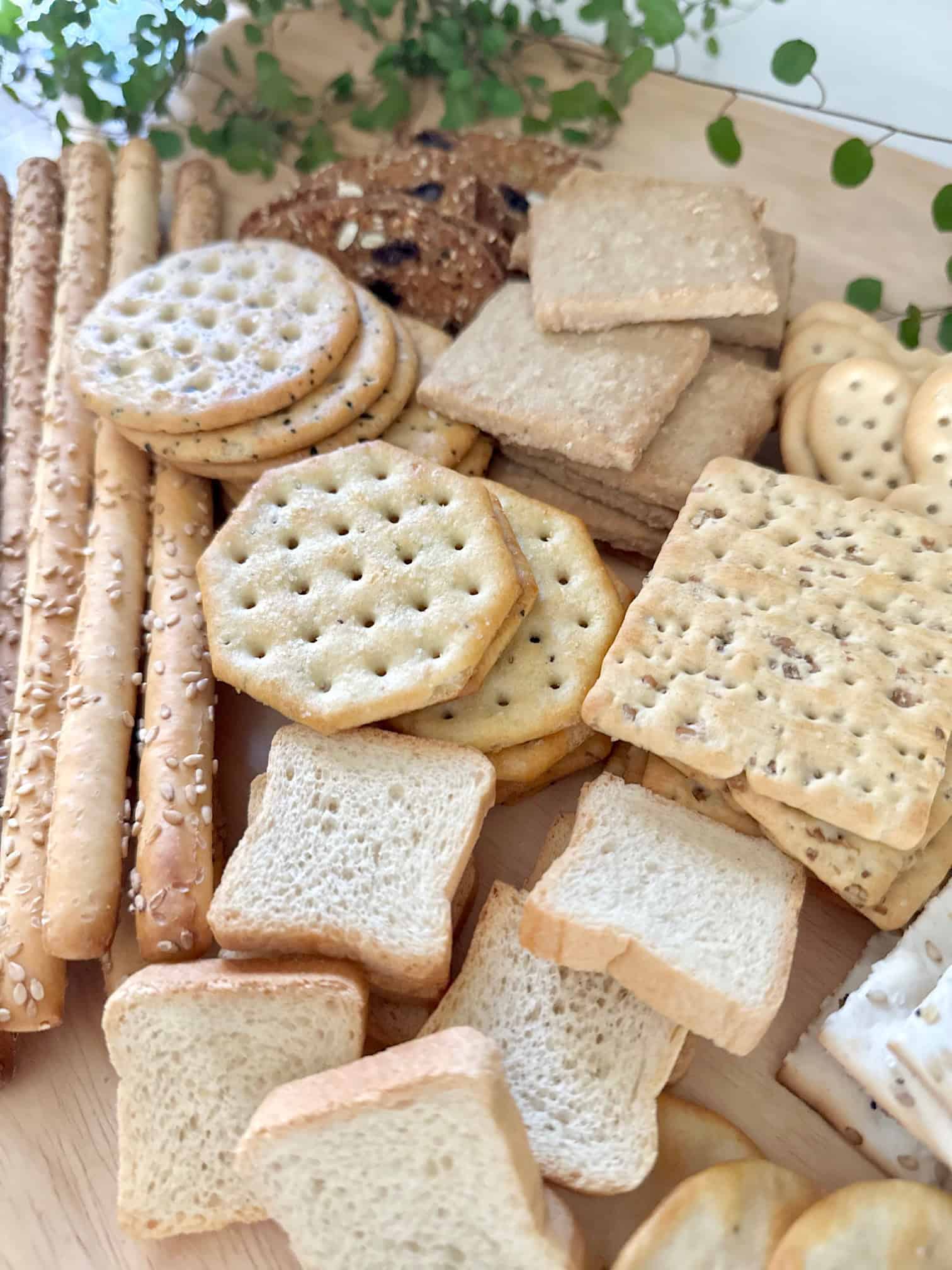
Crackers with visible herbs, seeds, or grains add instant texture. I love mixing in darker, grainy crackers alongside lighter, buttery ones because the contrast keeps the board from feeling flat or one-note. Even subtle differences in color go a long way when everything else on the board is soft and neutral.
These are also the crackers that tend to feel a little more rustic, which I like. They break up polished cheeses and smooth spreads and make the board feel layered and intentional instead of overly matched.
A good mix of light and dark, smooth and textured, is usually all it takes to make a board feel finished.
My non-negotiables when choosing crackers
When I'm choosing crackers for a charcuterie board, I'm thinking about both how they'll look and how they'll work once people start eating. A board can be beautiful, but if the crackers don't function well, it shows pretty quickly.
I never buy all one shape. A mix of long, round, and structured crackers keeps the board visually interesting and makes it easier to pair with different cheeses and spreads. I also always include at least one plain, buttery cracker. Something neutral that works with everything and can handle soft cheeses, honey, or jam without falling apart.
I like to add at least one cracker with visible herbs, seeds, or grains for texture and contrast, and I pay attention to how crackers will stack, lean, or fill space on the board. Just as important, I think about what happens after the board is in use. Crackers that hold up well help the board stay inviting, even as things shift and disappear.
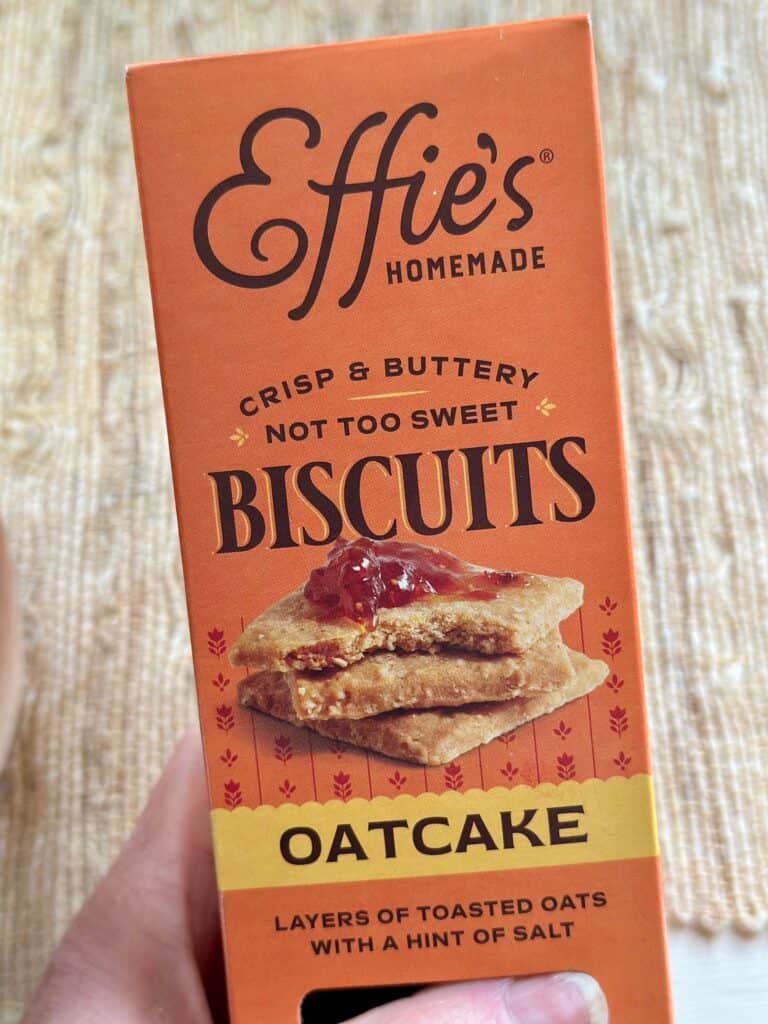
Tip: I also almost always include one cracker that feels a little special. For me, that's a slightly sweet, crisp cracker I was introduced to by my sister-in-law, the kind that sits somewhere between a cracker and a cookie. Effie's Homemade Oatcake Biscuits are a splurge, but paired with a sharp or salty cheese, it's one of those combinations people remember. I don't use it on every board, but when I do, it disappears fast.

Should crackers go on the board or on the side?
Ideally, I love the look of crackers on the board. I like everything living together on one surface, and when there's room, that's always my first choice.
That said, I am also very good at overfilling a charcuterie board. Between the cheeses, meats, fruit, dips, and little extras, I sometimes get to the end and realize I didn't leave enough space for crackers. When that happens, they go on the side, and that's completely fine.
Moving crackers off the board can actually improve the overall balance, especially if the board is starting to feel crowded. A simple bowl, basket, or small board lined with a linen or cotton napkin keeps things looking intentional instead of like an afterthought. It also makes it easier for guests to grab crackers without disrupting the rest of the board.
From a practical standpoint, most charcuterie components can be prepped ahead of time, but crackers should be added right before serving. Keeping them separate helps them stay crisp and prevents them from going stale or soft, especially if the board has dips or anything with moisture.
Pretty matters, but so does function
A cracker can look beautiful on a charcuterie board, but if it doesn't work once people start eating, it's not doing its job.
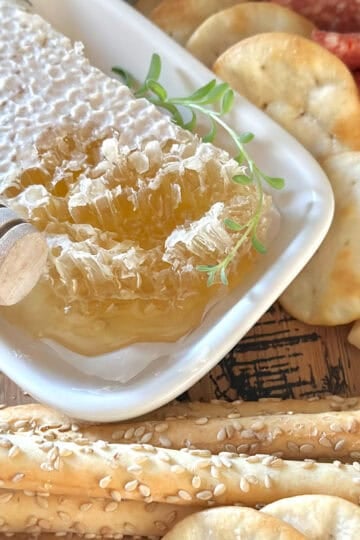
I pay attention to how crackers hold up under soft cheeses and spreads. Crackers that shatter or crumble the second you add brie or whipped cheese can get frustrating quickly. I also think about whether a cracker can handle honey or honeycomb, jam, or dips without snapping in half.
Another thing I keep in mind is how long crackers can sit out. Some crackers lose their texture fast, especially around moist cheeses or spreads. Choosing options that stay crisp helps the board look and function better from the first bite to the last.

Easy shortcuts for quick charcuterie boards
Not every charcuterie board needs to be built from scratch with six different cracker boxes spread across the counter. Sometimes you just want something that works, looks good, and doesn't require a lot of decision-making.
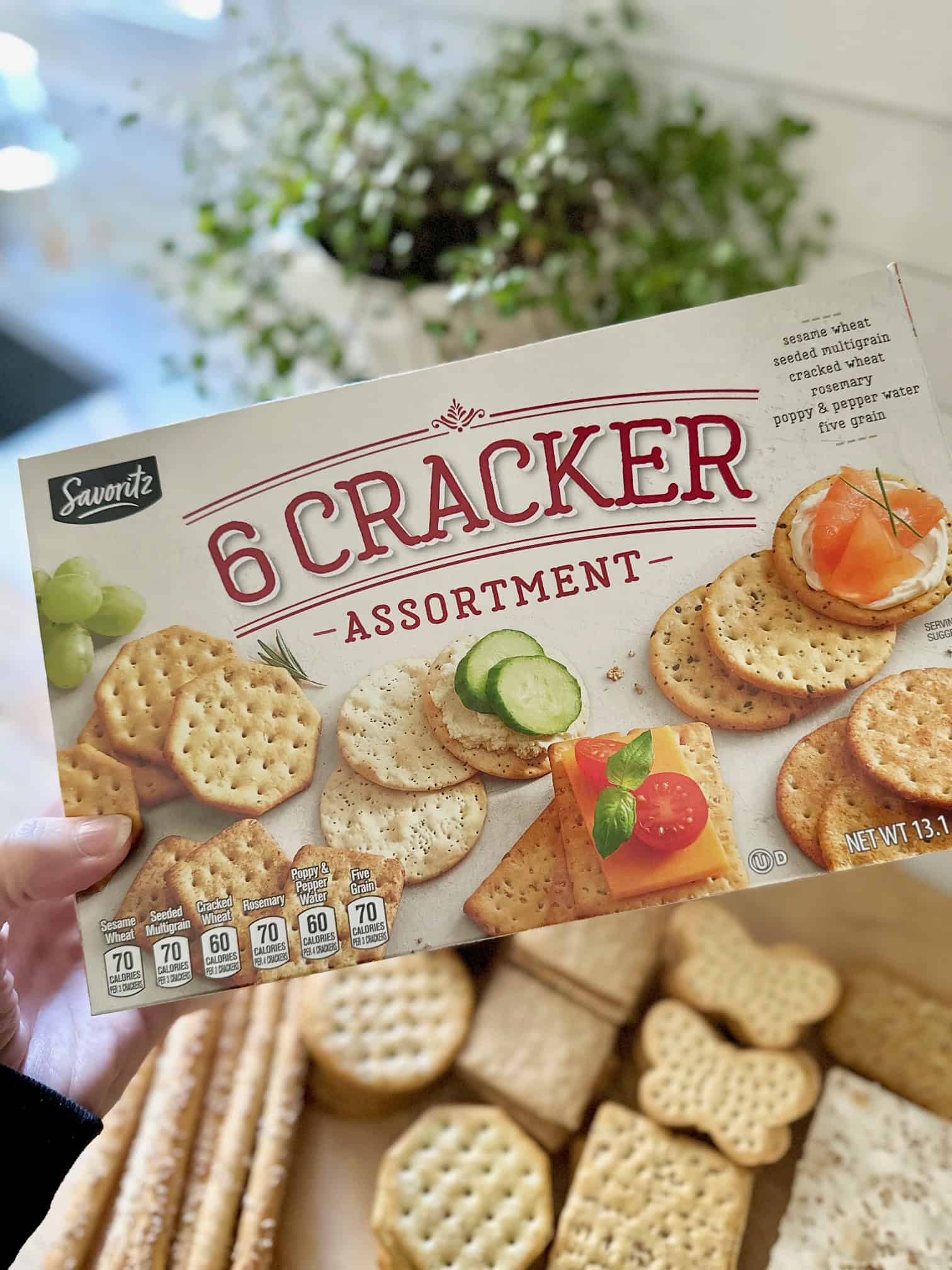
This is where pre-boxed cracker assortments really shine. Retailers are clearly understanding the assignment here, offering mixes with different shapes, textures, and flavors all in one box. For a quick board, or when you're pulling something together last minute, grabbing an assortment can instantly give you variety without having to overthink it.
I use these all the time, especially for smaller boards or casual gatherings. You usually get a mix of structured crackers, softer rounds, and something a little more textured, which checks most of the boxes visually and functionally. It's an easy way to make a board feel intentional without buying more than you need.
Shortcuts like this don't take away from the final result. They make it easier to put together a charcuterie board that looks balanced and inviting, even when time is limited.
Best crackers for charcuterie boards by use
Instead of thinking about the best cracker overall, I find it more helpful to think about what each cracker is meant to do on the board. Different cheeses, spreads, and pairings ask for different things.
Best crackers for soft cheeses
Soft and spreadable cheeses need crackers that are sturdy without being bulky. Thin, firm crackers or crispbreads with clean edges work well here because they hold their shape under brie, goat cheese, or whipped spreads without shattering.
Best crackers for hard cheeses
Hard cheeses give you a little more flexibility. Crisp crackers with some texture or grain work beautifully, especially ones that add contrast without competing with the cheese. These are great for stacking or layering next to sliced or cubed cheeses.
Best crackers for sweet pairings
When honey, jam, or fruit is involved, slightly buttery or subtly sweet crackers really shine. They create a nice balance with sharp or salty cheeses and help sweet toppings feel intentional instead of overly dessert-like.
Best neutral crackers to balance bold flavors
Every board needs at least one neutral option. Plain, lightly salted crackers act as a reset between stronger flavors and pair well with almost everything. These tend to be the most versatile crackers on the board and often the first to disappear.
How crackers fit into a well-styled charcuterie board
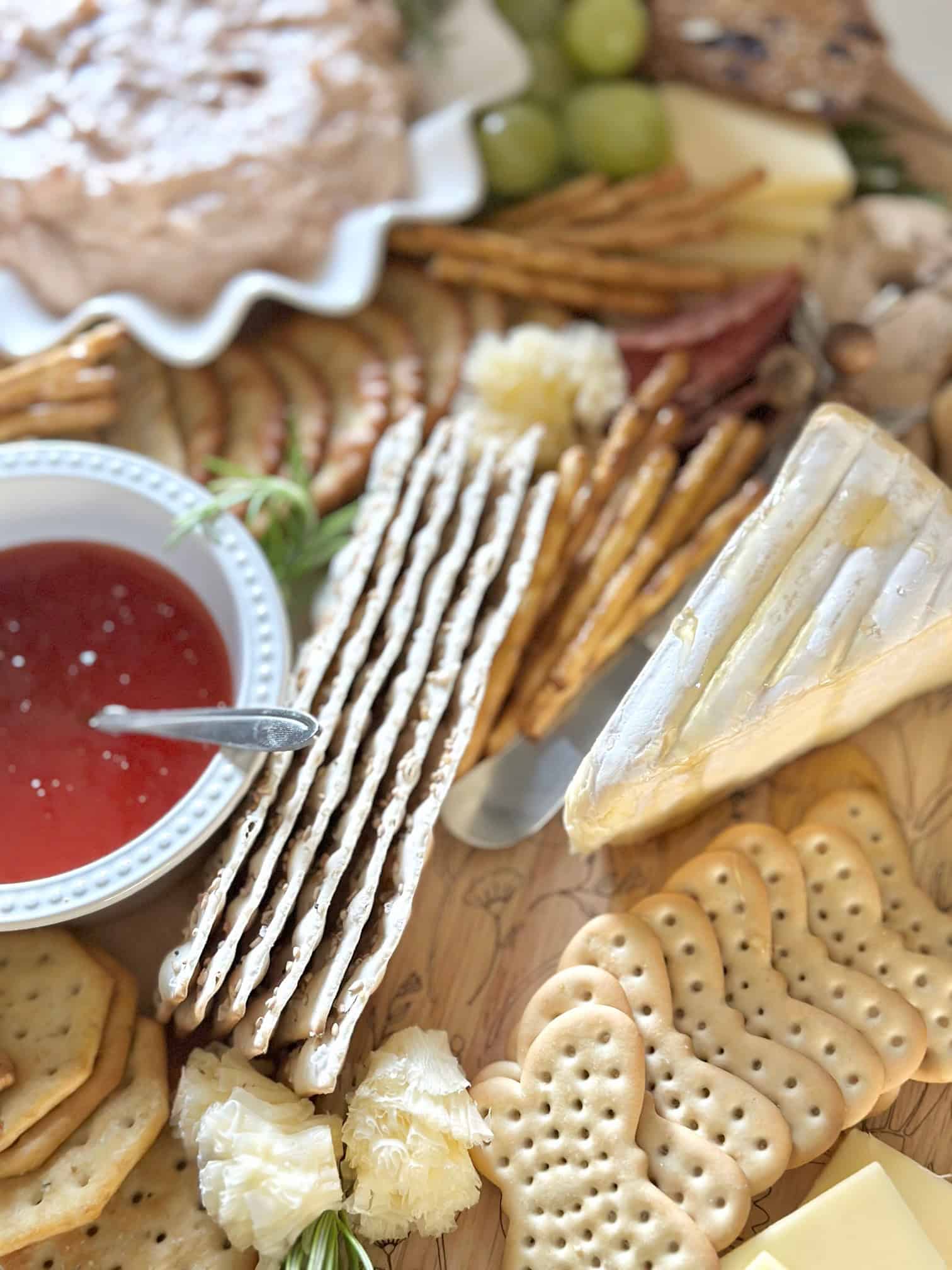
Once the crackers are chosen, how they're arranged matters just as much as what they are. Crackers aren't just fillers around the edges. They support the cheese, meats, and accompaniments and help guide the eye across the board.
I like to think about crackers as connectors. They bridge gaps between cheeses and dips and help everything feel intentional instead of scattered. Variety is what keeps a board visually interesting, but placement is what makes it feel styled.
For longer flatbreads or crispbreads, one of my favorite tricks is laying them on their sides, almost like a deck of cards. Fanned slightly or gently leaning, they add movement without taking up much space and instantly look more thoughtful than a flat stack. Round or smaller crackers work well layered or loosely stacked, while structured crackers look best in clean, simple rows.
When crackers are arranged with a little intention, they do more than hold cheese. They help anchor the board, balance the heavier elements, and keep everything looking good as people start grazing.
This is also where crackers tie the whole charcuterie board together, linking naturally to everything else on the spread, from cheeses and meats to dips, spreads, and all the little extras that make a board feel complete.
Frequently asked questions
The best crackers for a charcuterie board are ones that offer variety. A mix of sturdy crackers for soft cheeses, neutral crackers to balance bold flavors, and a few textured or shaped crackers for visual interest works better than relying on just one type.
The 3-3-3-3 rule is a general guideline that suggests including three cheeses, three meats, three crackers, and three accompaniments. It can be a helpful starting point, but I don't treat it as a strict rule. Balance, variety, and the size of your board matter more than hitting exact numbers.
Crackers can get soggy if they're placed too close to moist cheeses, dips, or spreads for too long. For best results, add crackers right before serving or keep extras on the side so they stay crisp.
Both work. I prefer the look of crackers on the board when there's room, but it's completely fine to serve them on the side if the board feels crowded. A small bowl or basket lined with a linen napkin keeps things looking intentional.
A few common mistakes include overcrowding the board, using crackers that crumble easily, skipping neutral options, adding crackers too far in advance, and relying on only one shape or texture.

There's no single "best" cracker for a charcuterie board, and that's actually the fun part. A great board comes down to balance, variety, and a little intention, not strict rules or perfect pairings.
When you start thinking about crackers as part of the overall design, everything else falls into place. Mixing shapes, textures, and styles helps the board look finished, feel inviting, and hold up once people start grazing.
Trust your eye, grab a few different options, and don't stress if the crackers end up on the side. As long as the board feels generous and welcoming, you've done it right.
Happy hosting, friends!