IKEA Laundry Room Wish List: What Made the Cut and What Didn’t

Planning an IKEA laundry room often means balancing wish-list features with real-world space limitations. In this post, I share what made the cut and what didn't in our own laundry room, including why a sink and window were ultimately left out. From scaling back a dog walking station to prioritizing a raised washer and dryer and smart storage, this guide walks through the decisions, tradeoffs, and compromises that shaped our final layout.
Content may contain affiliate links. When you shop the links, we receive a small commission at no cost to you. Thanks for supporting my small business.
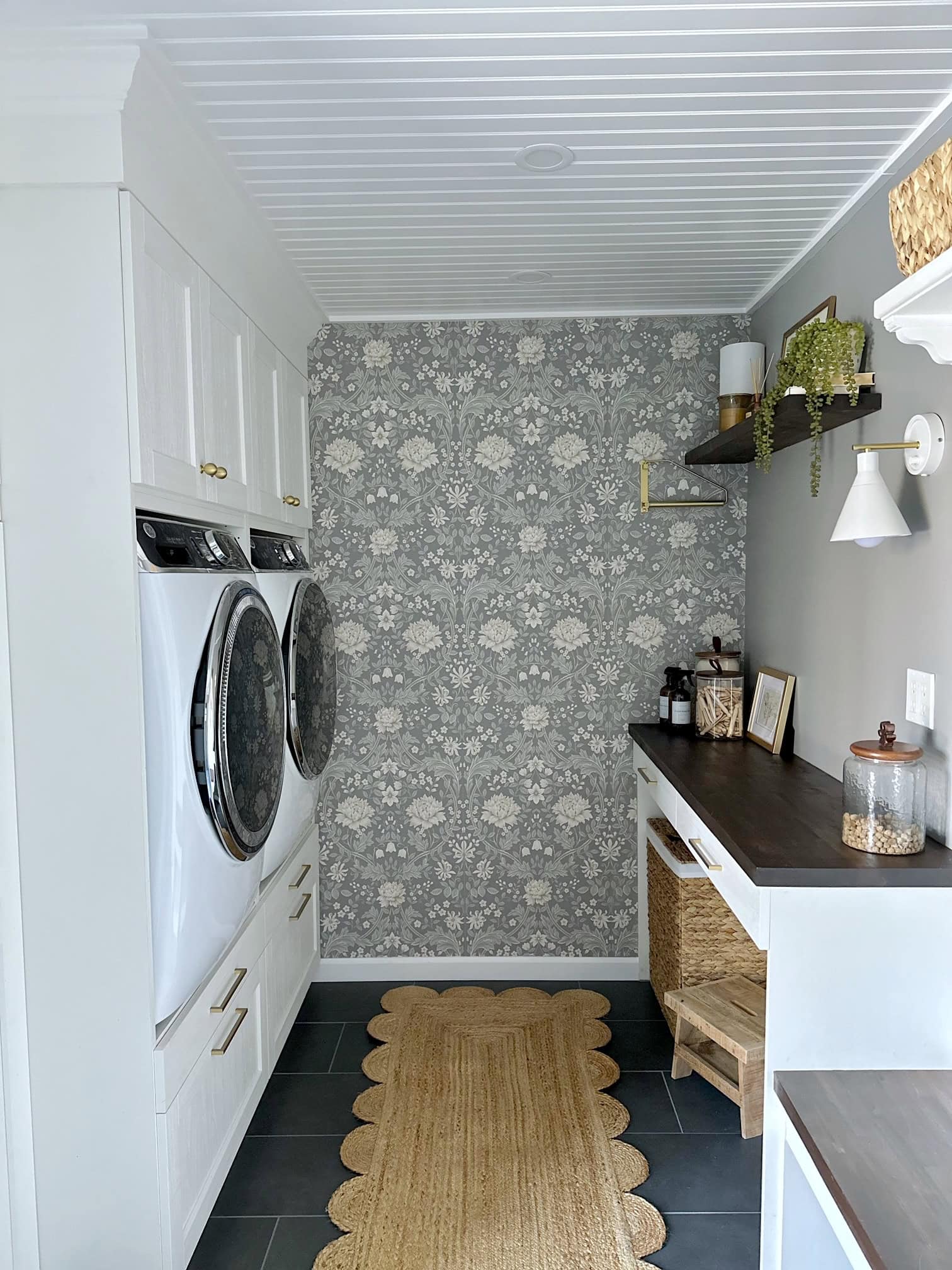
Before we ever touched the graph paper, we started with a full wish list and wrote down what we felt were the most important features for our laundry room makeover. This room works hard for us and wears a lot of hats. It functions as a laundry room, mudroom, dog walking station, and entryway, so maximizing every inch of space mattered.
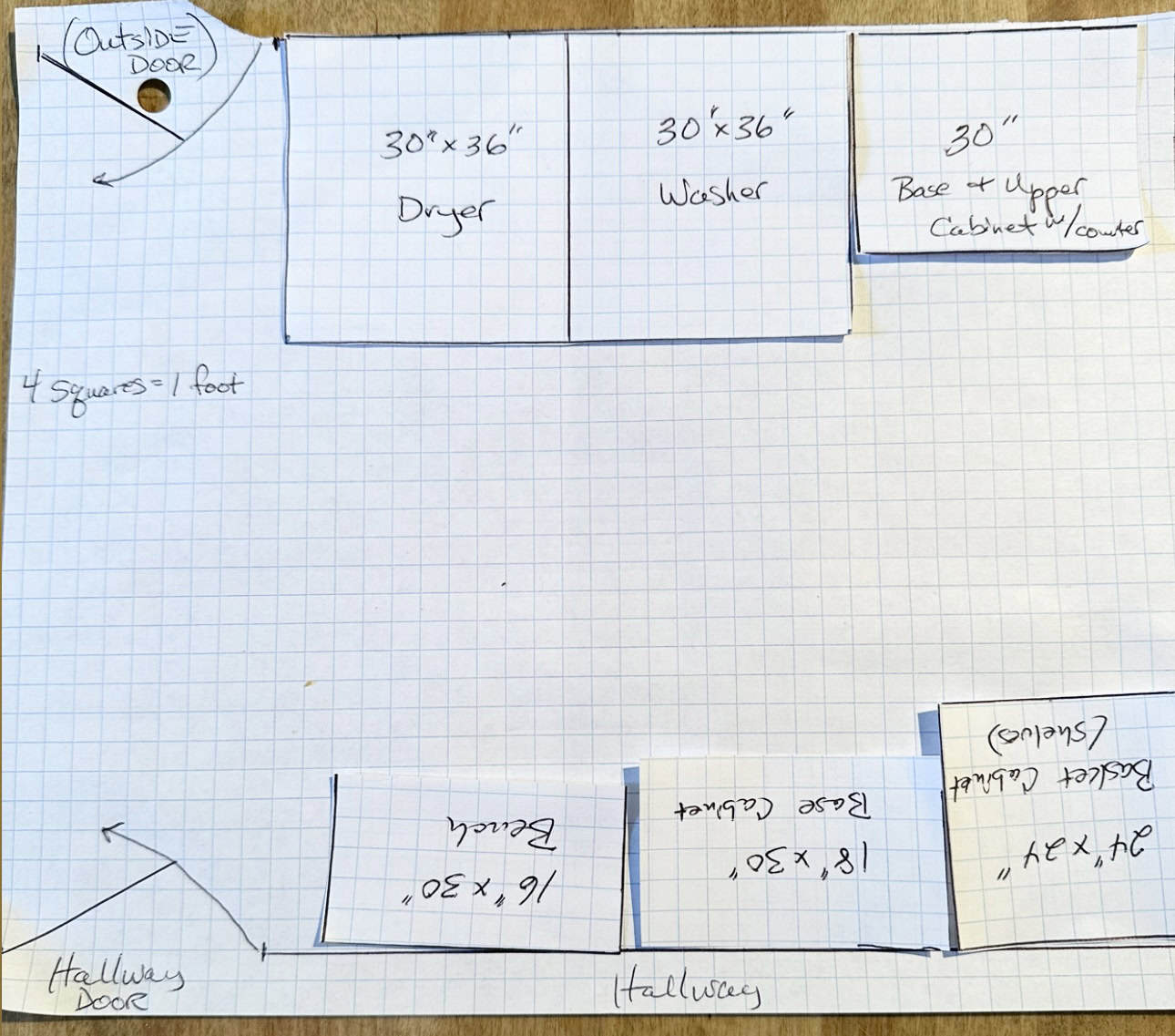
Once we had the wish list in place, we spent several nights at the table with graph paper, tiny measured squares representing each feature of the room, sliding everything around and testing different layouts to see what might actually fit. That process quickly showed us which ideas were non-negotiable, which ones needed to be scaled back, and which simply were not going to work in the space we had.
Below, I'm breaking down the features that mattered most, the compromises we made along the way, and what ultimately got cut from our original plan.
At a Glance: IKEA Laundry Room Wish List
_______________________
Designing an IKEA laundry room often means balancing dream features with real-life space limits. This guide walks through the decisions and compromises that shaped our final layout.
Project focus
Designing a functional IKEA laundry room with smart storage and practical upgrades
Key decisions
• Prioritizing a raised washer and dryer
• Choosing storage that maximizes wall space
• Scaling back a planned dog walking station
• Leaving out a sink and window due to layout limits
Design goals
• Efficient use of a small space
• Practical everyday workflow
• Clean, organized storage
What you'll learn
• How to plan an IKEA laundry room layout
• Which features are worth prioritizing
• Real-life tradeoffs when designing a laundry space
Summarize and Save this content on:
Jump to:
- At a Glance: IKEA Laundry Room Wish List
- Raised washer and dryer: A non-negotiable
- Storage priorities (and a marital compromise)
- Folding counter: Adjusted for a galley-style layout
- Dog walking station: Scaled back, but still useful
- What got cut: A window and a sink
- Planning takeaways from our IKEA laundry room
- More home improvement inspiration for your next project
Raised washer and dryer: A non-negotiable
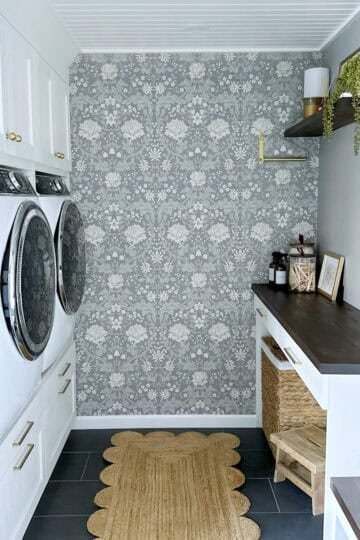
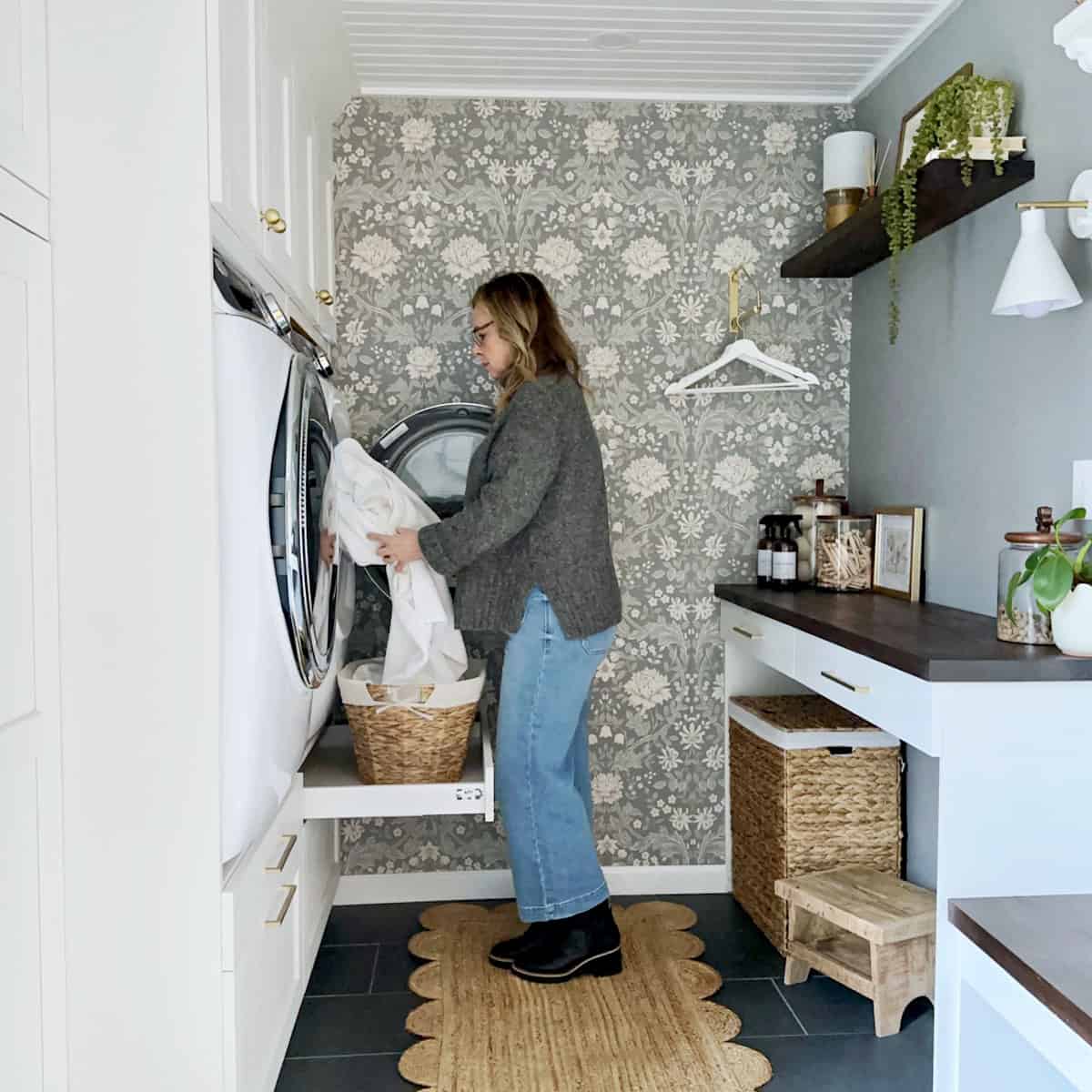
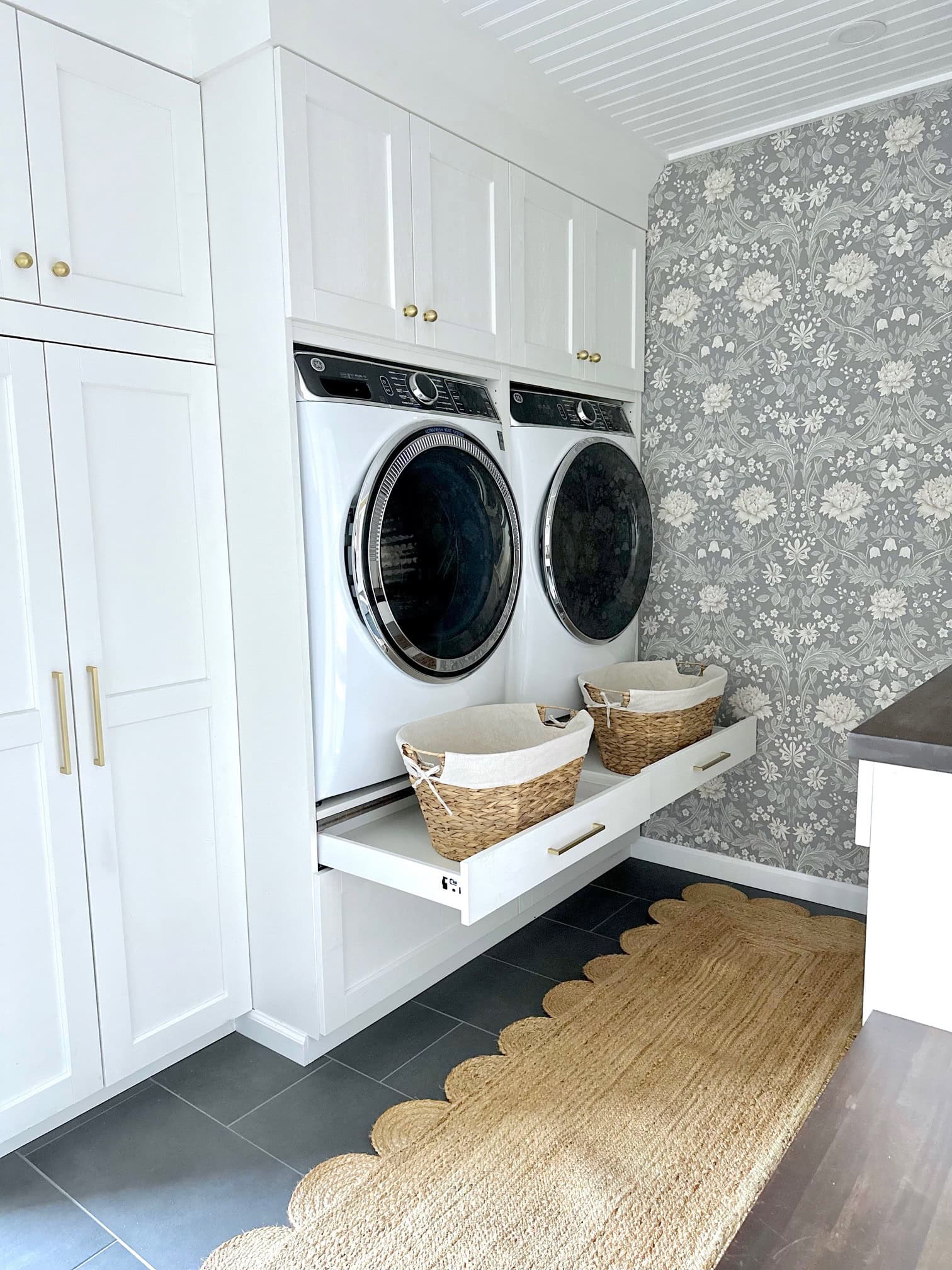
Some items on our laundry room wish list were never up for debate, and a raised washer and dryer was one of them. From the very beginning, we knew we wanted the machines lifted, with a pullout underneath to hold laundry baskets.
We first saw the idea on Pinterest, but what those photos never showed was how the tray was actually installed. We loved the look, but the logistics were unclear. That idea stayed in the back of our minds until a visit to the IKEA kitchen showroom, when the lightbulb finally went off.
While walking through the displays, we noticed the cabinet designed to hold a wall oven and microwave, complete with a slim drawer underneath. That's when it clicked. What if the washer and dryer went where the ovens would normally sit, and that slim drawer became the pullout for laundry baskets?
A drawer instead of a traditional pullout - brilliant!
Not only does it look clean and built-in, but it functions beautifully. Having the washer and dryer at waist height is incredibly comfortable, especially for everyday use, and the drawer keeps baskets contained and organized without cluttering the floor. If something else had to be cut from our plan to make this work, we were willing to do it. This feature was a must, and it has paid off every single day.
Storage priorities (and a marital compromise)
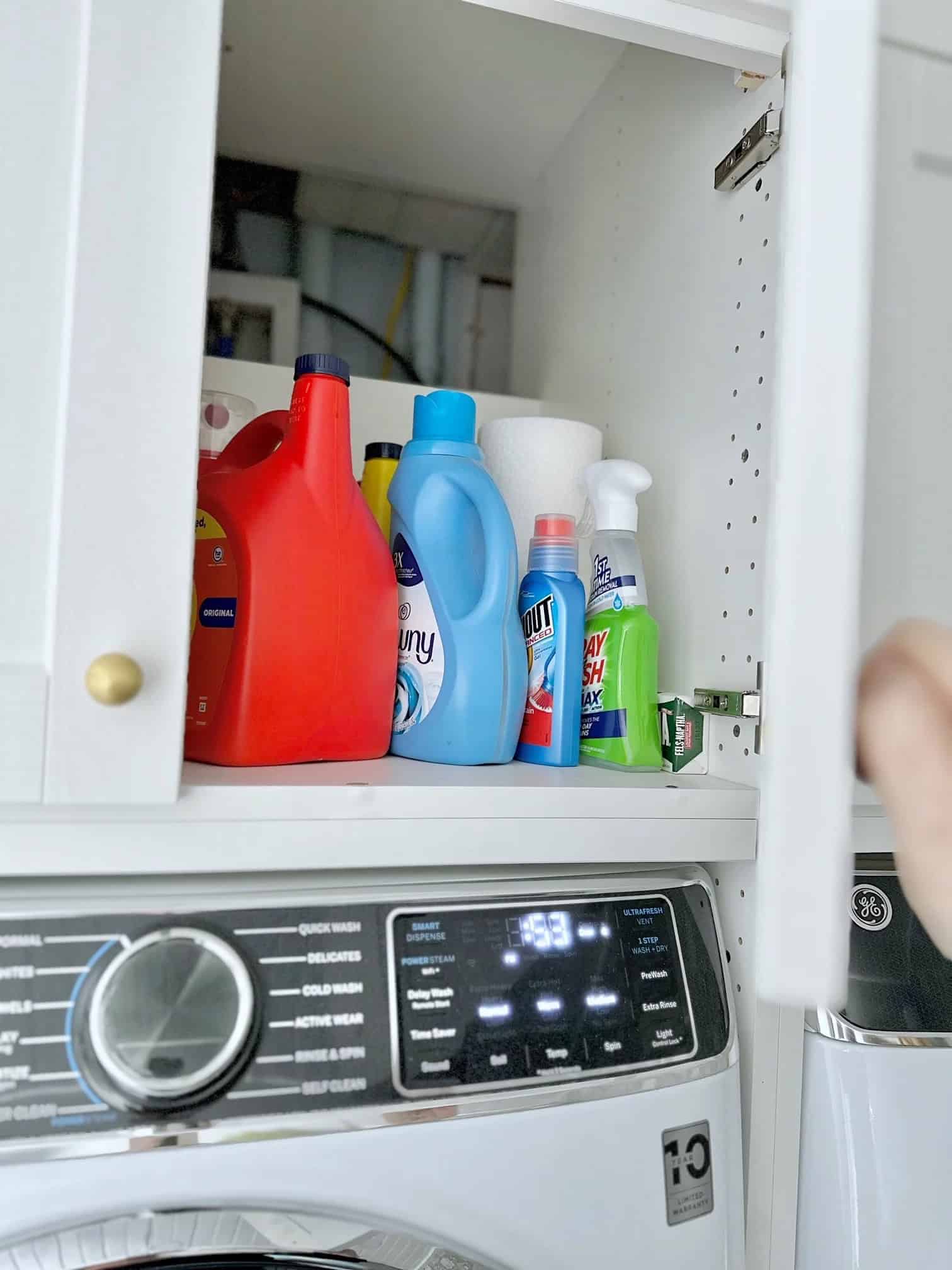
Storage was a major priority in this laundry room, especially because the space does so many jobs at once. From the beginning, my goal was to keep as much as possible hidden. I wanted doors on cabinets, closed storage, and places for everyday clutter to disappear so the room could stay neat and orderly, even on busy days.
That planning really paid off. We spent time thinking through what we actually needed to store in the laundry room and how often we would access it. The cabinets and storage solutions we chose still feel right, and the room functions well without feeling visually busy. Being able to close the door on baskets, supplies, and everyday mess makes a huge difference in how the space feels.
That said, one storage idea did not survive the final layout. I originally wanted a utility closet for items like the broom, vacuum, and cleaning supplies. My husband, however, needed space for hoodies and jackets, and in the end, he claimed the closet.
Consider it a classic marital compromise...
While I still think a utility closet would have been nice, the room works well as it is. We adjusted where those cleaning items live elsewhere in the house, and the laundry room stays clean, calm, and organized thanks to the hidden storage we prioritized from the start.
Folding counter: Adjusted for a galley-style layout
A folding counter was high on my original wish list. Having a wide surface to fold laundry felt like an obvious must, especially in a room that works as hard as this one. What we did not fully appreciate at first was how much a full-depth counter would impact movement in a galley-style layout.
Once we mapped everything out, it became clear that a standard, deep countertop would eat into the walking space and make the room feel tighter than it needed to be. With the washer, dryer, and cabinets already in place, that extra depth would have limited how comfortably we could move through the room while doing laundry.
Instead, we chose a thinner, less-deep countertop. It is still plenty wide enough for folding laundry, sorting clothes, and setting things down, but it does not restrict movement or make the room feel cramped. This adjustment ended up being one of those small decisions that made a big difference in how the space functions day to day.
Sometimes getting what you want means rethinking how it's sized, not cutting it entirely, and this was a great example of that.

Dog walking station: Scaled back, but still useful
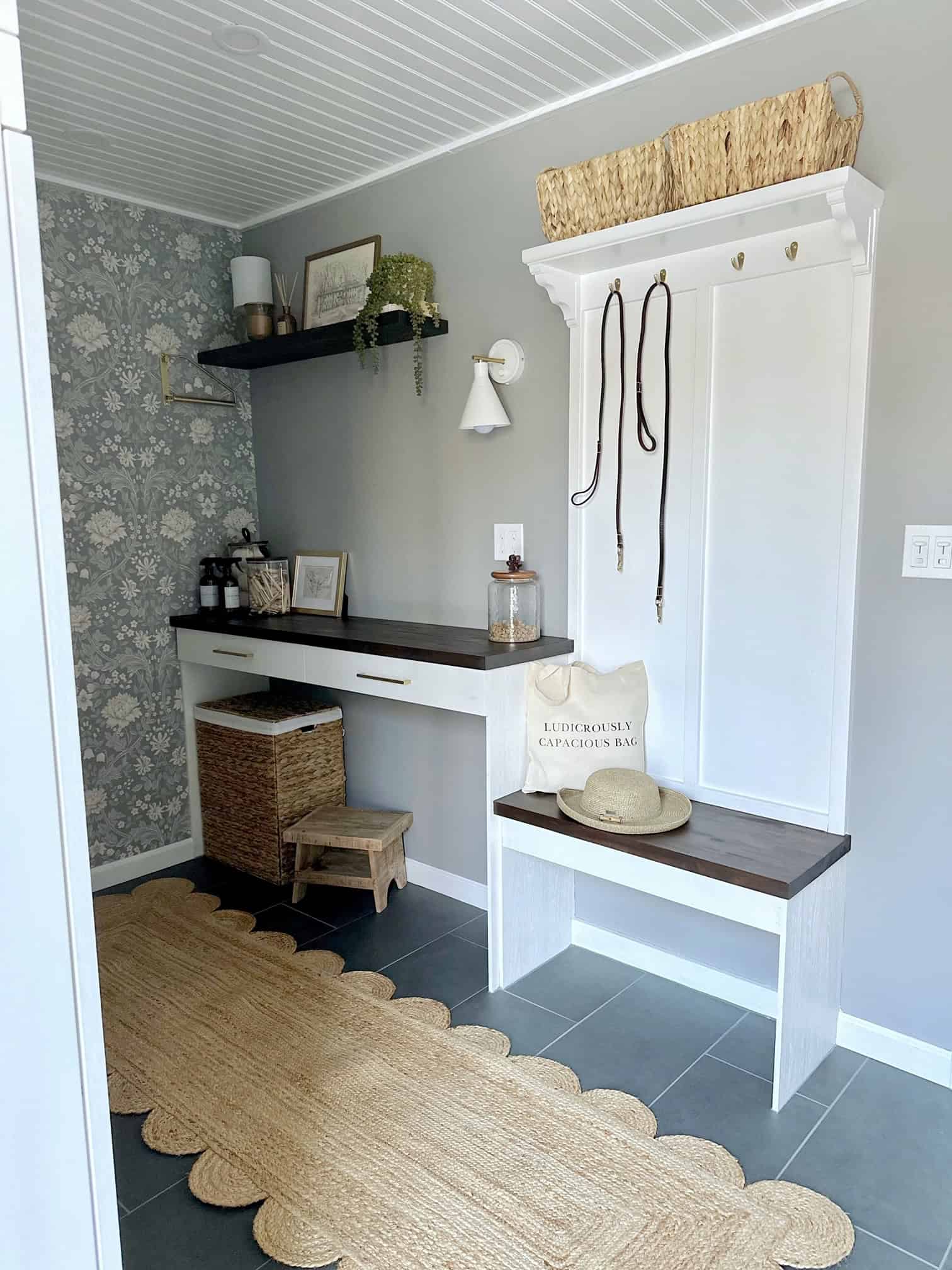
The dog walking station was always part of the plan, but the size of it changed as the layout came together. Originally, we pictured a larger bench where both of us could sit at the same time to get boots on and ready to head out. Once everything was mapped out, it became clear that the space simply would not allow for that without sacrificing circulation and function elsewhere in the room.
What worked beautifully was letting the thinner countertop pull double duty. It drops down naturally to create a bench for the dog walking station, making the transition from laundry space to entry point feel intentional rather than added on. We used the same espresso dark butcher block here as we did on the folding counter, which keeps the look seamless and cohesive and looks great against our laundry room wallpaper.
While the bench is smaller than originally planned, it still works well for real life. It's more of a one-at-a-time setup, which is fine for how we use the space, even though we usually walk the dogs together. The station gives us a dedicated place to sit, get ready, and move through the routine efficiently.
Just as important, we now have a designated home for leashes, collars, poop bags, and other dog essentials. Everything lives right by the door, which makes getting out of the house easier and keeps clutter from spreading into the rest of the room. The station may be scaled back from the original vision, but it's functional, well-used, and fits the space we actually have.
What got cut: A window and a sink
Two features stayed on our wish list right up until the very end: a window and a sink. No matter how many layouts we tried, there simply was not enough space to make either one work without compromising the rest of the room.
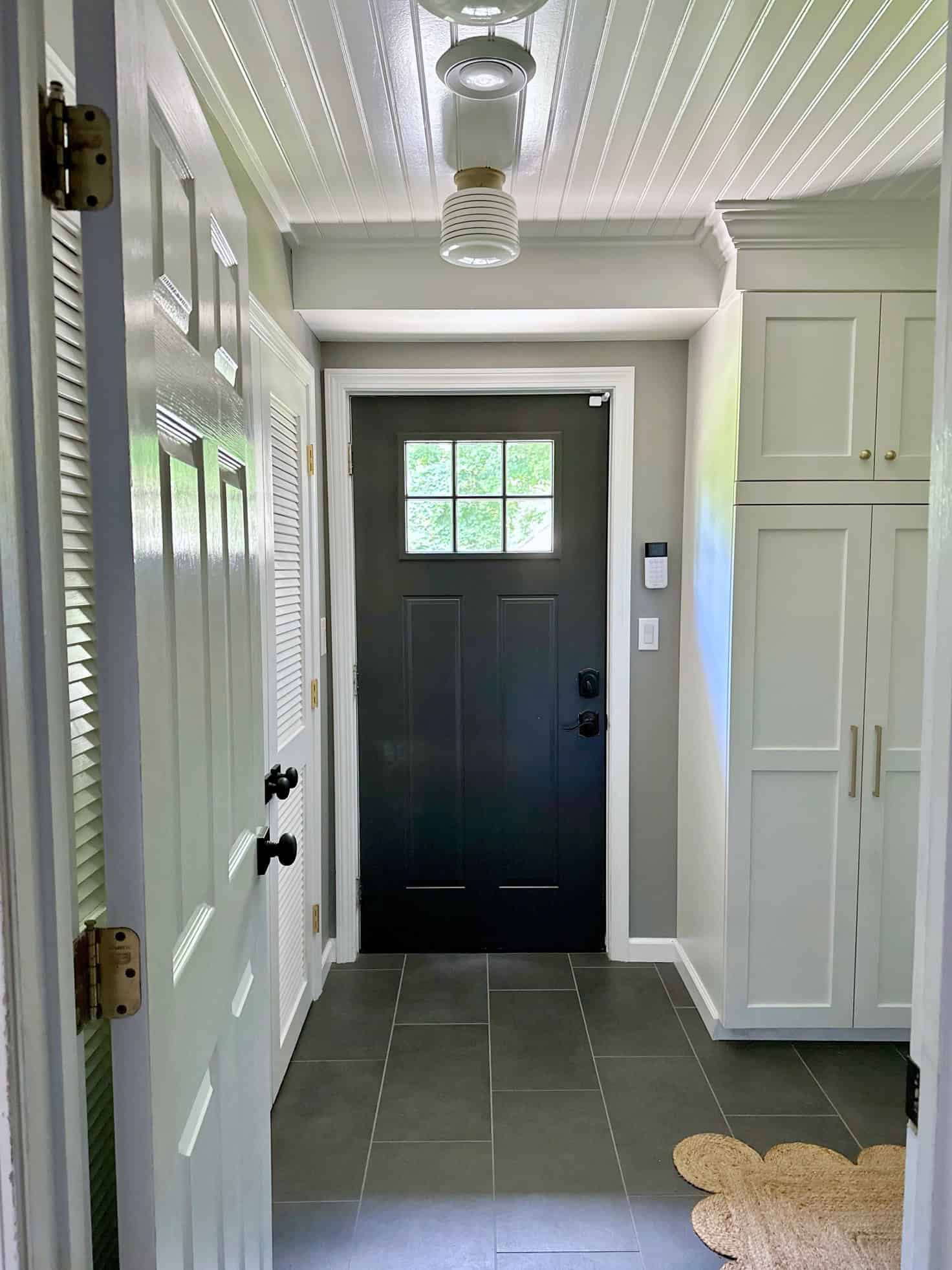
I would have loved more natural light. The laundry room only gets sunlight from the small window at the top of our back door, and adding another window felt like it would completely change the feel of the space. Unfortunately, there was no wall where a window could be added without losing storage, disrupting the cabinet layout, or creating awkward spacing elsewhere.
A sink was another feature that made a lot of sense in theory. Having a sink near where laundry is done is incredibly helpful, especially for quick rinses, handwashing, or treating stains. In our layout, though, fitting in plumbing would have meant giving up cabinet space or crowding the work areas in a way that didn't feel practical.
In the end, we had to accept that this room could not do everything. Prioritizing storage, circulation, and everyday function meant letting go of both the window and the sink. While I still think they would have been nice additions, the room works better overall without forcing them in.
This was one of those decisions where space, not desire, made the final call.
Tip: We used a gloss paint on the laundry room ceiling to help reflect natural light throughout the laundry room, a simple trick that works well when natural light is limited.
Planning takeaways from our IKEA laundry room
- Start with a full wish list, then rank true non-negotiables early.
- Map layouts to scale, especially in galley-style rooms.
- Full-depth features can impact movement more than expected.
- Hidden storage helps multi-use rooms stay calm and organized.
- Not every useful feature fits every space, and that's okay.
- Plan with real life in mind, including the people who use the space and their priorities...hoodies included.
More home improvement inspiration for your next project


Planning our IKEA laundry room was as much about making decisions as it was about designing a space. Starting with a full wish list and then working through layouts helped us understand what truly mattered, what could be adjusted, and what simply would not fit.
Not every idea made it to the final plan, but the room works hard for us because the priorities were clear from the beginning. By focusing on function, circulation, and storage, and by being willing to compromise when necessary, we ended up with a laundry room that supports real life rather than an idealized version of it.
If you're planning your own laundry room, especially one that needs to serve multiple purposes, give yourself permission to start big, then edit thoughtfully. The best spaces are not the ones that include everything, they're the ones that work well every single day.
Happy planning, friends!