Fresh Herbs for Garnish: How to Use Them on Charcuterie Boards

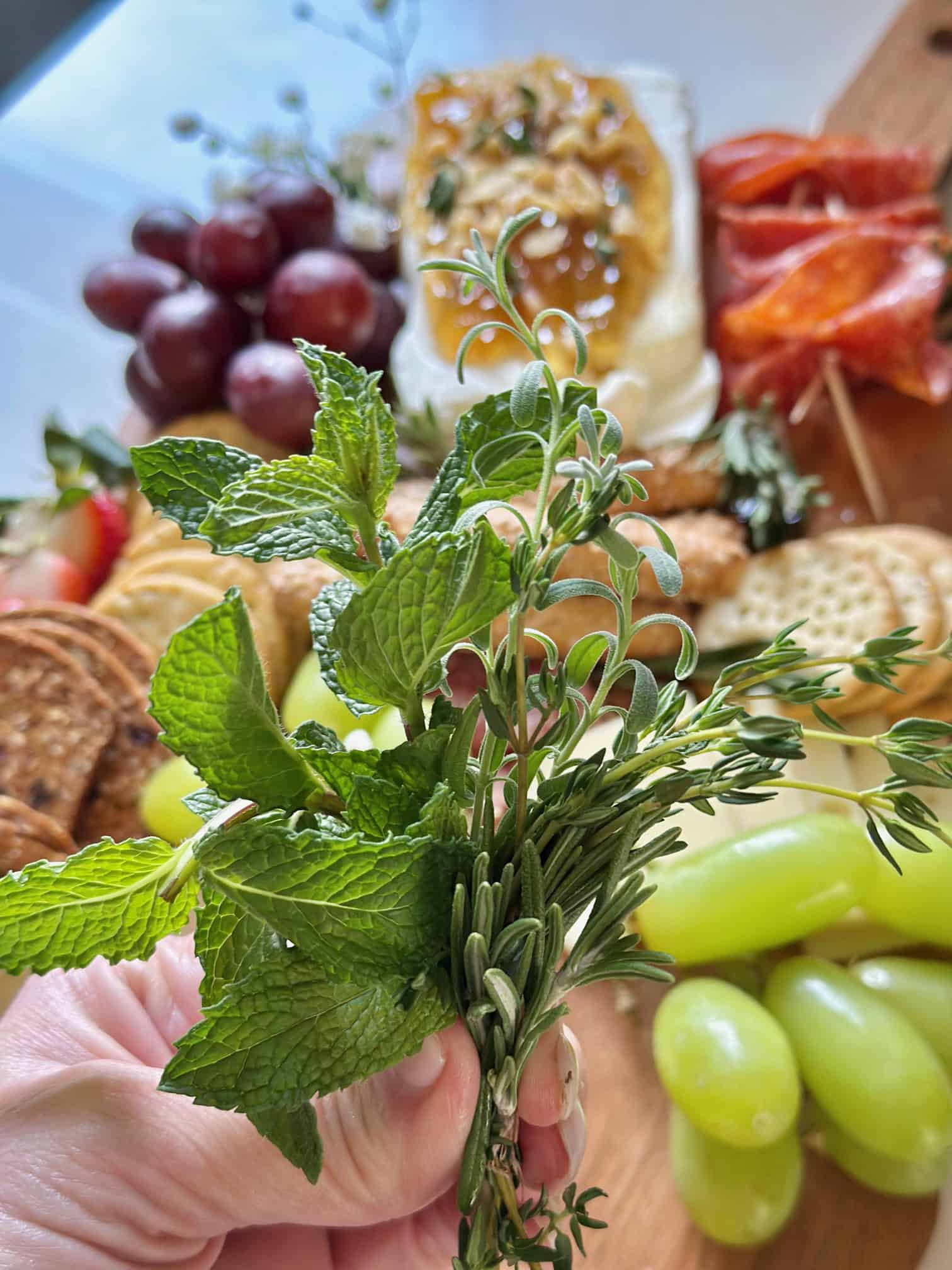
Fresh herbs for garnish add color, texture, and a fresh, natural finish to food and charcuterie boards. Woody herbs like thyme, rosemary, and lavender hold their shape best, while softer herbs like mint and chives add a lighter, more delicate touch. Used in small clusters or as accents on food, fresh herbs instantly make a board feel more styled and complete.
If you've ever put together a charcuterie board and felt like something was missing, it's usually not the cheese or the crackers.
It's the garnish.
Fresh herbs are one of the easiest ways to take a board from simple to something that feels finished, layered, and just a little more special. A few sprigs tucked here and there, or placed right on the food, can completely change the look without adding any extra work.
This is one of those small details that makes a big difference, and once you start using fresh herbs this way, it's hard to go back.
At a Glance: Fresh Herbs for Garnish
_______________________
- Fresh herbs instantly make a charcuterie board look more finished and styled
- My go-to herbs: thyme, rosemary, lavender, mint, chives, and sage
- Woody herbs (thyme, rosemary, lavender, sage) hold their shape best
- Softer herbs (mint, chives) add a fresh, lighter touch
- Use herbs both around the board and directly on the food
- Store soft herbs in water, woody herbs in a damp paper towel in the fridge
- Add herbs just before serving for the best look
Quick tip:
Parsley, cilantro, dill, and basil are beautiful, but they tend to wilt quickly as garnish, so I usually skip them for charcuterie boards.
Summarize and Save this content on:
Jump to:
- At a Glance: Fresh Herbs for Garnish
- The best fresh herbs for garnish
- Where to get fresh herbs
- How to keep herbs fresh before using
- How to use fresh herbs on a charcuterie board
- Where to place herbs for the best look
- When to add fresh herbs
- The difference fresh herbs make
- Frequently asked questions
- More Charcuterie board guides to explore
The best fresh herbs for garnish
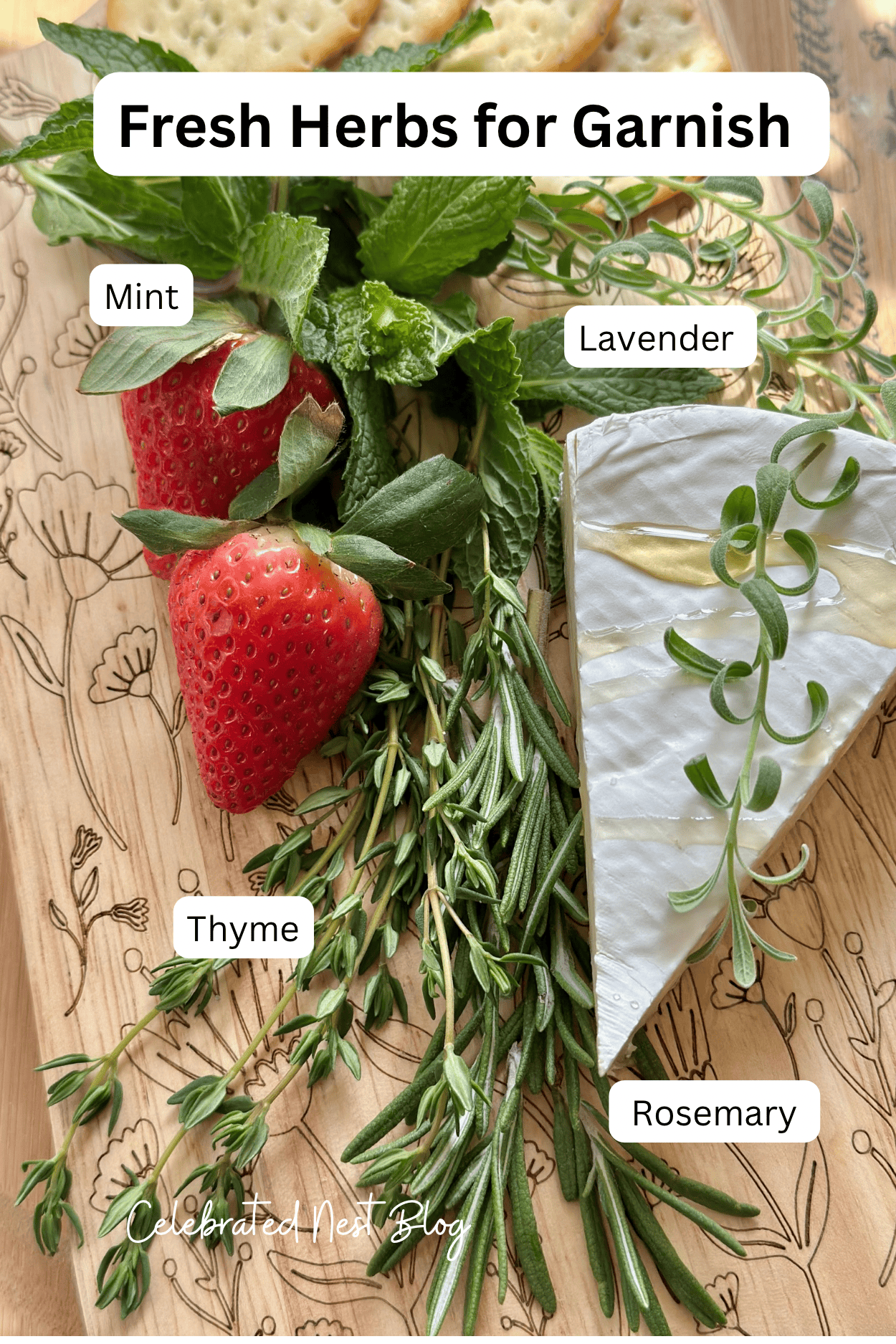
When it comes to fresh herbs for garnish, not all herbs behave the same. Some hold their shape and add structure, while others wilt quickly and lose their impact. These are the herbs I reach for again and again because they actually hold up on a charcuterie board and look beautiful while doing it.
Thyme
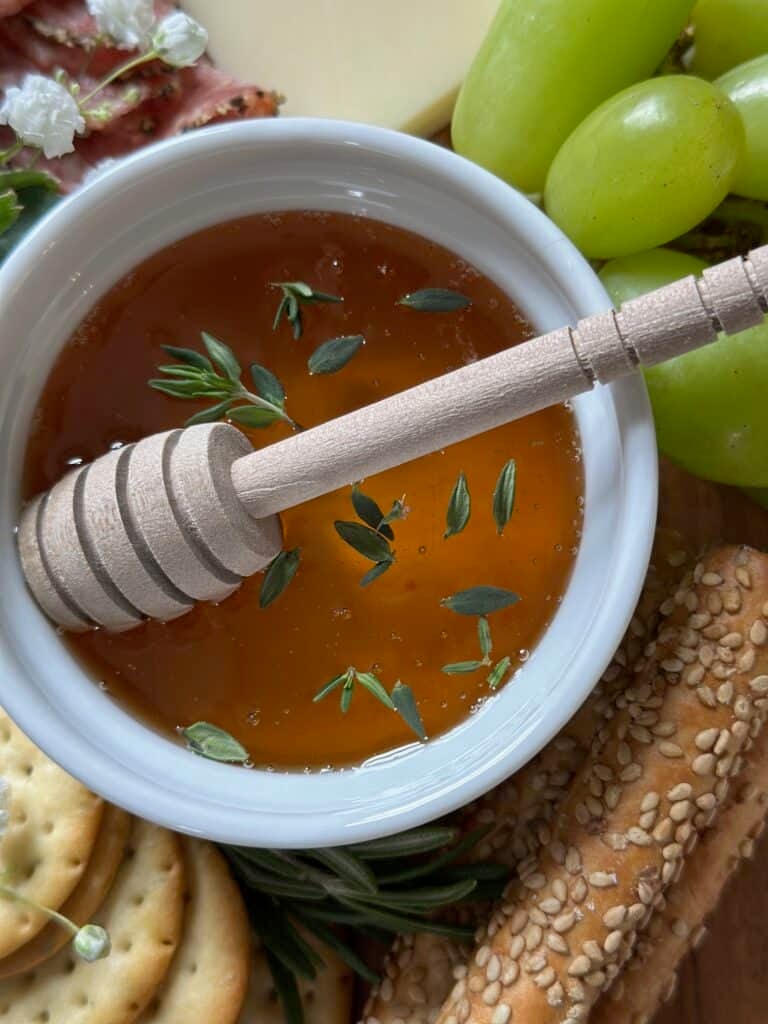
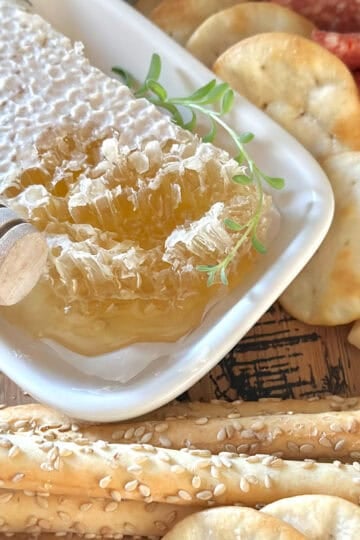
Small, delicate, and incredibly easy to use. Tuck a few sprigs of thyme around the board or sprinkle the leaves over honey, on brie cheese, or fruit for a soft, natural look.
Rosemary
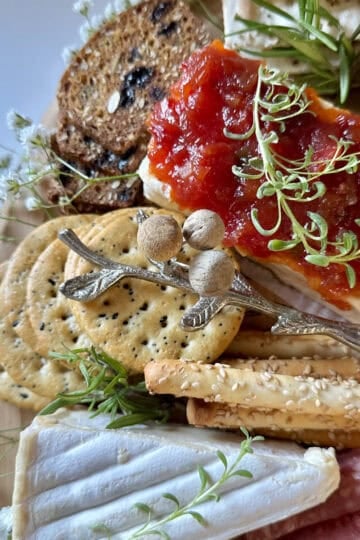
More structured and sturdy, rosemary adds height and shape. Rosemary works well as a visual anchor and pairs beautifully with cheeses like brie or alongside meats.
Lavender
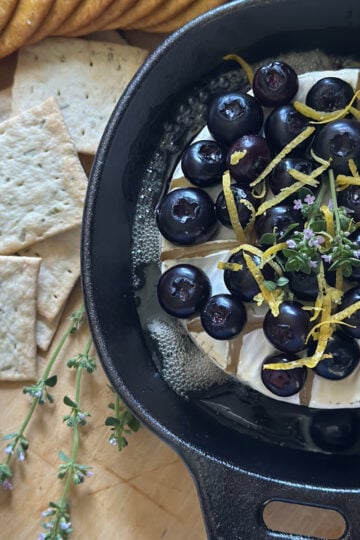
A little unexpected, but so pretty. Both the flowers and greenery for garden lavender or a lavender tree can be used to add a soft, floral touch, especially on sweeter elements like honey or baked brie.
Mint
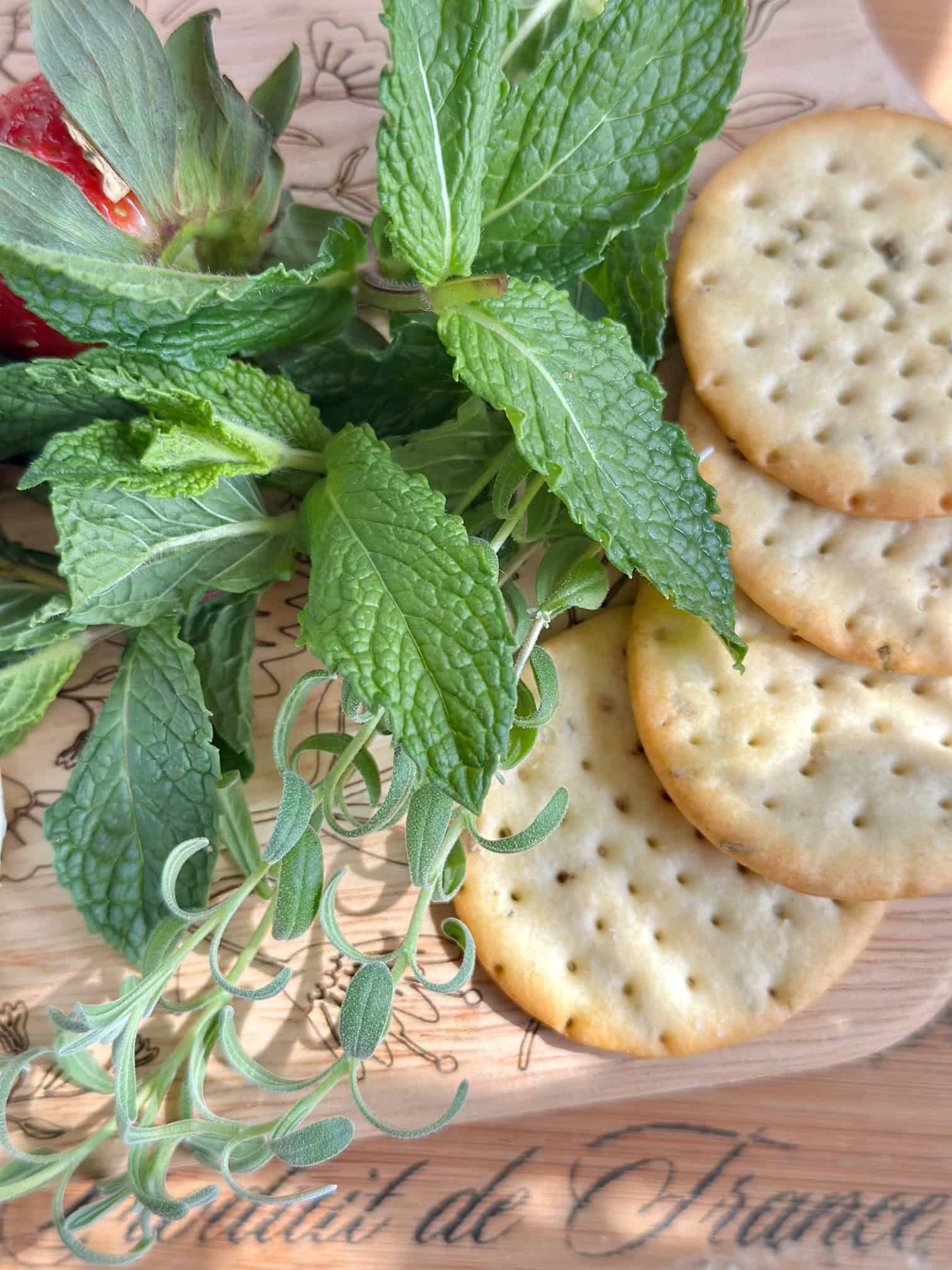
Fresh and bright, mint adds a lighter feel to the board. Use small clusters or torn leaves rather than scattering it too finely.
Chives and Chive Flowers
veSoft and grassy, chives are great for adding a subtle pop of green. Snip the leaves lightly over spreads or tuck a few pieces around the board. When they're in season, separate the tiny florets from chive flowers and scatter them over cheeses, dips, and deviled eggs for a delicate onion flavor and a beautiful touch of purple.
Sage
Sage has a soft, velvety leaf that adds a slightly rustic, earthy feel. It works well tucked near cheeses or layered into the board for texture.
Quick tip: Parsley, cilantro, dill, and basil are all beautiful herbs, but they tend to wilt quickly as garnish. For charcuterie boards, I usually stick with herbs that hold their shape a little better.
Where to get fresh herbs
Fresh herbs for garnish don't have to be complicated. Most of the time, I'm either clipping them straight from my herb garden or picking up a few bunches at the grocery store.
From your herb garden
During the growing season, my garden is always my first stop. It's the easiest way to grab exactly what I need, and everything is as fresh as it gets. If you have even a small herb garden or a few herb containers, it makes a huge difference for this.
From indoor herb plants
Outside of the gardening season, I still like to keep a few herbs within reach. I almost always have a rosemary tree or a small lavender plant indoors so I can clip from them whenever I need a quick garnish. It's one of those simple things that makes pulling a board together feel easy and a little more special.
From the grocery store
Store-bought herbs work perfectly well too. Look for bunches that are vibrant, not wilted, and avoid anything that feels damp or slimy. A quick rinse and a trim is all they need before using.
Quick tip: Take a second to really look at them before you buy. I always check the front and then turn the package over, especially with those small clear containers. Sometimes I'll even open the lid to make sure everything inside looks fresh. If something looks a little tired, I'll reach for the containers in the back, they're usually the freshest ones.

How to keep herbs fresh before using
Fresh herbs will only look as good as they're stored. The good news is it's simple, there are really just two methods, and which one you use depends on the type of herb.
For soft herbs (mint, chives)
Soft herbs need moisture to stay fresh, so I treat them almost like a small bouquet.
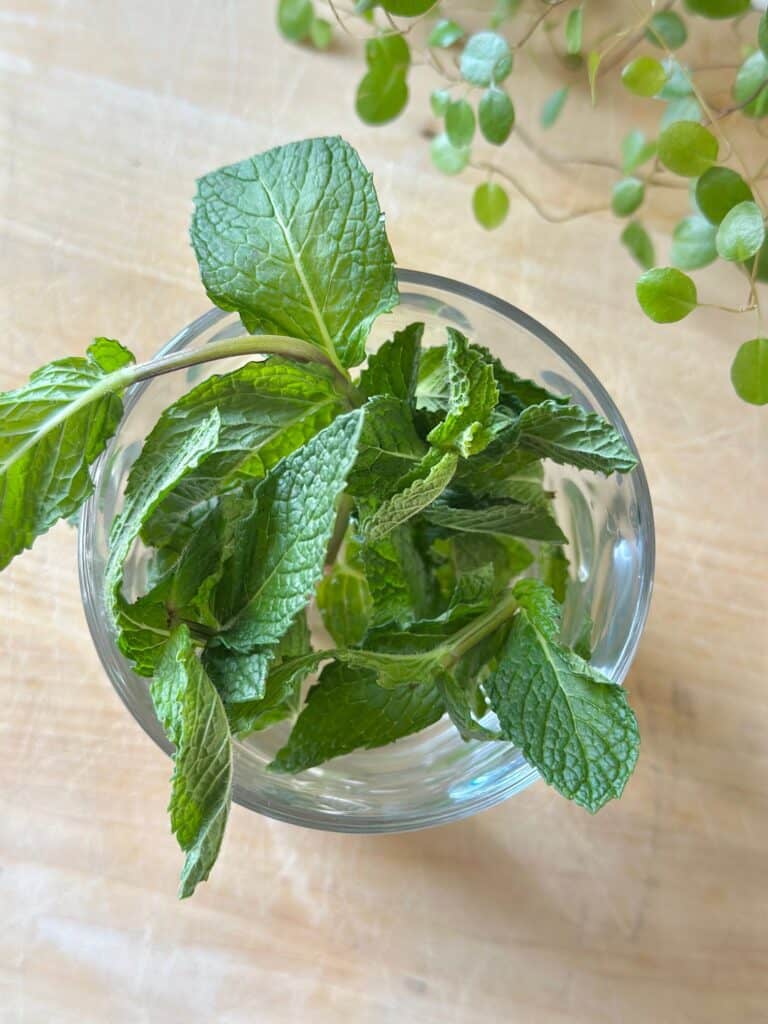
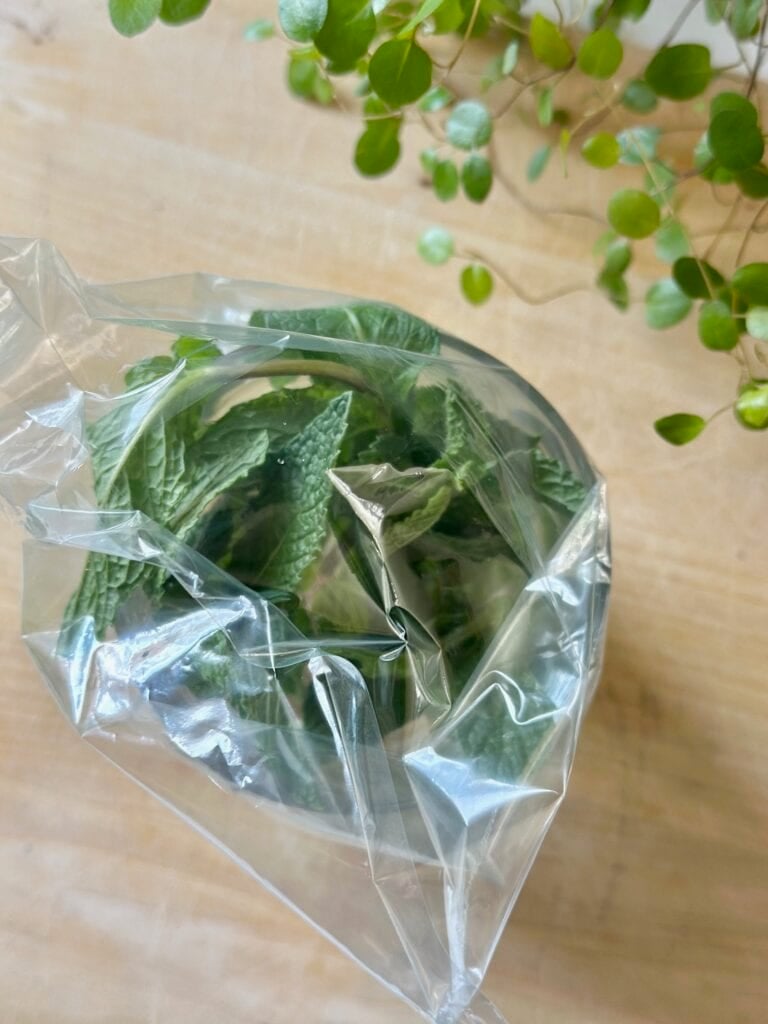
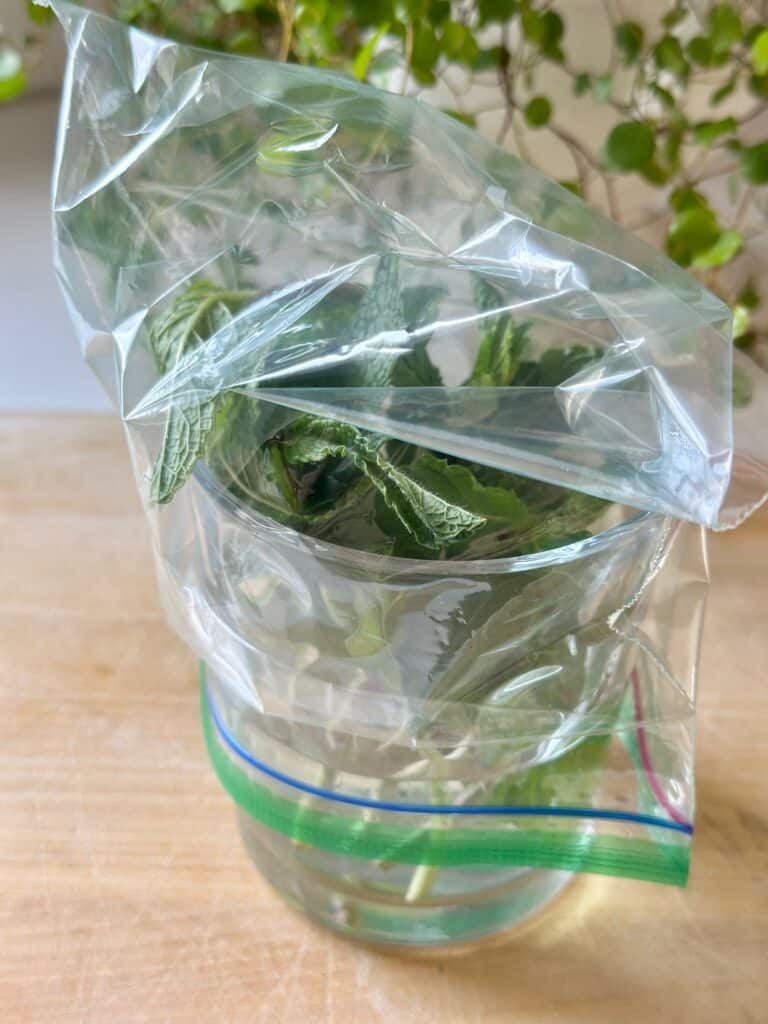
Trim the stems, strip any leaves from the bottom, and place them in a glass of water. Just like you would with flowers, give the stems a fresh cut and submerge the bottoms in water.
Then loosely cover the top with a plastic bag to create a soft dome and place them in the refrigerator.
This works especially well for mint and chives, and keeps them looking fresh and lively for garnishing.
For woody herbs (thyme, rosemary, sage, lavender)
Woody herbs or Mediterranean herbs hold up better with less direct moisture.
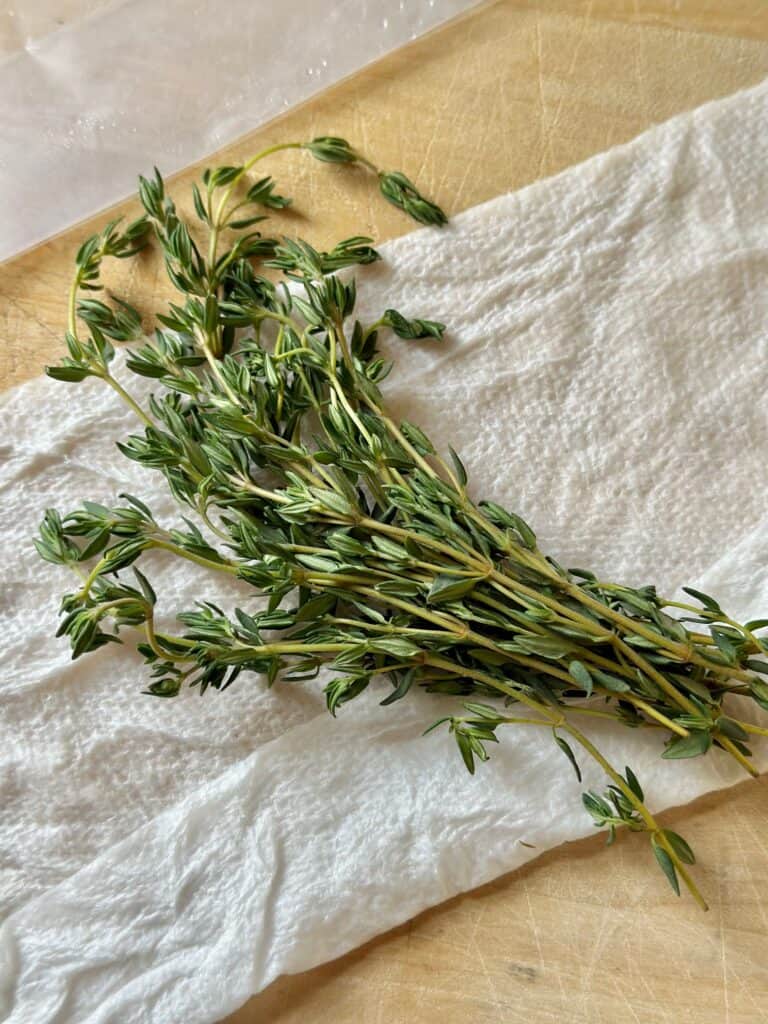
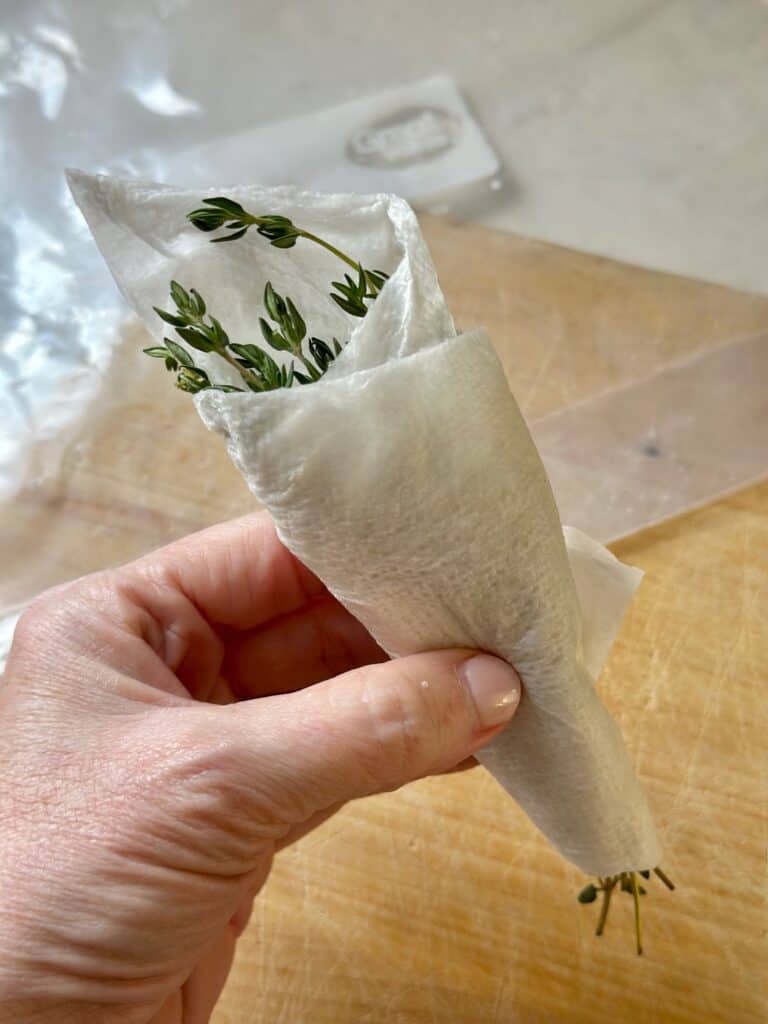
Dampen a paper towel and wring it out so it's not soaking wet. Wrap the herbs loosely in the towel, leaving the tips and stems slightly exposed, then place everything into a bag and refrigerate.
This method keeps thyme and rosemary from drying out without making them soggy, and it works well for sage too. If you're using lavender from your garden, you can treat it the same way.

Quick tip: No matter which method you use, herbs are always best when they're fresh. I try to prep them the same day or the day before, and then add them to the board just before serving so they look their best.
How to use fresh herbs on a charcuterie board
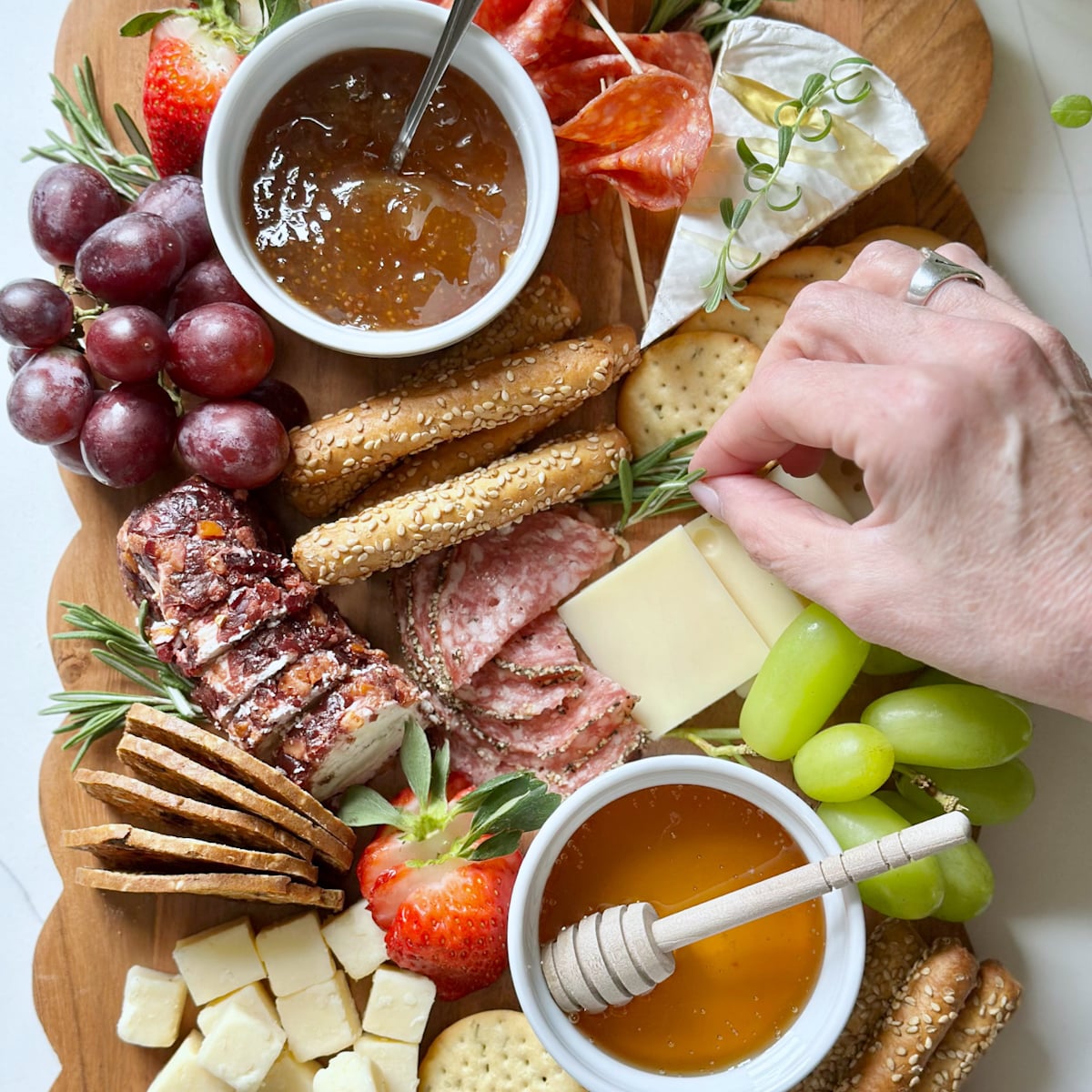
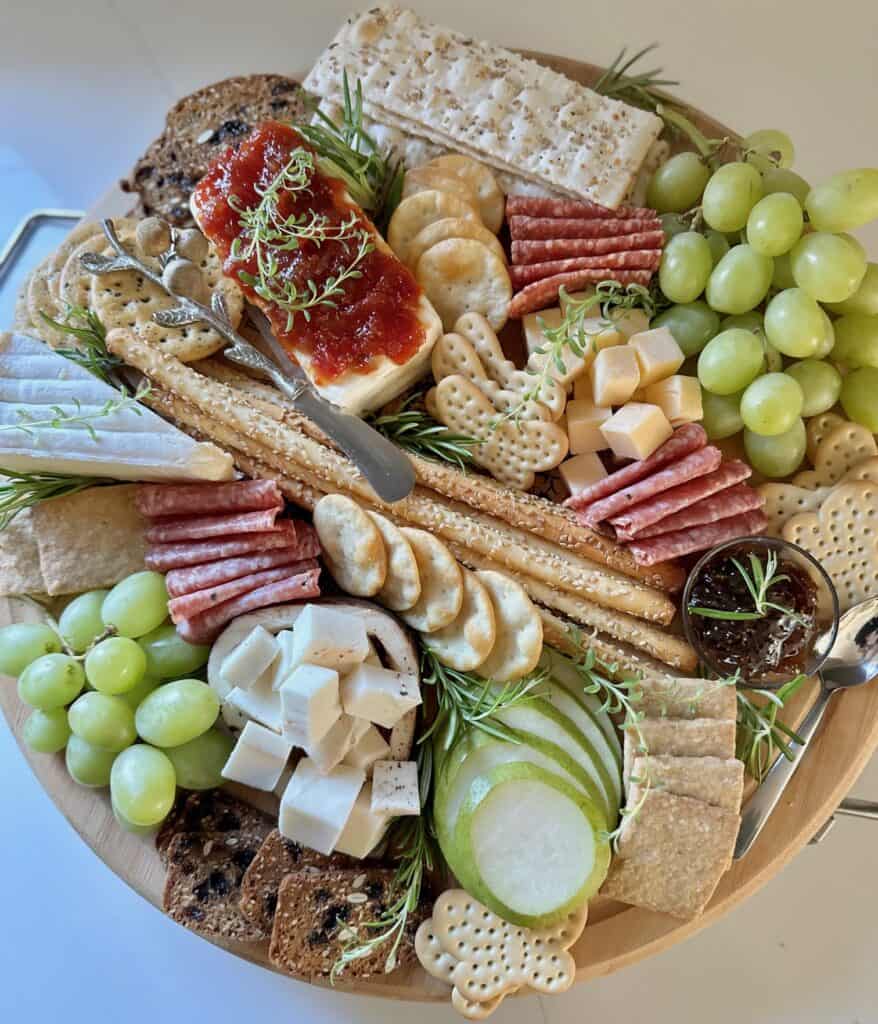
One of the easiest ways to make a charcuterie board feel more styled is to use fresh herbs in two ways, around the board and directly on the food. That combination is what makes everything feel layered instead of flat.
Around the board (filler + softness)
This is where herbs help pull everything together.
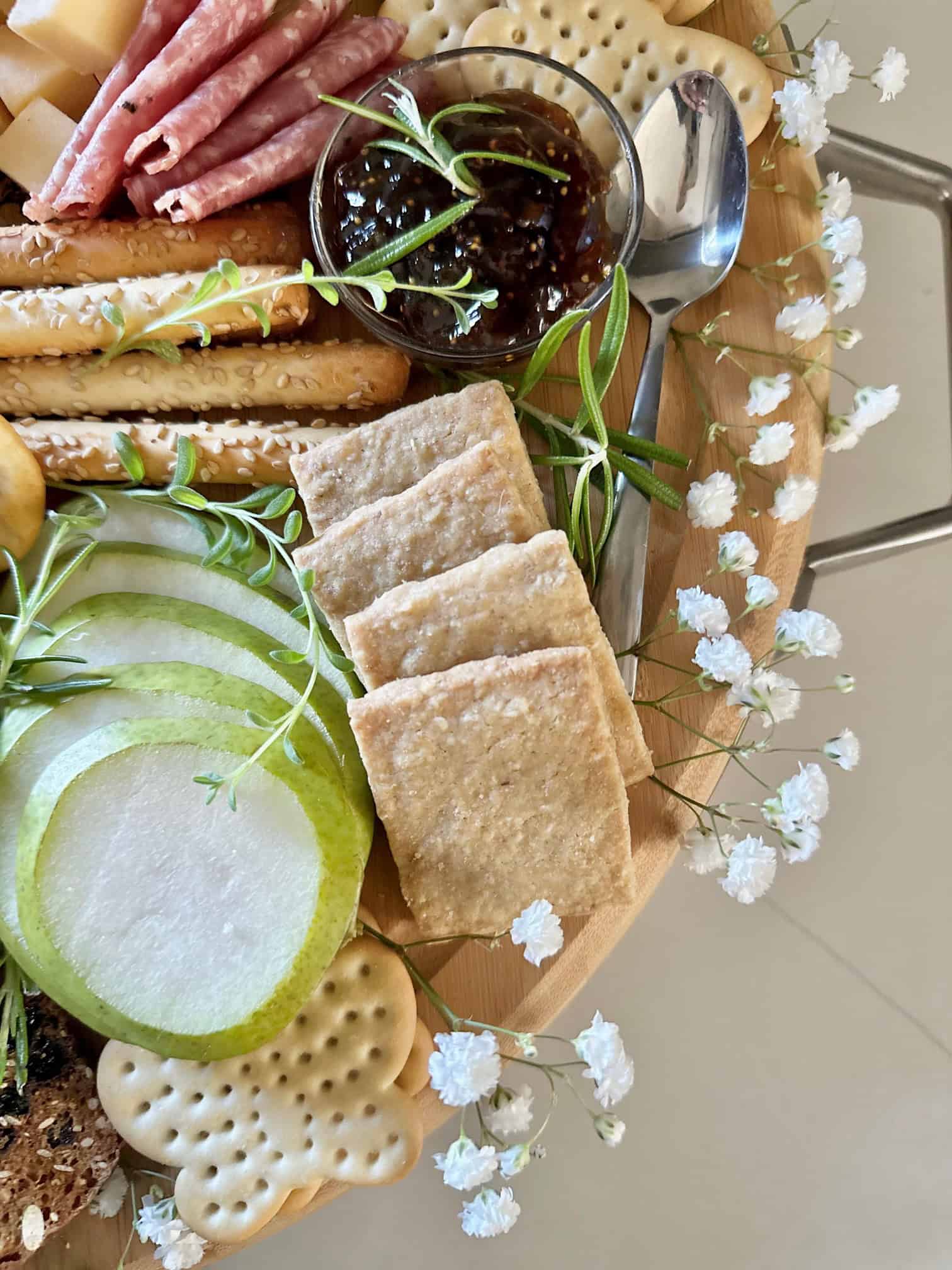
Tuck small sprigs into open spaces, small bowls and especially around cheeses and between meats. Let them soften the edges of the board and connect different elements so it doesn't feel like everything was placed separately.
Try to avoid scattering herbs randomly. A few small clusters will always look more intentional than little bits spread everywhere.

On the food (this is key)
This is the part that really changes the look of your board.
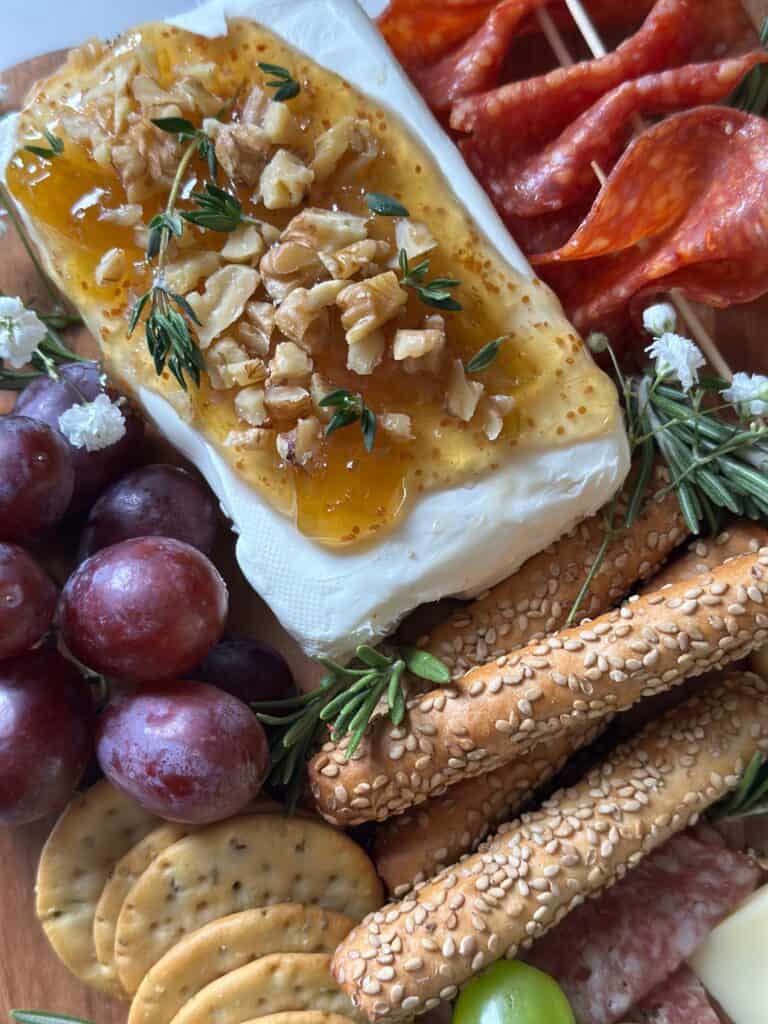
Adding herbs directly to the food creates little moments throughout the board that feel thoughtful and finished.
- A few thyme leaves over honey or a soft cheese
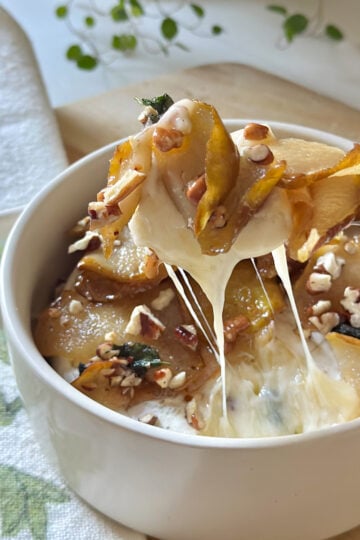
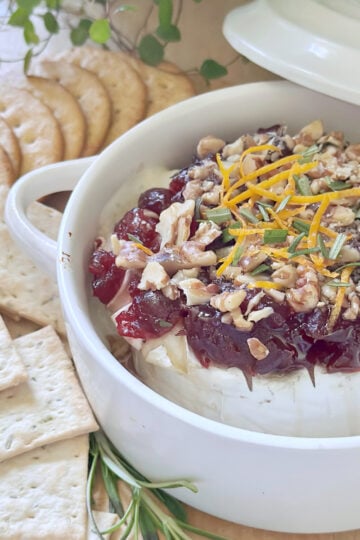
- A small sprig of rosemary or lavender resting on brie
- Mint paired with fruit or sweeter elements
These small details take almost no extra effort, but they make the entire board feel more elevated and complete.

Where to place herbs for the best look
Once your board is mostly built, placing the herbs is what brings everything together. This is less about filling space and more about making the board feel intentional.
Start with bowls and anchors first
I always place bowls, cheeses, and larger elements first. These act as your anchors and give the board structure. The herbs come in after to soften and connect everything.
Add herbs last
Herbs should be one of the final touches. Adding them at the end keeps them looking fresh and lets you see exactly where they're needed instead of guessing.
Work in small clusters, not sprinkles
Instead of scattering herbs all over the board, use small groupings. A few tucked sprigs will always look more natural and styled than little pieces spread everywhere.
Keep some areas clean
Not every space needs to be filled. Leaving a few areas open helps the board feel balanced and keeps it from looking crowded.
When to add fresh herbs
Fresh herbs are one of the last things I add to a charcuterie board, and timing really does make a difference.
Add right before serving
For the best look, add your herbs just before serving. This keeps them vibrant and prevents them from starting to wilt or lose their shape.
They wilt quickly (especially soft herbs)
Soft herbs like mint and chives can start to droop pretty quickly, especially at room temperature. Even sturdier herbs will look better when they're freshly placed.
Keep the board refrigerated until serving
Once your board is assembled, place it in the refrigerator until you're ready to serve. Then add your herbs at the end so everything looks fresh and finished.
The difference fresh herbs make
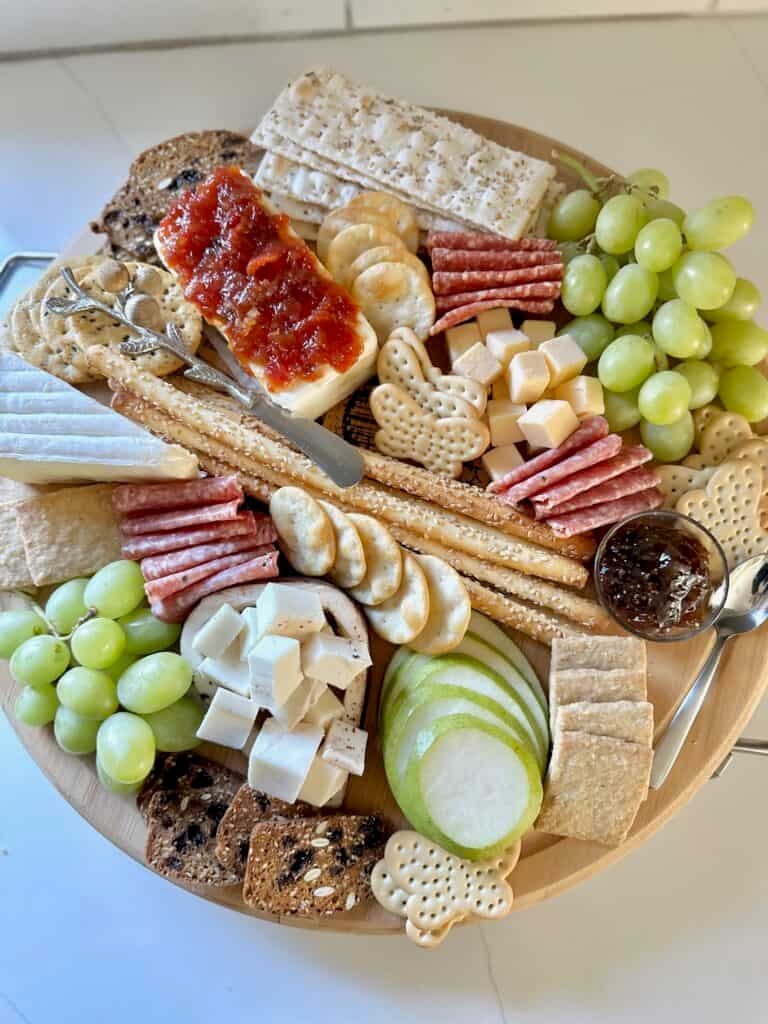
If you've ever stepped back from a charcuterie board and felt like something was missing, this is usually it.
Frequently asked questions
The best herbs for charcuterie boards are ones that hold their shape and look good over time. I reach for thyme, rosemary, lavender, mint, chives, and sage. Woody herbs like thyme and rosemary are especially reliable, while mint and chives add a softer, fresh touch.
Yes, you can prep herbs ahead by trimming and storing them properly in the refrigerator. Soft herbs like mint and chives do best in water, while woody herbs like thyme and rosemary should be wrapped in a damp paper towel. For the best appearance, I still recommend adding them to the board just before serving.
Both! Herbs can be tucked around the board to fill in gaps and soften the overall look, but they're just as effective placed directly on the food. Adding thyme to honey, rosemary to cheese, or mint with fruit creates small, styled moments that make the board feel more complete.
The key is proper storage and timing. Keep herbs refrigerated using the right method for their type, and add them to your board right before serving. Soft herbs tend to wilt faster, so they benefit the most from last-minute placement.

Fresh herbs are one of my favorite ways to finish a board, but they're not the only option. I also love using fresh flowers, fruit, and small decorative touches depending on the season.
If your charcuterie boards have ever felt like they were missing something, this is it. Fresh herbs are such a simple addition, but they make everything feel more finished, more layered, and more you.
You don't need anything complicated. A few sprigs, a little intention, and you're there.
Don't forget the herbs, they really do make all the difference.
Happy board styling, friends!