Flowering Branches: The Easiest Way to Bring Spring Indoors

Flowering branches are one of the easiest ways to bring early spring indoors. Branches such as cherry blossom, forsythia, quince, and pussy willow create dramatic arrangements that look beautiful in a simple vase. With a few care tips, including trimming and gently crushing woody stems, flowering branches can last for weeks while adding natural height and texture to a room.
Content may contain affiliate links. When you shop the links, we receive a small commission at no cost to you. Thanks for supporting my small business.
I spotted a bundle of fresh cut flowering branches at Trader Joe's the other day and almost gasped. Every year around late winter, I start craving signs of spring inside the house, and flowering branches are one of the simplest ways to make that happen.
There is something so beautiful about them. Tall branches reaching out of a vase, soft blossoms beginning to open, and suddenly the room feels lighter and more alive.
What I love most is that flowering branches in a vase do not need much fuss. You do not have to combine them with other flowers or greenery. On their own, they create a dramatic arrangement that instantly brings a bit of spring indoors.
At a Glance: Flowering branches for spring decor
_______________________
Flowering branches are an easy way to bring the beauty of early spring indoors. A few branches in a simple vase can create a dramatic arrangement with natural height and elegance.
Popular flowering branches for indoor arrangements:
• Cherry blossom
• Forsythia
• Flowering quince
• Pussy willow
Tips for longer-lasting arrangements:
• Trim stems at an angle before placing in water
• Gently crush woody stems to help them absorb water
• Use a tall vase to support longer branches
• Change the water every few days
With just a few branches, you can create a simple arrangement that adds fresh spring color and texture to any room.
Summarize and Save this content on:
Jump to:
- At a Glance: Flowering branches for spring decor
- What are flowering branches?
- Beautiful flowering branches to look for in early spring
- My tips for caring for flowering branches
- How long flowering branches last
- Styling flowering branches in your home
- How to keep branches standing upright
- Where to find spring branches
- Faux flowering branches as an alternative
- Frequently asked questions
- More floral inspiration to explore
What are flowering branches?
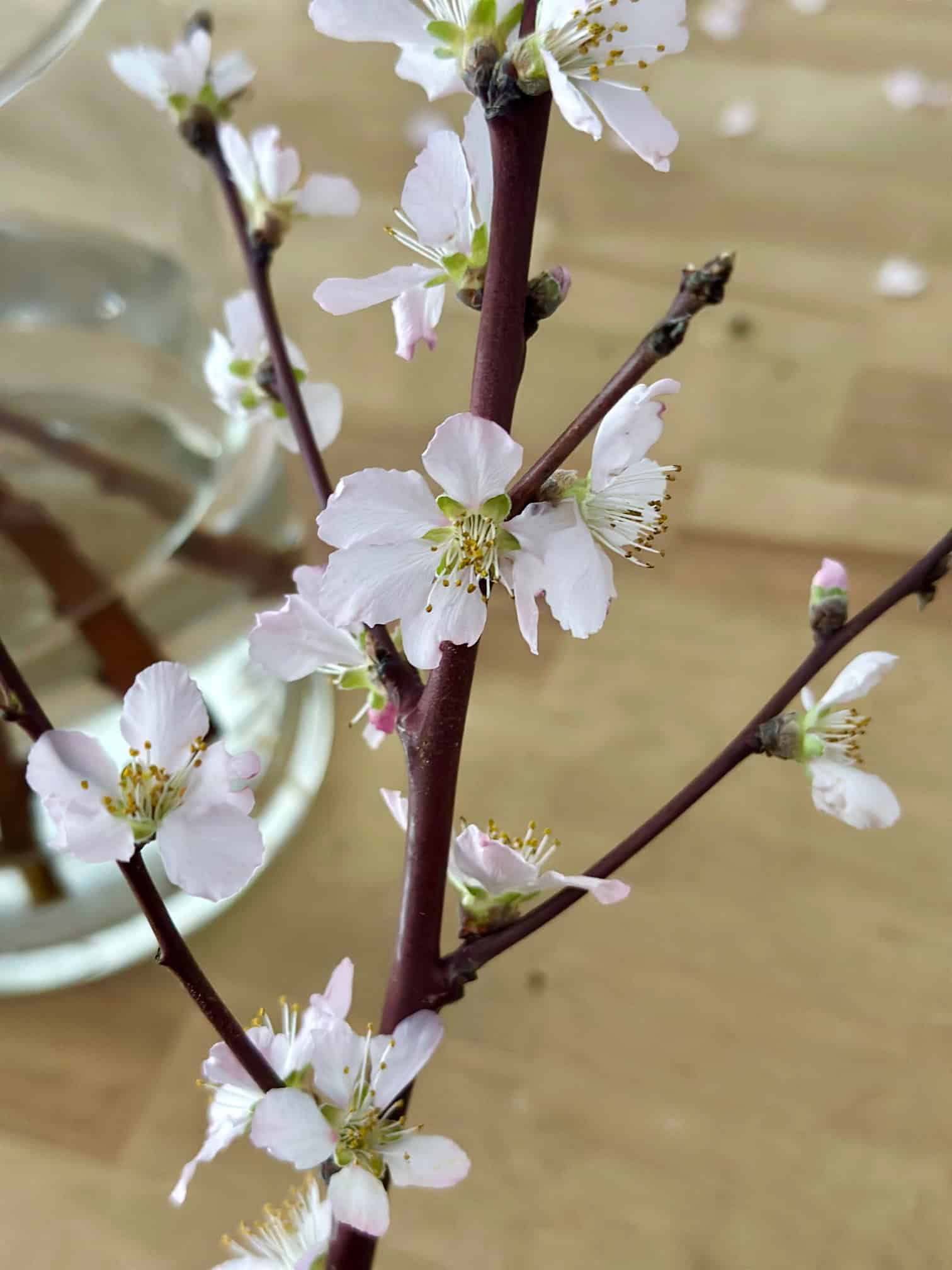
Flowering branches are fresh cut branches from early spring blooming trees and shrubs that open their blossoms indoors when placed in water.
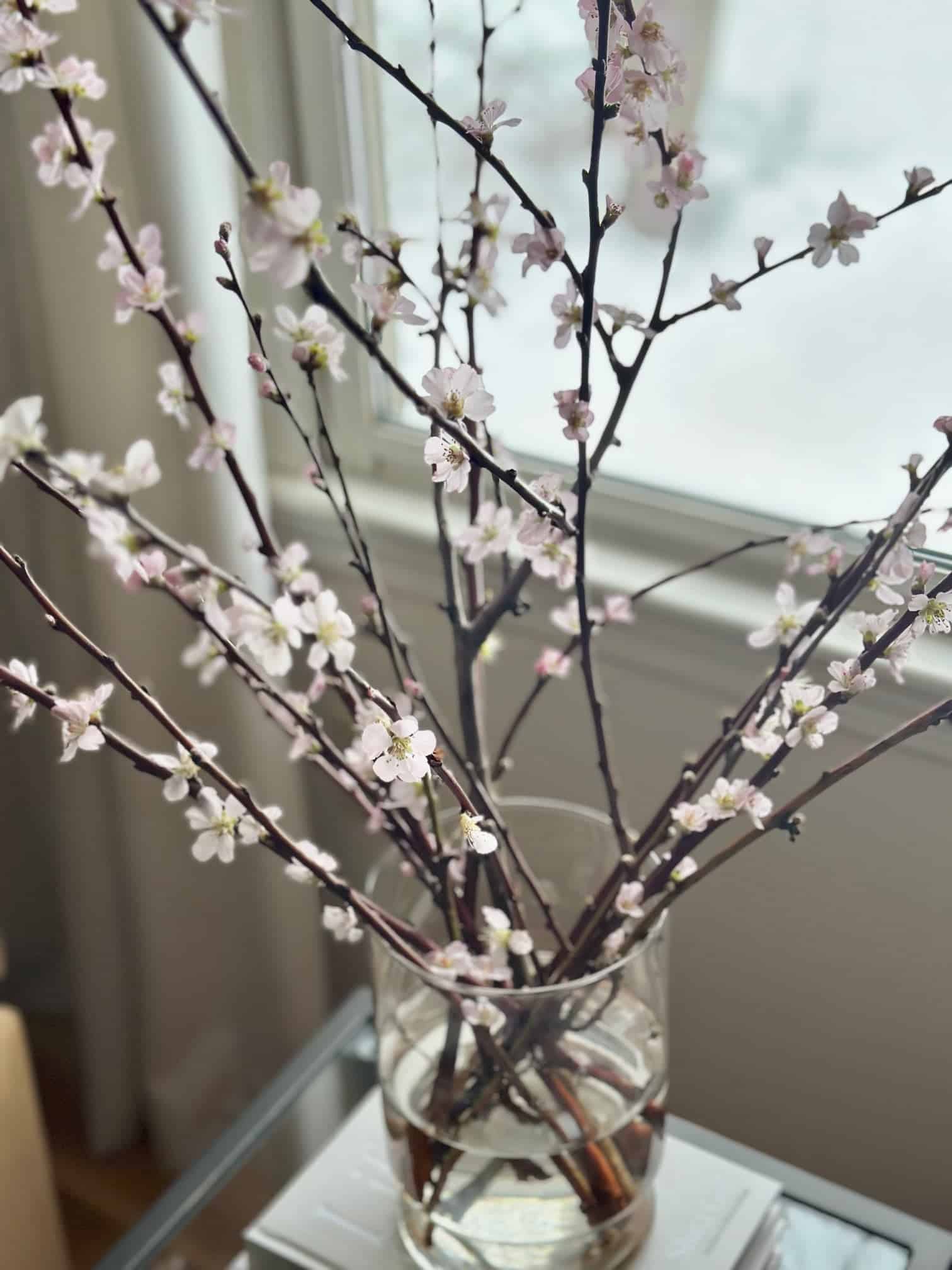
Many flowering trees bloom before their leaves appear, which gives these branches their sculptural, airy look. When placed in a vase, the buds slowly begin to open over several days, creating a natural arrangement that feels both simple and striking.
You may also hear this process referred to as forcing branches. In late winter or early spring, branches that already contain flower buds can be brought indoors where the warmth and water encourage the buds to open earlier than they would outside.
Some of the most popular flowering branches include cherry blossom, forsythia, quince, magnolia, pussy willow, and lilac.
Beautiful flowering branches to look for in early spring
If you love decorating with seasonal flowers, flowering branches are worth watching for at grocery stores and florists in late winter and early spring.
Some beautiful options include:
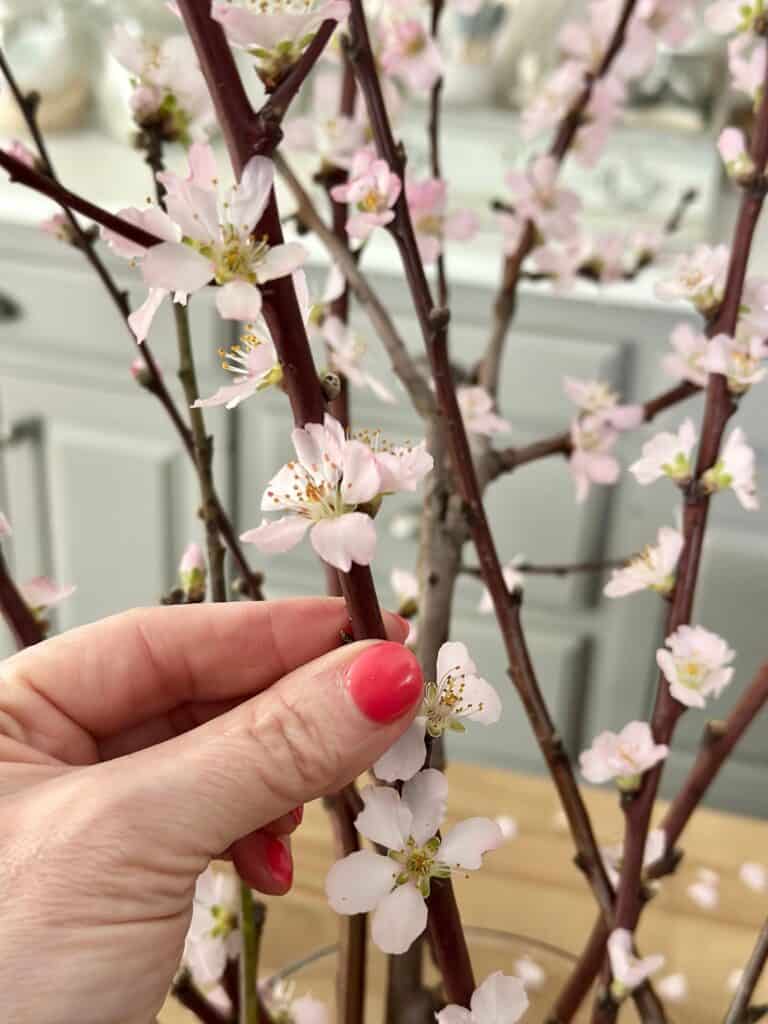
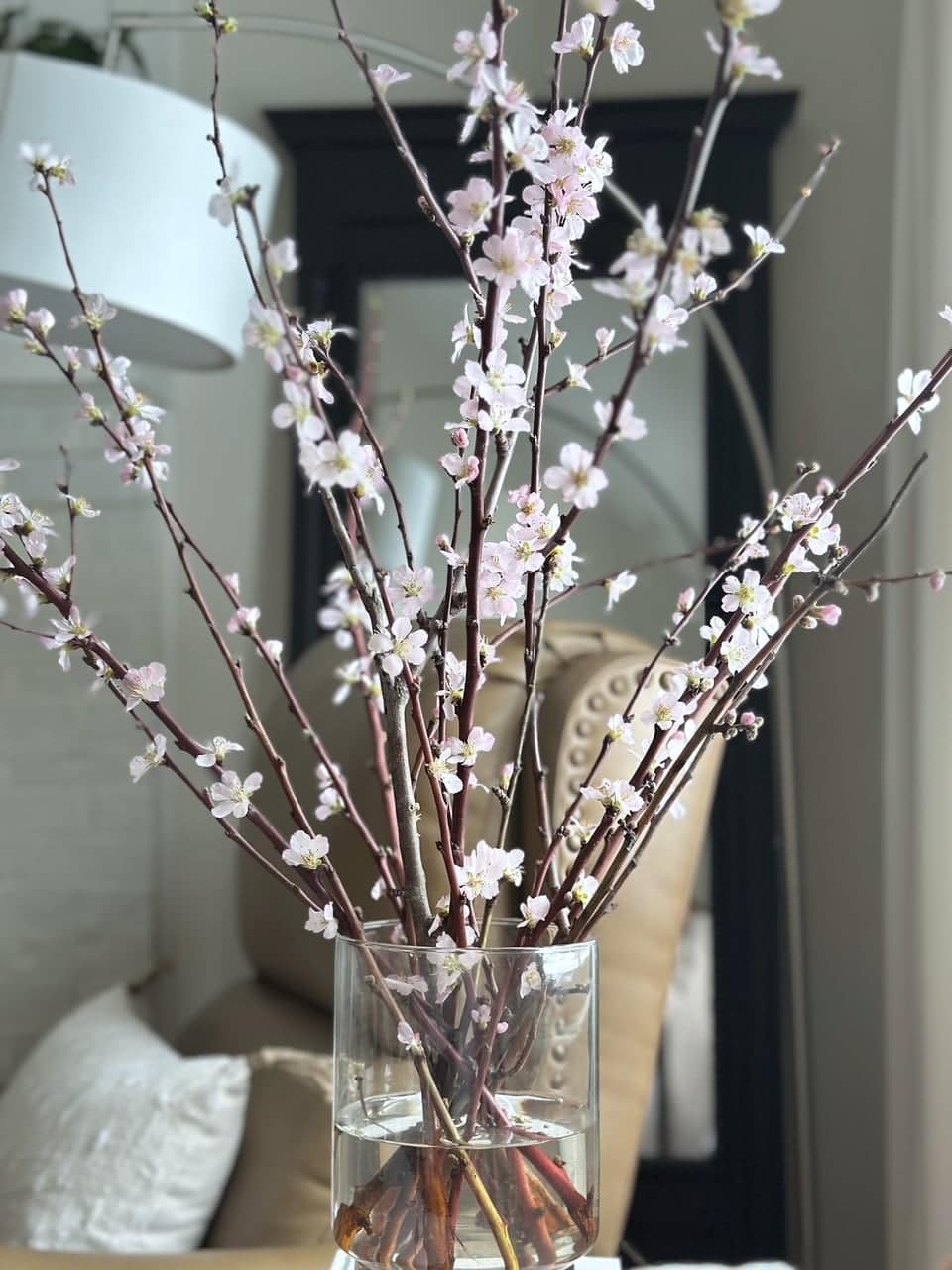
Cherry blossom branches: Soft pink blossoms open along delicate branches, creating a romantic and airy arrangement.
Plum blossom branches: Very similar to cherry blossoms, plum blossoms produce delicate pink or white flowers along slender branches and are often available in late winter.
Forsythia branches: Bright yellow blooms appear along long stems and instantly brighten a room.
Quince branches: Quince branches produce beautiful pink or coral blossoms that add color and texture to a vase.
Pussy willow branches: These branches are known for their soft gray catkins and are often one of the first signs of spring.
Magnolia branches: Magnolia buds slowly open into large, dramatic flowers that feel elegant and sculptural.
My tips for caring for flowering branches
Before I started blogging, I spent many years working with flowers. I worked for several florists and eventually ran my own floral business. Preparing stems properly is something you learn very quickly when you work with fresh flowers every day.
Flowering branches are incredibly beautiful, but because they have woody stems they benefit from a little extra preparation. These are a few simple techniques I still use whenever I bring branches into the house.
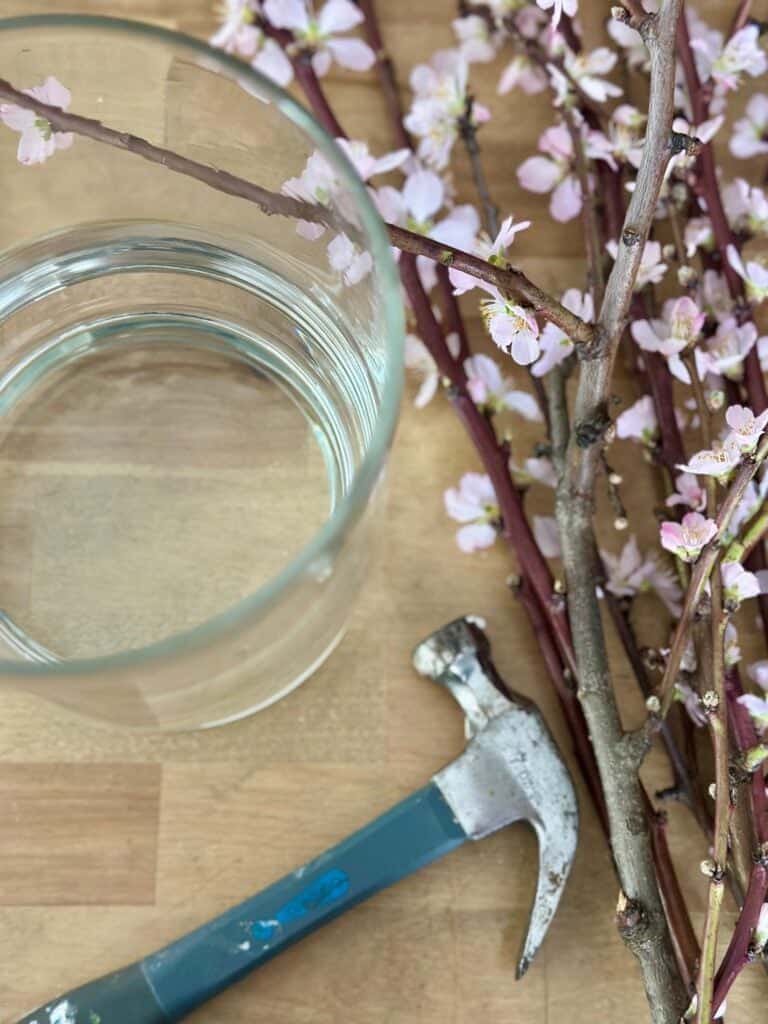
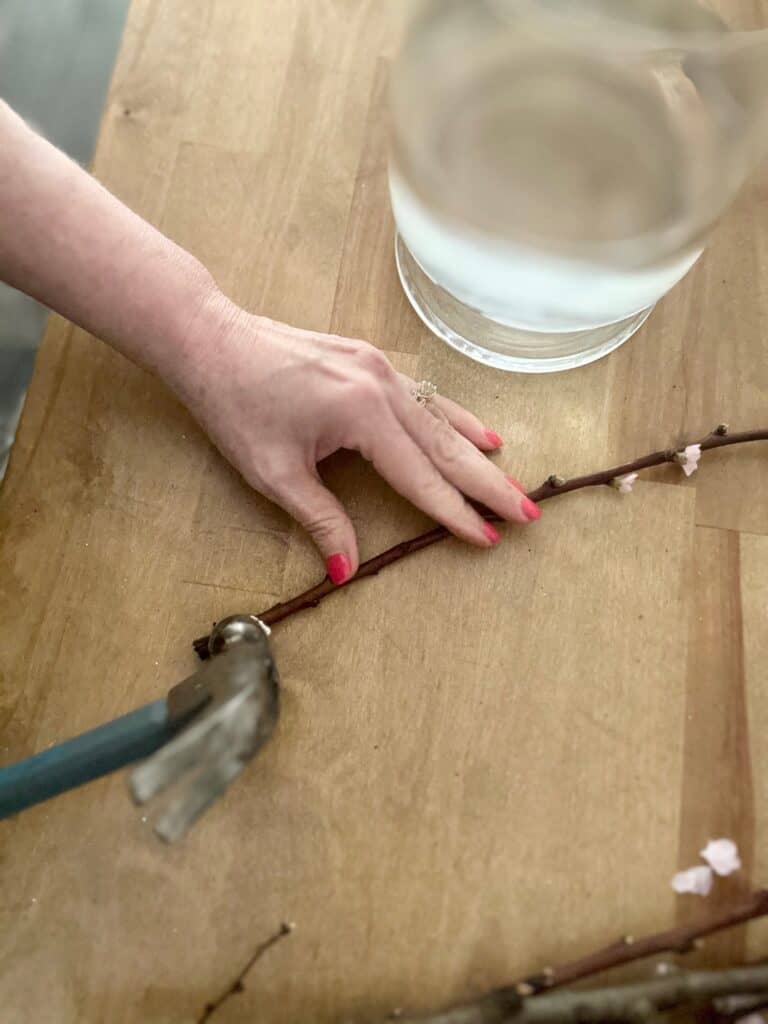
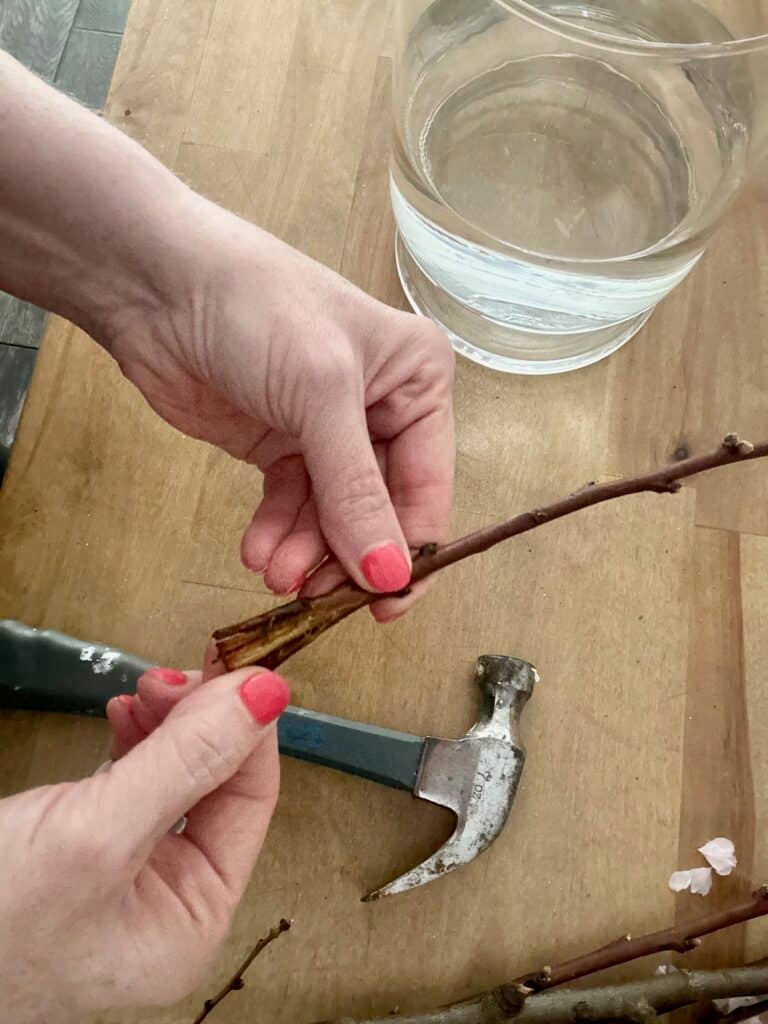
Gently crush the base of woody stems: Many flowering branches have tough stems that do not absorb water easily. Using a hammer to gently crush the bottom inch or two of the stem helps open the fibers so the branch can take in water more efficiently.
This technique works well for many woody stems, including cherry blossom, forsythia, quince, and lilac.
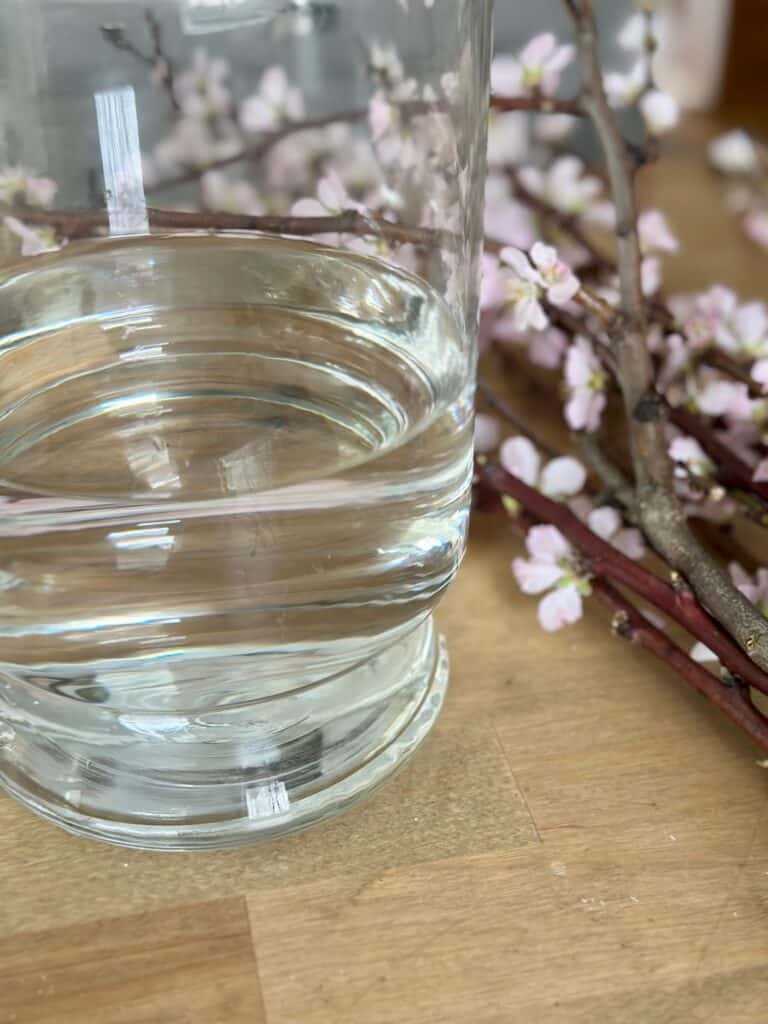
Start with fresh cuts: Before placing the branches in water, trim the ends at an angle with sharp pruners or scissors. A fresh cut allows the stem to begin absorbing water immediately.
Use a large vase: Branches need room to spread naturally. A larger vase helps them fan out and creates that loose, airy look that makes flowering branches so beautiful.
Change the water regularly: Just like fresh flowers, flowering branches last longer when the water stays clean. Changing the water every few days helps prevent bacteria and keeps the branches looking fresh.
How long flowering branches last
Flowering branches typically last anywhere from one to three weeks in a vase, depending on the variety.
The blossoms usually open first, and after the flowers fade you may notice small green leaves beginning to appear along the branches. This can give the arrangement a second life and extend its beauty for a little while longer.
Styling flowering branches in your home
One of the reasons I love flowering branches so much is how easy they are to style. Because they are tall and sculptural, a simple vase is often all you need.
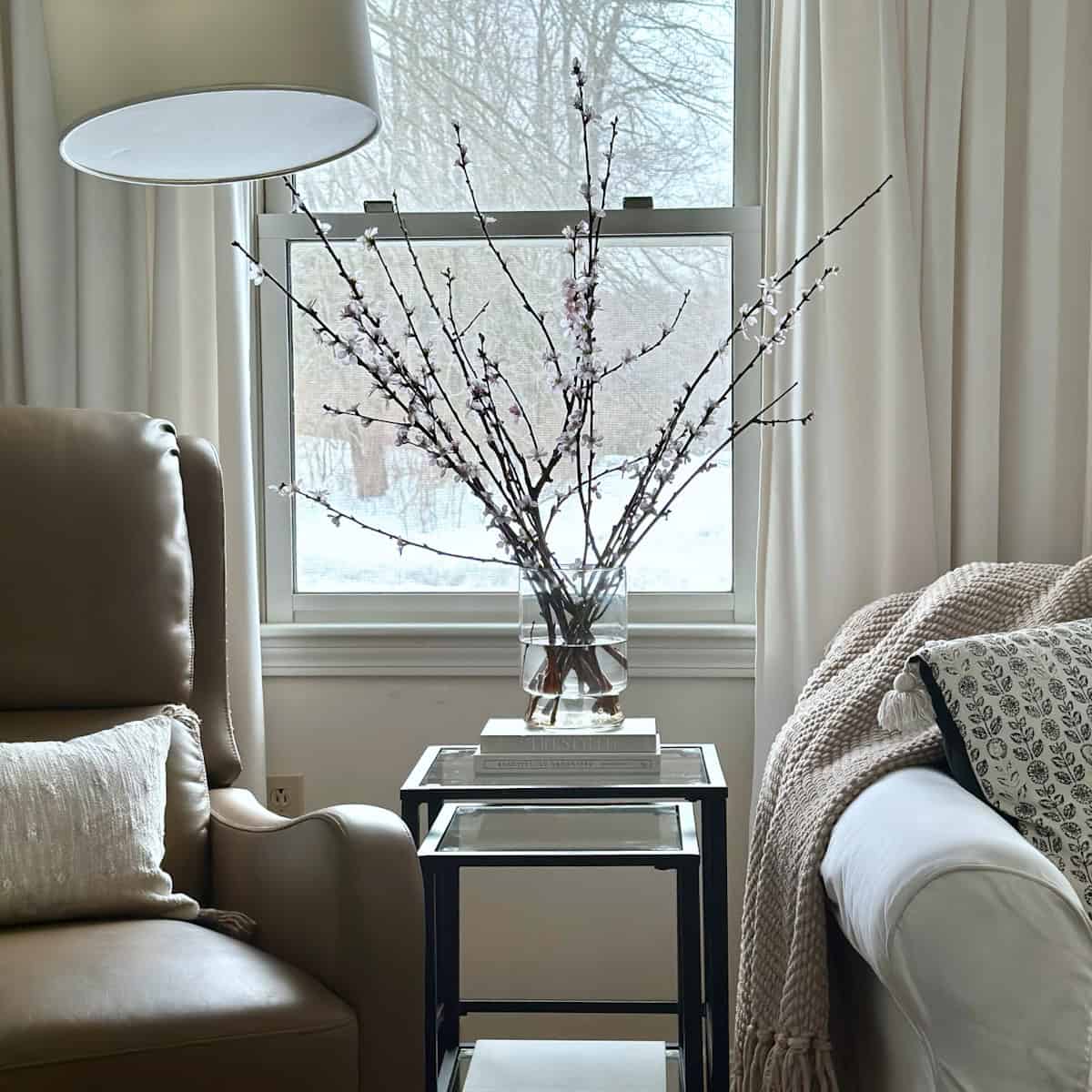
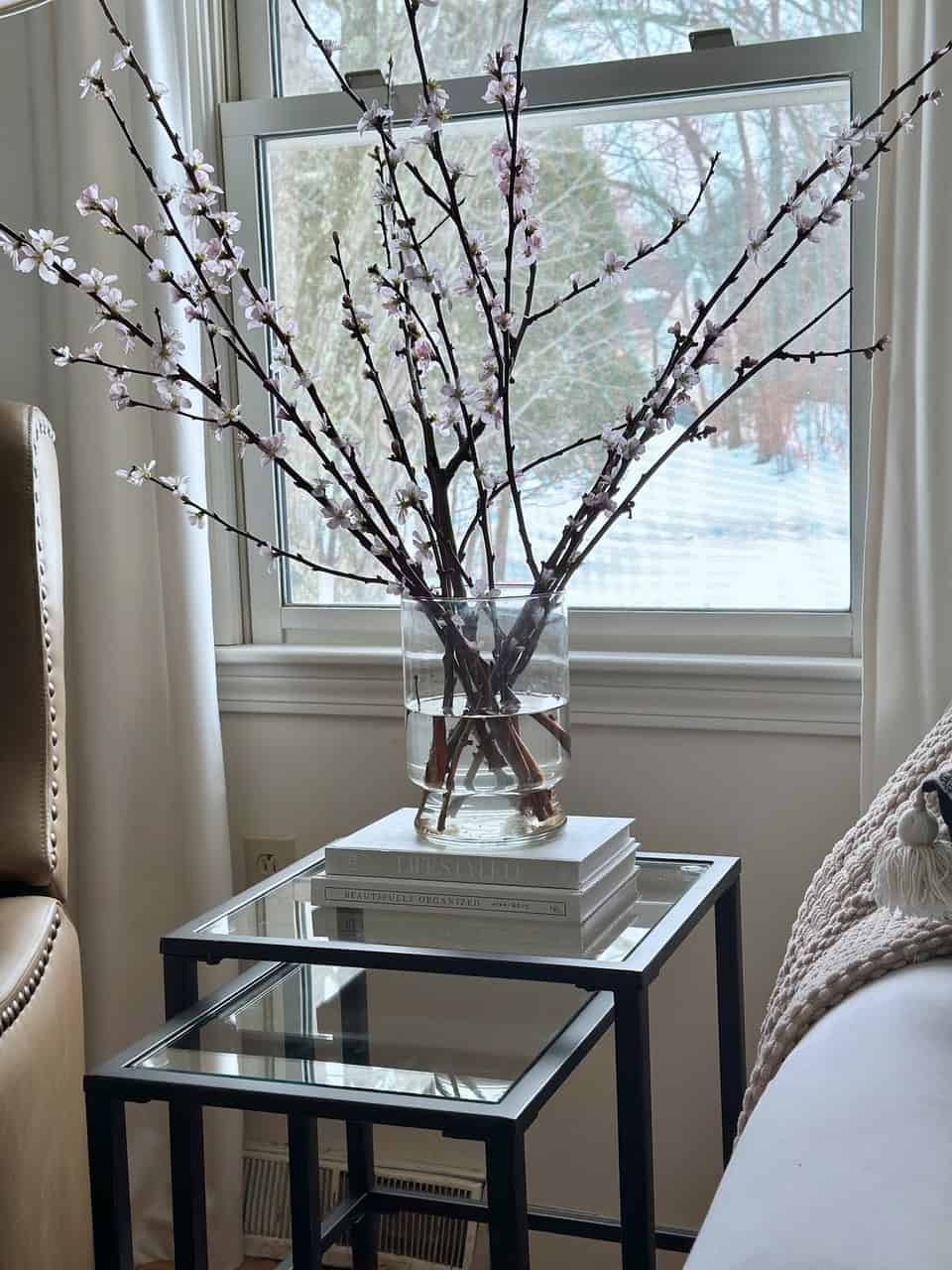
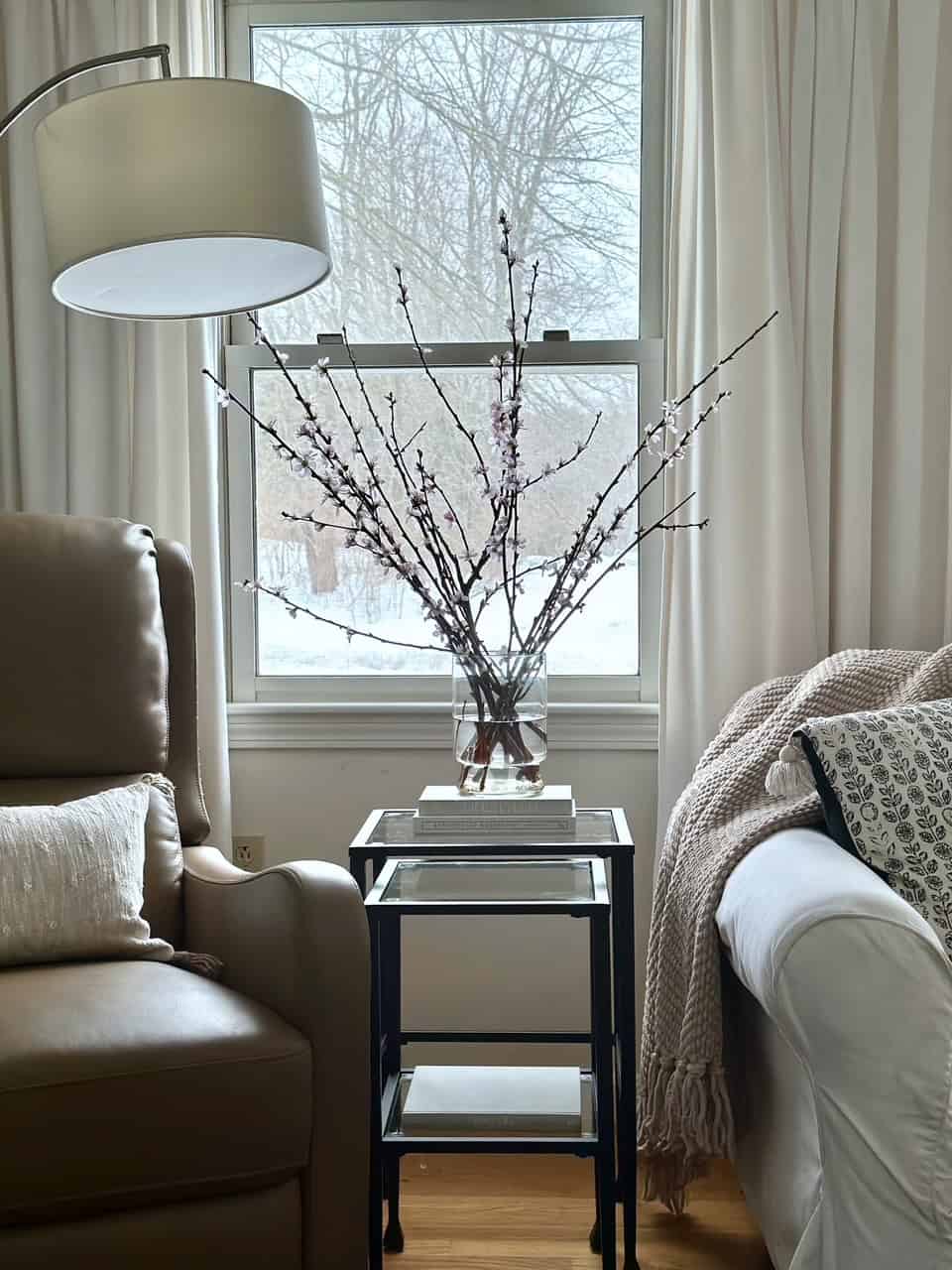
They look beautiful on a side table or end table in your living room where their height can add interest to the room. A clear glass vase works especially well because you can see the natural structure of the branches and the water inside.
Another simple styling trick is to place the vase on a stack of decorative books. This adds a little height and creates a styled vignette without much effort.
Flowering branches also make lovely centerpieces for a dining table or kitchen island. Their natural shape keeps the arrangement feeling relaxed and organic.
How to keep branches standing upright
Sometimes flowering branches can feel a little floppy in a vase. A few simple tricks can help keep them standing tall and looking natural.
Buy two bunches instead of one: When I bring flowers home from the grocery store, I almost always buy two bunches instead of one. I recommend the same thing in my grocery store flower tips post because a single bunch often looks sparse and does not have enough stems to support itself in the vase.
Two bunches create a fuller arrangement and allow the branches to naturally lean against one another for support.
Start with the largest branch in the center: Place the largest or strongest branch in the center of the vase first. Then add the remaining branches at slight angles around it. The largest branch acts like an anchor and helps support the rest of the arrangement.
Add a few simple branches: If the stems still feel loose, you can tuck in a few plain branches from outside. These act as natural support and help keep the flowering stems standing upright.
Choose a tall, heavier vase: A taller vase gives the stems more structure and helps stabilize the arrangement so the branches can spread out naturally.
A note about floral foam: Flowering branches can also be arranged in fresh floral foam, which is sometimes helpful if you are creating a structured centerpiece. However, I usually prefer placing branches directly in water because woody stems tend to absorb water more easily that way.
Where to find spring branches
Flowering branches often appear in grocery stores and florists during late winter and early spring.
You may find them at places like Trader Joe's, local florists, or garden centers. If you have flowering trees or shrubs in your yard, you can also cut a few branches and bring them inside to bloom.
Faux flowering branches as an alternative
Fresh flowering branches are always my first choice. There is something special about watching the blossoms slowly open and change over the course of a week or two.
That said, high quality faux flowering branches have come a long way in recent years. Many makers are doing a much better job creating stems that look surprisingly realistic, especially when arranged in a simple vase.
Faux branches can be a good stand in when fresh branches are not available at your local grocery store or florist. Another benefit is that they last indefinitely, so you can bring them out year after year when you want a touch of early spring in your home.
If you are shopping for faux flowering branches, there are a few details that make a big difference.
Look for realistic woody stems: Good faux branches should have natural looking stems with variation in color and texture rather than smooth plastic. Brown toned branches often look more realistic than green.
Pay attention to the flowers: The blossoms should have soft shaping and layered petals so they look more natural and less flat. Avoid shiny leaves or petals for a natural look.
Choose natural colors: Soft pinks, whites, and muted tones usually look more convincing than very bright or artificial looking colors.
I personally still prefer fresh flowering branches whenever I can find them, but a beautiful faux arrangement can be a great option when fresh stems are out of season.

Tip: Make Your Own Faux Flowering Branches: If you enjoy DIY projects, you can also make your own faux flowering branches. I have a step-by-step tutorial showing how I created DIY faux flowering branches for spring decor. It is an easy project and a great option if you cannot find fresh branches locally or want something you can reuse year after year.
Shop faux flowering branches:

Frequently asked questions
Flowering branches are simply cut branches from flowering trees or shrubs that are placed in water so the buds can open indoors. Common examples include cherry blossom, forsythia, magnolia, quince, pussy willow, and lilac branches.
Most flowering branches last between one and three weeks in a vase, depending on the type of branch and how often the water is refreshed. The blossoms usually appear first, and after the flowers fade you may notice small leaves beginning to grow along the stems.
Yes, flowering branches should be placed in a vase filled with fresh water just like cut flowers. Woody stems absorb water best when the ends are freshly cut and gently crushed to help the branch take up moisture.
Flowering branches last longest when the stems are trimmed before placing them in water, the base of woody stems is gently crushed, and the water is changed every few days. Using a large vase and removing any leaves below the water line also helps keep the branches fresh.


Flowering branches are one of the simplest ways to welcome spring indoors. A single vase filled with blooming branches can completely change the feeling of a room, adding height, softness, and a touch of the season without much effort.
Whether you find them at a grocery store, a florist, or cut a few branches from your own yard, they create an arrangement that feels natural and relaxed. And one of the things I love most is that they do not need anything else. A vase of flowering branches on their own can be just as beautiful as a full bouquet.
If you see a bundle of branches while you are out shopping in late winter or early spring, bring them home and give them a try. They are an easy way to brighten a room and enjoy a little preview of the season ahead.
Keep creating, friends!