
How to Make an Ivy Topiary with a Grapevine Wreath

This simple ivy topiary uses a grapevine wreath as a natural topiary form, creating a unique living centerpiece full of texture and charm. Learn how to plant, train, and care for an ivy topiary using inexpensive materials and easy step-by-step instructions.

Content may contain affiliate links. When you shop the links, we receive a small commission at no cost to you. Thanks for supporting my small business.
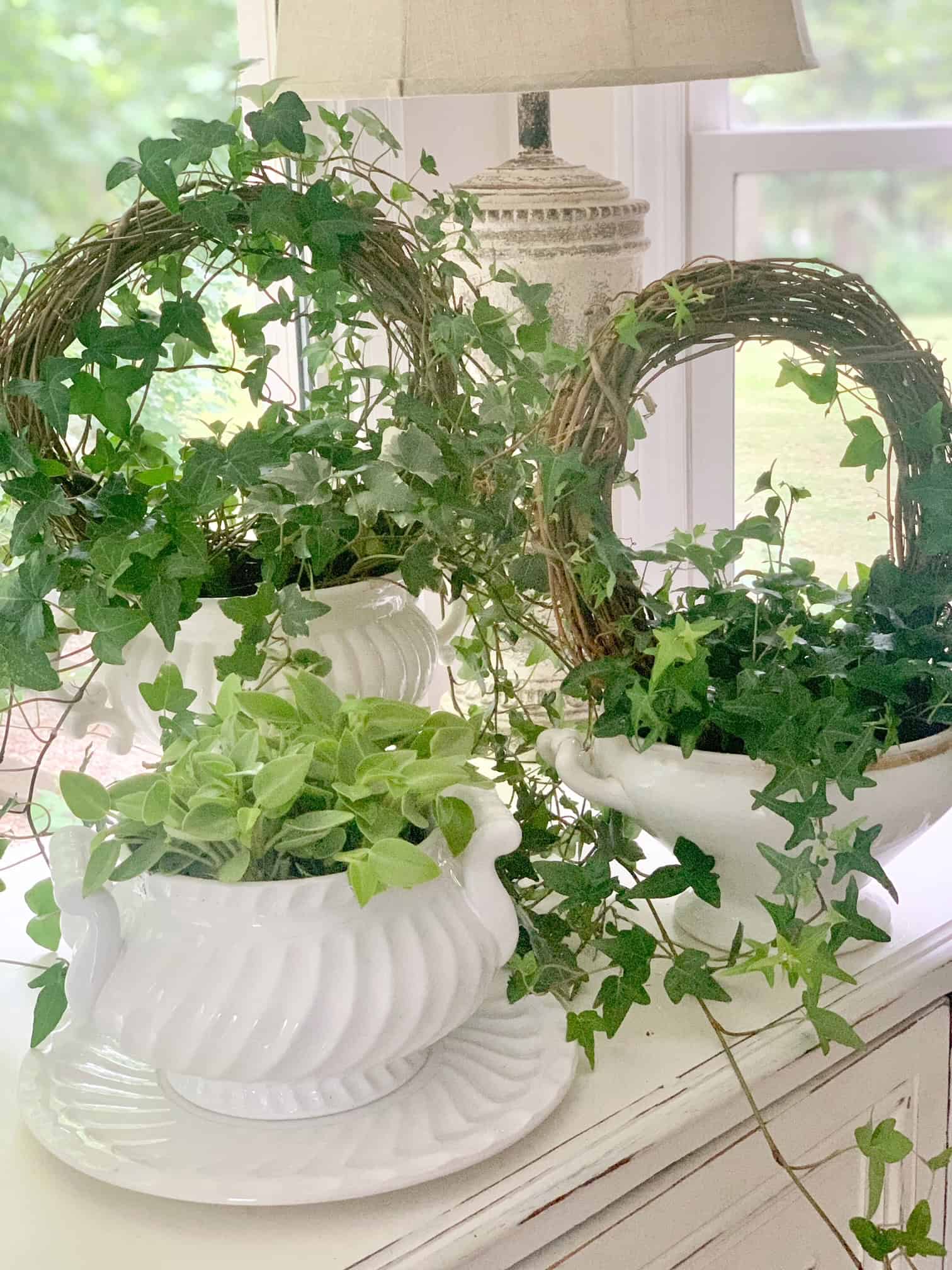
If you love topiaries but want something a little less formal, this ivy topiary made with a grapevine wreath is a beautiful alternative. Instead of hiding the topiary form, the rustic grapevine remains visible, adding texture and natural charm to the design.
Using English ivy and a simple grapevine wreath, you'll create a living ring topiary that becomes fuller over time as the vines grow and wrap around the form. It's an easy project that's perfect for adding a touch of greenery to your home.
At a Glance: Ivy Topiary
_______________________
- Project Type: DIY living topiary
- Plant Used: English ivy (Hedera helix)
- Topiary Form: Grapevine wreath
- Skill Level: Beginner
- Time to Create: About 30 minutes
- Best Location: Bright indoor light or partial outdoor shade
- Maintenance: Occasional watering, pruning, and vine training
- Container: Soup tureen, planter, or decorative pot
- Special Feature: The grapevine wreath remains visible, adding natural texture and charm
- Also Works With: Angel vine, rosemary, creeping fig, jasmine, and mint
- Lifespan: Can be enjoyed for years with proper care and training
Summarize and Save this content on:
Jump to:
What is an ivy topiary?
An ivy topiary is a living plant trained to grow around a form or frame. As the ivy grows, the vines are gently wrapped and guided to create a decorative shape.
While many topiaries are grown on wire frames, this version uses a grapevine wreath for a more natural look. The exposed grapevine adds texture and character while providing support for the growing ivy.
Why use a grapevine wreath?
Most ivy topiaries are grown on wire forms, but I love using grapevine wreaths instead. The natural branches add texture and character while providing a sturdy structure for the ivy to grow around.
Grapevine wreaths are inexpensive, easy to find at craft stores, and come in a variety of sizes. As the ivy fills in, some of the grapevine remains visible, creating a softer, more organic look than a traditional topiary.
It's one of the reasons this project feels so unique. Rather than hiding the form completely, the wreath becomes part of the design.

How to make an ivy topiary with a grapevine wreath
Supplies
For this project, I used standard English ivy plants (Hedera helix). I used both green and variegated (green and white in the leaves) types for a nice variety. Ivy plants are timeless and a popular choice for topiaries as they are a vining plant. The ivy stems grow "leggy" which is a great thing when training a topiary.
- Soup Tureen - or other similar size container
- Potting Soil
- Small stones, rocks or gravel
- 8" grapevine wreath
- 4- 4" potted Ivy plants
Tools
- Hand shovel
- Watering can
- Florist's wire
- Wire cutters
- Floral string or Garden Twine
- Scissors or Floral design knife
- Spray bottle
Step by step instructions
- Prepare the tureen
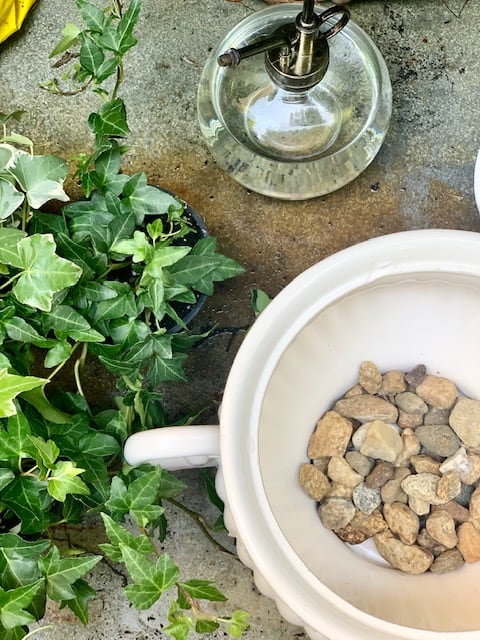
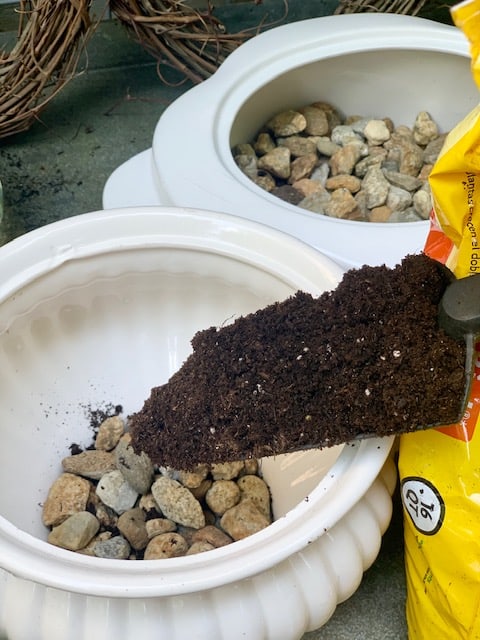
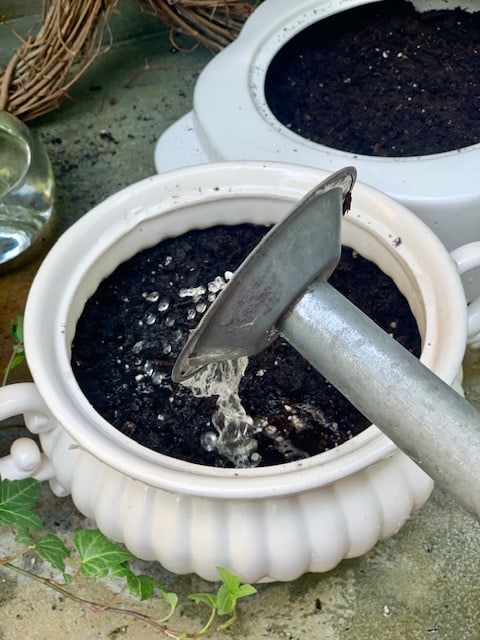
Cover the bottom of the tureen with a layer of small stones for drainage. Add potting soil until the tureen is ¾ full. Moisten the soil with water.
- Plant the ivy
Remove each ivy plant from its original pot. Plant all four ivy plants in the prepared soil. Ensure the base of each ivy plant is beneath the soil, while allowing the leaves to gracefully crown the top. Position the two plants with the longest stems on opposite sides of the tureen, as these will be used to wrap around the wreath.
- Position the grapevine wreath
Carefully nestle the grapevine wreath on its side in the soil, avoiding the ivy plants as much as possible. To stabilize the wreath, use floral wire (flocked wire works best). Cut three pieces of wire in half and shape each into a U. Push these U-shaped wires over the bottom of the wreath at three evenly spaced points to secure it in place.
- Create the topiary shape
Shape With the wreath secured, gently weave the ivy stems around it. Start with the longest stems from the plants on the sides. For this ivy topiary, additional support from floral string or garden twine wasn't necessary, as the ivy easily wrapped and held onto the wreath.
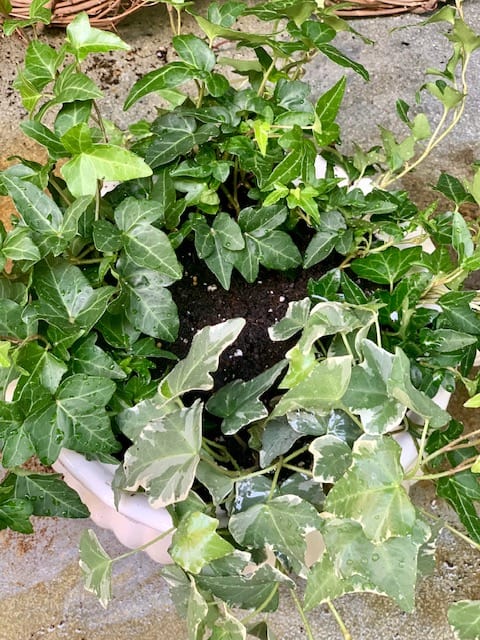
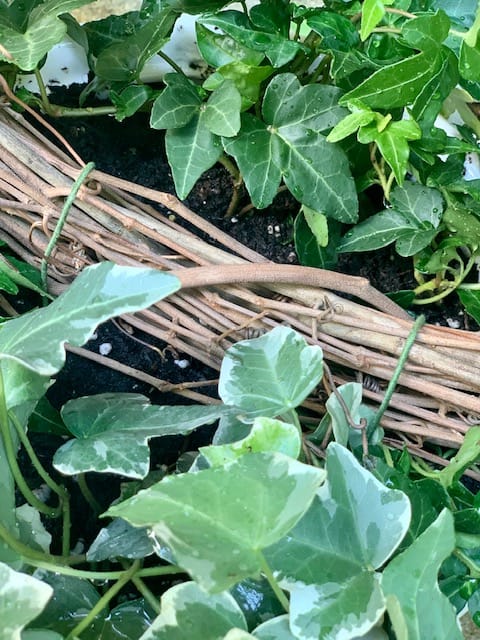
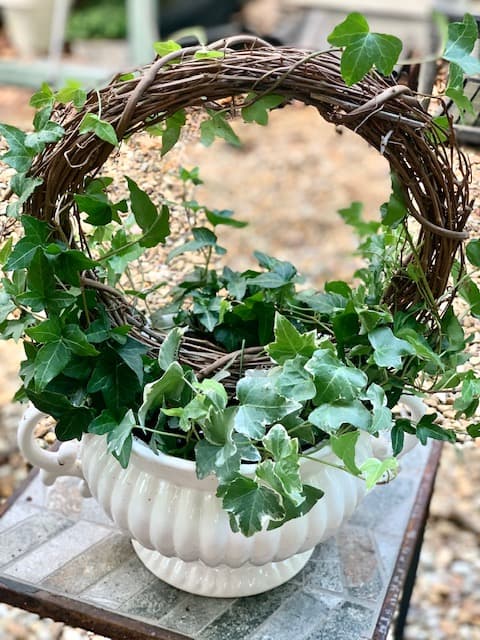
A Note About the Container: I planted my ivy topiary in a vintage soup tureen because I love giving old pieces a new purpose. While a traditional terracotta pot works beautifully, an unexpected container can add even more character to the finished project. If you enjoy repurposing vintage finds, be sure to check out my guide to using soup tureens as planters, where I share more ideas for turning these charming pieces into unique homes for plants.
How to care for an ivy topiary
Ivy topiaries are surprisingly easy to care for. Place your topiary near a bright window and water when the top inch of soil feels dry to the touch. If the leaves begin to look a little less perky than usual, it's often a sign that the plant needs a drink.
Because I planted mine in a vintage soup tureen without drainage holes, I'm careful not to overwater. Ivy prefers evenly moist soil, but it doesn't like sitting in water. Over time, you'll learn your plant's watering rhythm and be able to tell when it's thirsty.
As the ivy grows, continue wrapping and weaving the vines around the grapevine wreath to maintain the shape of the topiary. This simple training process is what gradually transforms a small plant into a full, living sculpture.
One thing I've noticed is that my ivy topiary grows much faster outdoors during the summer months than it does indoors. Each year, I move it to a partially shaded spot outside, where it quickly fills in with fresh growth. Before the first frost arrives, I bring it back indoors and continue enjoying it throughout the colder months.
Other plants that work well for grapevine wreath topiaries
While I used English ivy for this project, many other trailing and vining plants can be trained around a grapevine wreath using the same technique. The key is choosing a plant that produces long, flexible stems that can be gently wrapped around the form.
Angel Vine
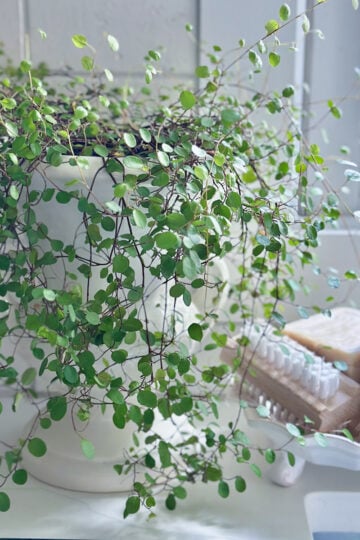
Angel vine is one of the most popular choices for small topiaries. Its delicate stems and tiny leaves quickly weave through the wreath, creating a light and airy look.
Rosemary
Rosemary creates a more structured topiary with fragrant foliage and woody stems. As it grows, the stems can be gently trained around the wreath to create a beautiful living centerpiece.
Creeping Fig
Creeping fig naturally clings to surfaces as it grows, making it well suited for topiary projects. Its small leaves create a lush, dense appearance over time.
Jasmine
With its twining growth habit and fragrant blooms, jasmine can be trained around a grapevine wreath to create a beautiful flowering topiary.
Mint
Mint grows quickly and responds well to regular trimming, making it a fun option for outdoor topiaries. In addition to its attractive foliage, you'll have fresh herbs to harvest throughout the season.
When choosing a plant, look for varieties with long, flexible stems rather than compact mounding growth. These plants are easiest to wrap around the wreath and train into shape as they grow.

Frequently asked questions
That depends on the size of the ivy plants and growing conditions. Most ivy topiaries begin filling in within a few months and become much fuller after a growing season of regular growth and training.
Yes. Ivy often grows much faster outdoors than indoors. Place it in a partially shaded location during the growing season and bring it indoors before the first frost if you live in a cold climate.
As new vines grow, gently wrap and weave them around the grapevine wreath. Occasional trimming will encourage fuller growth and help maintain the desired shape.
Absolutely. Angel vine, rosemary, creeping fig, jasmine, and even mint can be trained around a grapevine wreath using the same basic technique. Choose plants with long, flexible stems for the best results.


An ivy topiary is one of those projects that becomes more beautiful with time. What starts as a simple grapevine wreath and a few small plants gradually grows into a living sculpture filled with texture and character. I love that the natural grapevine remains part of the design, giving the finished topiary a softer, more organic feel than traditional forms.
Whether you display it on a table, mantel, or sunny windowsill, this easy project adds year-round greenery to your home and can be enjoyed for years with just a little care and occasional training. If you love creating with plants, this is a project that's well worth trying.
Have fun with it, friends!







I FINALLY got around to doing this with a white tureen I bought years ago and some ivy plants I bought last summer! I really struggled securing my vine wreath into the soil; I may have needed a slightly smaller one but couldn’t find one. I ended up using pins I made from the outer corners of wire hangers. Not the most secure, but it stays upright. I love it!
Hopefully as the plant grows it will help support the wreath! Thank you for visiting the blog!
Hey Stephanie, Always fun reading your blog!
Thank you Susan!
Beautiful! You are so talented! Thanks fo teaching us. ♥️🙏🌹
Thank you so much!
Super cute and what a great idea! They look so pretty in those white tureens! Love love love this project! Now, I wish we had a Blessing Barn! 💜❤️💜
Thank you Maraye!!!