
How Often Should You Water Peace Lily Plants?

Peace lilies typically need water about once a week, but timing depends on light, temperature, and humidity. Water when the top inch of soil feels dry, and always allow excess water to drain. During winter, this common houseplant uses less water, so watering should be reduced. Drooping leaves are a common sign a peace lily is thirsty.
Peace lilies (Spathiphyllum) are one of those plants that come with watering questions almost as soon as you bring them home. Many guides will give you a number, like "once a week," but in reality there isn't a one size fits all schedule for peace lilies. The right time to water depends on your individual home, including how bright your light is, how warm or cool it is, the pot and soil you use, and even the season.
What I've found with my own peace lilies is that they tell you what they need if you learn to read the signs. Rather than watering by the calendar, I touch the soil, watch the leaves, and adjust for the time of year. Once you do that, you'll find peace lilies are actually quite straightforward to care for, and watering becomes less guesswork and more instinct.
Jump to:
Questions I get a lot about peace lilies
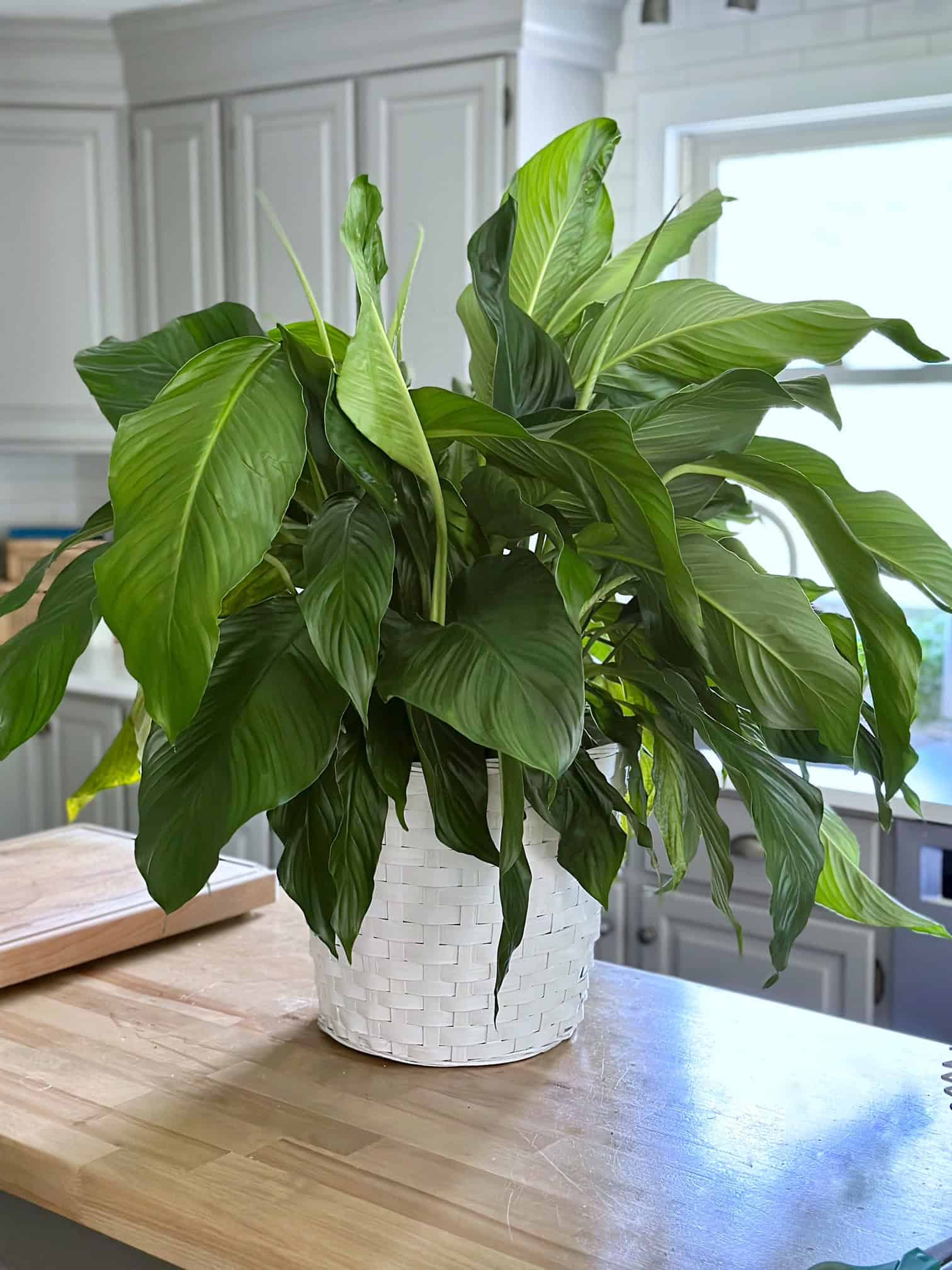
Peace lilies usually let you know they're thirsty by drooping their leaves. Before watering, I always check the soil. If the top inch feels dry and the plant looks less perky than usual, it's time to water.
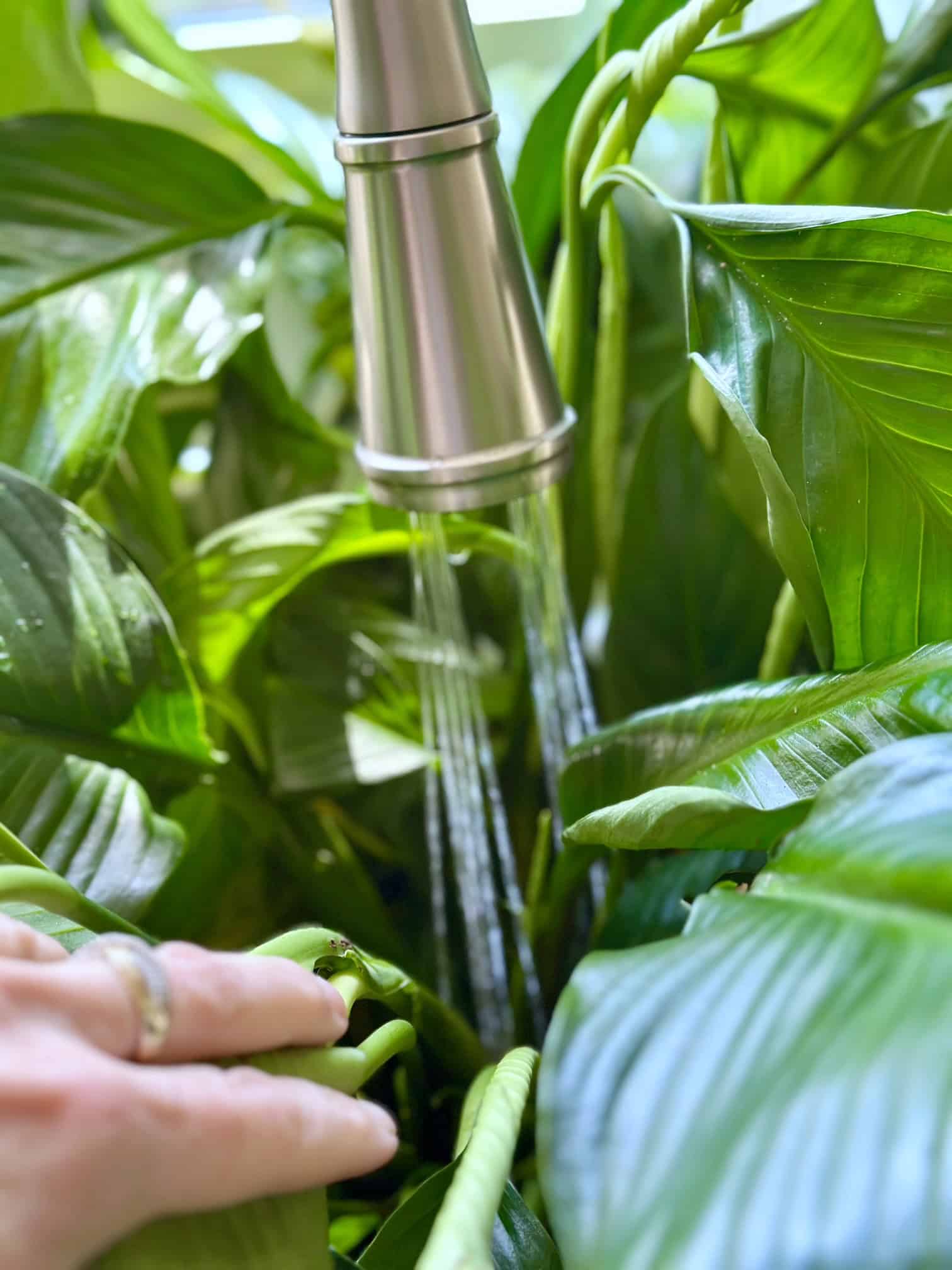
Peace lilies do best when watered from the top so moisture moves evenly through the soil. I water slowly until excess drains from the bottom of the pot, typically in my kitchen sink.
Yes, peace lilies need light to stay healthy, but not direct sun. They grow best in bright, indirect light, which supports steady growth without scorching the leaves.
The best spot for a peace lily is near a bright window with indirect light, such as an east-facing window or a few feet back from a sunnier one. I also avoid placing them near heat vents or cold drafts, since they prefer a stable environment.
Quick answer: How often should you water a peace lily?
There are two common ways people approach watering peace lilies.
The first is the general guideline you'll see most often. In many homes, peace lilies are watered about once per week, allowing the top inch of soil to dry out between waterings. This can be a helpful starting point if you're new to the plant.
The second, and the method I personally rely on, is to watch the plant itself. Peace lilies are very expressive. When they begin to look slightly droopy and the soil feels dry, it's time to water. Light levels, temperature, pot size, and the season all affect timing, so the plant's cues are usually more reliable than a calendar.
For most people, using the weekly guideline as a loose reference while paying attention to the plant works best.
How to tell when your peace lily needs water
Peace lilies are not subtle. When they're thirsty, they let you know.
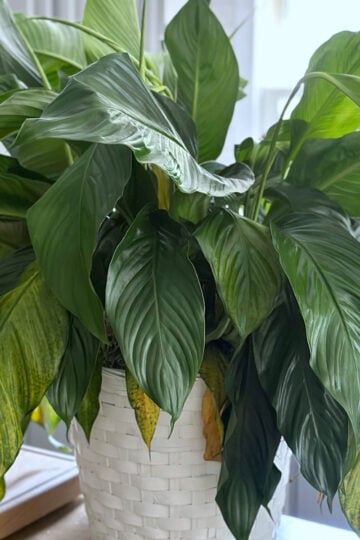
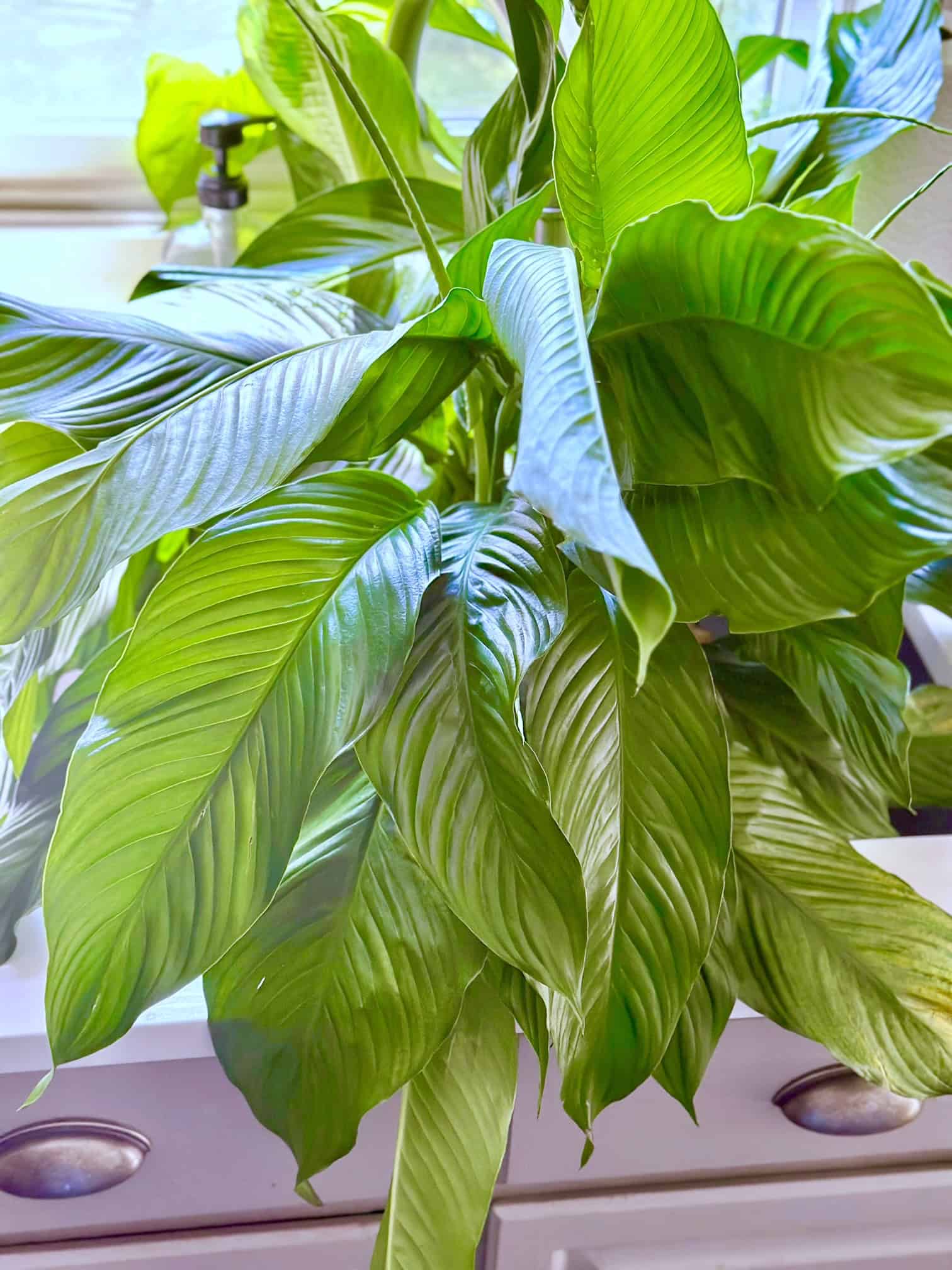
The most obvious sign is drooping leaves. The whole plant can suddenly look dramatic and wilted, almost overnight. If the soil feels dry to the touch, this is usually your peace lily asking for water.
I also pay attention to the soil itself. If the top inch feels dry and the pot feels lighter than usual, that's another clear signal it's time to water.
Yellow leaves can be trickier. They don't always mean the plant needs water. In fact, yellowing can be a sign of too much water or too little, which is why checking the soil before watering is so important. The plant may be loud, but it still helps to listen closely.
Does your peace lily need fertilizer? Find out and learn how to feed your plants using common household scraps.
Watering tips that actually work
With larger plants, especially peace lilies, I almost always water them right at the kitchen sink. As long as the pot has good drainage, this makes watering simple and much less messy.
I let the water run through the soil slowly and thoroughly, making sure it flows freely out of the bottom of the pot. Then I leave the plant in the sink for a bit so it can drain well before putting it back in place. Peace lilies really don't like sitting in leftover water, and this helps avoid that problem altogether.
A few other tips that make a difference:
- Use room-temperature water rather than cold
- Water slowly and evenly, not all at once
- Make sure excess water fully drains before returning the plant to its spot
- Peace lilies can be sensitive to chlorine, so filtered or distilled water often works best
This approach has been the most consistent for me, especially with larger peace lilies that are harder to manage in a sink saucer setup.

Seasonal watering adjustments
Peace lilies don't need the same amount of water year-round, and this is one place where a lot of people get tripped up.
In spring and summer, when days are longer and light levels are higher, peace lilies are actively growing. During this time, they tend to use water more quickly, so watering usually becomes more frequent. I still check the soil first, but I expect to water more often during these months.
In fall and winter, everything slows down. Growth pauses, light is weaker, and water sits in the soil longer. This is when I consciously pull back on watering and give the plant more time between drinks. Even if the plant looks healthy, it simply doesn't need as much.
Indoor heating can complicate things a bit. Dry air may make leaves look thirsty, but that doesn't always mean the roots need more water. Instead of watering more often, I focus on consistency and let the soil and the plant guide me.
Adjusting watering with the seasons has made a noticeable difference for my peace lilies, especially in winter when overwatering is easiest to do.
Peace lily watering problems at a glance
Signs your peace lily is overwatered
| Sign | Likely Cause | What It Means |
|---|---|---|
| Yellowing leaves | Overwatering | Roots may be stressed or sitting in soggy soil |
| Mushy stems or roots | Overwatering | Possible root rot |
| Soil stays wet for days | Overwatering | Poor drainage or watering too often |
| Foul or sour smell | Overwatering | Soil or roots are breaking down |
Signs your peace lily is underwatered
| Sign | What You'll Notice | What It Means |
|---|---|---|
| Limp or droopy leaves | Whole plant collapses | Plant is thirsty |
| Crisp or dry edges | Leaf tips feel papery | Soil has dried out too much |
| Plant perks up after watering | Improvement within hours | Underwatering was the issue |


If there's one thing to remember, it's that peace lilies are tough plants with big personalities. They may be dramatic, but they're also forgiving. A little observation, a quick soil check, and a calm approach usually solve most watering problems.
Don't stress about getting it perfect. Watch the plant, adjust as needed, and trust that it will let you know what it needs. With a bit of practice, watering a peace lily becomes second nature.
You've got this!