How to Make Chive Flower Salt

If your chive plants are covered in blossoms, turn them into this beautiful chive flower salt. Made with just fresh chive blossoms and flaky sea salt, it's an easy way to preserve the season while adding subtle onion flavor to everyday dishes. Tucked into a small jar with ribbon and a vintage spoon, it also makes a lovely homemade gift.
Content may contain affiliate links. When you shop the links, we receive a small commission at no cost to you. Thanks for supporting my small business.
Every spring, my chives are among the first herbs to burst into bloom, covering the garden with cheerful purple blossoms. It's one of my favorite signs that the growing season is officially underway. I grab my garden clippers, head outside to my herb garden, and start harvesting before those fleeting blooms disappear.
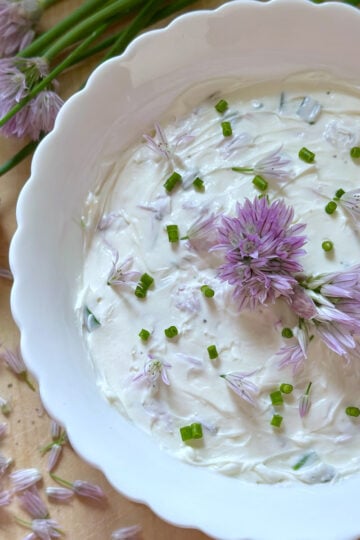
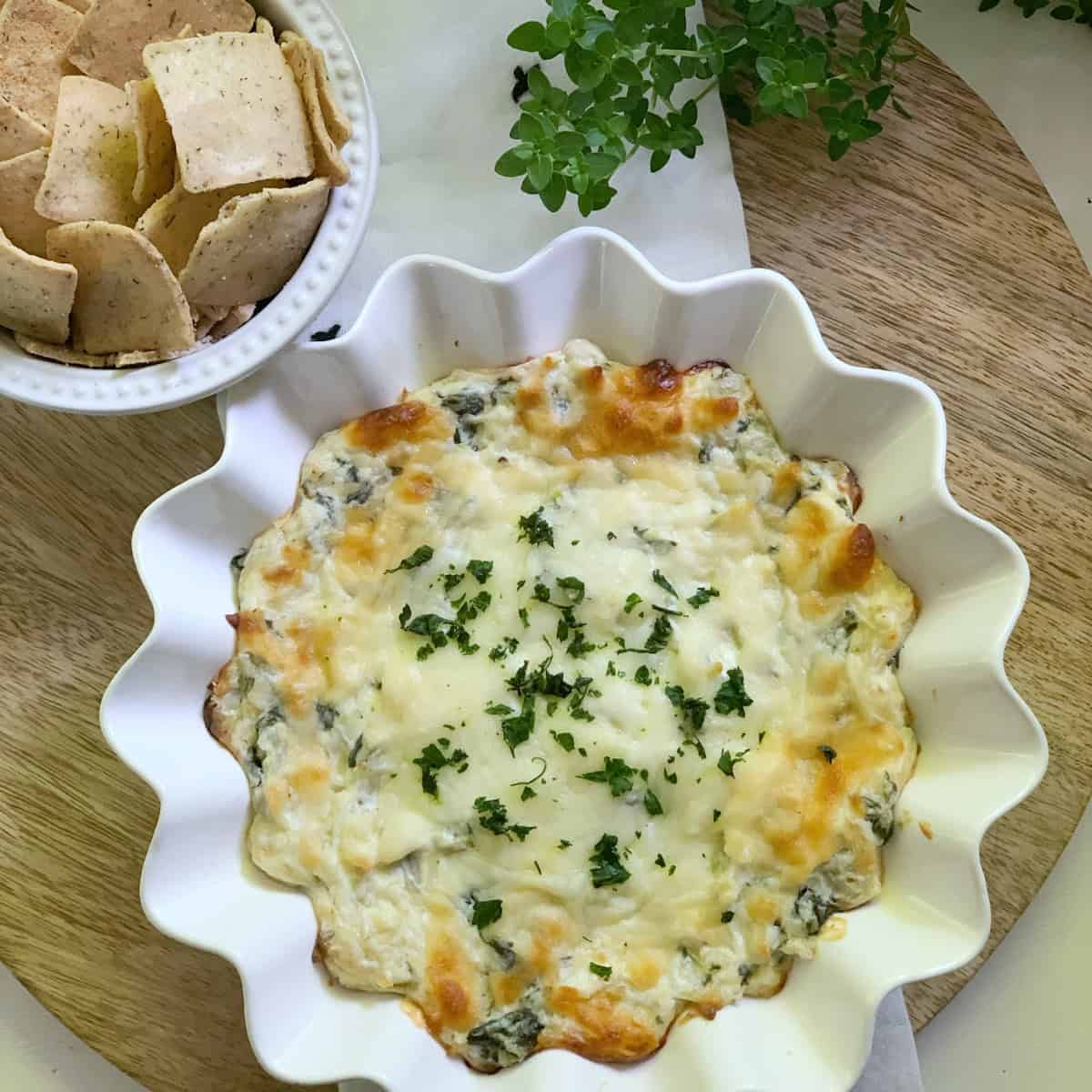
While I love using fresh blossoms in recipes like our favorite chive dip or chive blossom vinegar, turning them into chive flower salt may be my favorite way to preserve them. Made with just fresh chive blossoms and flaky sea salt, this simple recipe captures their delicate onion flavor in a finishing salt that's as beautiful as it is useful.
If you're new to cooking with chive blossoms, be sure to learn how to harvest chives properly and explore more ways to use these edible flowers in the kitchen. Once dried and tucked into a pretty jar, this homemade chive flower salt is perfect for seasoning everything from eggs and roasted potatoes to soups and vegetables. It also makes a thoughtful gift for fellow gardeners and home cooks.
At a Glance: Chive Flower Salt
_______________________
- Flavor: Delicate, savory, and lightly oniony
- Difficulty: Easy
- Prep Time: 15 minutes
- Drying Time: 12 hours
- Total Time: 12 hours 15 minutes
- Yield: 1 cup
- Servings: 48 (1 teaspoon each)
- Ingredients: Fresh chive blossoms and salt
- Best For: Eggs, roasted potatoes, vegetables, soups, and buttered bread
- Storage: Airtight container in a cool, dry place for up to 6 months
- Perfect For: Preserving spring chive blossoms and creating thoughtful homemade gifts
Summarize and Save this content on:
Jump to:
- At a Glance: Chive Flower Salt
- What is chive flower salt?
- Why you'll love this recipe
- Ingredients for this herb blossom salt
- How to make chive flower salt
- Ways to use chive flower salt
- How to store chive flower salt
- A beautiful homemade gift
- From Stephanie
- Frequently asked questions
- Check out our other herb pantry staples
- Chive Flower Salt
What is chive flower salt?
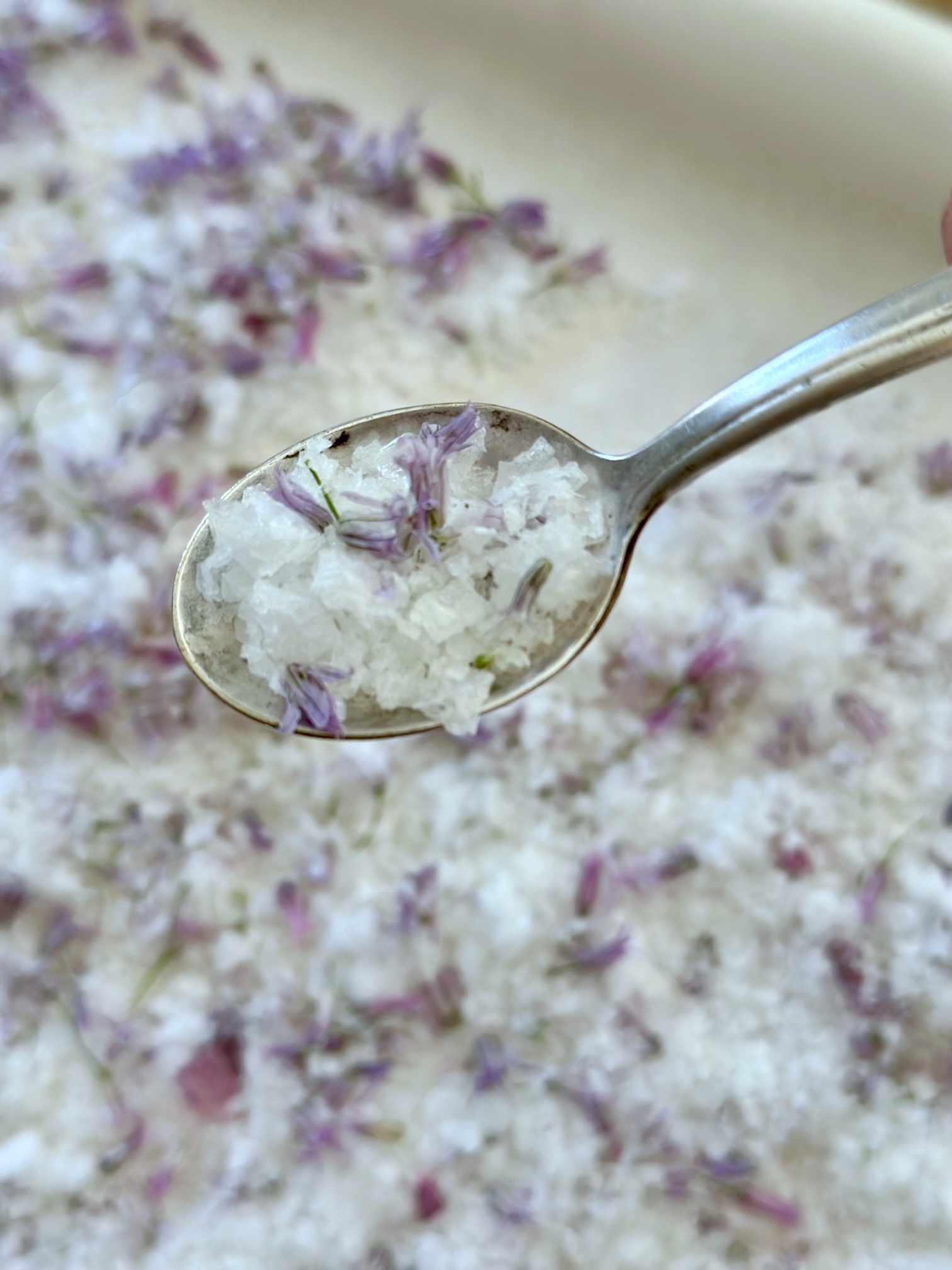
Chive flower salt is simply salt infused with fresh chive blossoms. As the blossoms dry, they lend a delicate onion flavor to the salt while creating a beautiful blend flecked with soft purple petals.
It's an easy way to preserve a short-lived spring harvest and add a subtle savory finish to everyday dishes. Sprinkle it over eggs, roasted potatoes, vegetables, soups, or warm buttered bread for a gentle burst of flavor.
And while I used flaky Maldon sea salt because I love its texture and presentation, don't let that stop you from making this recipe. Kosher salt, coarse sea salt, or even your everyday table salt will work just fine. Use what you have on hand and enjoy the harvest.
Why you'll love this recipe
- Just two ingredients. Fresh chive blossoms and salt are all you need to create this simple finishing salt.
- A beautiful way to preserve the season. Chive blossoms don't last long in the garden, making this an easy way to enjoy their subtle onion flavor long after the blooms have faded.
- Pretty enough to leave on display. The delicate purple flecks tucked among the salt make this a charming addition to your spice cabinet, countertop, or charcuterie board.
- Perfect for gifting. Pack it into a small glass jar, tie it with ribbon, and add a tiny spoon for an inexpensive homemade gift that feels thoughtful and special.
Ingredients for this herb blossom salt
You only need two simple ingredients to make this beautiful herb salt:
- Maldon sea salt flakes: I love using flaky sea salt because of its delicate texture and beautiful presentation. Maldon sea salt creates a lovely finishing salt that's perfect for gifting. That said, kosher salt, coarse sea salt, or even regular table salt will work if that's what you have on hand.
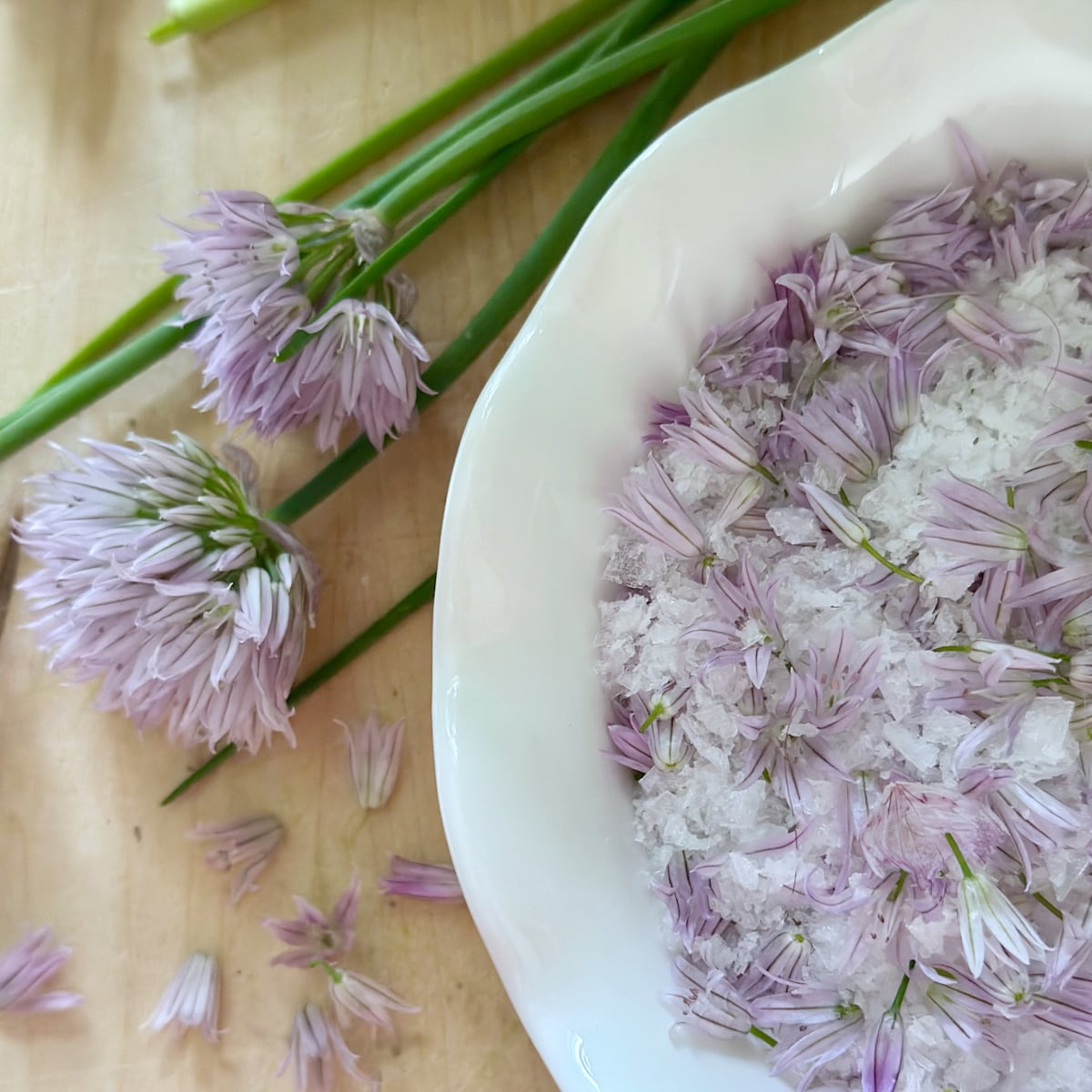
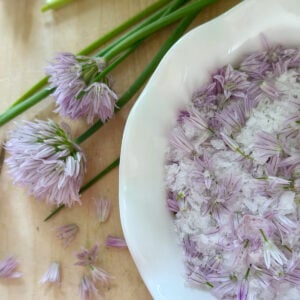
- Fresh chive blossoms: Harvest blossoms that are freshly opened and vibrant in color. Gently separate the florets from the stems before mixing them with the salt. The blossoms add a mild onion flavor and those signature purple flecks that make this salt so special.
Tip: If your chive blossoms have little garden visitors hiding inside, give them a gentle shake outdoors or a quick rinse and dry them thoroughly before using.
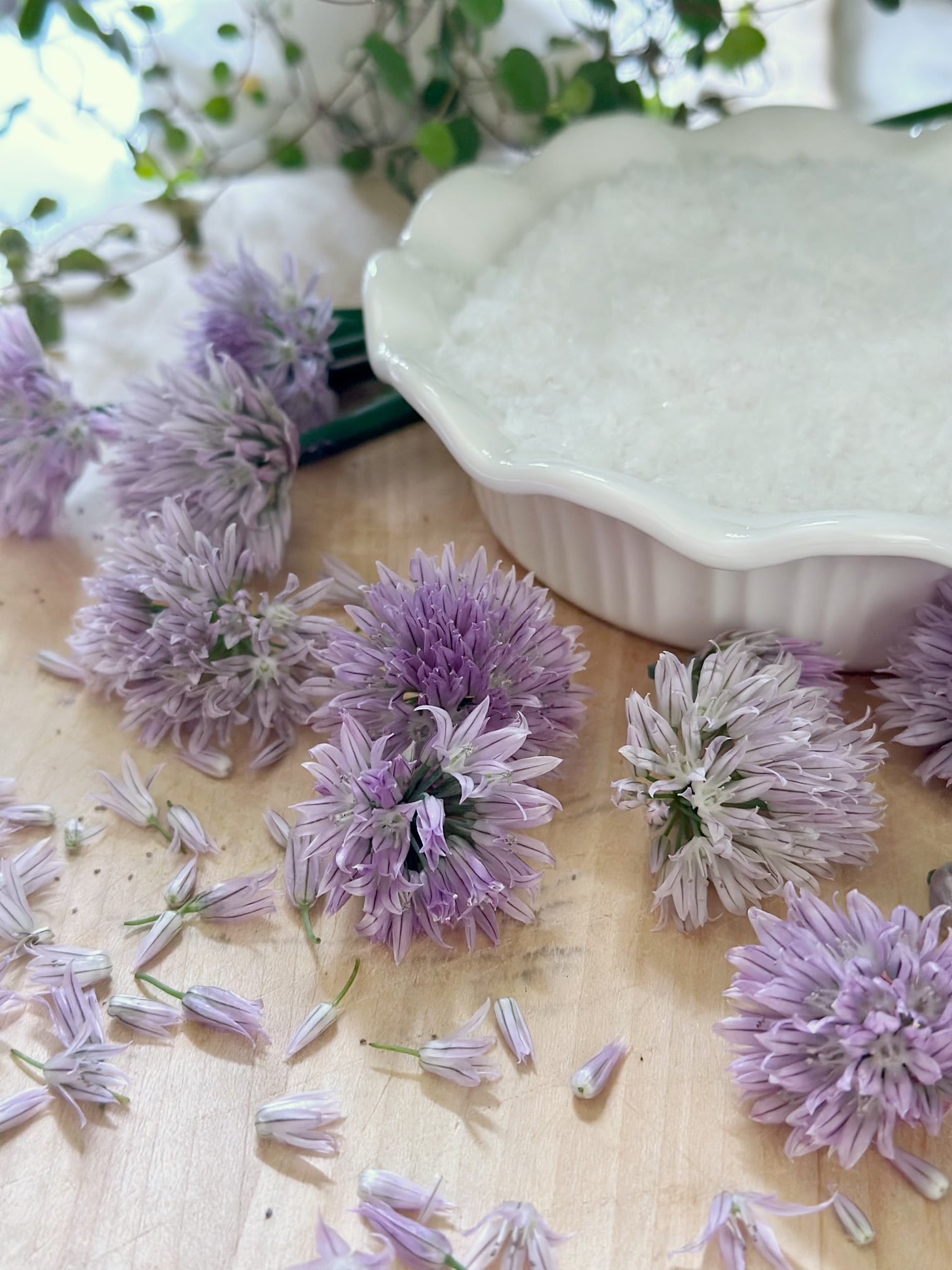
How to make chive flower salt
This simple recipe comes together in just a few easy steps. Follow along with the process photos below, and be sure to scroll down to the recipe card for exact measurements and complete instructions.
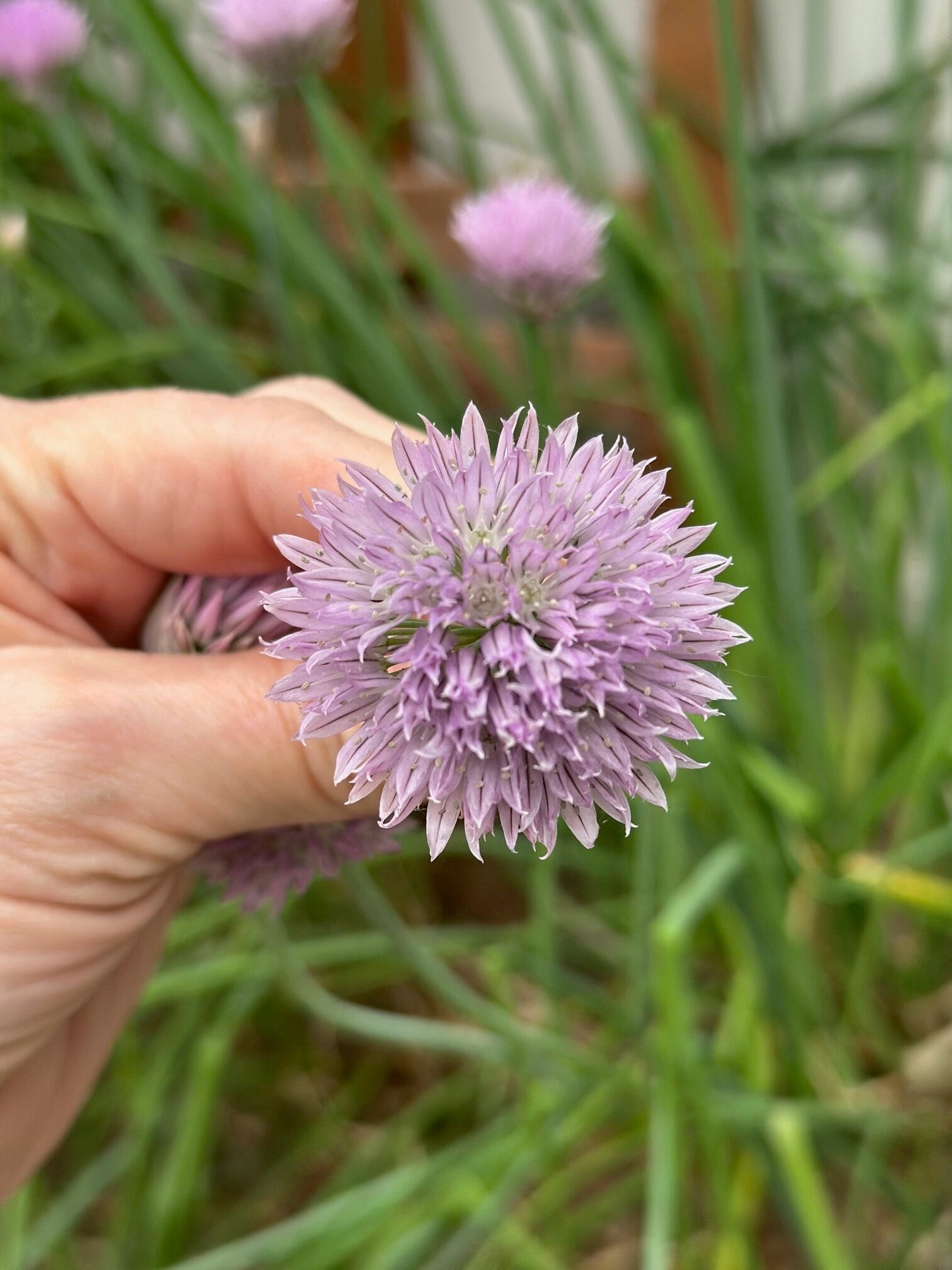
Step 1: Harvest the chive blossoms
Using clean garden scissors or clippers, snip fresh chive blossoms from the plant. Choose blossoms that are fully open and vibrant in color for the best flavor and appearance.
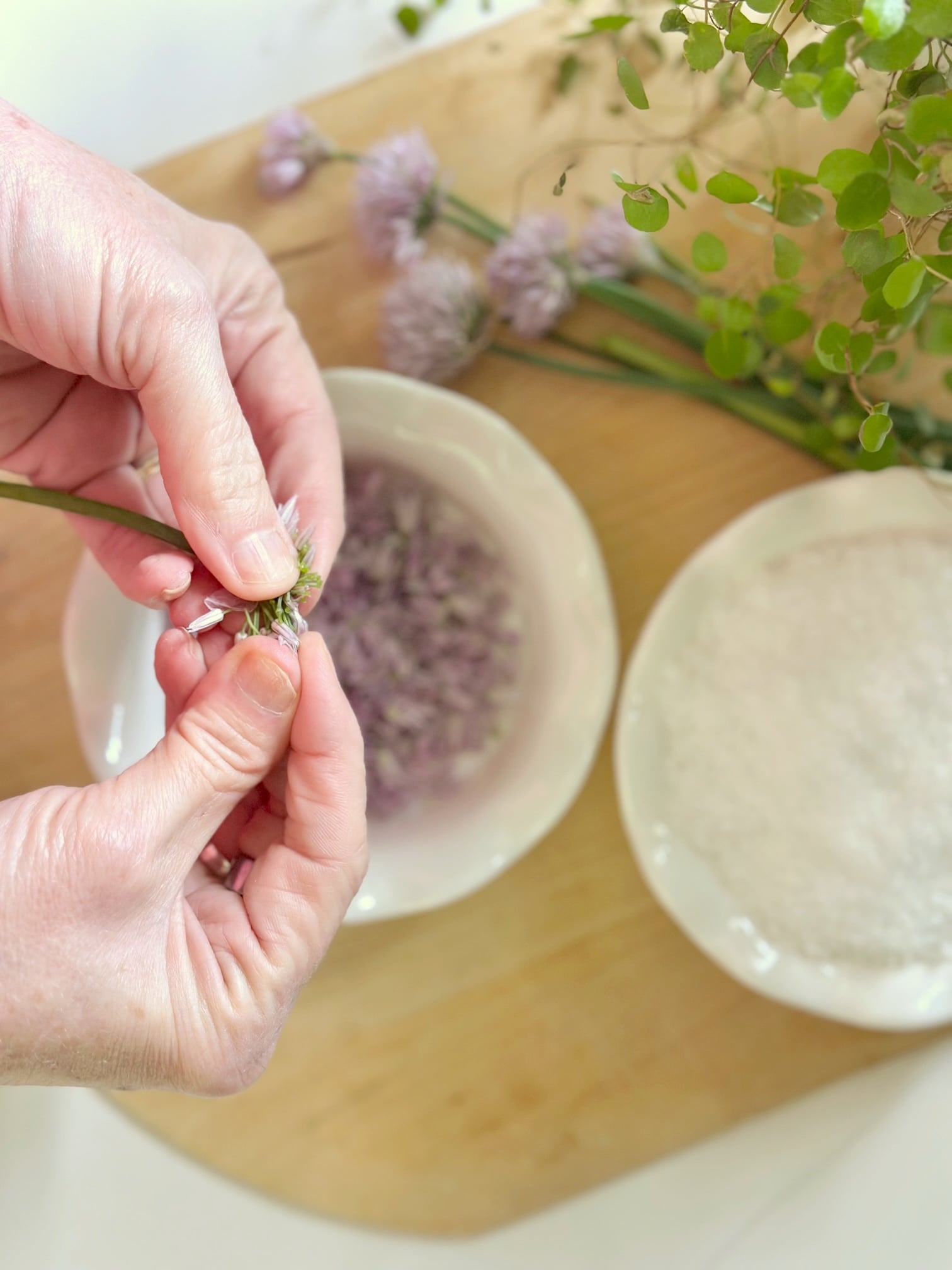
Step 2: Separate the florets
Gently pull the tiny purple florets away from the green flower heads, discarding the tough stems and base of the blossom.
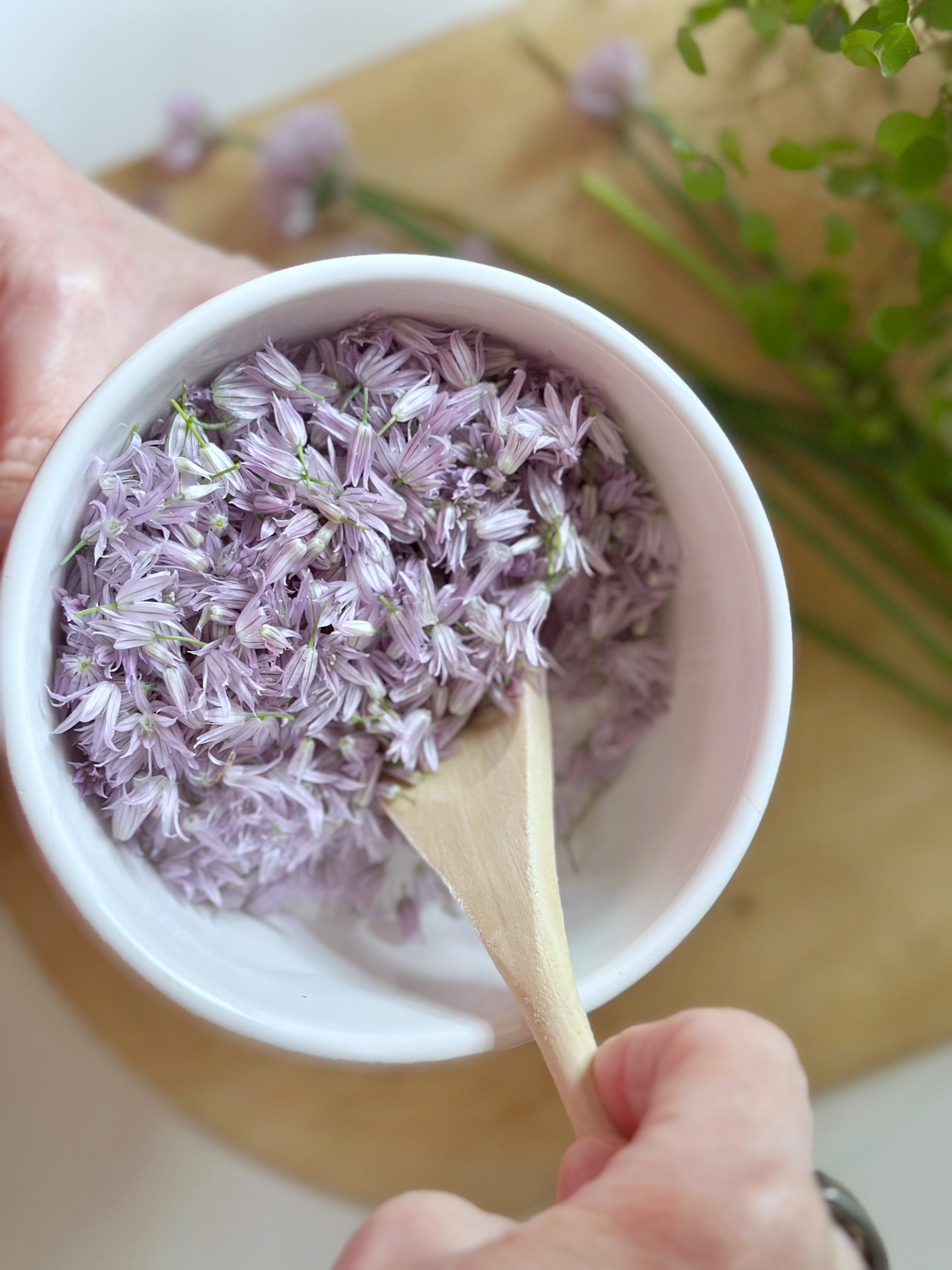
Step 3: Mix with the salt
Place the chive florets in a bowl with the sea salt and toss until the blossoms are evenly distributed throughout the salt.
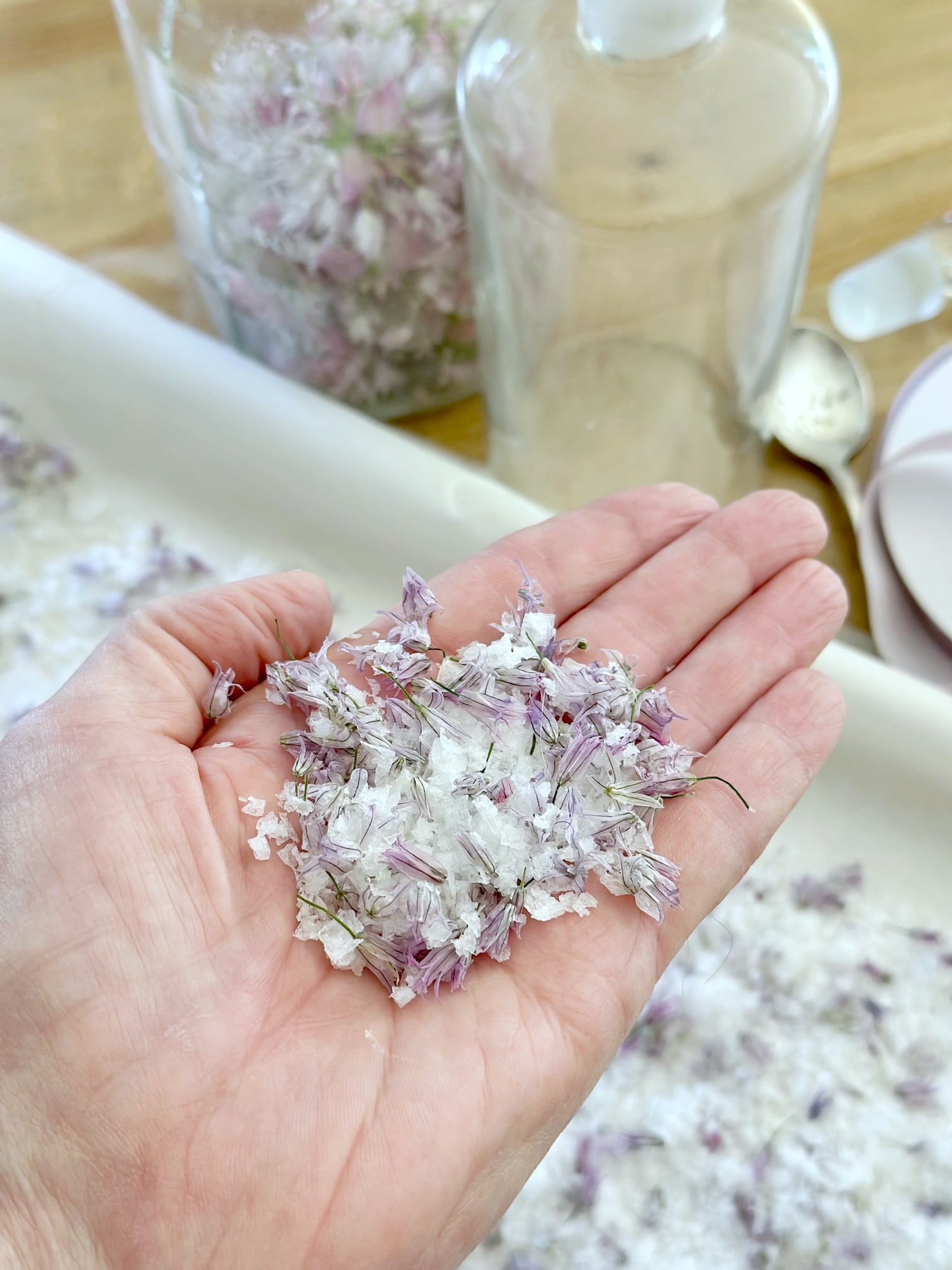
Step 4: Spread on a baking sheet
Line a baking sheet or tray with parchment paper, then spread the salt mixture into an even layer to encourage thorough drying.
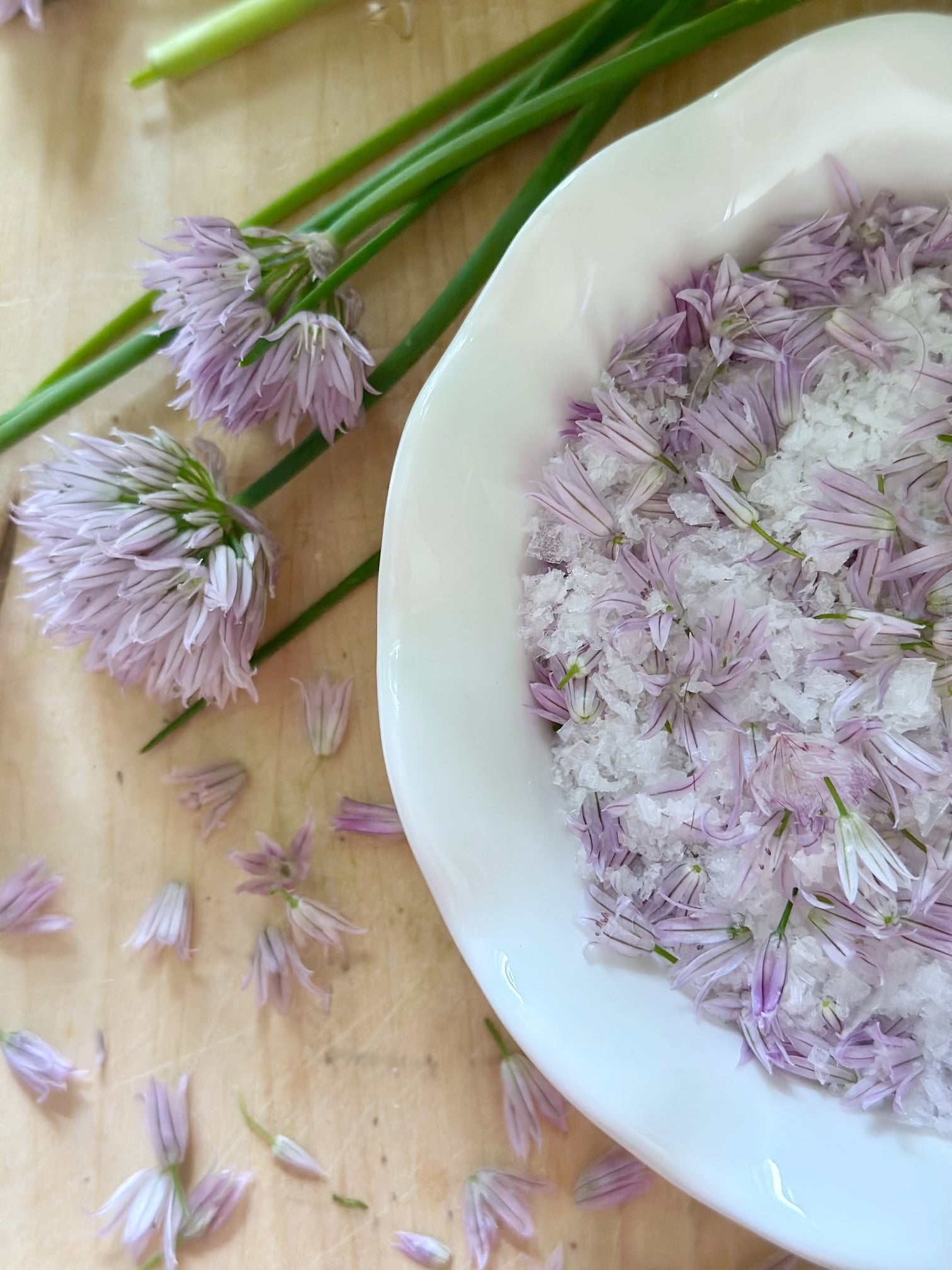
Step 5: Allow the salt to dry
Let the mixture air dry completely at room temperature, stirring occasionally if desired. The salt should feel dry and free-flowing before storing.
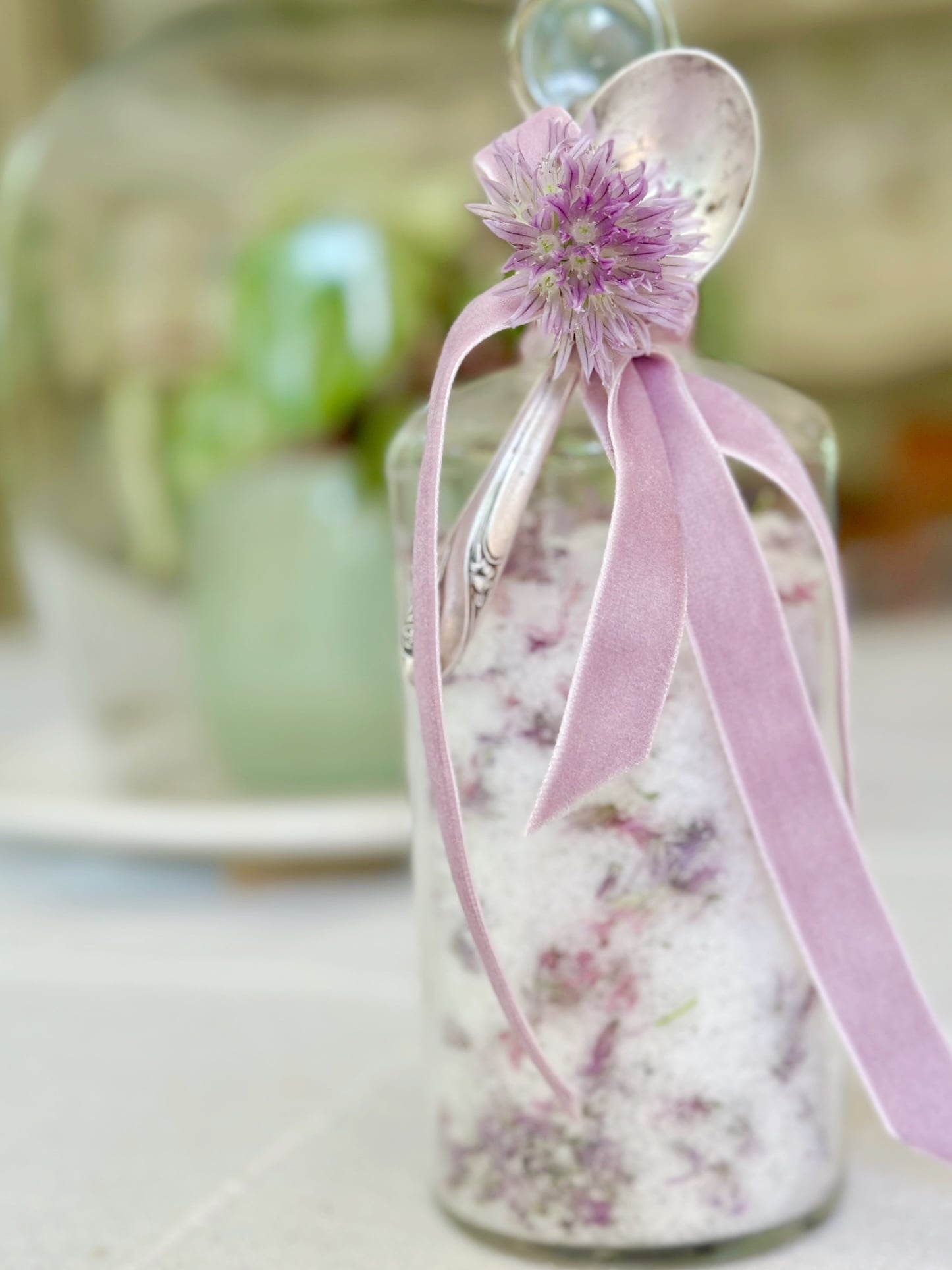
Step 6: Jar and enjoy
Transfer the finished chive flower salt to an airtight container or small glass jar. Use it as a finishing salt or package it with ribbon and a small spoon for a thoughtful homemade gift.
Ways to use chive flower salt
One of my favorite things about this recipe is that it's both beautiful and practical. The subtle onion flavor enhances everyday dishes without overpowering them.
- Scrambled eggs: Sprinkle a pinch over fluffy scrambled eggs just before serving.
- Roasted potatoes: Toss hot roasted potatoes with a little butter and a generous dusting of chive flower salt.
- Buttered bread: Spread warm bread with softened butter and finish with a scattering of this flavorful salt.
- Grilled vegetables: Add a final sprinkle to grilled asparagus, zucchini, corn, or other seasonal vegetables.
- Deviled eggs: Use it as a pretty garnish that adds both flavor and color to your favorite deviled egg recipe.
- Soups: Finish creamy potato soup, spring vegetable soup, or simple broths with a pinch just before serving.
Tip: Use chive flower salt as a finishing salt rather than during cooking. Adding it at the end preserves both the delicate flavor and the beautiful purple flecks from the blossoms.

How to store chive flower salt
Once the salt is completely dry, transfer it to an airtight container or small glass jar with a tight-fitting lid.
Store your chive flower salt in a cool, dry place away from direct sunlight and moisture. A pantry, spice cabinet, or countertop canister all work well.
While salt itself has an incredibly long shelf life, the flavor and color from the chive blossoms are best enjoyed within several months. For the freshest taste and most vibrant appearance, try to use your homemade chive flower salt within 6 months.
A beautiful homemade gift
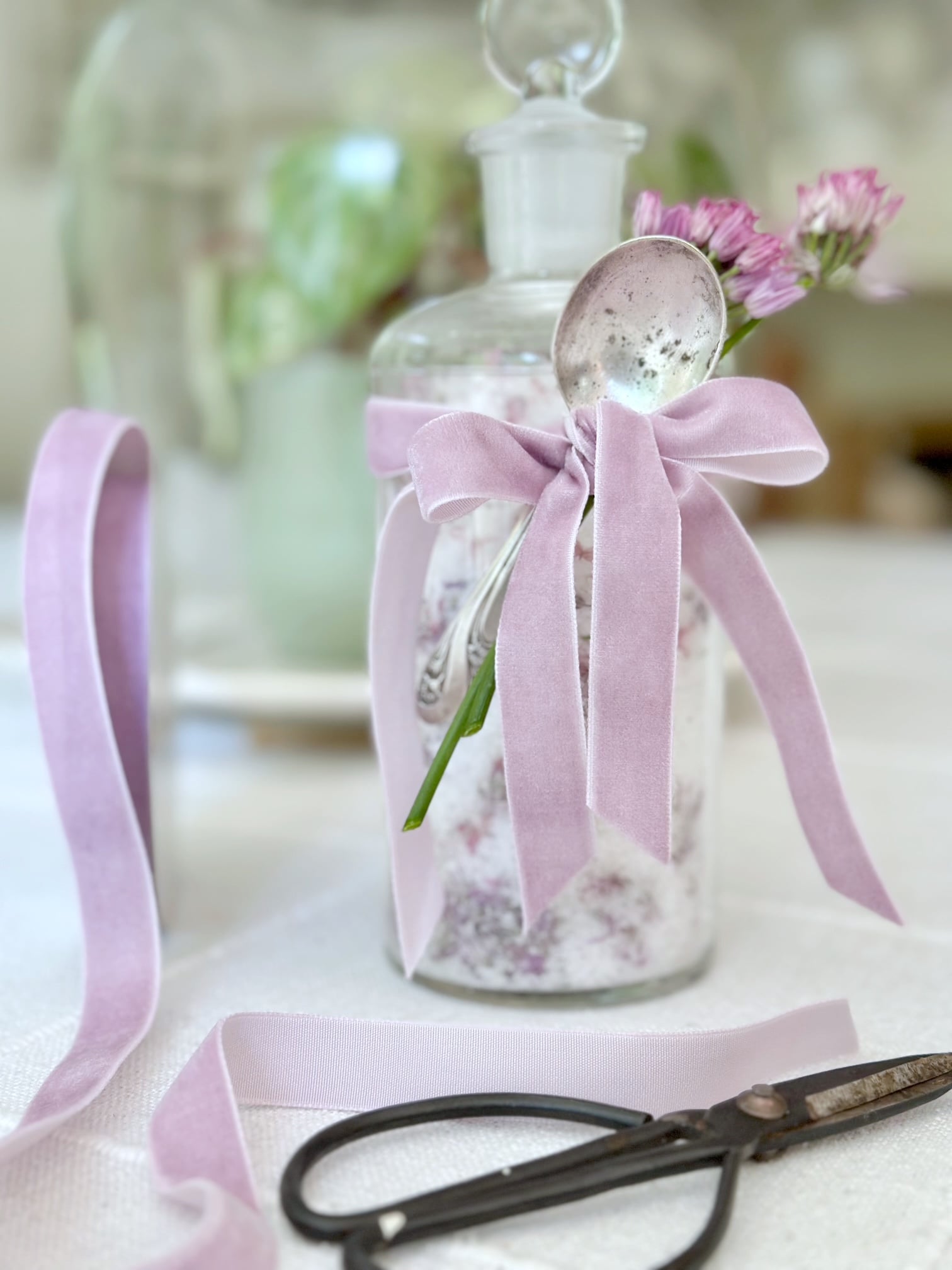
One of my favorite things about this chive flower salt is how easily it transforms into a thoughtful homemade gift. Spoon it into small glass jars, tie a ribbon around the top, and tuck in a tiny vintage spoon for a charming finishing touch.
It's the kind of gift that feels both practical and personal. Perfect for hostess gifts, garden club gatherings, teachers, neighbors, or anyone who loves spending time in the kitchen. And because it's made from a harvest that would otherwise fade with the season, it carries a little bit of the garden with it.
Simple, beautiful, and made by hand, it doesn't get much better than that.
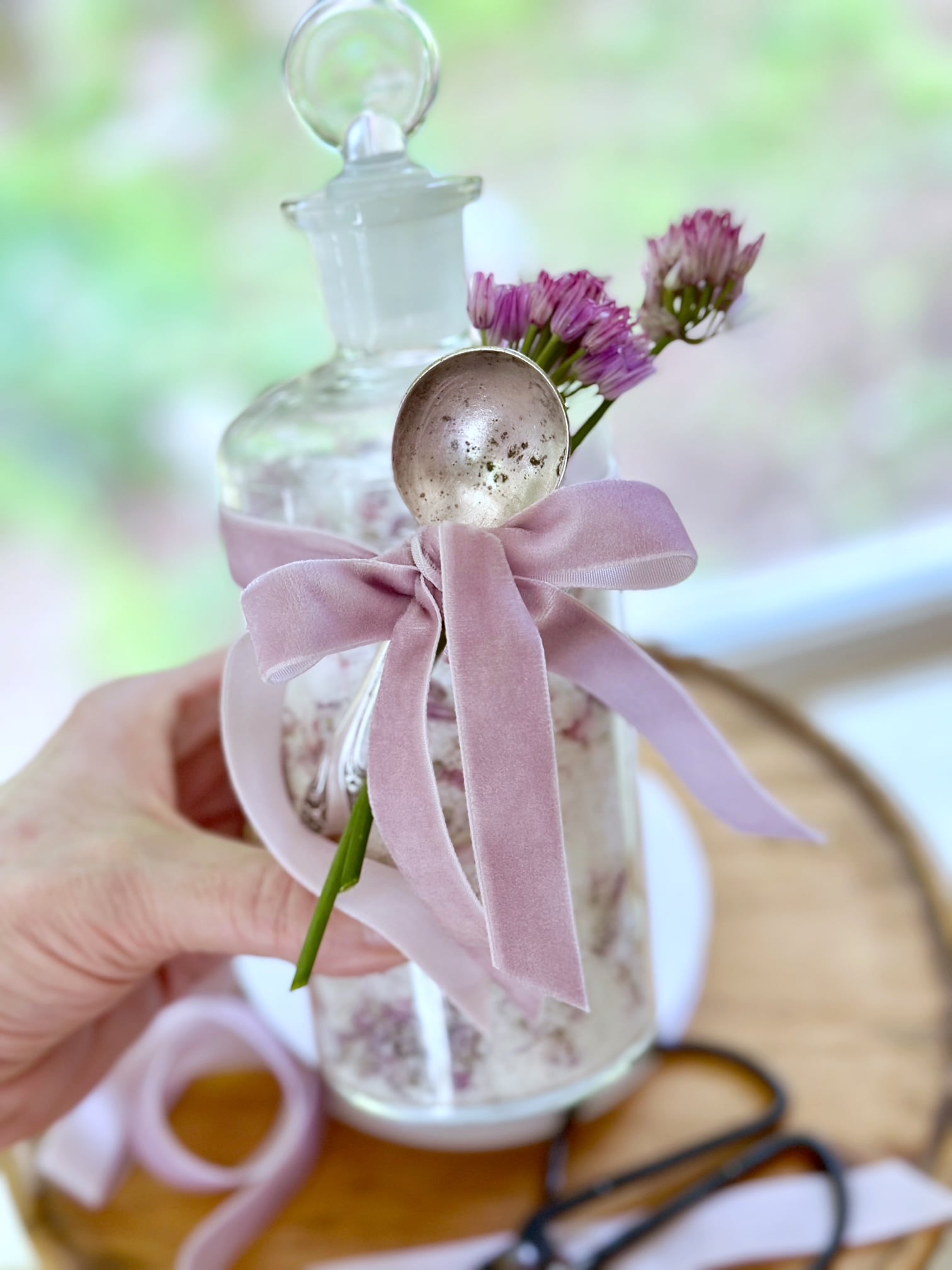
From Stephanie

What I love most about chive flower salt isn't even the flavor, it's how beautiful it looks. The soft lavender florets scattered through the flaky white salt feel almost too pretty to use.
This batch found its way into a little apothecary jar with a vintage spoon I discovered at Off The Common Antiques in Grafton, MA. I brought it home knowing exactly what it would be used for.
Finished with a leftover piece of lavender ribbon, it became one of those simple garden projects that feels both practical and special at the same time. Every time I reach for it, I'm reminded of the chive blossoms that briefly take over the herb garden each spring.
Happy gardening,
Stephanie
Frequently asked questions
Yes. I used flaky Maldon sea salt because I love its texture and presentation, but this recipe is very forgiving. Kosher salt, coarse sea salt, Himalayan salt, and even regular table salt can all be used successfully. Choose the salt you enjoy cooking with or already have in your pantry.
Yes. Fresh chive blossoms contain moisture, and allowing the mixture to dry completely helps prevent clumping and extends its shelf life. The salt should feel completely dry and free-flowing before transferring it to a storage jar.
For the best texture, I recommend separating the tiny purple florets from the blossom head and discarding the tougher green base and stems. The florets distribute more evenly throughout the salt and create a prettier finished product.
No. Chive flower salt has a delicate, mild onion flavor that's much more subtle than raw onions. It adds a savory finish to dishes without overpowering them, making it an easy way to elevate everyday foods.

Chive Flower Salt
Ingredients
- 1 cup Maldon sea salt flakes (or your preferred salt)
- ½ cup fresh chive blossom florets (about 10 to 12 blossoms)
Instructions
- Harvest the chive blossoms, choosing blooms that are fully open and vibrant in color. Gently shake them to remove any insects and rinse if needed. Pat completely dry.
- Separate the tiny purple florets from the blossom heads, discarding the tough green base and stems.
- Place the salt and chive florets in a medium bowl. Toss until the blossoms are evenly distributed throughout the salt.
- Line a baking sheet or tray with parchment paper and spread the salt mixture into an even layer.
- Allow the mixture to air dry at room temperature for about 12 hours, or overnight, until the salt is completely dry and free-flowing.
- Transfer the finished chive flower salt to an airtight jar or container. Store in a cool, dry place and use as a finishing salt for eggs, potatoes, vegetables, soups, and more.
Notes
- I used Maldon sea salt flakes for their delicate texture and beautiful presentation, but kosher salt, coarse sea salt, Himalayan salt, or regular table salt will also work.
- Make sure the salt is completely dry before transferring it to a storage jar. Any remaining moisture can cause clumping and shorten its shelf life.
- For the best texture and appearance, use only the purple florets and discard the tougher green base of the blossoms.
- Chive flower salt is best used as a finishing salt. Sprinkle it over eggs, roasted potatoes, soups, vegetables, and buttered bread just before serving.
- Stored in an airtight container in a cool, dry place, this salt is best enjoyed within 6 months for optimal flavor and color.
- For a thoughtful homemade gift, package the salt in small glass jars tied with ribbon and add a tiny vintage spoon for a charming finishing touch.
Nutrition
When the chive blossoms begin to appear each spring, I know it's time to head into the garden with my clippers and make the most of this short-lived harvest. This simple chive flower salt is one of my favorite ways to preserve both their delicate flavor and their beauty.
Whether you sprinkle it over scrambled eggs and roasted potatoes or package it into little jars to share with friends, it's a reminder that some of the best things from the garden don't have to be complicated. Sometimes all it takes is two ingredients and a few extra minutes to create something both useful and lovely.
If you try this recipe, I'd love to hear how you use it. Leave a comment below and let me know your favorite way to enjoy chive flower salt, and be sure to explore my other chive recipes and gardening guides for even more inspiration from the herb garden.
Enjoy!