Chive Flowers: How to Harvest, Use, and Enjoy Them

Chive flowers are one of the first edible blooms to appear in the herb garden each spring. These cheerful purple blossoms have a delicate onion flavor and can be used in everything from salads and compound butters to infused vinegars and homemade chive flower salt. In this guide, you'll learn how to harvest chive flowers, when to pick them, and simple ways to enjoy this beautiful, short-lived garden treat.

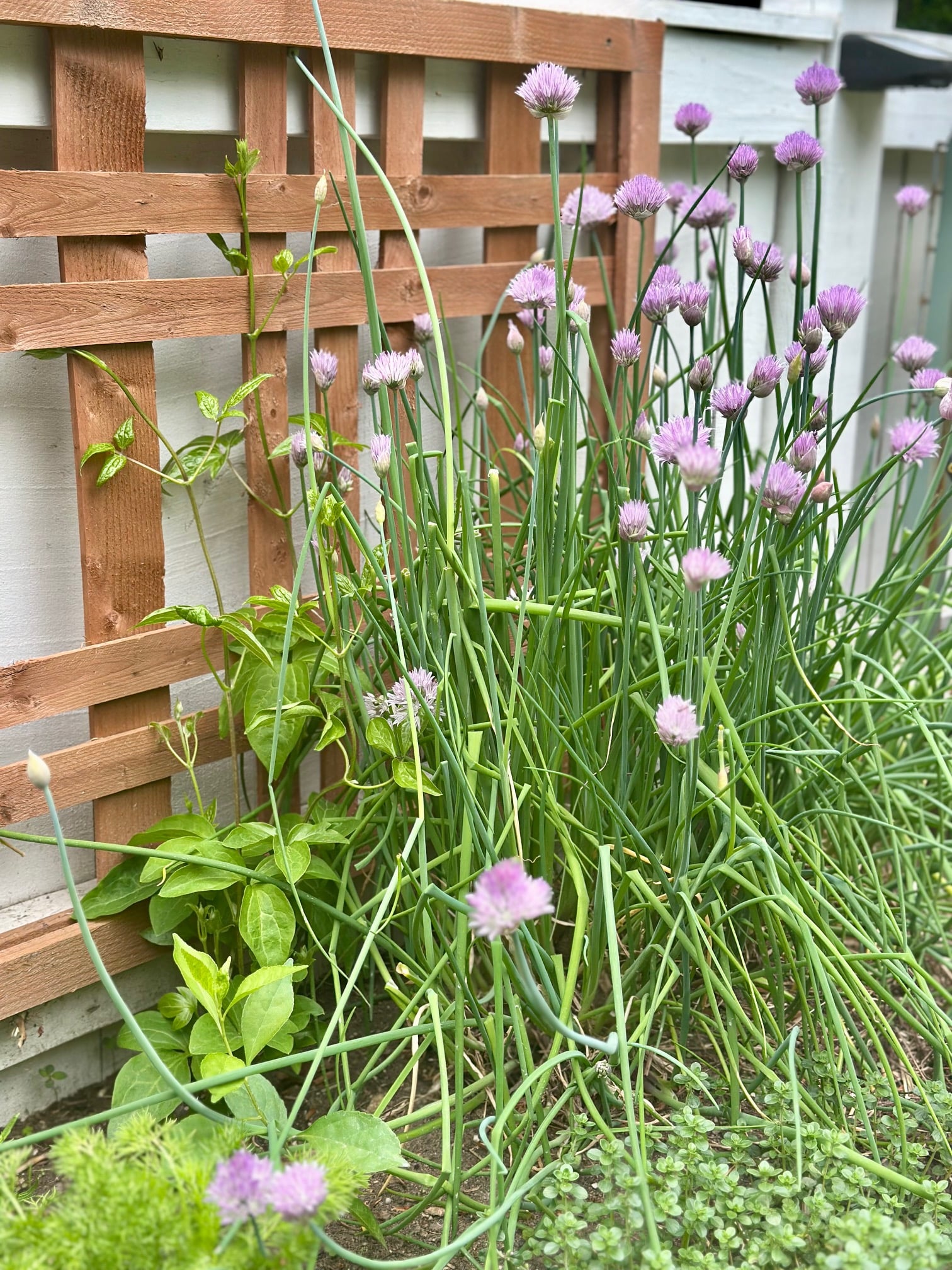
If there's one thing I can count on in the spring garden, it's chive flowers. Long before many of my herbs and perennials have fully awakened for the season, the sturdy chive plants are already sending up their cheerful purple-pink blossoms. They arrive early, return reliably year after year, and always feel like the garden's way of announcing that better days are ahead.
As beautiful as they are, chive flowers are far more than ornamental. These edible blossoms have a delicate onion flavor that can be sprinkled over salads, stirred into butter, infused into vinegar, or transformed into homemade chive flower salt. They're one of the easiest ways to bring a little beauty from the garden into the kitchen.
In this guide, I'll show you how to harvest chive flowers, when they're at their best, and the many ways to use and preserve them. Whether you're making chive butter, chive dip or drying chive blossoms for later, or simply wondering if these pretty blooms are edible, you'll discover just how versatile they can be.
At a Glance: Chive Flowers
_______________________
- Botanical Name: Allium schoenoprasum
- Edible: Yes, both the purple florets and green leaves are edible
- Flavor: Mild, delicate onion flavor with a hint of sweetness
- Bloom Time: Late spring to early summer
- Best Time to Harvest: Morning, once the flowers are fully open
- Uses: Salads, compound butter, flavored salt, infused vinegar, soups, garnishes, and bouquets
- Preservation Methods: Drying, freezing, salts, and vinegars
- Pollinator Friendly: Yes, bees and other beneficial insects love them
- Perennial: Yes, chives return year after year in many growing zones
- Why Gardeners Love Them: They're one of the first edible flowers of the season, beautiful in the garden, and incredibly versatile in the kitchen.
Summarize and Save this content on:
Jump to:
- At a Glance: Chive Flowers
- What are chive flowers?
- Are chive flowers edible?
- What do chive flowers taste like?
- When to harvest chive flowers
- What happens after chive flowers bloom?
- How to use chive flowers
- How to preserve chive flowers
- Do you need to remove chive flowers?
- Frequently asked questions
- More flowering herbs to explore
What are chive flowers?
Chive flowers are the edible blossoms of chive plants (Allium schoenoprasum), a perennial herb in the onion family. Each round flower head is made up of dozens of tiny purple-pink florets that gradually open into the cheerful pom-pom blooms chives are known for.
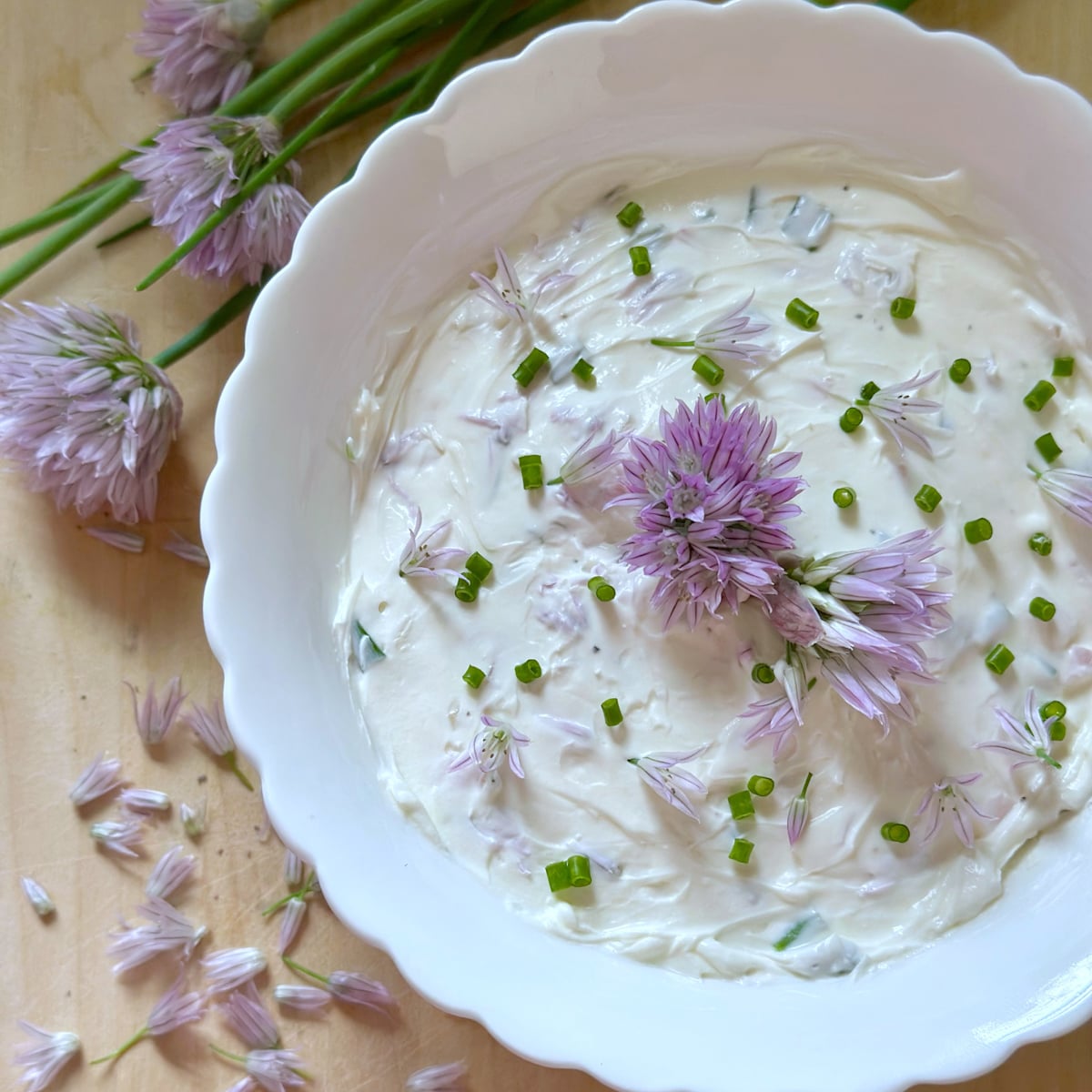
Beyond their beauty, chive flowers are surprisingly useful. The blossoms attract pollinators and can be used in a variety of ways in the kitchen. Scatter the florets over salads, stir them into compound butter, infuse them into vinegar, or transform them into homemade chive flower salt. These edible blooms bring both flavor and color to everyday cooking.
Are chive flowers edible?
Yes, chive flowers are completely edible. Both the delicate purple florets and the familiar green chive leaves can be enjoyed, making chives one of the most versatile herbs in the garden.
The blossoms have a mild onion flavor that's gentler and slightly sweeter than raw onions. They add a subtle savory note without overpowering other ingredients, which makes them easy to incorporate into everyday meals.
Beyond their flavor, chive flowers bring a touch of beauty to the table. The tiny purple florets can be scattered over finished dishes as an edible garnish, adding color, texture, and a little reminder that some of the prettiest things in the garden are meant to be enjoyed.
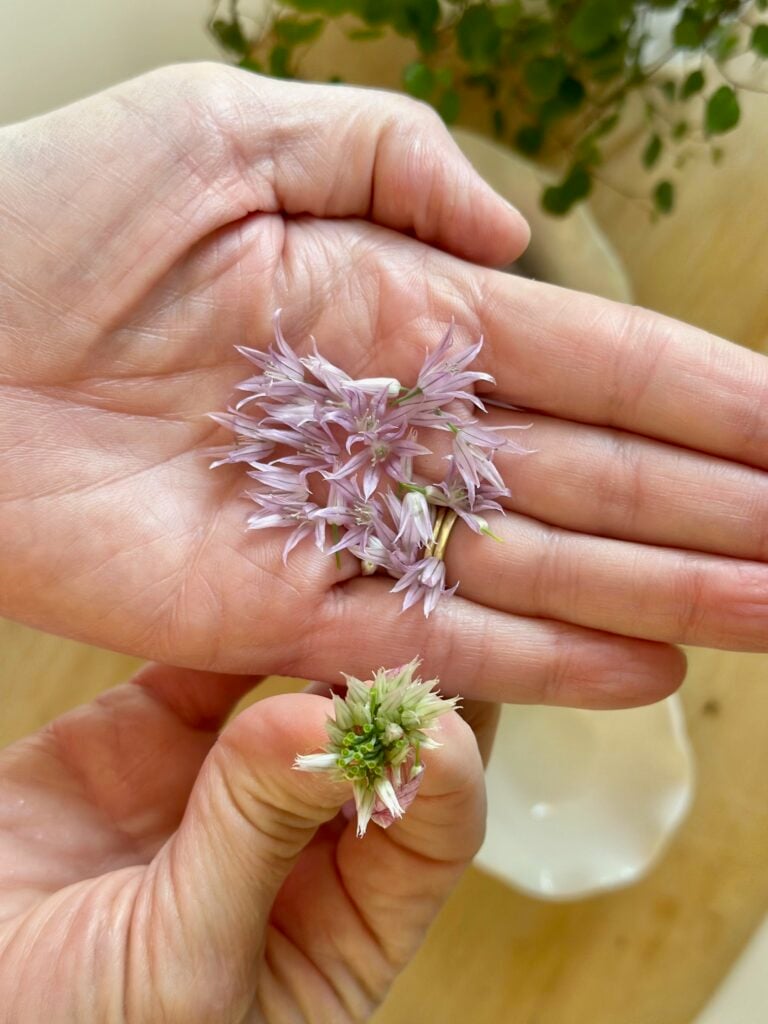
Kitchen Note: For the best texture, separate the tiny florets from the flower head before using them in recipes. The green base of the blossom can be tougher and is typically discarded.
What do chive flowers taste like?
If you've ever wondered what chive flowers taste like, think of them as a softer, more delicate version of the chive leaves themselves. They have a mild onion flavor with just a hint of sweetness, making them far less intense than raw onions.
Because their flavor is subtle, chive flowers complement rather than overpower other ingredients. They pair especially well with eggs, potatoes, butter, creamy dips, fresh salads, and spring vegetables.
Of course, part of their appeal is visual. The tiny purple-pink florets add a pop of color that instantly makes everyday dishes feel a little more special.
When to harvest chive flowers
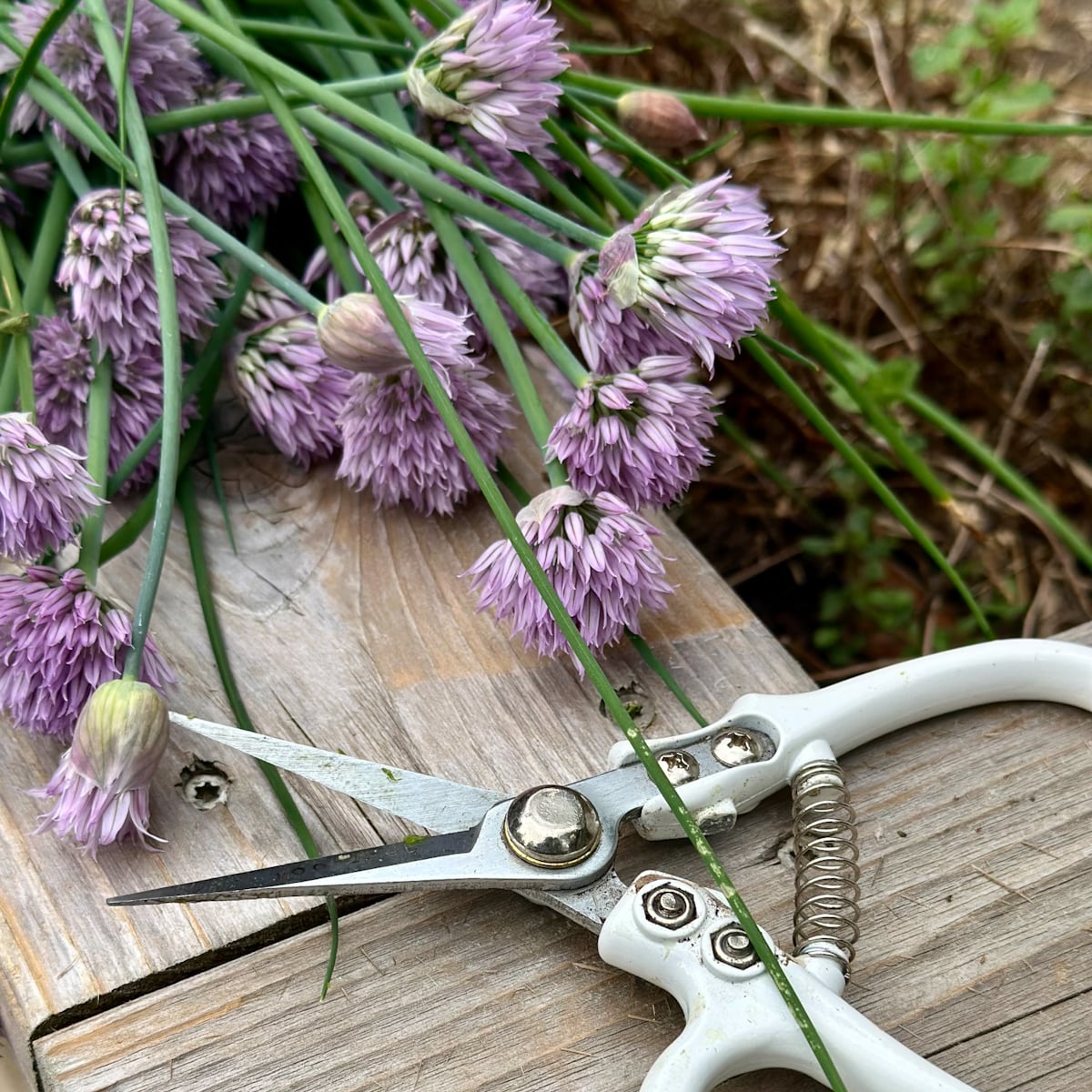
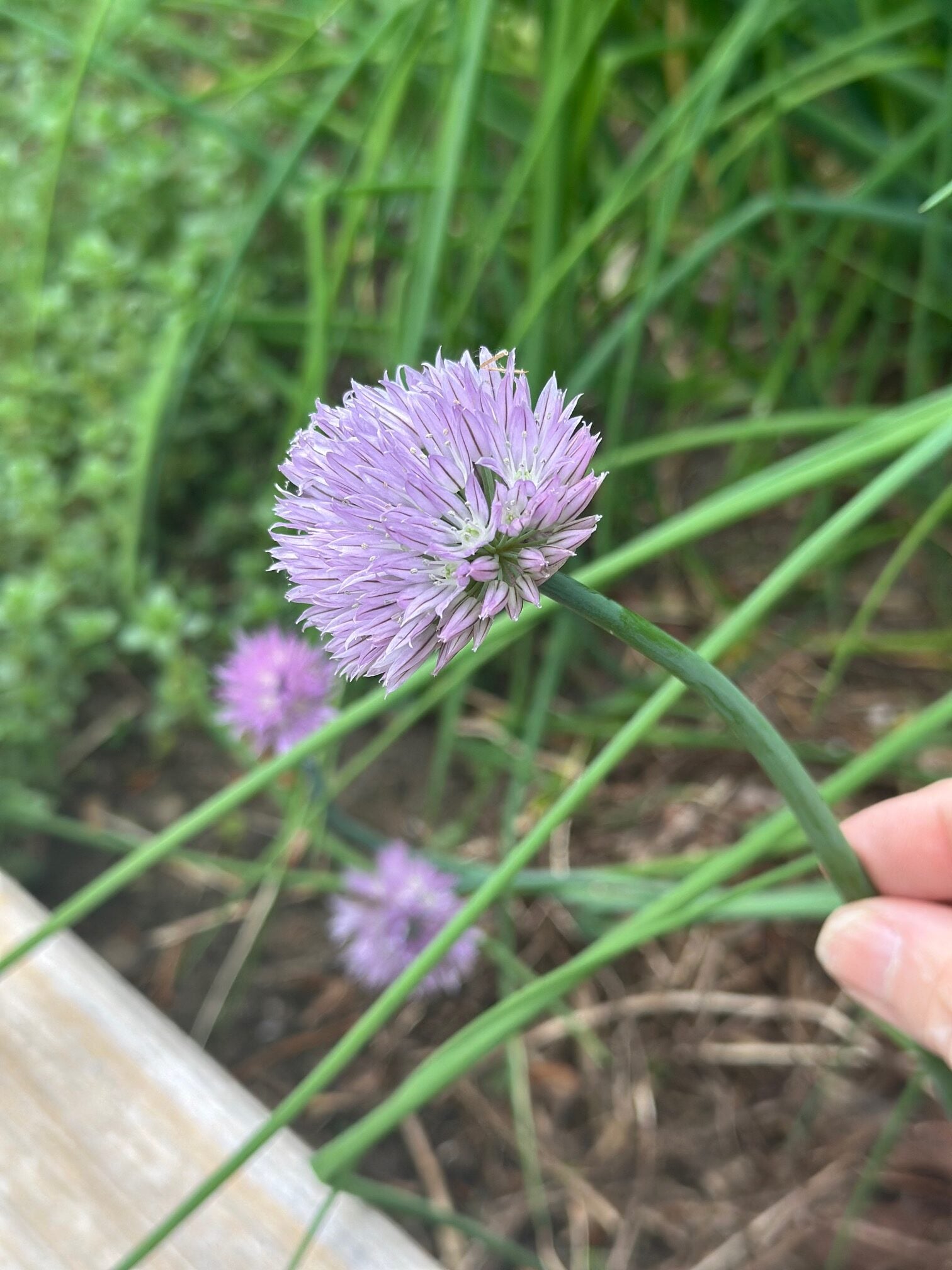
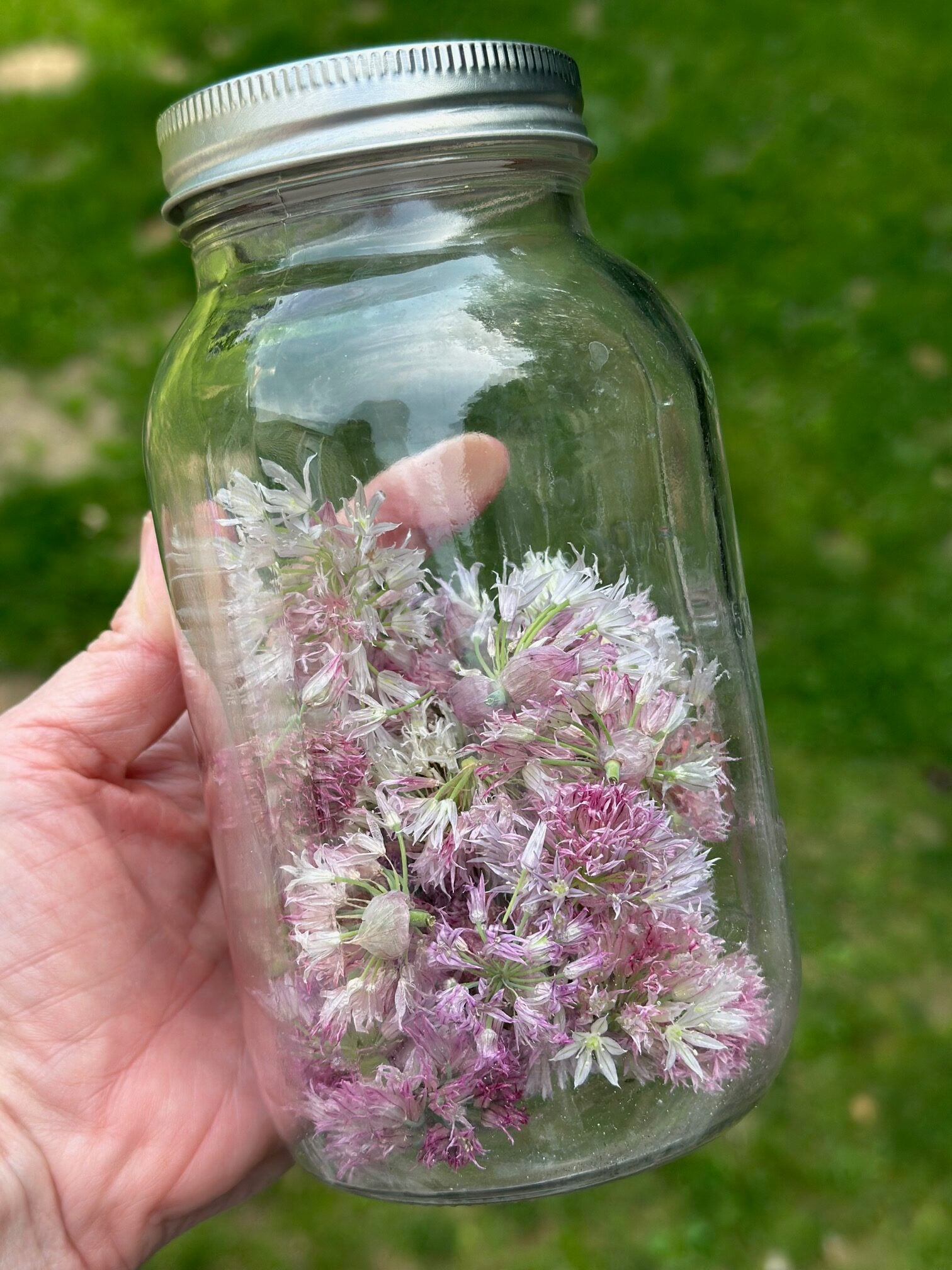
The best time to harvest chive flowers is when the blooms are fully open and vibrant in color. You'll notice the blossoms begin as tightly closed buds before gradually unfurling into round clusters of tiny purple-pink florets. While they're beautiful at every stage, fully opened flowers offer the best flavor and are the easiest to use in recipes.
For the freshest blossoms, harvest in the morning after the dew has dried but before the heat of the day sets in. This is when herbs are typically at their peak quality.
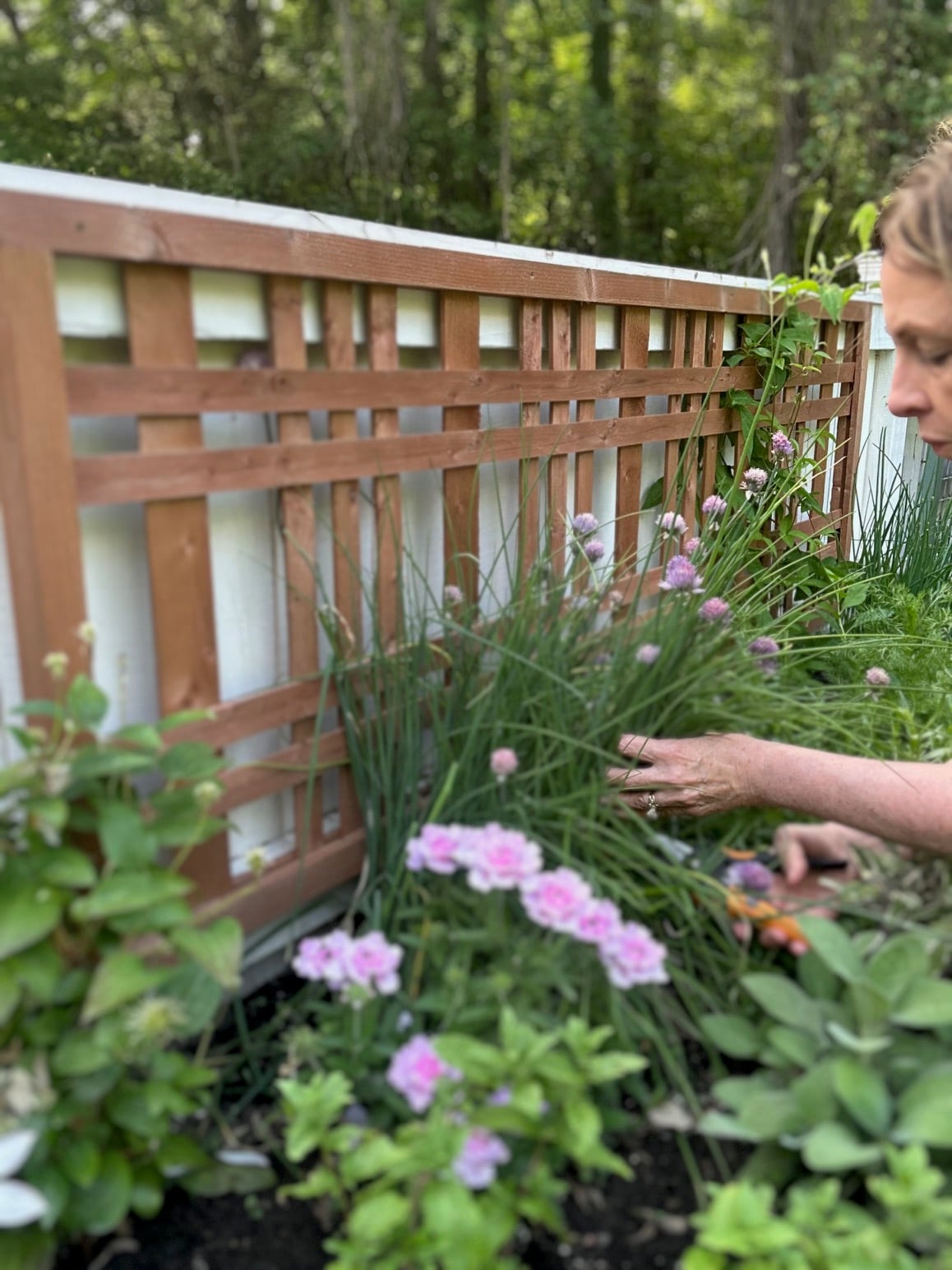
Using clean scissors or garden snips, cut the flower stems near the base and give the blossoms a gentle shake outdoors to encourage any tiny garden visitors to move along before bringing them inside. From there, you can separate the florets and use them immediately or preserve them for later.
Garden Tip: Don't feel like you have to harvest every bloom. Leaving a few flowers behind provides an early food source for pollinators and adds plenty of charm to the herb garden.
What happens after chive flowers bloom?
One thing I've noticed growing chives in my Zone 6b herb garden is that the first flush of spring growth is always the most impressive. After a long winter, the plants emerge with an abundance of sturdy green leaves and dozens of flower buds. The display is often far more dramatic than any blooms that follow later in the season.
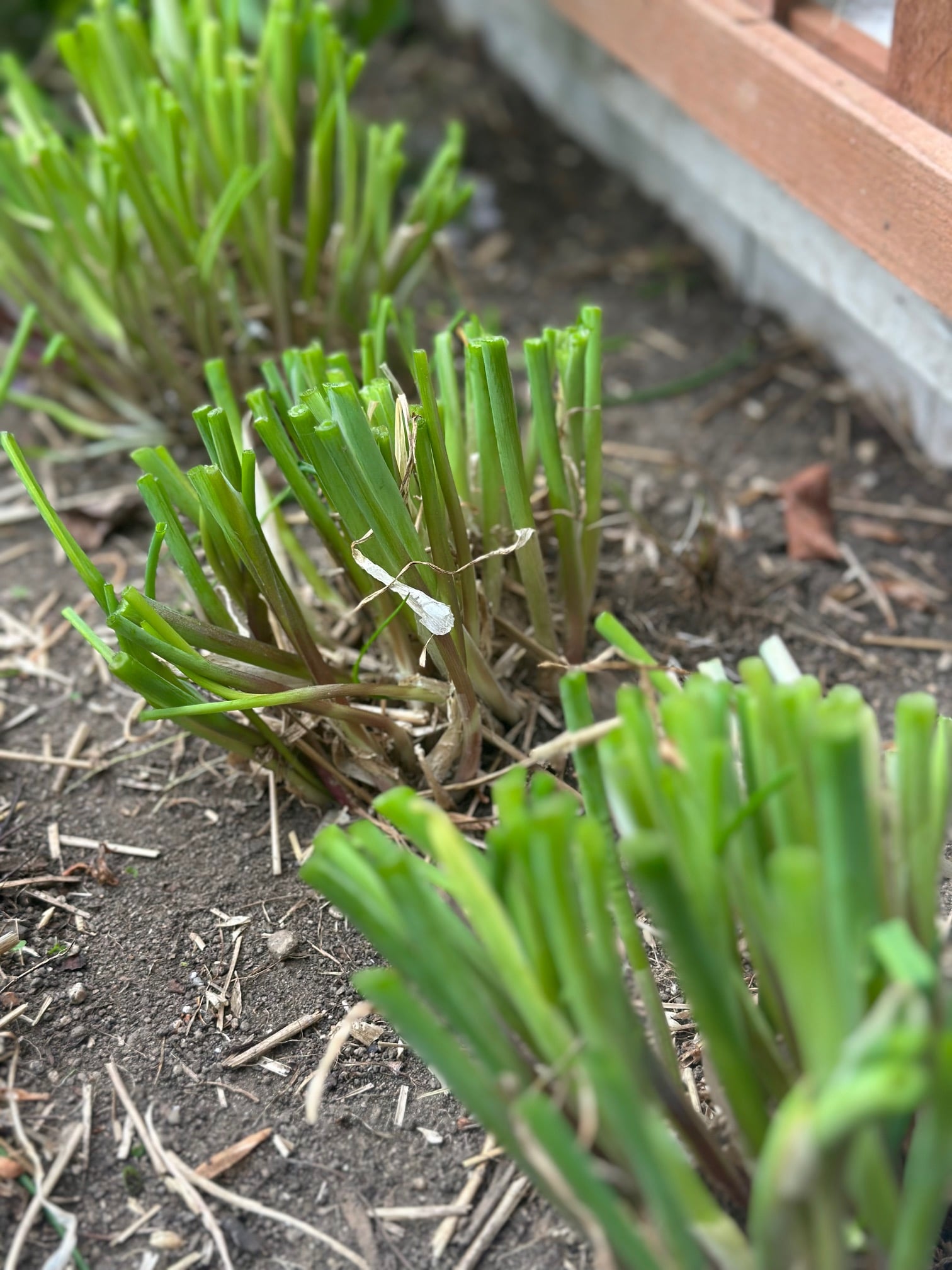
Once I've harvested the flowers and cut the plants back, the chives rebound surprisingly quickly. Within a few weeks, fresh green growth appears and the clump looks healthy again. Occasionally, I'll even get a second round of blooms.
That second flush, however, is usually much less showy than the first. The flower stems tend to be fewer in number and the overall display isn't nearly as dramatic.
My theory is that the plants spend the winter storing energy in their underground bulbs and roots. By spring, they have a season's worth of reserves ready to fuel that spectacular burst of growth and flowering. After blooming, the plant shifts its focus toward rebuilding those energy reserves, which may explain why later blooms are often more modest.
Of course, every garden is different, but year after year I've found that the first chive blossoms of spring are the ones worth watching for. They're usually the biggest, most abundant, and most beautiful blooms of the season.
How to use chive flowers
One of the best things about chive flowers is how versatile they are. Their delicate onion flavor and cheerful purple color make them just as useful in the kitchen as they are beautiful in the garden.
- Sprinkle over salads: Separate the tiny florets and scatter them over green salads, pasta salads, or grain bowls for a subtle onion flavor and a pop of color.
- Garnish deviled eggs: Chive flowers make a beautiful finishing touch for deviled eggs and other spring appetizers.
- Stir into softened butter: Fold the florets into homemade or softened butter to create an easy compound butter that's delicious on bread, vegetables, and grilled meats.
- Make chive flower salt: Combine the blossoms with salt to create a flavorful finishing salt that's perfect for gifting and everyday cooking.
- Infuse vinegar: Steep the blossoms in vinegar to create a gorgeous pink chive blossom vinegar that brightens salad dressings and marinades.
- Finish soups: Sprinkle a handful of florets over creamy potato soup, vegetable soup, or chilled soups just before serving.
- Enhance compound butters: Pair chive flowers with other herbs to create compound butters for baked potatoes, steaks, seafood, and roasted vegetables.
- Freeze in ice cubes: Add individual florets to ice cube trays with water to preserve their beauty for summer drinks and entertaining.
- Arrange them in small bouquets: Don't overlook their ornamental value. Tuck chive flowers into tiny bud vases or informal herb arrangements to bring a bit of the garden indoors.
One of my favorite ways to enjoy chive flowers is also the simplest. I separate the tiny florets, let them dry completely, and store them in a small jar in my pantry. Throughout the year, I sprinkle them over salads, scrambled eggs, roasted potatoes, and soups whenever I want to add a little flavor and a reminder of the spring garden. It's such an easy way to extend the harvest long after the blossoms have disappeared from the garden.
How to preserve chive flowers
Chive blossoms have a relatively short season, which is one of the reasons I try to make the most of them while they're here. The good news is that preserving them is easy, allowing you to enjoy a bit of the spring garden long after the blooms have faded.
Dry them
Separate the tiny florets and allow them to dry completely before storing them in an airtight jar. Dried chive flowers are wonderful sprinkled over salads, eggs, roasted potatoes, soups, and other everyday dishes.
Infuse vinegar
Steeping fresh chive blossoms in vinegar creates a stunning pink vinegar with a delicate onion flavor. Use it in homemade vinaigrettes, marinades, and sauces.
Freeze them
Freeze individual florets in ice cube trays filled with water for a decorative touch in summer drinks, or freeze the florets in small portions to add to cooked dishes later on.
Preserving chive flowers is a simple way to extend the harvest and enjoy one of the first gifts of the herb garden well beyond spring.
Make chive flower salt
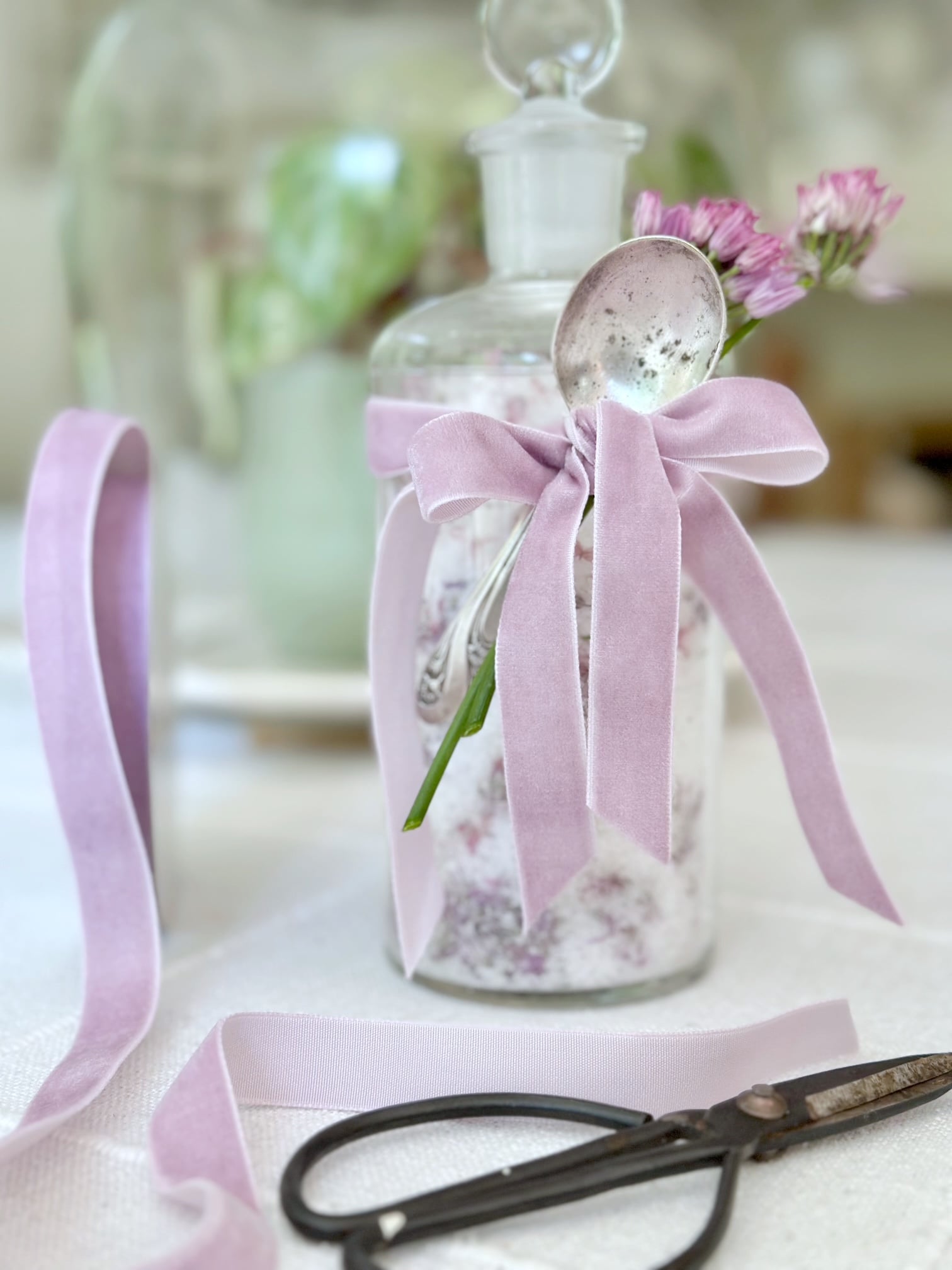
One of my favorite ways to preserve chive blossoms is by mixing them with salt to create a beautiful finishing salt. It's simple to make, practical to use, and pretty enough to package as a homemade gift. Try my Chive Flower Salt recipe.
Do you need to remove chive flowers?
No, you don't have to remove chive flowers, but whether you deadhead them depends on your goals.
If you're growing chives primarily for their leaves, removing the spent blossoms can encourage the plant to redirect its energy into producing fresh green growth. Many gardeners give their chive plants a light trim after flowering to tidy them up and encourage a new flush of tender leaves.
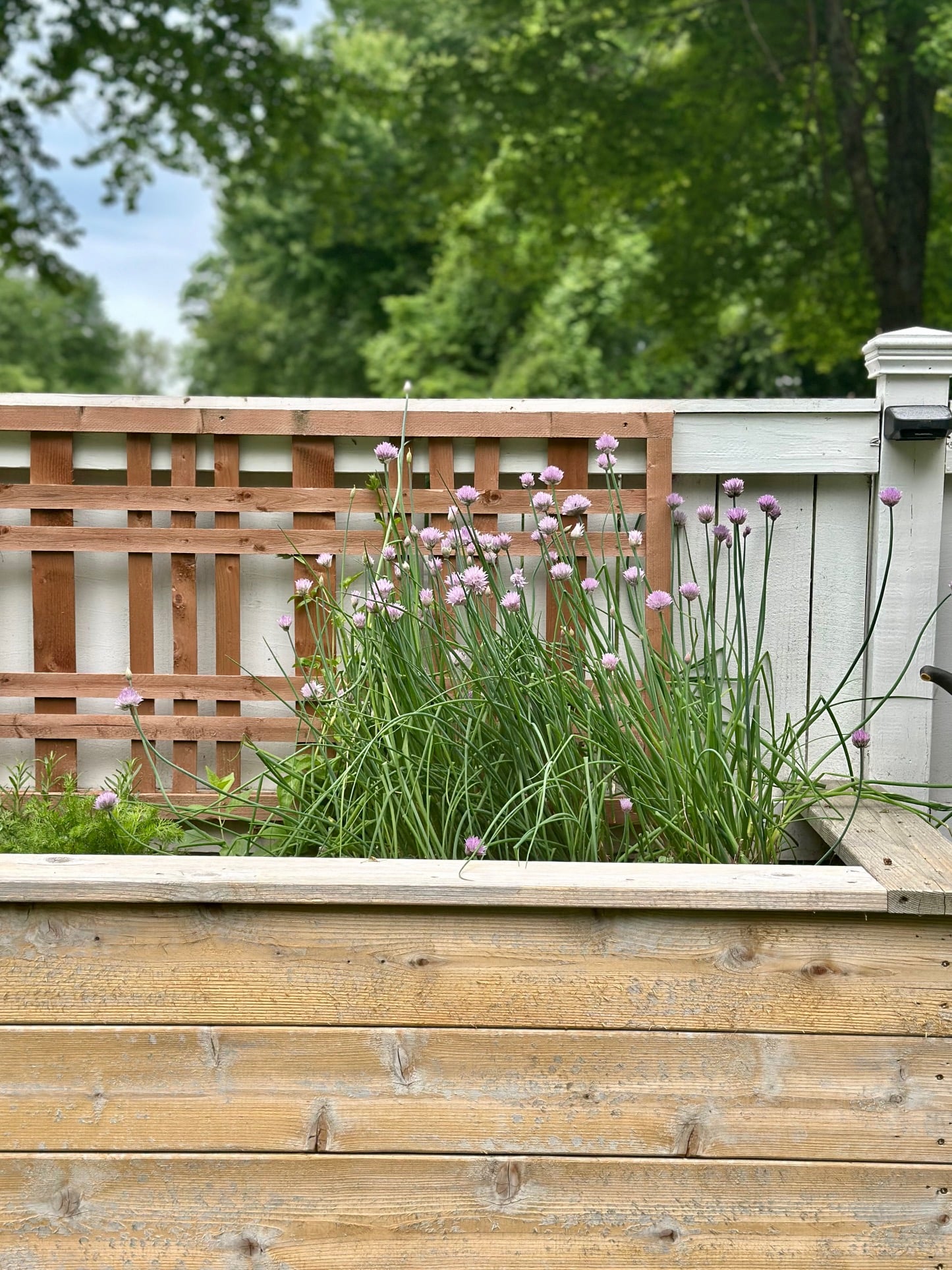
That said, I rarely remove all of the flowers at once. Chive blossoms are one of the earliest food sources for bees and other pollinators, and I love seeing them buzzing around the herb garden. Leaving a few blooms behind supports beneficial insects and adds plenty of beauty to the landscape.
My approach is a bit of both. I harvest many of the blossoms to use in the kitchen, leave some for the pollinators to enjoy, and then deadhead the remaining spent flowers once they've finished blooming. It gives me the best of all worlds: beautiful blooms, plenty of fresh chives, and a garden that's alive with pollinators.
Frequently asked questions
Yes, chive flowers are edible, but most people prefer to use the individual purple florets rather than the entire flower head. The florets have the best texture and are easy to sprinkle over dishes, while the green base can be tougher and more fibrous.
Absolutely. Chive flowers attract bees and other pollinators, add beauty to the herb garden, and provide plenty of culinary opportunities. If you want to encourage more leaf growth later in the season, simply harvest or deadhead some of the blooms once you've enjoyed them.
Yes. You can freeze individual florets in ice cube trays with water for a decorative touch in drinks, or freeze the florets in small portions to use later in cooked dishes and compound butters.
Yes. Chives are hardy perennial herbs that return year after year in many growing zones. Their cheerful purple blossoms are often among the first edible flowers to appear each spring, making them a welcome sign that the growing season has arrived.

For me, chive flowers are one of the first reminders that the garden is waking up again. Just when everything still feels a little bare, those sturdy clumps of chives begin sending up their cheerful purple blooms, returning year after year with very little fuss.
They're beautiful enough to enjoy in a vase, useful enough to sprinkle over everyday meals, and versatile enough to preserve in salts, vinegars, and dried florets for later. Whether you're harvesting them for the first time or have been growing chives for years, I hope this guide inspires you to bring a few of these edible blossoms from the garden to the table.
If you give chive flowers a try, I'd love to hear how you use them. Leave a comment below and let me know your favorite way to enjoy these early spring blooms, and don't forget to explore my other chive recipes and gardening guides for even more inspiration from the herb garden.
Happy gardening, friends!