How Many Cilantro Plants per Pot: A Guide to Optimal Growth

The ideal number of cilantro plants per pot depends on container size. As a general rule, plant 1 cilantro plant in an 8-inch pot, 2 in a 10-inch pot, and up to 4-5 in larger containers. Proper spacing allows for better airflow, healthier roots, and a fuller harvest.

Content may contain affiliate links. When you shop the links, we receive a small commission at no cost to you. Thanks for supporting my small business.
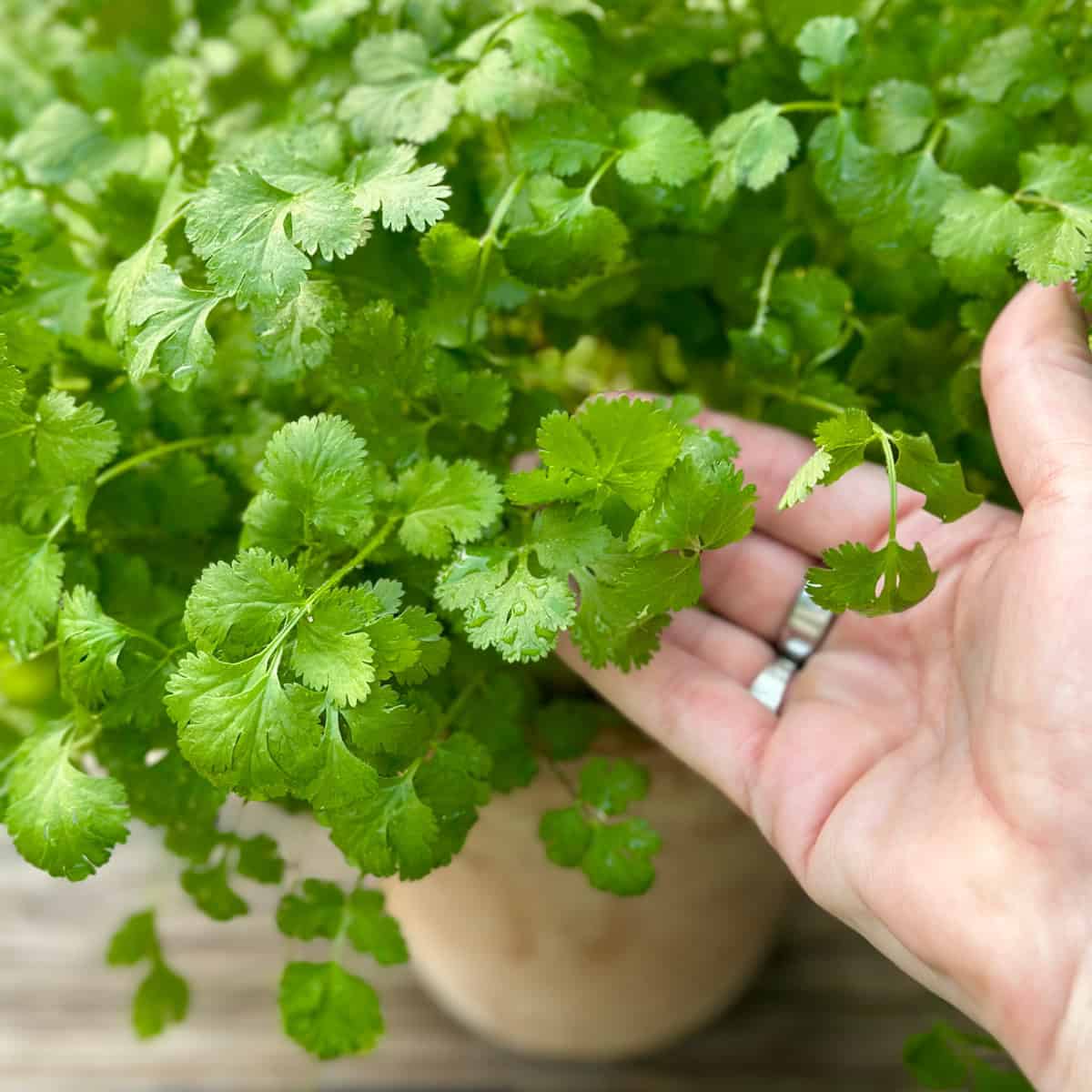
How many cilantro plants per pot is one of the first questions new gardeners ask, and for good reason. Cilantro is easy to grow in containers, but spacing makes the difference between weak, spindly plants and a lush harvest.
This versatile herb adds fresh flavor to guacamole, tacos, salsas, and countless global dishes, so it is worth getting the planting right from the start. In this guide, I will walk you through the best number of cilantro plants per pot, along with tips on pot size, planting techniques, and how to keep your cilantro thriving indoors or outdoors.
At a Glance: How Many Cilantro Plants per Pot
_______________________
- Best spacing: 1 plant per 8-inch pot
- Larger pots: 2-5 plants depending on size
- Plant type: Seeds or starter plants
- Sunlight: Partial sun to full sun
- Water: Keep soil consistently moist
- Best season: Spring and fall
Summarize and Save this content on:
Jump to:
- At a Glance: How Many Cilantro Plants per Pot
- How many cilantro plants per pot?
- Cilantro spacing chart (plants per pot)
- Why spacing cilantro correctly matters
- Planting cilantro in pots (seeds or starter plants)
- How to plant cilantro in pots (indoor and outdoor)
- Basic care for cilantro in containers
- Selecting the right pot for growing cilantro
- Choosing the best potting soil
- Tips for healthy potted cilantro care
- Frequently asked questions
- Check out some of our other helpful growing guides
How many cilantro plants per pot?
The number of cilantro plants per pot depends on the size of your container. For best results:
- 8-inch pot: 1 plant
- 10-inch pot: 2 plants
- 12-inch pot: 3 plants
- 14-inch pot: 4 plants
- 16-inch pot: 5 plants
Giving each plant enough space helps prevent overcrowding, improves airflow, and leads to healthier, fuller growth.
Cilantro spacing chart (plants per pot)
Determining the appropriate pot size and planting density is crucial for successful cilantro cultivation in containers. Below is a guide to help answer the common question: "How many cilantro plants per pot?" This table provides recommended pot sizes along with the corresponding number of cilantro plants for optimal growth:
| Pot Size | Number of 4" pot Cilantro Plants |
|---|---|
| 8-inch | 1 |
| 10-inch | 2 |
| 12-inch | 3 |
| 14-inch | 4 |
| 16-inch | 5 |
Choosing the right pot size ensures that cilantro plants have enough space for their roots to grow and access to adequate nutrients and water. Additionally, proper spacing between plants allows for optimal airflow and reduces the risk of overcrowding, which can lead to fungal diseases and stunted growth. Adjust the number of plants based on the pot size to create an ideal growing environment for cilantro in containers.
Why spacing cilantro correctly matters
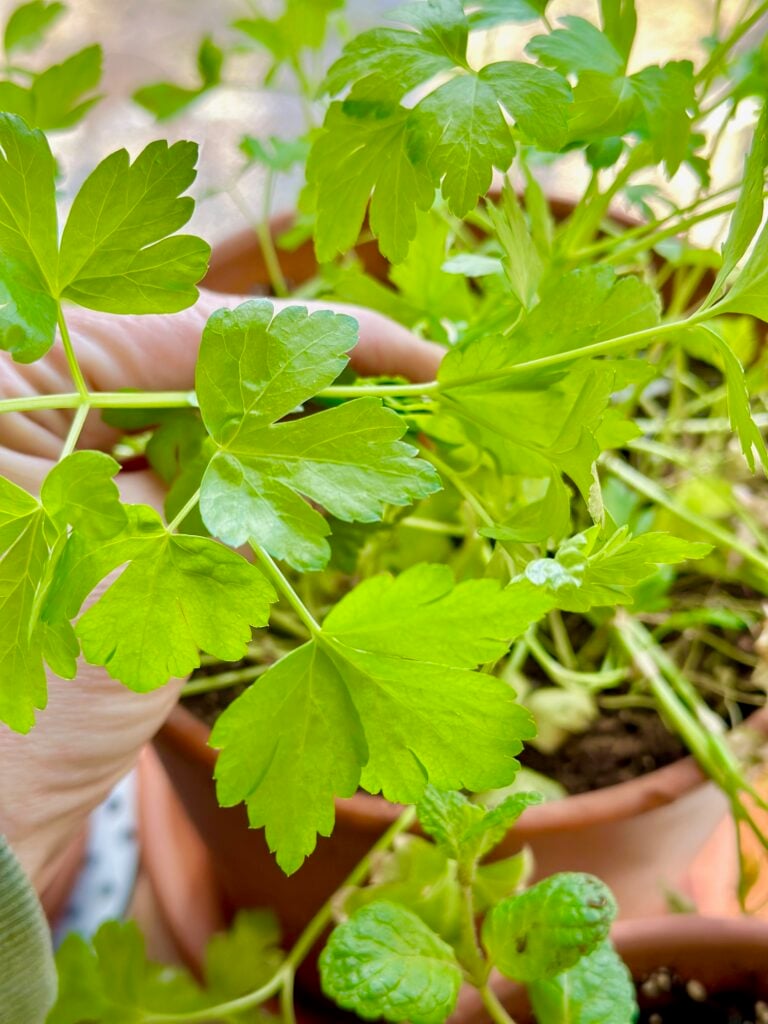
Giving cilantro the right amount of space in a pot makes a noticeable difference in how well it grows. When plants are too crowded, they compete for light, water, and nutrients, which can lead to weak, leggy growth and smaller leaves.
Proper spacing allows for better airflow around each plant, which helps reduce the risk of fungal issues and keeps the foliage healthier. It also gives cilantro's roots enough room to develop, which supports stronger, more productive plants.
Another benefit of correct spacing is that it can help slow down bolting. When cilantro is stressed from overcrowding or poor conditions, it's more likely to flower early instead of continuing to produce leaves.
In short, giving each plant enough space leads to fuller growth, better flavor, and a longer harvest window.
Planting cilantro in pots (seeds or starter plants)
Cilantro grows easily in containers, whether you start from seeds or young plants. Seeds are the most common and budget-friendly option, while starter plants give you a quicker harvest.
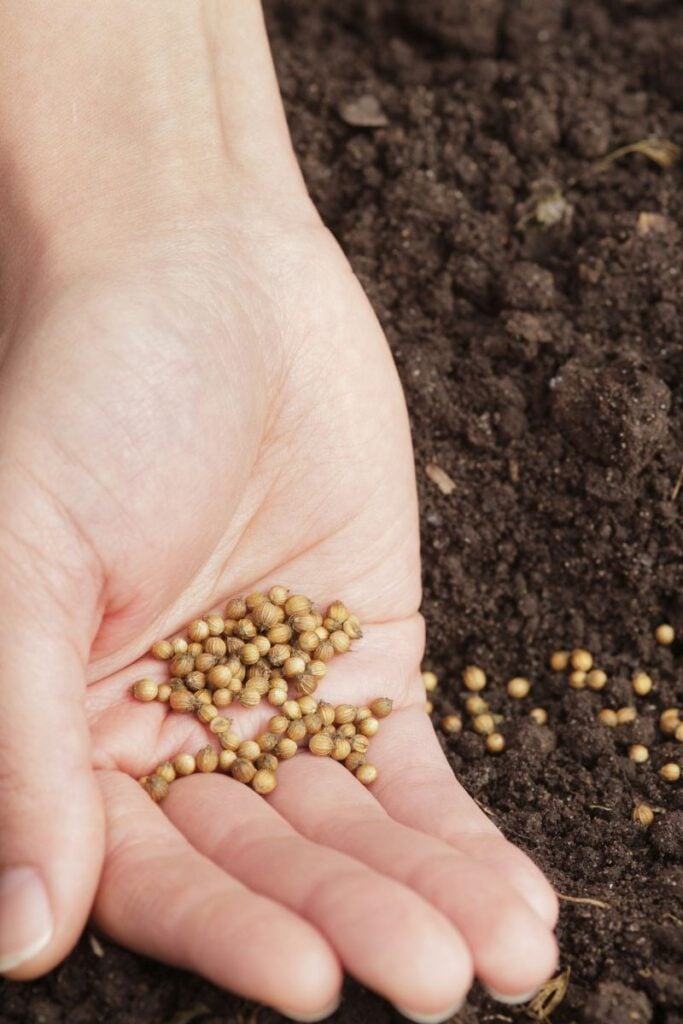
- From seeds: Sow cilantro seeds about ¼ inch deep and 1-2 inches apart. This allows you to thin or harvest early for baby greens.
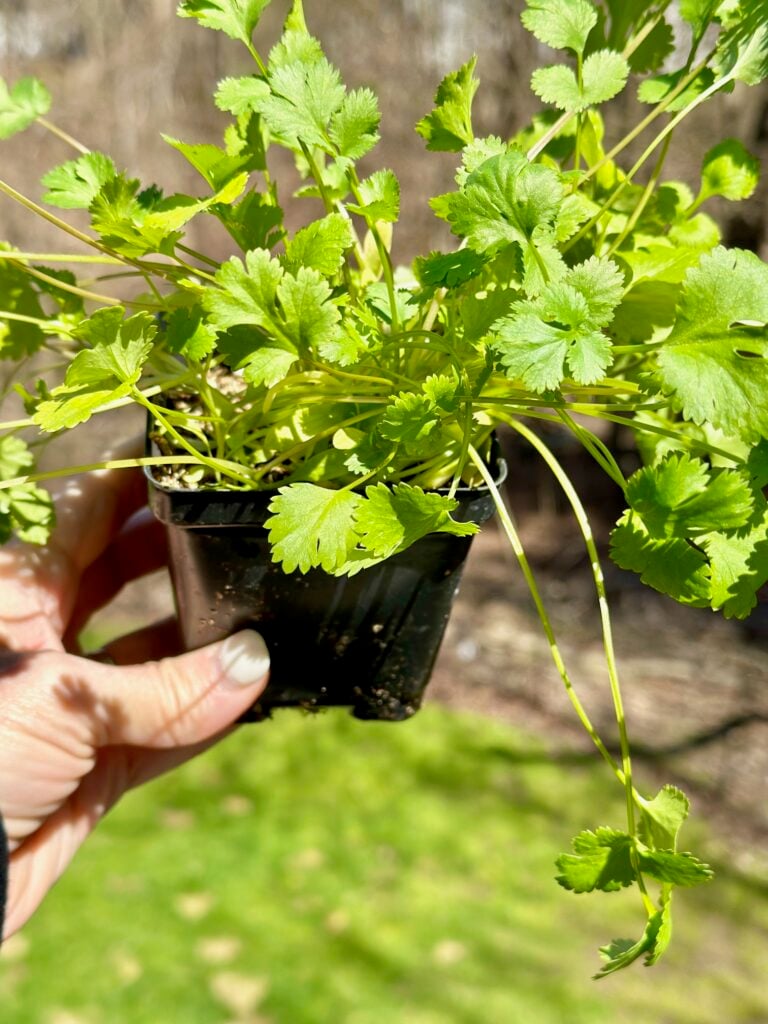
- From starter plants: Transplant young cilantro plants carefully to avoid disturbing the roots. Space them according to your pot size for best results.
Tip: If starting with young plants, consider getting plants in peat pots. Peat pots minimize root disturbance during transplantation, promoting smoother growth and establishment in your garden or container.
How to plant cilantro in pots (indoor and outdoor)
Choose a container with good drainage and fill it with well-draining potting soil, leaving about half an inch of space at the top.
- Sow seeds about ¼ inch deep
- Space seeds or plants based on your pot size
- Water thoroughly after planting
Cilantro prefers cooler conditions. In most regions, it grows best in spring and fall. In warmer climates, provide some afternoon shade to prevent early bolting.
Basic care for cilantro in containers
Once planted, cilantro is relatively low maintenance, but a few simple practices will keep it growing well:
- Watering: Keep soil consistently moist but not soggy. Water when the top inch feels dry.
- Light: Provide 5-6 hours of sunlight daily, or use a grow light indoors.
- Temperature: Cilantro prefers cooler temperatures between 60-75°F.
Good spacing, proper watering, and consistent light will help your plants stay healthy and productive.
Selecting the right pot for growing cilantro
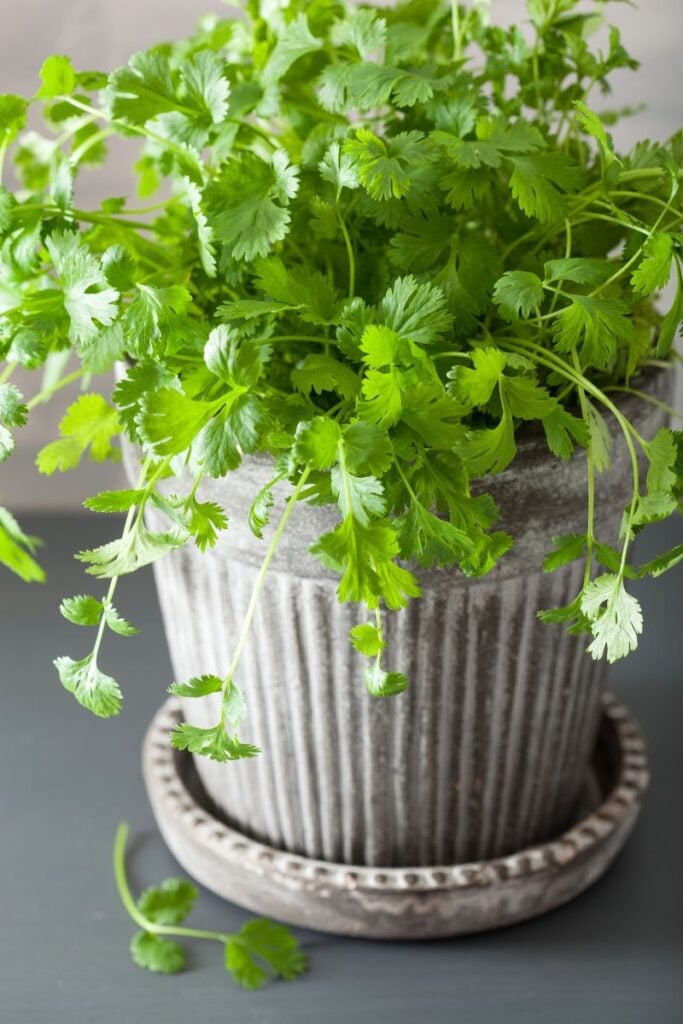
When discussing the type of pot for growing cilantro, we should consider factors such as drainage, moisture retention, airflow, durability, and aesthetic preferences. Each type of pot has its advantages and considerations, so it's essential to choose the one that best suits the specific growing conditions and needs. Here are some options:
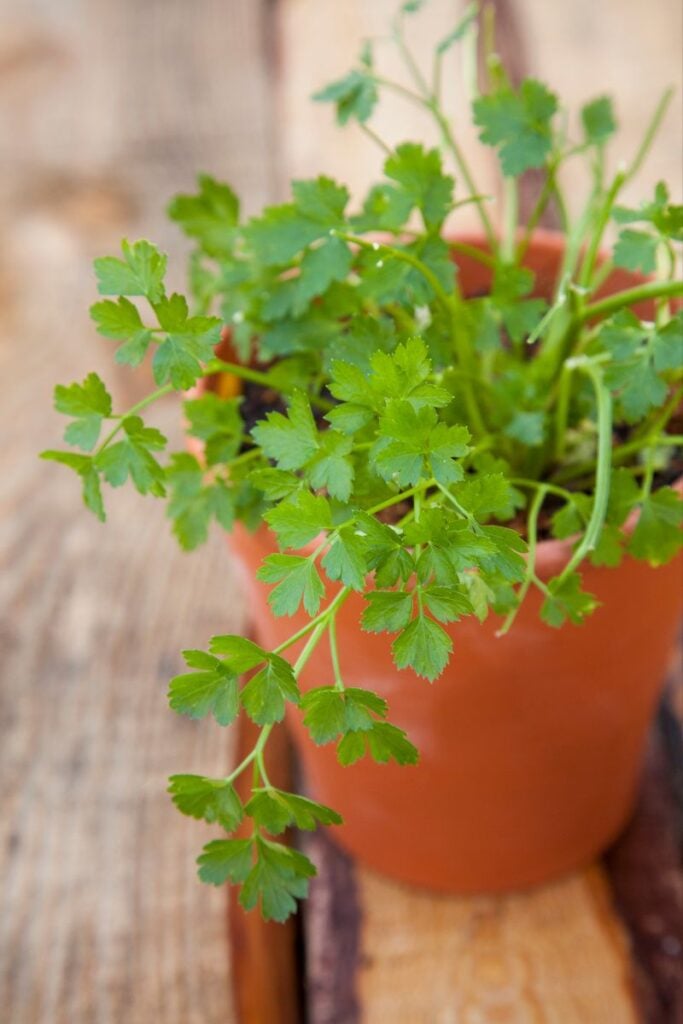
- Terra cotta pots: These pots are porous, allowing for good air circulation and moisture regulation. They are ideal for cilantro as they help prevent overwatering and root rot. However, they may dry out more quickly than other types of pots, requiring more frequent watering.
- Plastic pots: Plastic pots are lightweight, durable, and retain moisture well. They are suitable for growing cilantro, especially for beginners or in environments where moisture retention is essential. However, they may not provide as much airflow to the roots as terra cotta pots.
- Glazed clay pots: Glazed clay pots offer the benefits of both terra cotta and plastic pots. They have good moisture retention like plastic pots but also provide better airflow to the roots like terra cotta pots. However, they can be heavier and more expensive than other options.
- Ceramic pots: Ceramic pots come in various designs and colors, adding aesthetic appeal to indoor or outdoor spaces. They provide good moisture retention and are suitable for growing cilantro, but they may be more prone to breakage than other types of pots.
- Self-watering pots: These pots have a reservoir at the bottom that holds water, allowing the plant to absorb moisture as needed. Self-watering pots are convenient for busy gardeners or for growing cilantro indoors, as they help maintain consistent moisture levels without frequent watering.
Tip: In my experience, I've found that using self-watering pots for growing cilantro can be a game-changer, especially if you tend to forget to water your plants regularly. These pots provide a consistent moisture level to the cilantro roots, ensuring they stay healthy and hydrated even during busy weeks. Plus, they're great for indoor cultivation, where environmental conditions can vary. If you're new to growing cilantro or have a hectic schedule, consider giving self-watering pots a try for hassle-free herb gardening!

Choosing the best potting soil
When growing cilantro in pots, selecting the right potting soil is essential for providing the necessary nutrients and moisture retention. Here's a guide to help you choose the best potting soil for your cilantro:
Type of potting soil
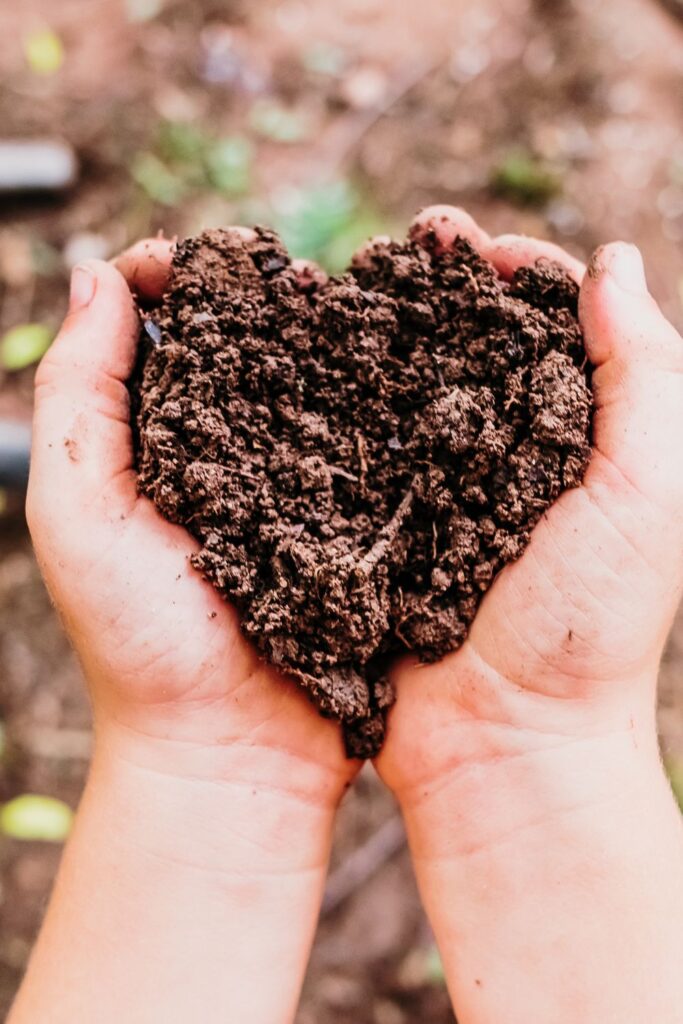
Select a high-quality potting mix specifically formulated for herbs or vegetables. Avoid heavy garden soil, as it may compact in containers and hinder root growth. Look for a well-balanced mix that provides good drainage while retaining moisture.
Key considerations:
- Drainage: Ensure the potting soil has excellent drainage to prevent waterlogging, which can lead to root rot and other diseases. Look for mixes containing perlite or vermiculite to improve drainage.
- Nutrient content: Choose a potting soil enriched with organic matter, such as compost or aged manure, to provide essential nutrients for healthy cilantro growth. Balanced levels of nitrogen, phosphorus, and potassium (N-P-K) are crucial for robust foliage and root development.
- pH level: Cilantro prefers slightly acidic to neutral soil with a pH range between 6.0 and 7.0. Test the pH of the potting soil before planting and adjust if necessary using pH-adjusting products or amendments.
- Texture: Opt for a potting mix with a light, fluffy texture that allows for easy root penetration and promotes air circulation. Avoid compacted or heavy soils that may restrict root growth and drainage.
Tip: Consider using a premium organic potting mix specifically designed for herbs or vegetables. These blends often contain a balanced combination of organic matter, perlite, and other amendments to create an ideal growing medium for cilantro in containers.
Tips for healthy potted cilantro care
Maintaining robust cilantro plants requires attention to several key factors to ensure optimal foliage production and overall plant health. Here are some essential tips for caring for your cilantro:
- Maximizing foliage: To encourage lush foliage growth, pinch back the young cilantro plants regularly. This practice promotes branching and bushier growth, resulting in increased leaf production. Additionally, harvesting the outer leaves periodically can stimulate new growth and prolong the plant's lifespan.
- Managing watering: Cilantro plants prefer consistently moist soil but dislike soggy conditions. Water your cilantro plants regularly, ensuring the soil remains evenly moist but not waterlogged. Avoid overhead watering, as wet foliage can increase the risk of fungal diseases. Instead, water at the base of the plant to deliver moisture directly to the roots.
- Fertilization: Provide your cilantro plants with adequate nutrients by applying a balanced fertilizer regularly. Choose a fertilizer specifically formulated for herbs or vegetables and follow the manufacturer's instructions for application rates. Avoid over-fertilizing, as excessive nitrogen can lead to rapid growth and reduced flavor in cilantro leaves.
- Sunlight exposure: Cilantro thrives in partial shade to full sun, depending on the climate. In hot regions, provide afternoon shade to prevent premature bolting. In cooler climates, cilantro can tolerate more sunlight. Monitor your cilantro plants' sunlight exposure and adjust as needed to prevent stress and promote healthy growth.
- Pest and disease management: Keep an eye out for common pests such as aphids, spider mites, and leaf miners, which can damage cilantro foliage. Use insecticidal soap or neem oil to control pest infestations, applying treatments according to the product label instructions. Additionally, practice good sanitation by removing any diseased or infested plant material promptly to prevent the spread of diseases such as powdery mildew or leaf spot.
Frequently asked questions
Late spring, after the danger of frost has passed, is an excellent time to plant cilantro seeds outdoors for a summer harvest.
Cilantro tends to bolt, or prematurely produce flowers and seeds, in hot weather. Providing shade and adequate watering can help mitigate this issue.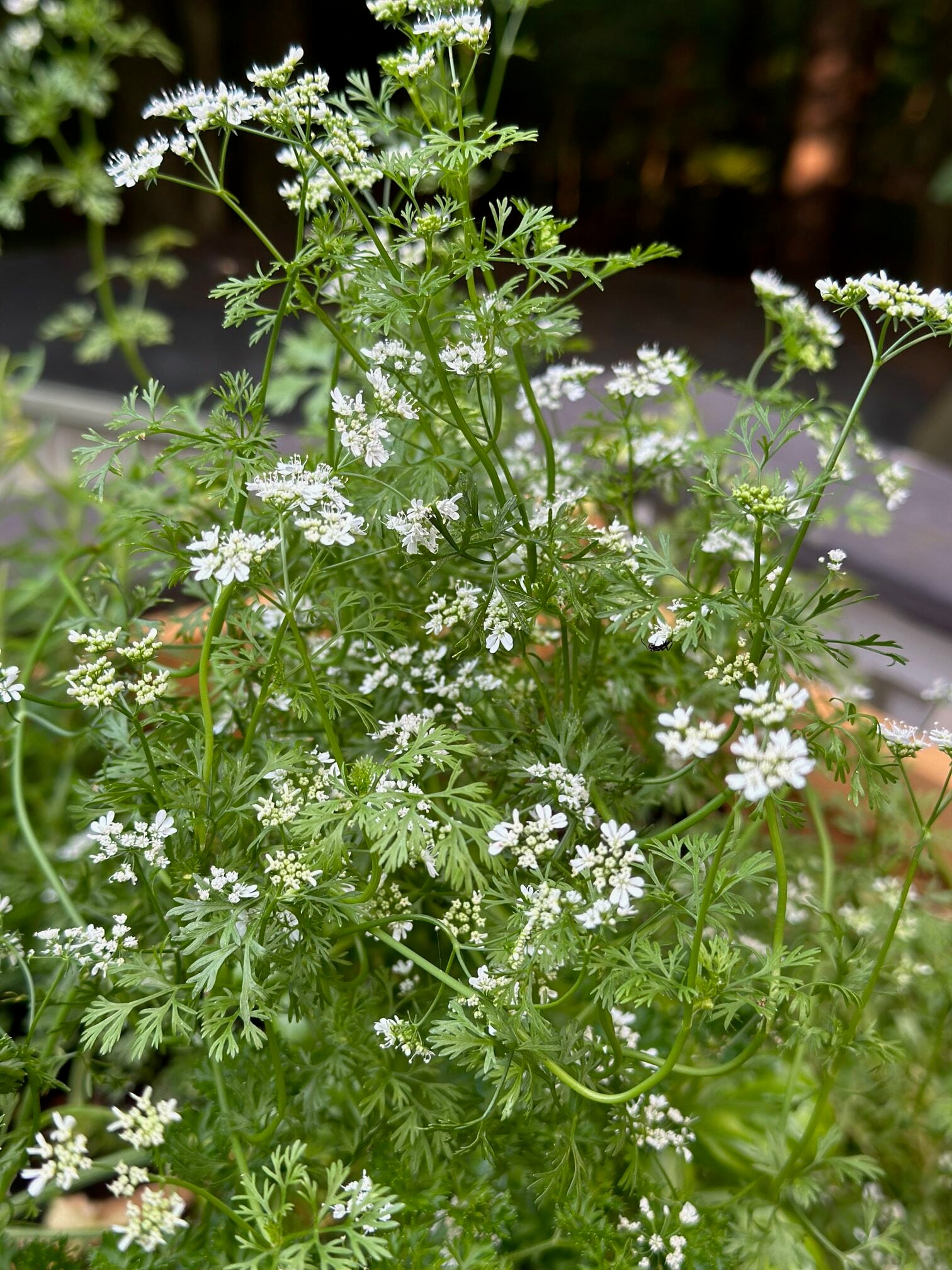
Cilantro plants require approximately an inch of water per week, either from rainfall or irrigation. Avoid overwatering, as cilantro does not like soggy soil.
If cilantro bolts, meaning it produces flowers and seeds prematurely, harvest the leaves promptly for the best flavor. Consider planting new cilantro seeds for a continuous supply. Learn more about herbs bolting vs. flowering in my guide.
Use a well-draining potting mix for cilantro in plastic pots to prevent waterlogging and promote healthy root growth. Amend the soil with compost for added nutrients.
Check out some of our other helpful growing guides
Growing cilantro is a rewarding experience that offers a continuous supply of fresh, flavorful herb for your culinary adventures. Whether you're nurturing mature plants in larger containers or starting with little plants in small spaces, cilantro thrives with just the right amount of sunlight, water, and care.
By following the tips in this comprehensive guide, you'll be able to enjoy harvesting fresh leaves for Asian cuisines and other dishes from early spring through late summer. With its aromatic leaves and versatile culinary use, cilantro is indeed a must-have herb in any home garden. So grab your seed packet, set those seeds, and watch as your cilantro plants flourish, providing you with a continual harvest of this cool-season herb.
Happy Herb Gardening!