Basil Companion Planting: Best Plants to Grow Together

Basil companion planting means growing basil with plants that share similar needs or offer mutual benefits. Basil thrives in full sun and moist, well-drained soil, making it a great companion for tomatoes, peppers, and certain herbs. Its strong aroma may help deter common garden pests while attracting beneficial insects, supporting a healthier, more productive garden.
Basil is one of those herbs I reach for all season long. From sweet basil tucked into a caprese salad to a handful of fragrant leaves added to dinner at the last minute, it's easily one of the most useful plants in my garden.
But where you plant basil matters more than you might think.
Companion planting helps create a healthier, more balanced garden. The right plant pairings can support stronger growth, naturally reduce garden pests, and make better use of the garden space you have, whether you're working with a full vegetable garden or a few well-placed herb containers.
And basil just happens to be one of the easiest plants to build around.
At a Glance: Basil Companion Planting
_______________________
- Best companion plants: Tomatoes, peppers, bush beans, root vegetables, flowering plants like marigolds and nasturtiums
- Herbs that grow well with basil: Parsley, cilantro, chives, dill, and other basil varieties
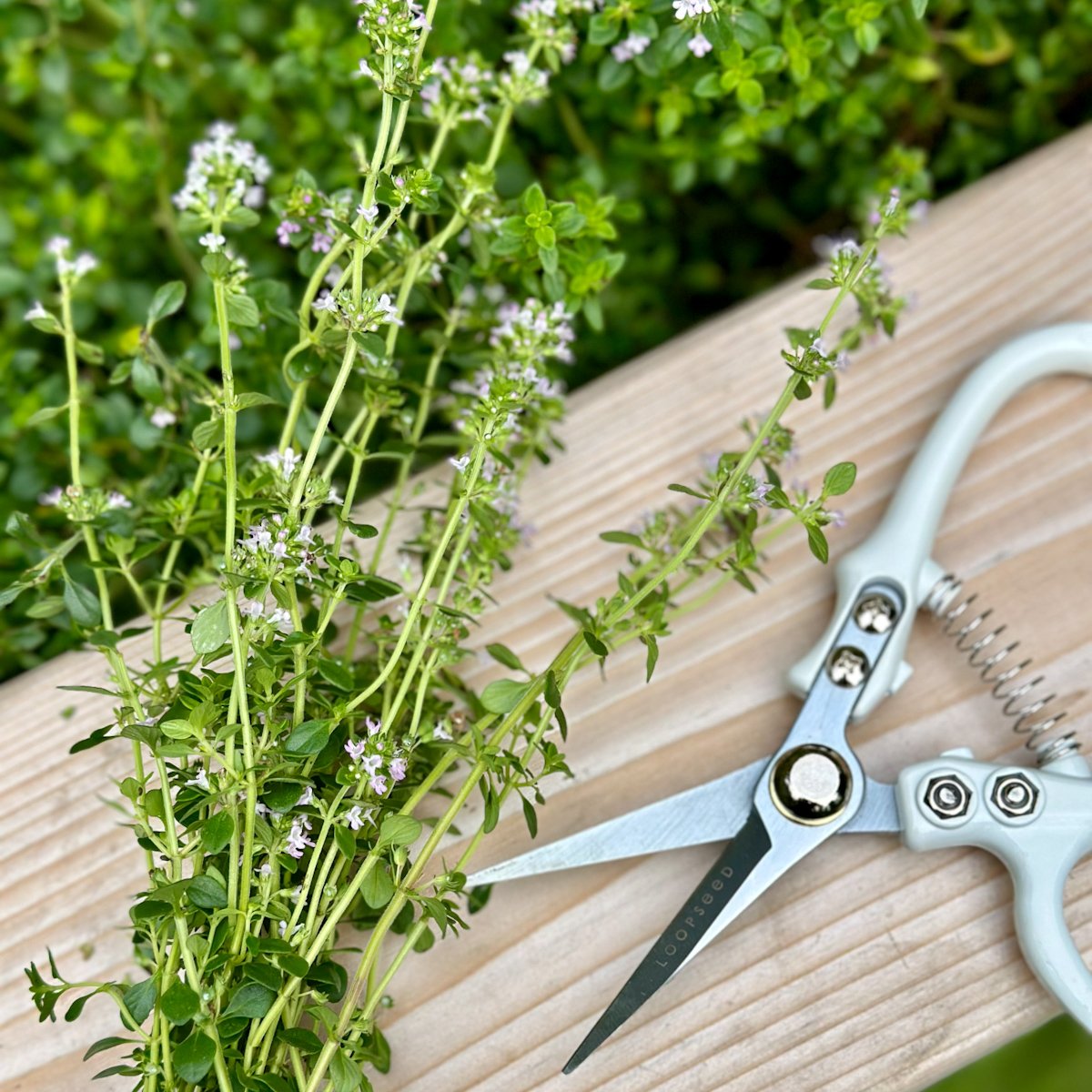
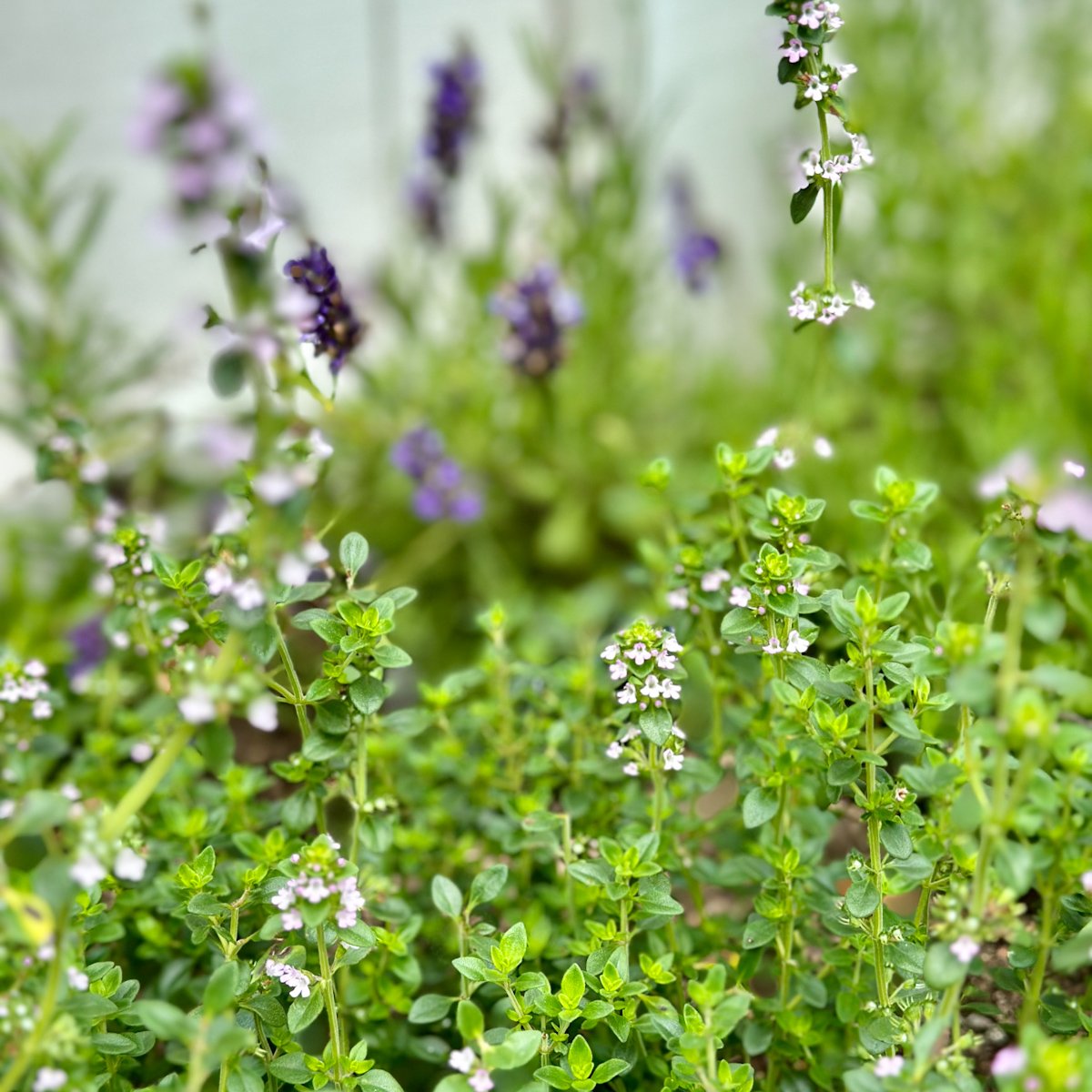
- Herbs to keep separate: Rosemary, thyme, sage, oregano, lavender
- What basil helps with: May deter pests like aphids, spider mites, and tomato hornworms while attracting beneficial insects and pollinators
- Ideal growing conditions: Full sun, rich and fertile soil, consistent moisture
- Works in containers: Yes, if plants have similar water and sunlight needs, though basil also thrives on its own
- Biggest tip: Group plants with similar water needs to keep everything healthy and easy to manage
Summarize and Save this content on:
Jump to:
- At a Glance: Basil Companion Planting
- What is basil companion planting?
- Best companion plants for basil
- Herbs to grow with basil
- Herbs to keep separate from basil
- What not to plant with basil
- Can you grow basil with other plants in containers?
- Tips for successful basil companion planting
- Frequently asked questions
- More herb growing guides to explore
What is basil companion planting?
Basil companion planting is the practice of growing basil alongside other plants that benefit from similar conditions or support each other's growth. These plant pairings are based on mutual benefits, from improved growth to better pest resistance.
Basil thrives in full sun, well-drained, fertile soil, and consistent moisture, so it pairs best with plants that have similar growing requirements.
Basil is a great companion plant thanks to its strong aroma and natural oils. That fragrance may help deter common garden pests like aphids, spider mites, and even tomato hornworms.
At the same time, basil attracts beneficial insects, including pollinators and predatory insects like parasitic wasps, which help keep harmful pests in check.
Because it thrives in full sun and rich, moist soil, basil fits easily into both vegetable gardens and herb gardens, making it a reliable and versatile plant to grow alongside others.
Best companion plants for basil
Basil grows best alongside plants that enjoy full sun, rich soil, and consistent moisture. These pairings not only make planting easier, they can also support healthier growth and help manage common garden pests.
Tomato plants
Tomatoes and basil are a classic pairing for a reason. They share similar water and sunlight needs, and they grow well side by side throughout the growing season. Many gardeners also believe basil may help deter pests like tomato hornworms.
Peppers (sweet peppers and hot peppers)
Peppers thrive in the same warm, sunny conditions as basil. With similar growing seasons and water needs, they make an easy and reliable companion in both garden beds and larger containers.
Bush beans
Bush beans are a good companion plant for basil and other garden plants. They can help support overall soil health, creating a more balanced growing environment in your vegetable garden.
Root vegetables (carrots, radishes, beets)
Root vegetables grow below the soil surface, which makes them a great match for basil. This pairing helps you make better use of space without crowding nearby plants.
Asparagus
Asparagus is a long-term crop with a different growth habit than basil. Because it grows at a different pace and structure, it can share space with basil without competing heavily for nutrients or sunlight.
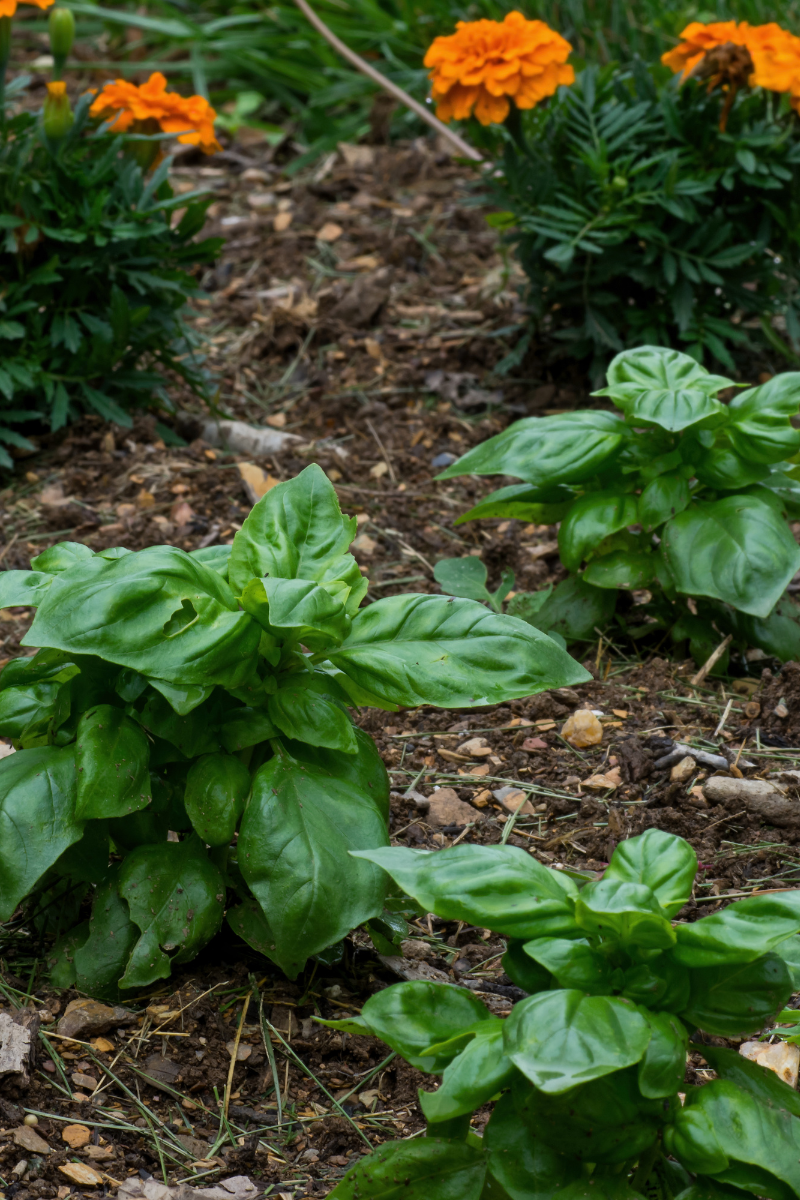
Flowering plants (marigolds, nasturtiums)
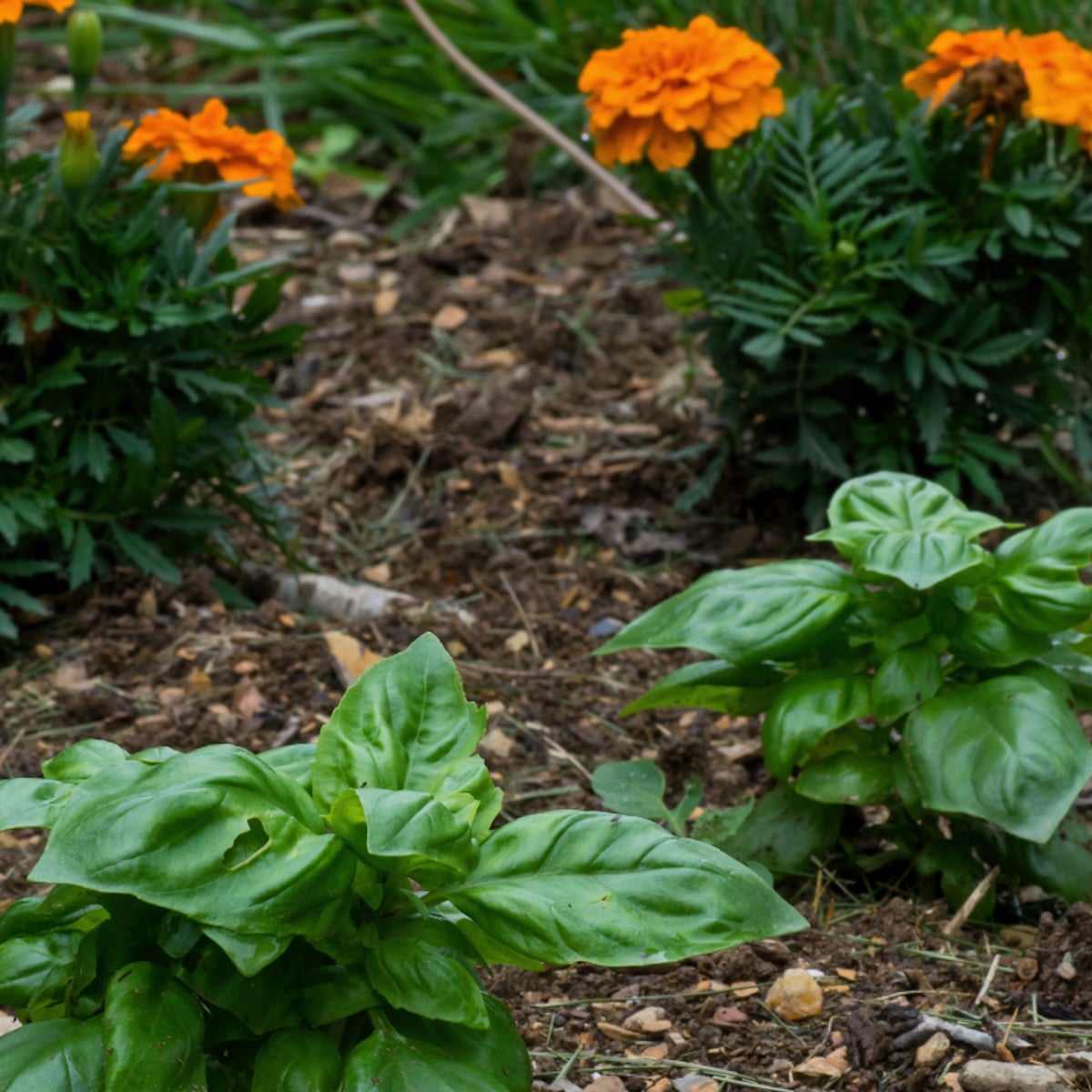
Flowering plants like marigolds and nasturtiums bring multiple benefits to the garden. They attract beneficial pollinators and may help reduce harmful insects like Japanese beetles and carrot flies. They also add bright color and visual interest around your basil plants.
Herbs to grow with basil
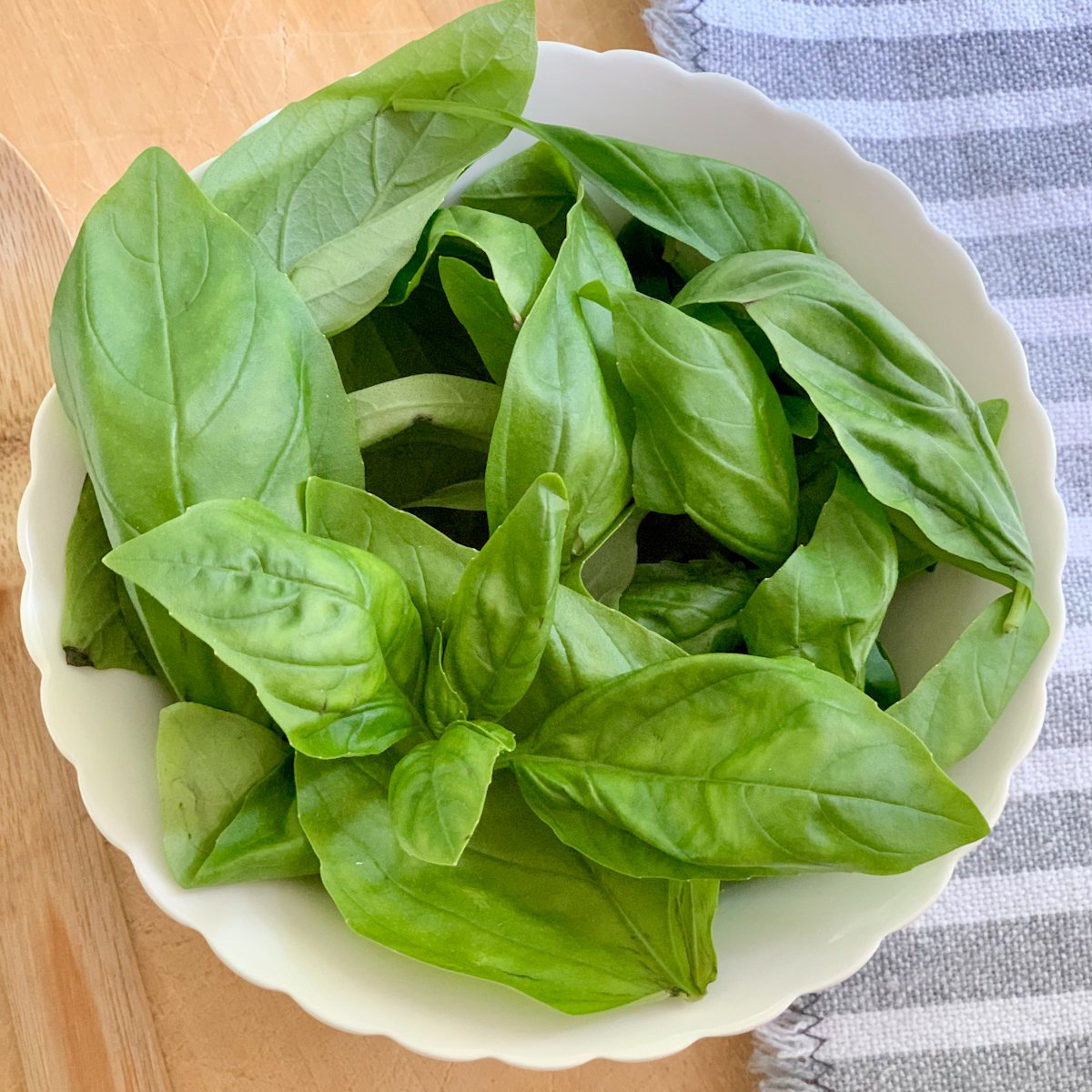
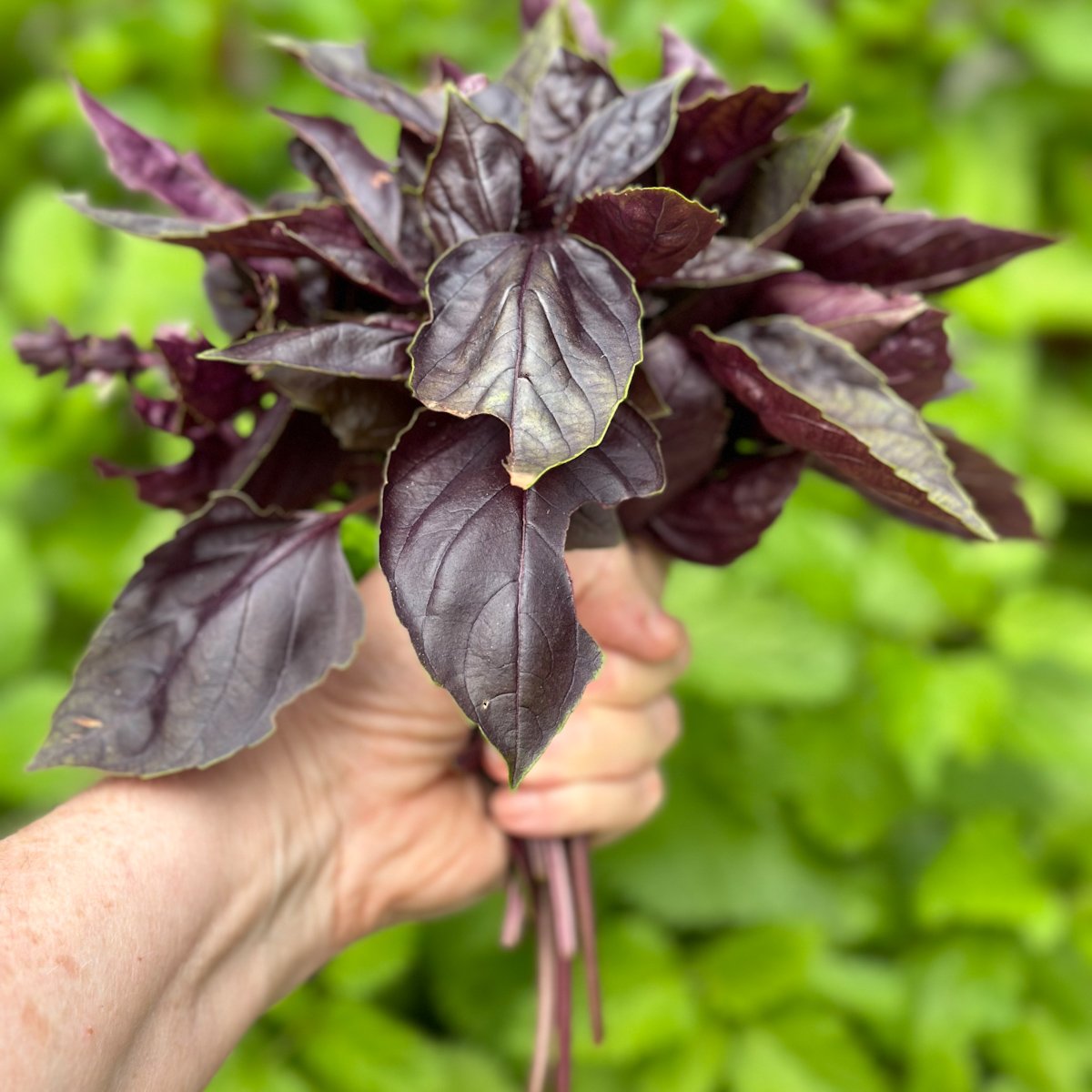
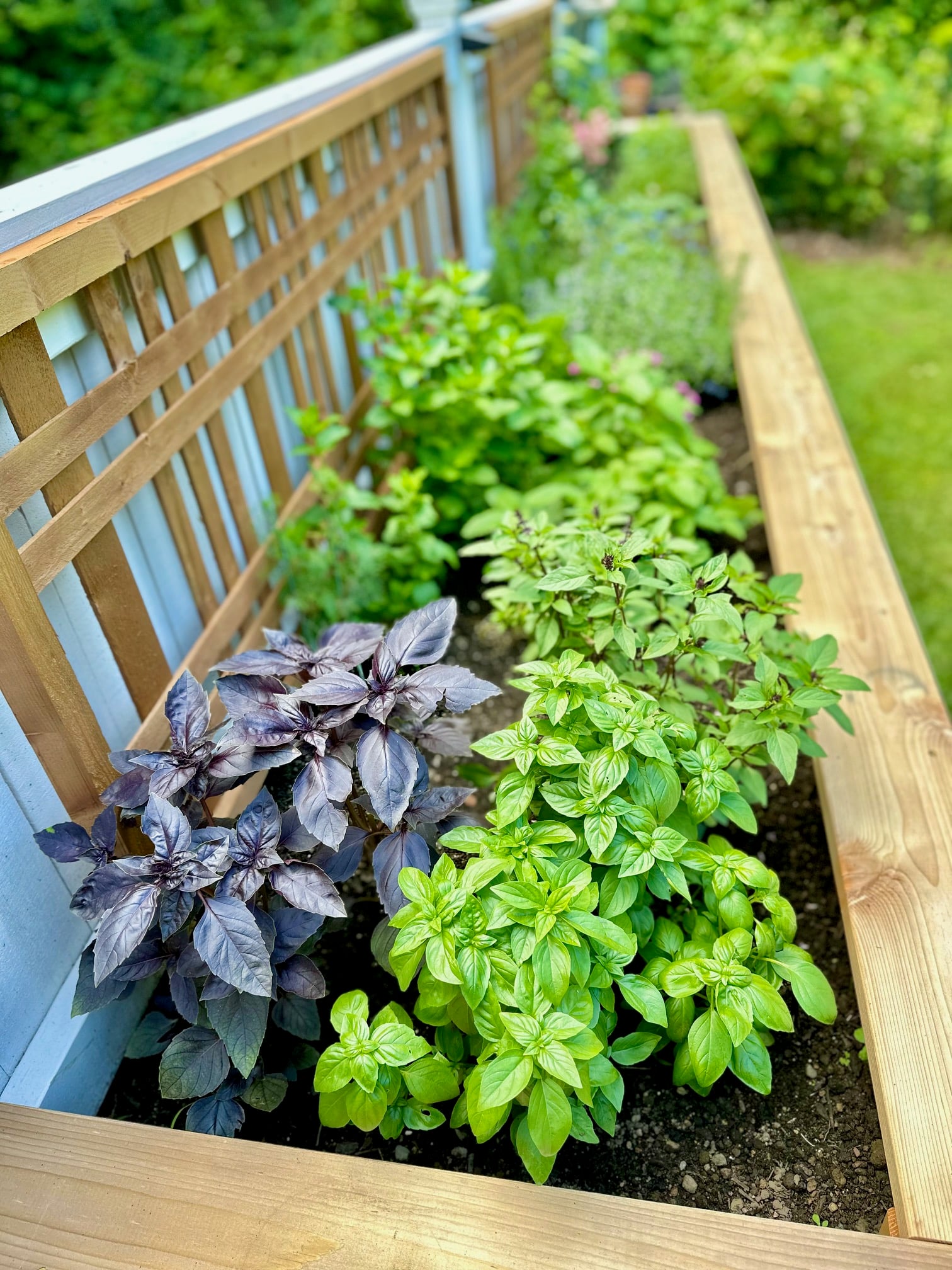
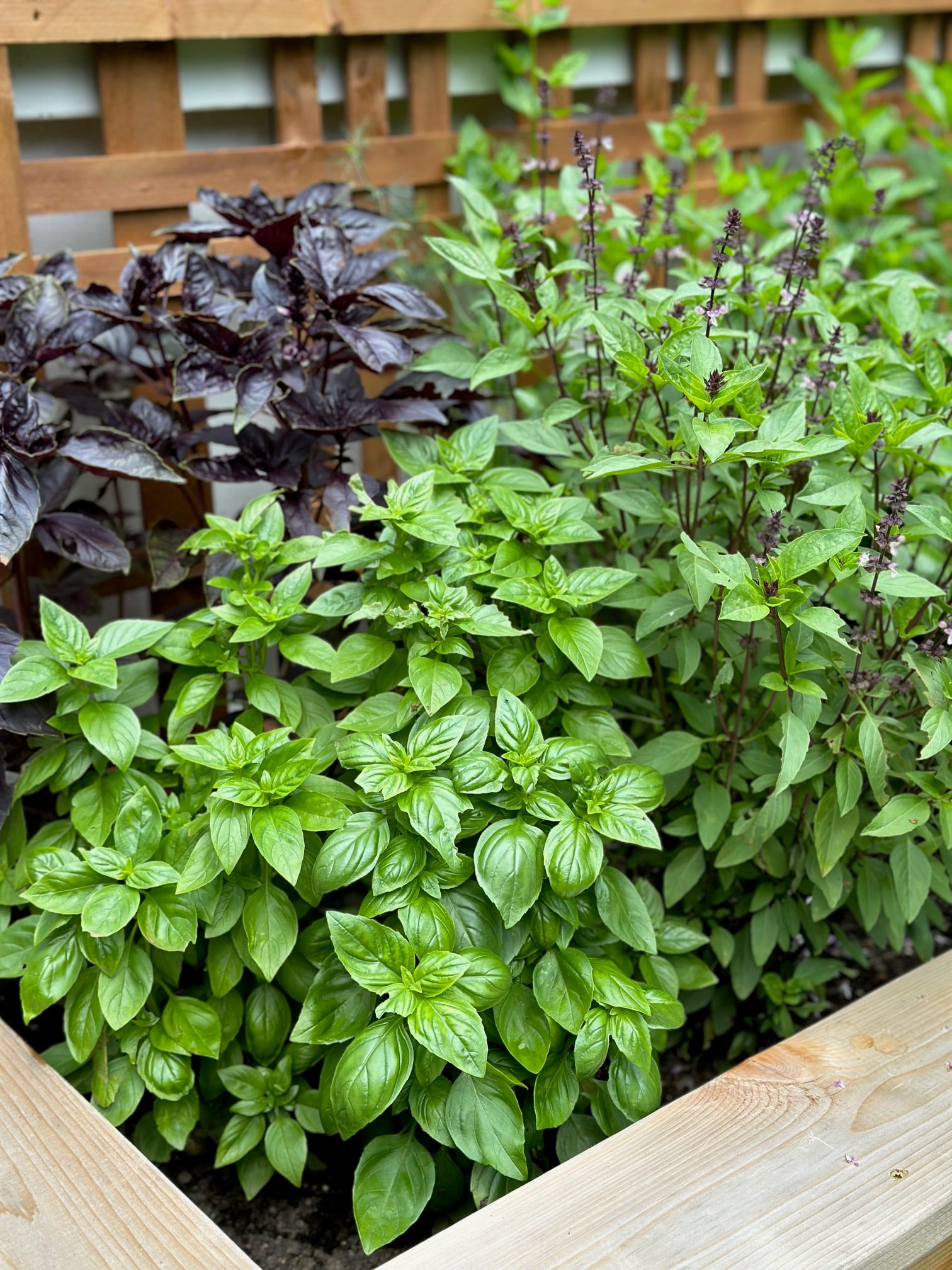
In my own garden, I almost always grow basil with more basil. Sweet basil, purple basil, and Thai basil all tucked together in the same space. They have the same needs, grow at a similar pace, and just work beautifully side by side.
Best herbs to plant with basil
Basil also pairs well with a handful of other herbs that enjoy the same growing conditions:
These herbs work well together because they have similar water needs, prefer rich, moist soil, and thrive in full sun. Planted together, they create an easy, low-maintenance herb grouping that grows consistently throughout the season.
Herbs to keep separate from basil
Some herbs are better planted away from basil due to very different growing needs:
These herbs prefer drier soil and less frequent watering, while basil thrives in consistently moist, fertile conditions. Planting them together can make it difficult to care for both properly, since one will almost always be getting too much or too little water.
What not to plant with basil
While basil is easy to grow with many plants, there are a few it's better to keep separate.
- Common rue
- Plants that prefer dry or sandy soil
- Anything with very different water needs
Basil thrives in moist, fertile soil and benefits from consistent watering. Plants that prefer drier conditions often struggle when planted nearby, making it harder to care for both successfully in the same space.
Can you grow basil with other plants in containers?
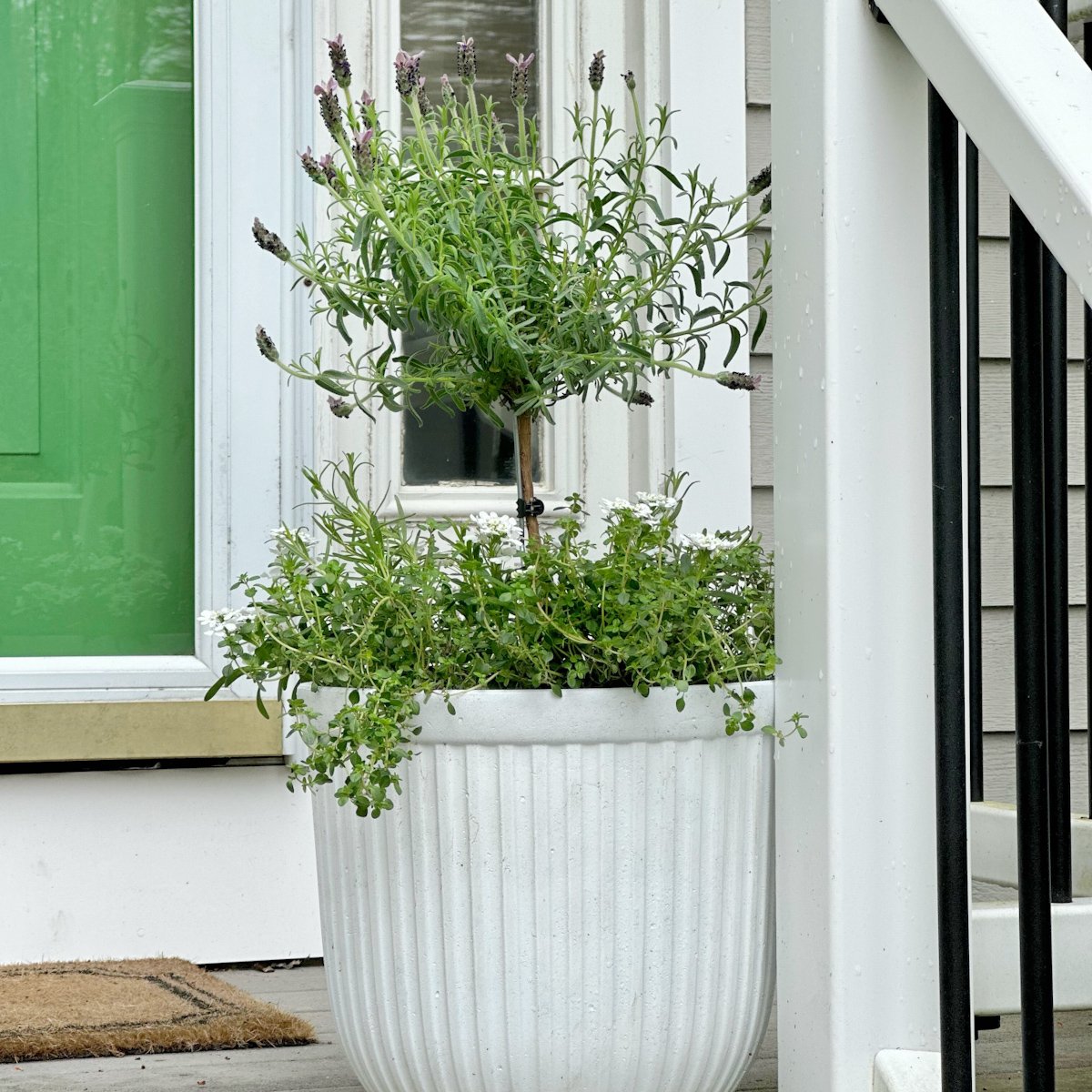
Yes, basil can grow well with other plants in containers as long as they share similar conditions. Look for plants that thrive in full sun, prefer moist, well-drained soil, and have similar water needs.
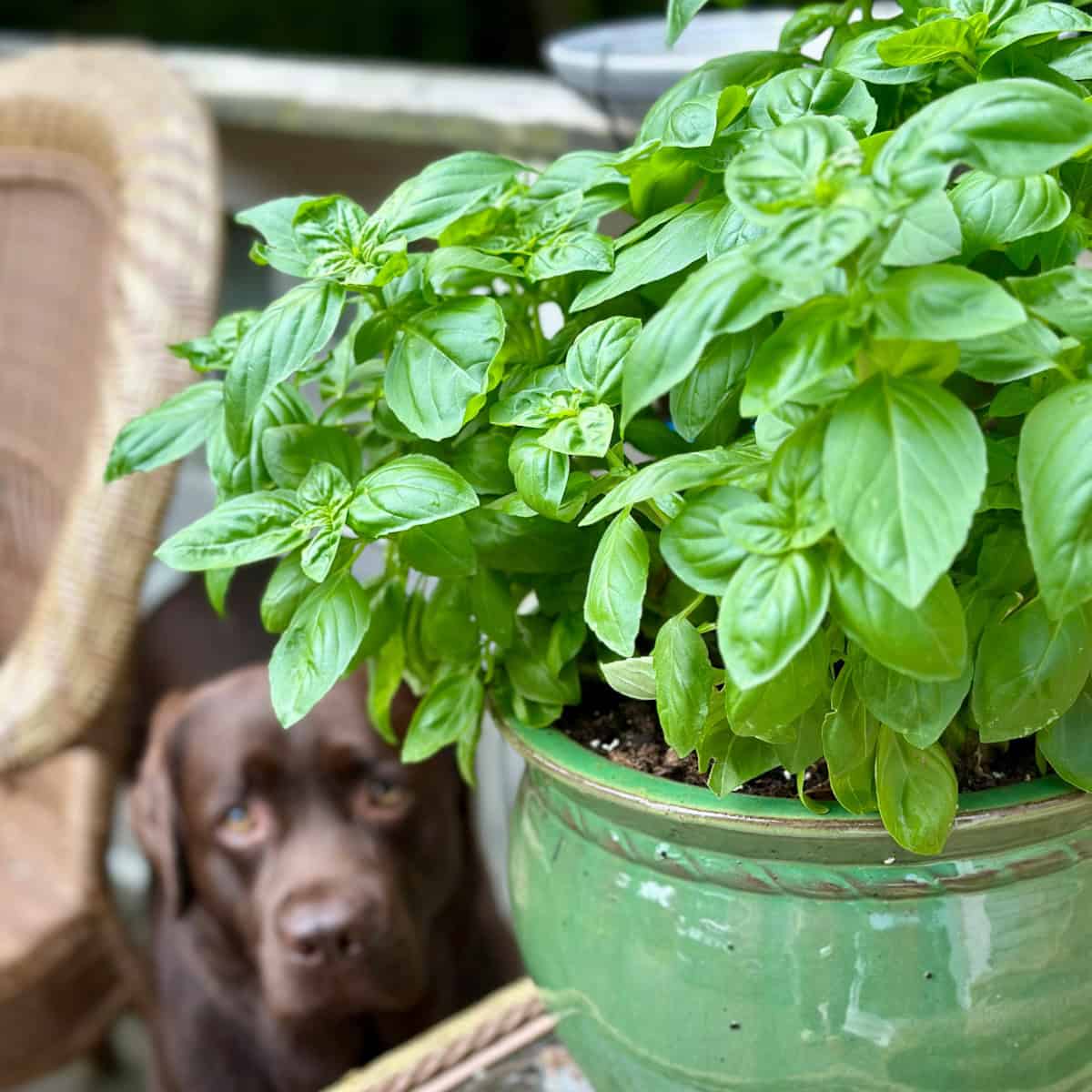
In my own garden, I often give basil its own container. It grows quickly, needs consistent moisture, and I like having easy access for harvesting. That said, it can still be successfully paired with other plants if their care needs closely match.
Simple pairings that work well include basil with tomatoes, peppers, or parsley. Keeping plants with similar requirements together makes container gardening much easier and more successful.
Tips for successful basil companion planting
- Plant in rich, fertile soil
- Keep soil consistently moist (not dry)
- Feed regularly with a gentle fertilizer to support steady growth (banana water fertilizer is a simple option)
- Give plants enough space for airflow
- Harvest basil leaves often for abundant growth
- Place near frequently harvested plants for easy access
Frequently asked questions
Avoid planting basil next to herbs like rosemary, thyme, sage, and oregano, which prefer drier soil. Basil thrives in moist, fertile conditions, so plants with very different water needs are not ideal companions.
Basil grows best next to plants with similar needs, such as tomatoes, peppers, bush beans, and root vegetables. It also pairs well with herbs like parsley, chives, and dill.
Yes, basil and tomatoes are one of the most popular companion plant pairings. They share similar sunlight and water needs and grow well together throughout the growing season.
Basil's strong aroma may help deter common garden pests like aphids and spider mites. It can also attract beneficial insects that help manage pest populations.
Yes, basil grows well with herbs that prefer similar conditions, such as parsley, cilantro, chives, and dill. It's best to keep it separate from herbs that prefer dry soil, like rosemary and thyme.

Basil is one of the easiest and most rewarding plants to build a garden around. With the right companion plants, you can support healthier growth, naturally reduce pests, and make the most of your space.
Whether you're planting in a vegetable garden, an herb bed, or a few simple containers, the key is choosing plants with similar needs. Start with a few reliable pairings, pay attention to how your plants grow together, and adjust as you go.
Over time, you'll find what works best in your own garden, and basil will almost always be at the center of it.
Happy gardening, friends!