What to Plant with a Lavender Tree (Best Companion Plants for Pots)

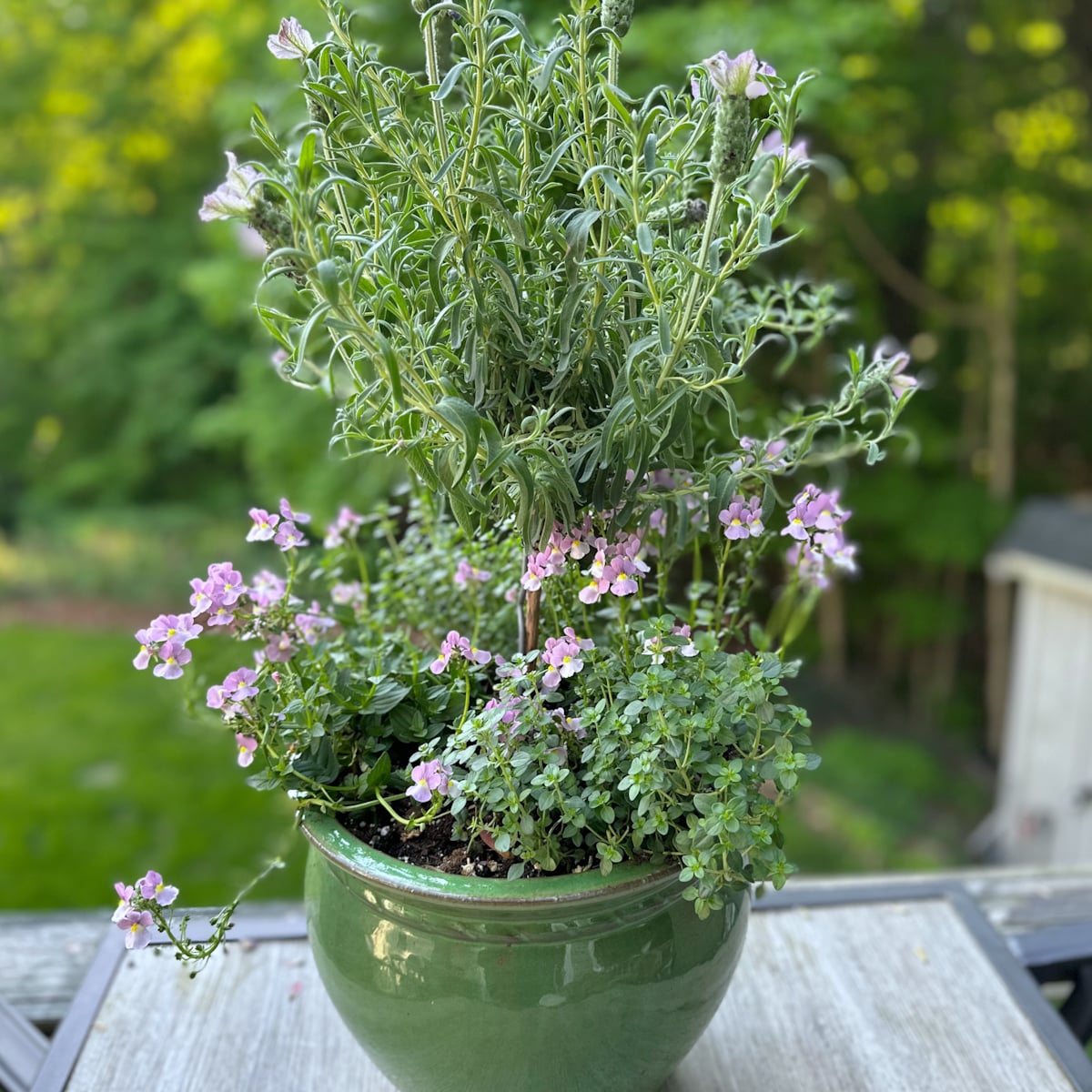
Choosing what to plant with a lavender tree comes down to selecting companion plants that thrive in the same sunny, well-drained conditions. The best options include drought-tolerant fillers like rosemary and candytuft, along with trailing spillers like thyme and lobelia that soften the edges of the container. By combining the right plants, you can create a balanced, low-maintenance lavender tree planter that is both beautiful and functional.
A lavender tree in a simple terra cotta pot is beautiful on its own. But if you're anything like me, you eventually start looking at that empty space around the base and wondering what else you can plant.
Choosing the right companion plants can turn a lavender tree into a full, layered container that feels intentional and balanced, not crowded or overdone. The goal is to complement the lavender, not compete with it.
With a few well-chosen fillers and spillers that love the same sunny, well-drained conditions, you can create a planter that feels both effortless and just a little bit special.
At a Glance: What to Plant with a Lavender Tree
_______________________
- Best growing conditions: Full sun with well-drained, slightly dry soil
- Lavender's needs: Low water, good airflow, and space around the base
- Best companion plants: Drought-tolerant herbs and sun-loving annuals
- Filler plants: Rosemary, candytuft, small grasses, compact sage
- Spiller plants: Thyme, creeping thyme, lobelia, sweet alyssum, dichondra
- Design method: Use the thriller, filler, spiller approach for balance
- What to avoid: Moisture-loving plants or anything that crowds the trunk
- Best containers: Terra cotta or breathable pots with excellent drainage
Summarize and Save this content on:
Jump to:
- At a Glance: What to Plant with a Lavender Tree
- What to plant with a lavender tree
- Choosing the right container (that looks good and works)
- Choosing the right soil for a lavender tree planter
- Using the thriller, filler, spiller method
- Best filler plants for a lavender tree planter
- Best spiller plants for a lavender tree planter
- Best low-growing plants for around the base
- What not to plant with a lavender tree
- Planting a lavender tree in a pot (without overplanting)
- Seasonal lavender tree planter ideas
- Caring for a lavender tree planter
- Frequently asked questions
- More container gardening guides to explore
What to plant with a lavender tree
When deciding what to plant with a lavender tree, the most important thing is choosing companion plants that thrive in the same conditions. Lavender prefers full sun, excellent drainage, and slightly drier soil, so anything you pair with it should be able to handle those same conditions.
Think of your lavender tree as the anchor of the planter. It needs space, airflow, and room around the base, so the goal is to build around it, not crowd it. The best combinations include a mix of low-maintenance fillers and soft, trailing spillers that add texture and movement without competing for water.
Herbs like rosemary and thyme are natural companions, while drought-tolerant flowers and foliage plants can add contrast and color. By choosing plants with similar needs, you create a container that not only looks beautiful, but is easy to care for and actually thrives over time.
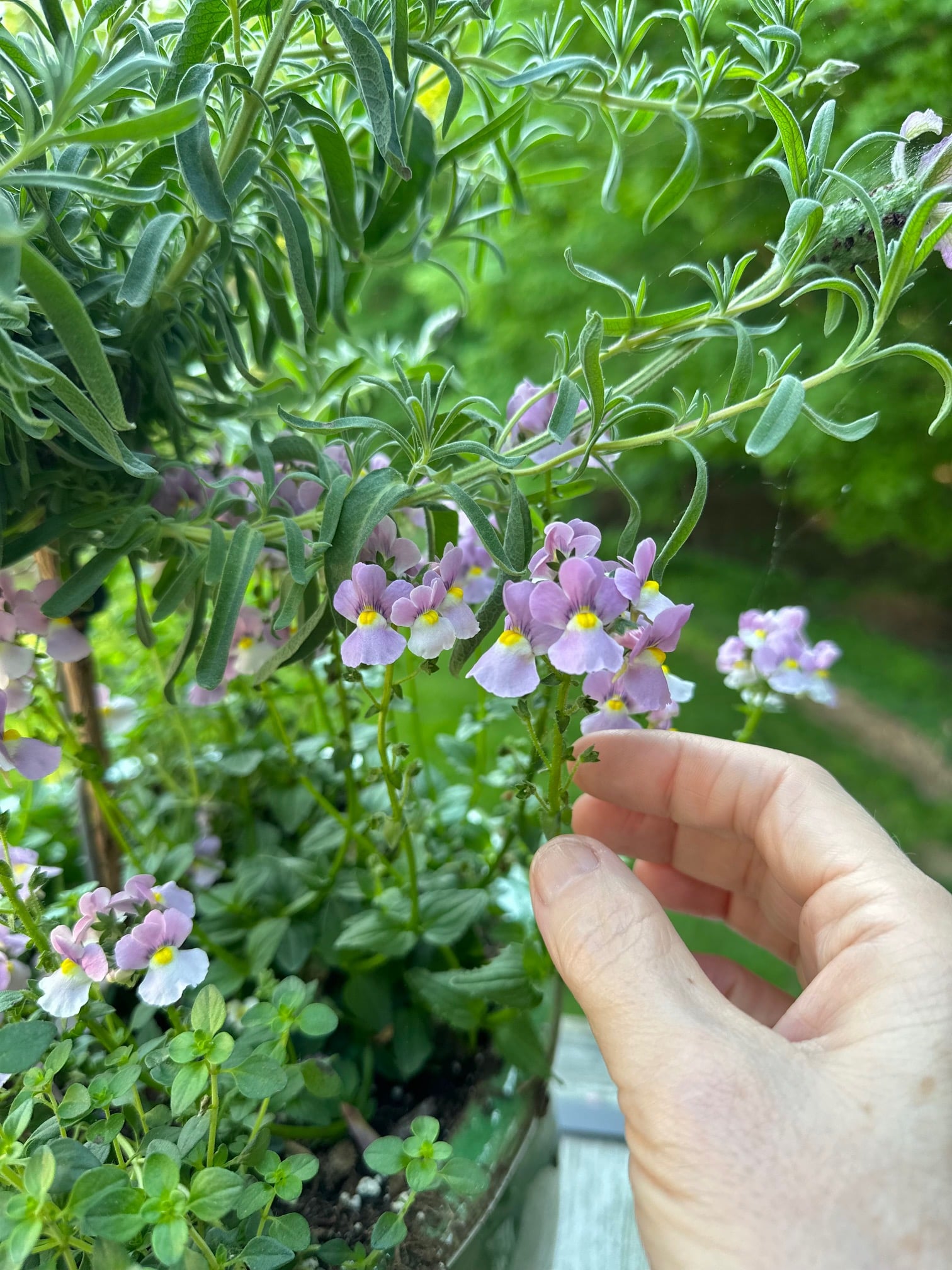
Tip: The lavender tree shown here is a Spanish variety (Anouk), but the same planting approach works for most lavender types. The key is choosing companion plants that prefer full sun and well-drained soil, regardless of the specific variety.
Choosing the right container (that looks good and works)
Visual appeal is important, but function comes first. Your container should:
- Be at least 12-16 inches wide for mature trees (room for roots and companion plants)
- Have excellent drainage (lavender's #1 rule)
- Be made from breathable materials like terra cotta, ceramic, or wood
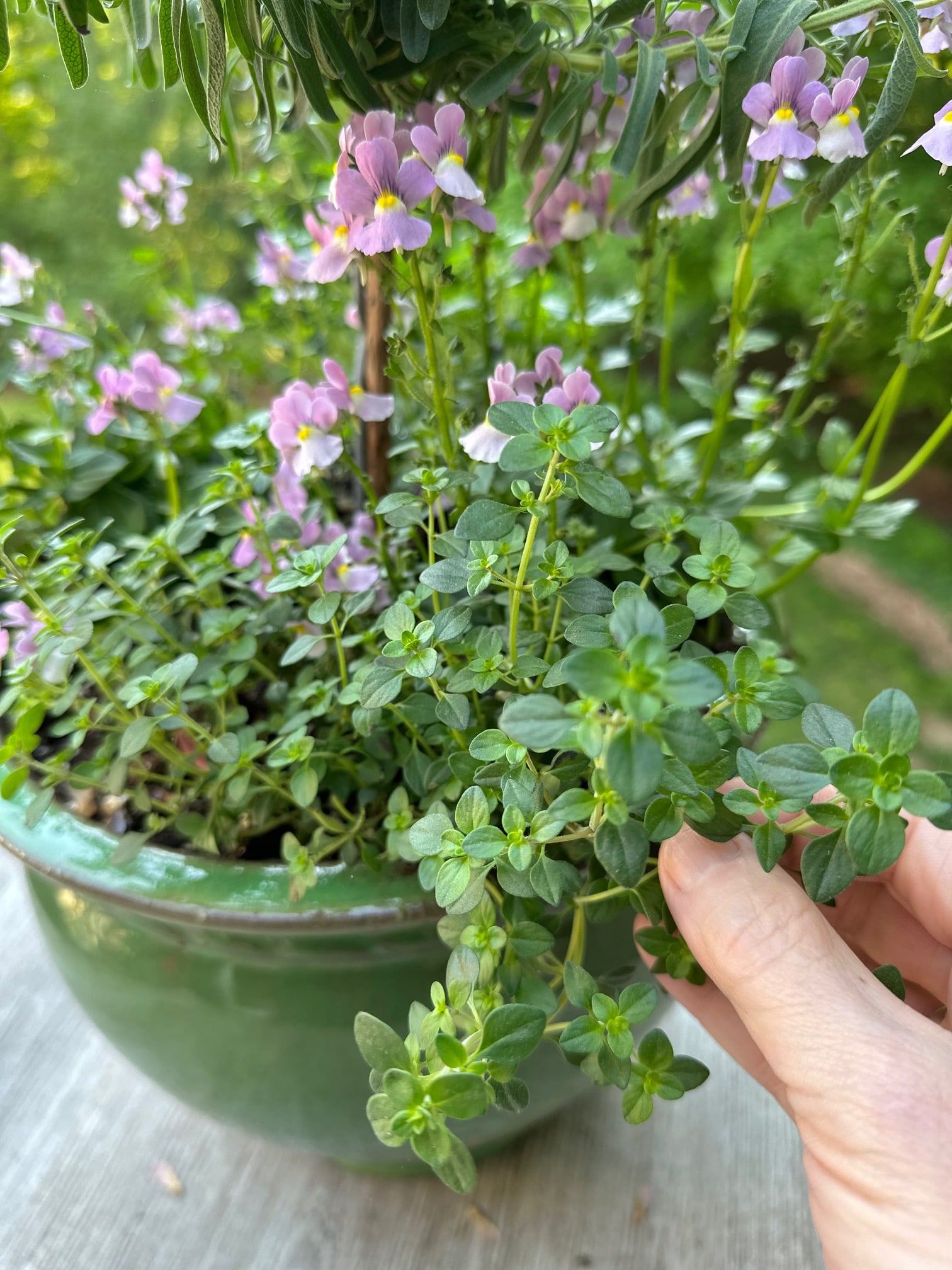
Lately, I've been especially drawn to green ceramic pots for my planters. I like how they blend in with the plants instead of competing with them, and they let the silvery foliage of the lavender really stand out. It's a subtle look, but one that feels calm and intentional.
Want something bold? A square planter in concrete or a modern matte black pot can make the silvery foliage pop. Prefer cottage-style charm? Go with aged terra cotta or a weathered wooden barrel. Just make sure it drains.
Choosing the right soil for a lavender tree planter
Lavender is very particular about soil, especially in containers. The goal is to keep things light, airy, and well-drained so the roots never sit in moisture for too long.
Start with a high-quality potting mix designed for containers. Then, if you can, improve drainage by mixing in a bit of perlite or coarse sand. This helps water move through the soil more quickly and keeps the roots healthy.
Avoid heavy or moisture-retaining soils. Lavender doesn't like to stay wet, and too much moisture is the fastest way to run into problems.
When planting, keep the base of the lavender tree at the same level it was in its original pot. Don't mound soil up around the trunk, and leave a little breathing room so air can circulate.
Once you have the soil right, everything else, watering, companion planting, and overall health, becomes much easier to manage.
Tip: It's been my experience that lavender trees don't always stay happy in the small nursery pots they come in. Transplanting into a larger container with well-draining soil sooner rather than later usually results in a stronger, healthier plant.

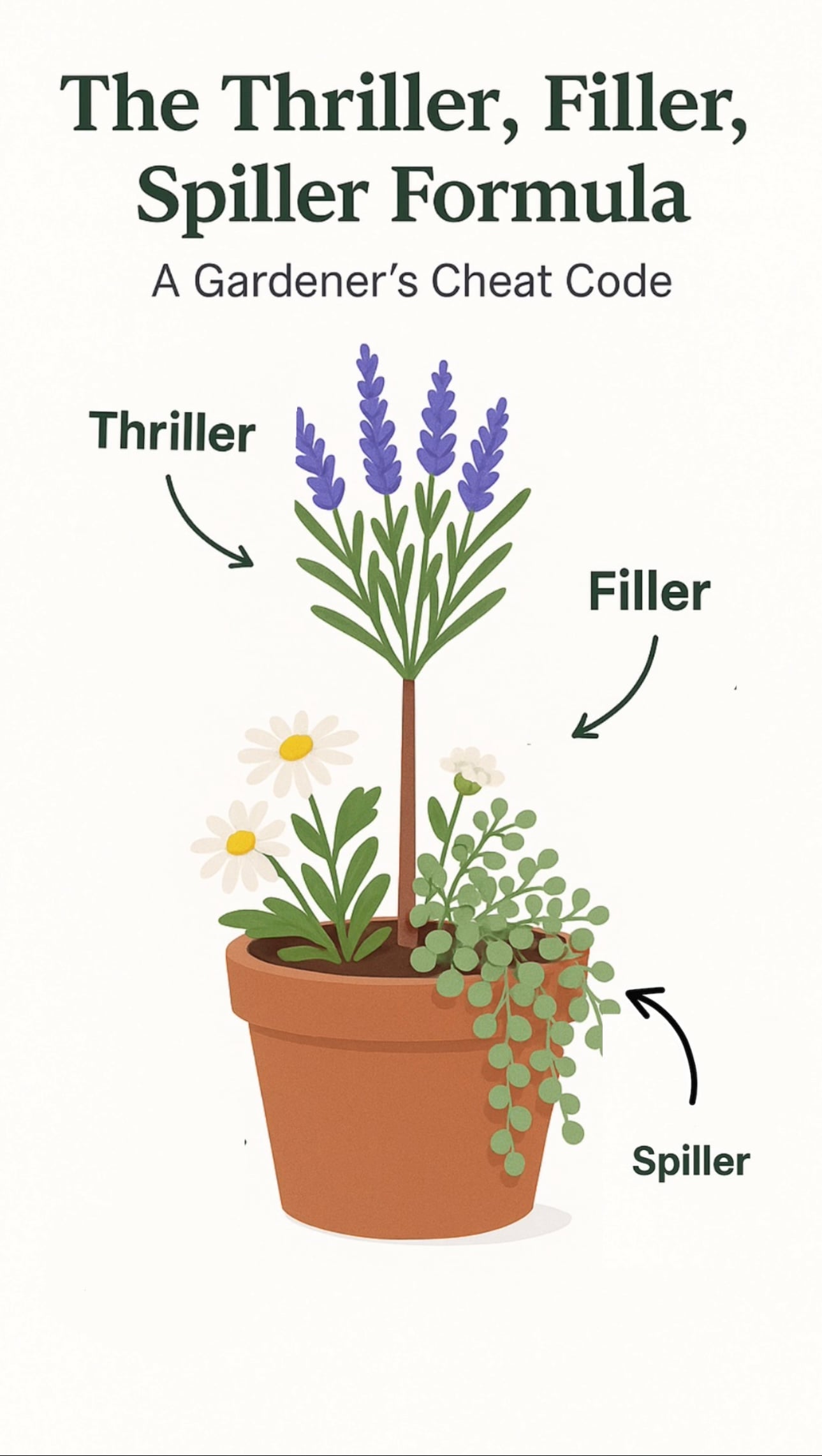
Using the thriller, filler, spiller method
This classic container method keeps things balanced and beautiful:
- Thriller: That's your lavender tree, the star of the show
- Filler: Mid-height plants that add color or texture without stealing the spotlight
- Spiller: Trailing plants that soften the edges and cascade over the pot
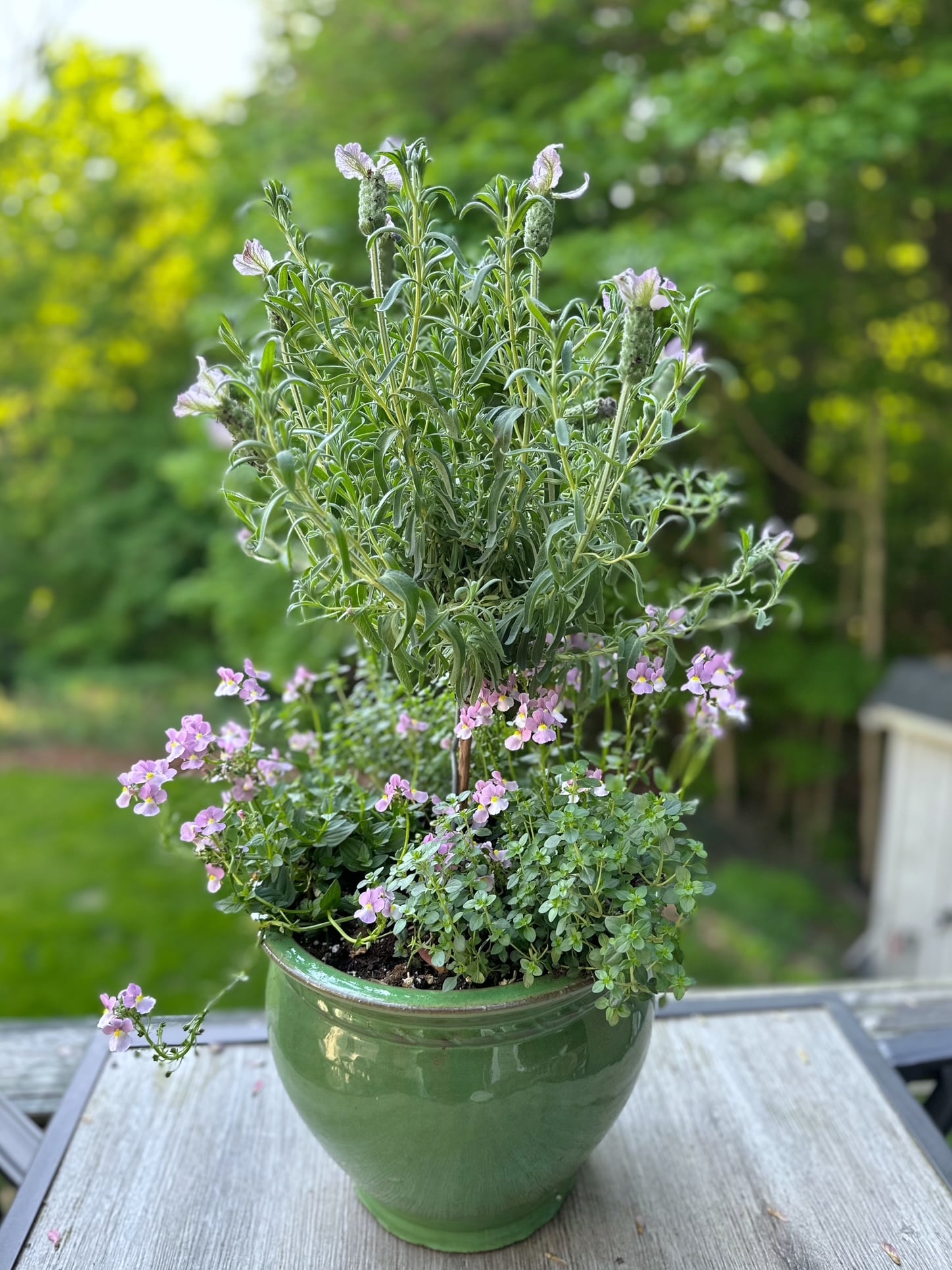
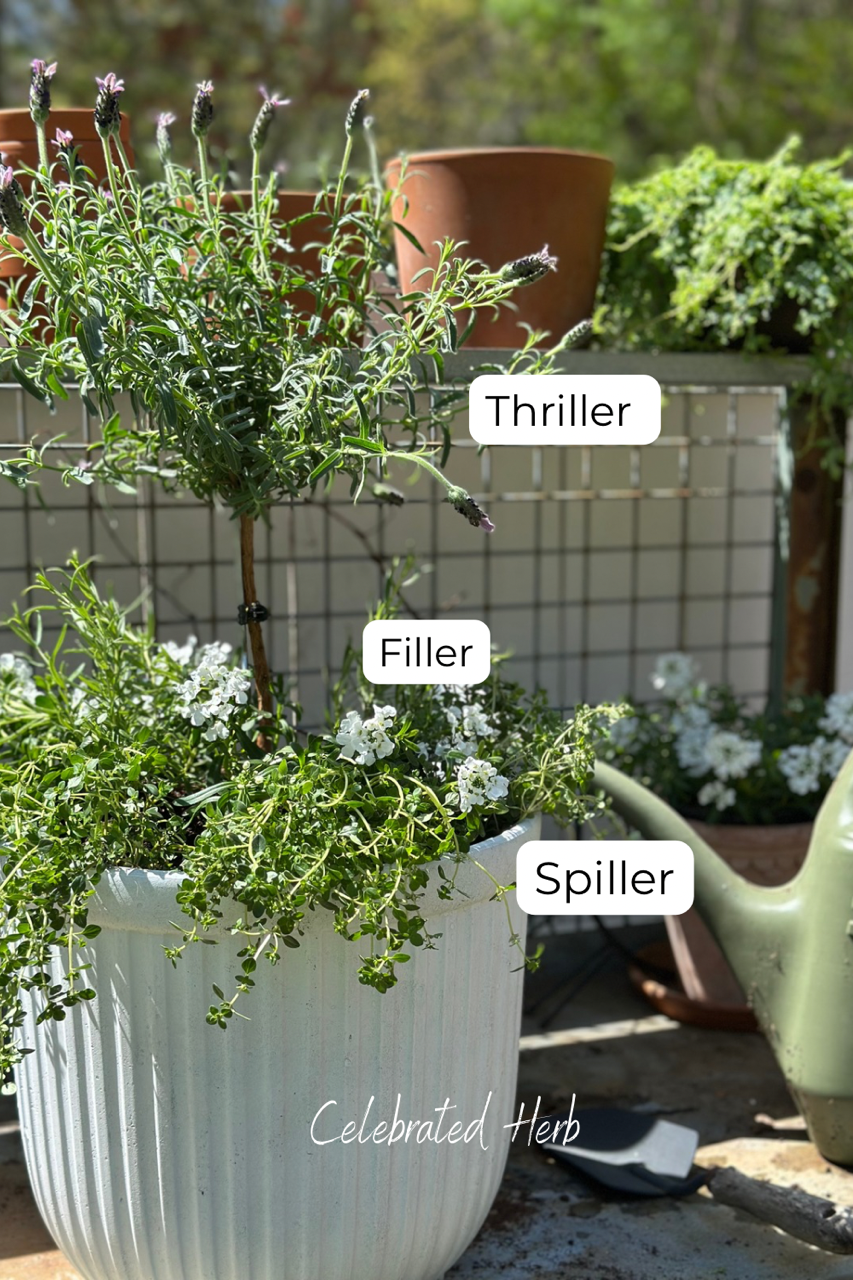
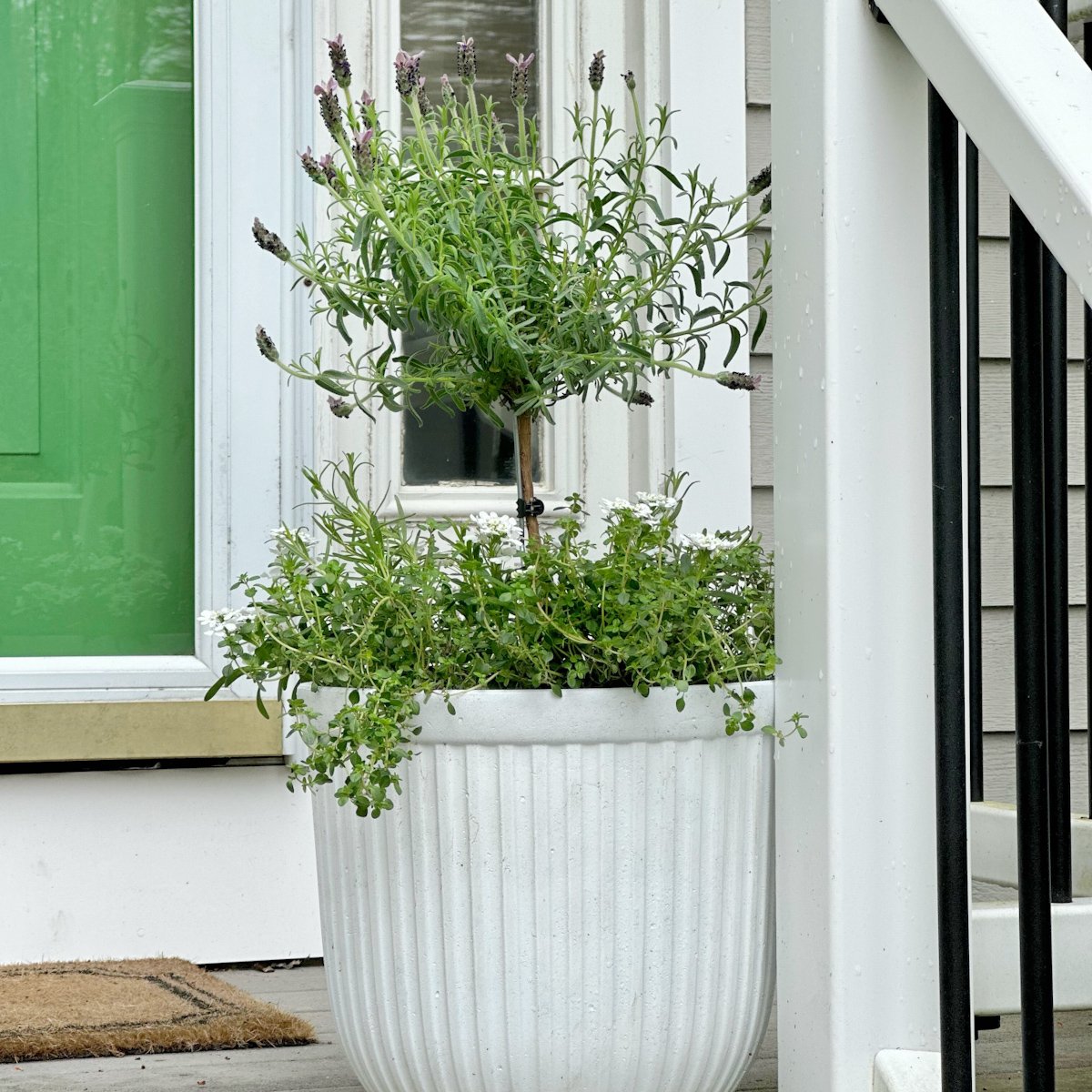
For this planter, I used:
- Thriller: Lavender tree
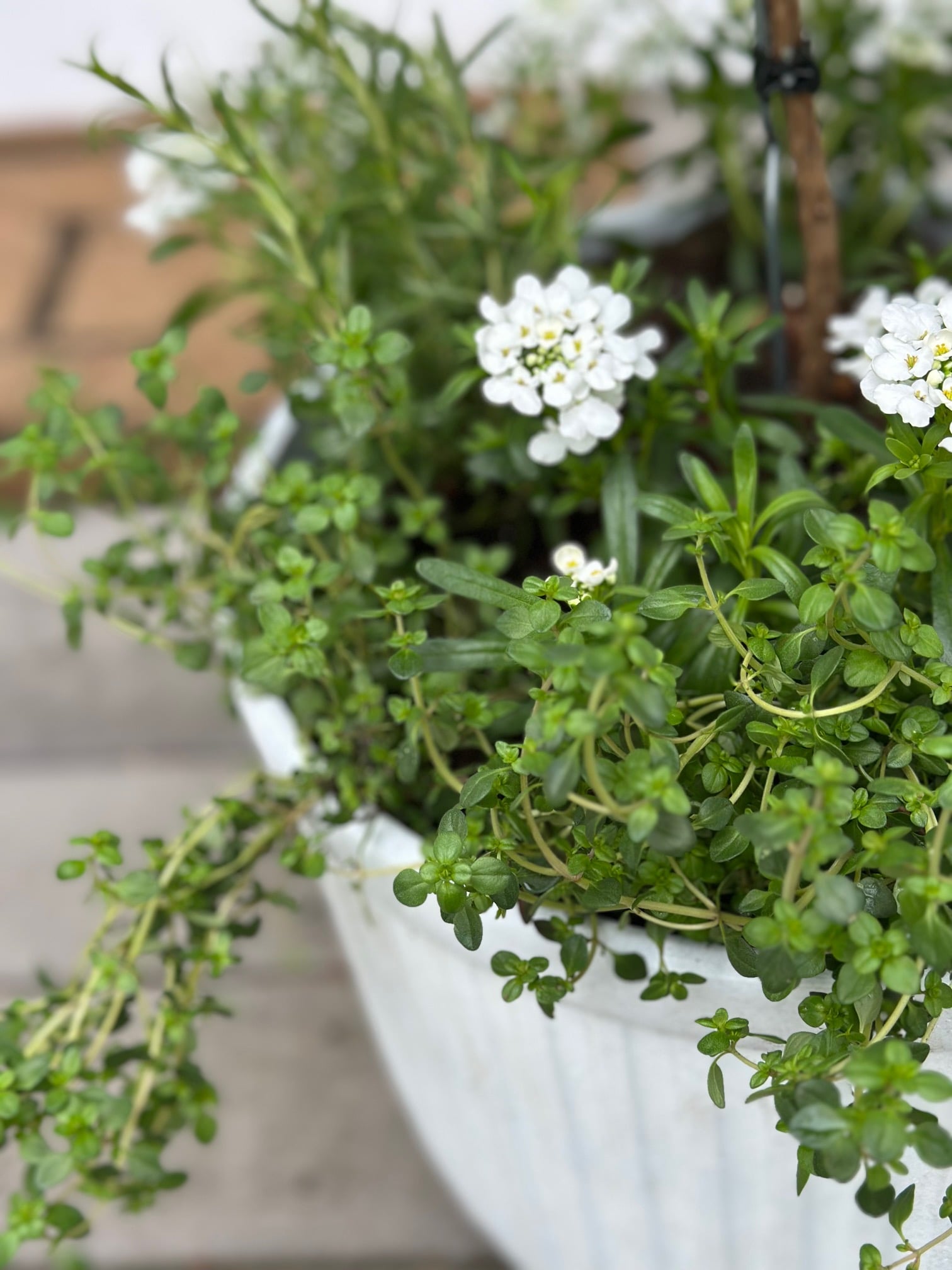
- Filler: Rosemary and candytuft
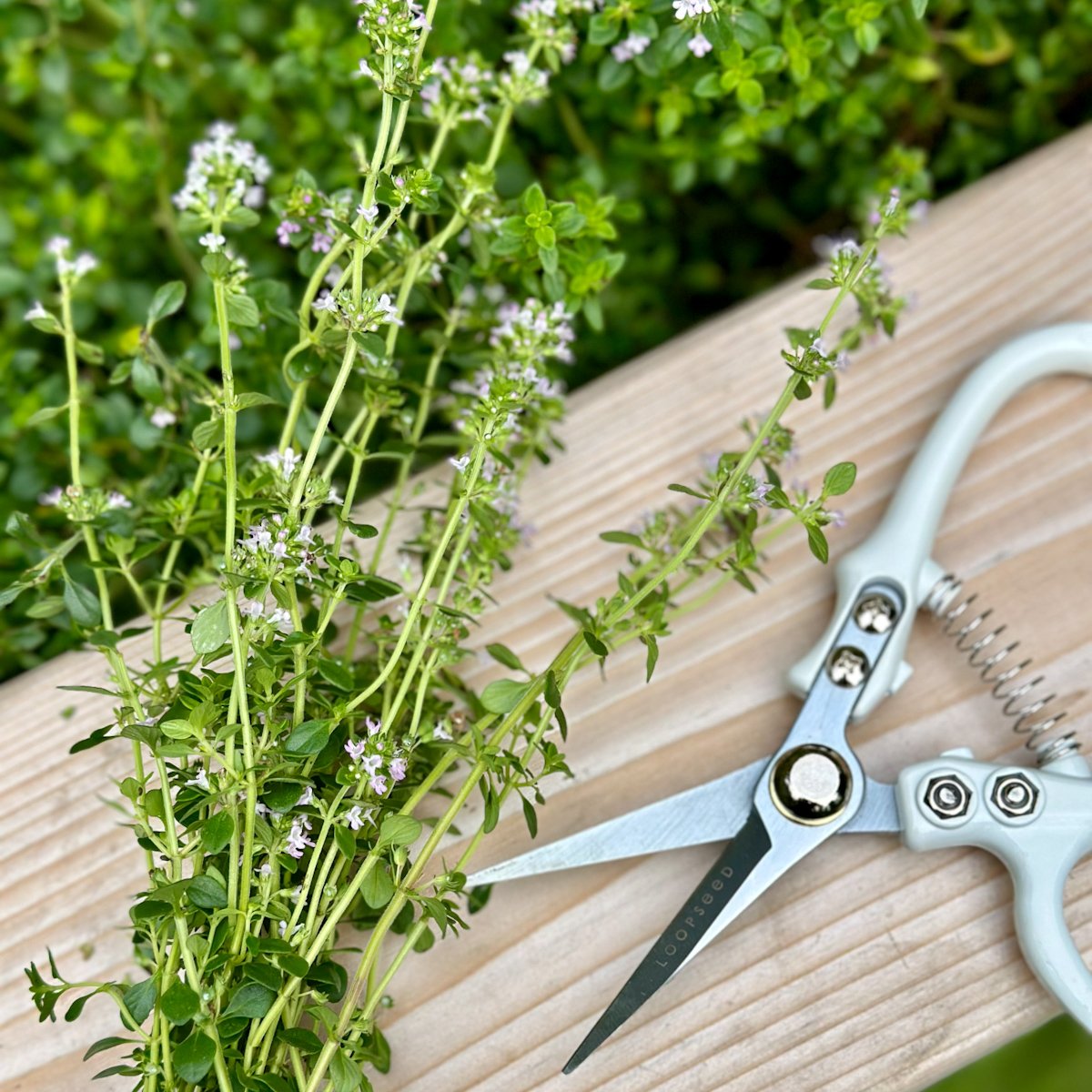
- Spiller: Lemon thyme
It's a simple combination, but it works because everything shares similar growing conditions while still bringing in different textures and shapes.
This is where it gets fun.
Best filler plants for a lavender tree planter
Fillers are what give your planter body. They sit just below the height of the lavender tree and help everything feel full and layered without taking over.
The key is choosing plants that complement the lavender, not compete with it.
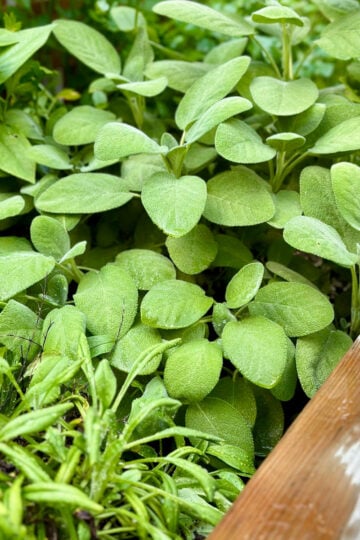
Rosemary and sage: A natural pairing. Rosemary and sage love the same dry, sunny conditions and add a slightly upright structure that works beautifully alongside a lavender tree.
Iberis (Candytuft): Soft white blooms create a light, airy contrast against lavender's silvery foliage. It brightens the whole planter without overwhelming it.
Small ornamental grasses: These add movement and texture, especially when they catch the breeze. Look for compact varieties that won't crowd the container.
Dwarf santolina: A tidy, mounded plant that brings structure and a subtle pop of color. It's incredibly drought-tolerant and easy to maintain.
Mini lavender varieties (optional layering): If you want a more layered look, smaller lavender varieties can echo the main plant without competing for attention.
Best spiller plants for a lavender tree planter
Spillers are what soften the edges of your container and give it that relaxed, overflowing look. They trail over the sides of the pot and help everything feel more natural and less structured.
Since lavender prefers dry, sunny conditions, choose spillers that can handle similar conditions without needing constant watering.
Dichondra 'Silver Falls': Silvery, elegant, and low-maintenance. This is one of my favorites for echoing the soft tones of lavender while adding a dramatic trailing effect.
Sweet alyssum: Tiny blooms with a light, sweet scent. It softens the planter and attracts pollinators while holding up well in sunny conditions.
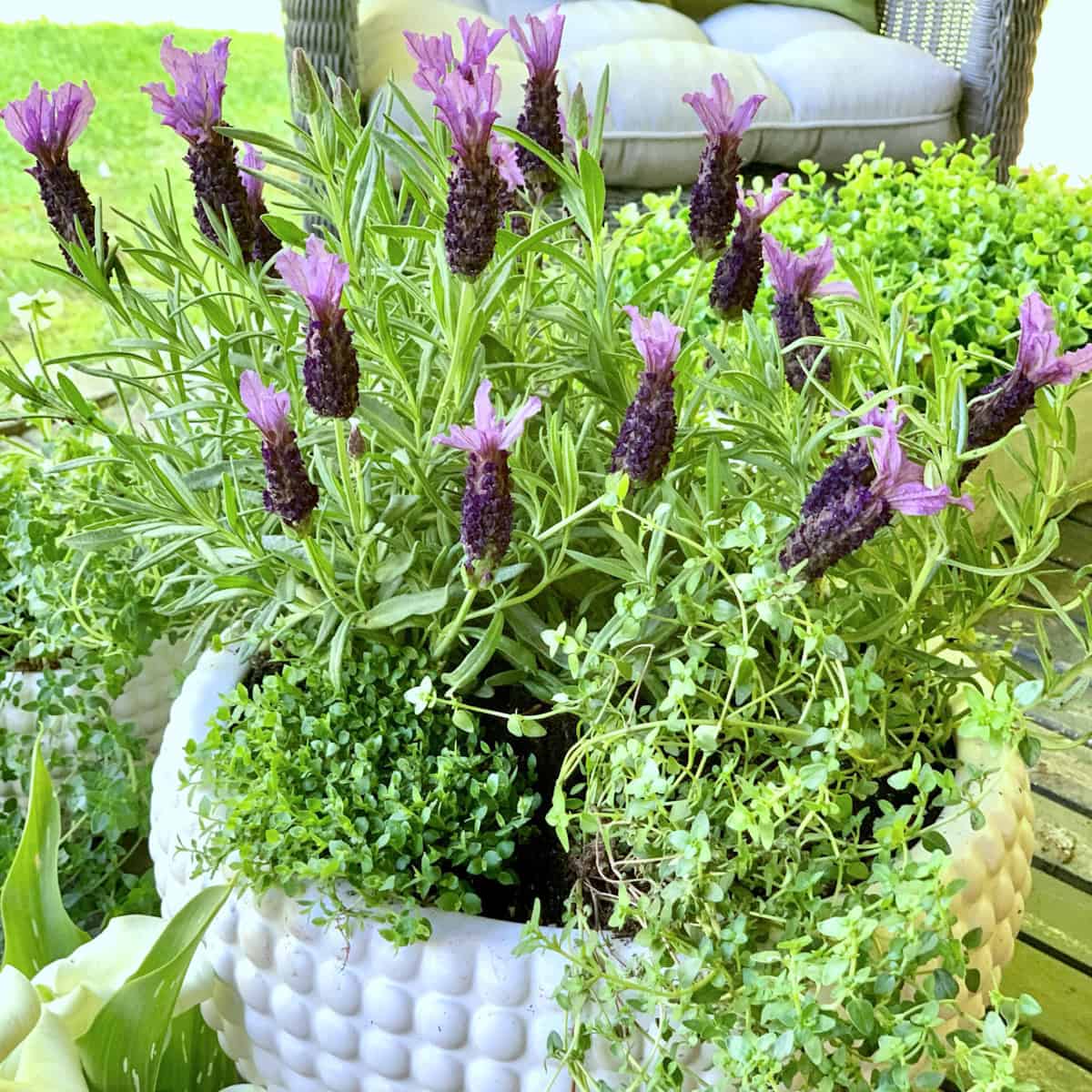
Creeping thyme: Both beautiful and useful. It's drought-tolerant, lightly fragrant, and looks perfect cascading over the edge of a pot.
Lemon thyme: A great edible option with a slightly brighter color. It trails nicely and adds a subtle citrus scent when brushed against.
Trailing lobelia: If you want a pop of color, this is a great choice. The blues and purples contrast beautifully with lavender, just keep in mind it may need a bit more water than the others.

Best low-growing plants for around the base
If you want to fill in around the base of your lavender tree, the key is to keep things low and breathable. These plants help soften the soil line without crowding the trunk or trapping moisture.
Think of these as quiet support players, they add interest without taking up space.
Woolly thyme: Soft, silvery, and low-growing. It hugs the soil and adds a subtle texture that pairs beautifully with lavender.
Sedum varieties: Colorful, compact, and extremely drought-tolerant. A great choice if you want something low-maintenance that can handle dry conditions.
Miniature ornamental grasses: These add a light, airy texture without overwhelming the container. Look for smaller varieties that stay compact.
Iberis (candytuft): A repeat from the filler section, but it works just as well here. It creates a soft cloud of white blooms around the base without feeling heavy.
What not to plant with a lavender tree
Lavender is easy to grow once you understand what it likes, but it doesn't play well with everything. The biggest issue is moisture. Lavender prefers dry, well-drained soil, so pairing it with the wrong plants can quickly lead to problems.
Moisture-loving plants: Avoid anything that needs frequent watering, like impatiens, ferns, or most shade-loving annuals. These plants require more moisture than lavender can tolerate.
Dense, fast-growing plants: Anything that quickly fills in and crowds the container can restrict airflow around the base of the lavender tree. This can lead to mildew or rot over time.
Plants that trap moisture at the base: Low, dense plants placed too close to the trunk can hold moisture where you don't want it. Always leave a little breathing room around the base.
Heavy feeders or high-maintenance plants: Lavender prefers lean soil and doesn't need much fertilizing. Plants that require frequent feeding or rich soil won't be the best match.
Planting a lavender tree in a pot (without overplanting)
This is one of the most important parts of the whole planter, and it's where it's easiest to go wrong. Lavender needs space, airflow, and dry conditions at the base to stay healthy.
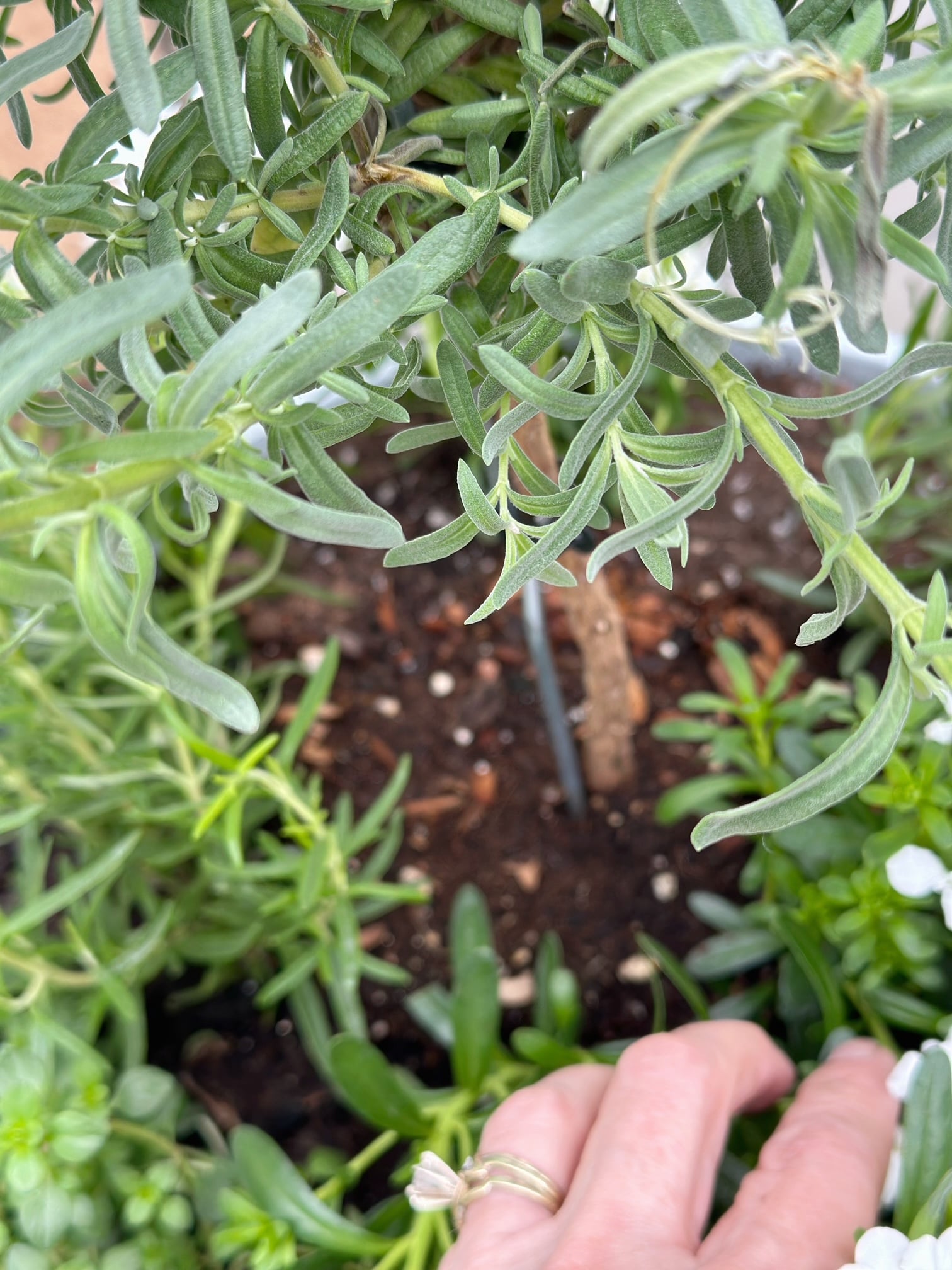
Leave space around the trunk: Give your lavender tree a little breathing room. A 2-3 inch gap around the base helps prevent moisture from building up and keeps air circulating.
Don't mound soil: Keep the crown of the lavender tree at the same level it was in its original pot. Piling soil up around the trunk can lead to rot.
Keep airflow in mind: Lavender doesn't like to feel crowded. Good airflow around the base helps prevent mildew and keeps the plant healthy.
Place companion plants around the edges: Tuck your filler and spiller plants toward the outer edge of the container, not right up against the trunk. Think of it as giving your lavender its own little space in the center.
Tip: Don't be surprised if your lavender tree looks a little droopy for the first few days after planting. This is normal as the roots adjust to their new space. With proper care and good drainage, it should perk back up as it settles in.
Seasonal lavender tree planter ideas
Lavender is evergreen in many climates, which makes it a great anchor for a planter you can refresh throughout the year. Swapping out companion plants seasonally keeps things looking fresh without starting from scratch.
Spring:
Lavender + sweet alyssum + woolly thyme
Soft, airy, and full of fresh growth. This combo feels light and natural, perfect for early-season planters.
Summer:
Lavender + dichondra 'Silver Falls' + creeping thyme + mini zinnias
A mix of trailing texture and a pop of color. The silvery tones keep it cohesive while the zinnias add a little energy.
Fall:
Lavender + sedum + ornamental grass + violas
Warmer tones and more texture. Sedum and grasses bring in that layered, late-season look.
Winter (mild climates):
Keep it simple with silver foliage or let the lavender stand on its own. In colder areas, you can swap in frost-tolerant accents or go decorative with pinecones and moss.
If you're gardening in a colder zone, think of this planter as seasonal. Refresh it as needed with cold-hardy annuals or simple natural elements.
Caring for a lavender tree planter
Lavender is relatively low-maintenance, but a few simple habits will keep your planter looking its best throughout the season.
Watering: Water at the base of the lavender tree rather than soaking the entire container. Let the soil dry out slightly between waterings, lavender prefers drier conditions and doesn't like to sit in moisture.
Pruning: Trim back your lavender lightly to maintain its shape and encourage new growth. Keep an eye on companion plants as well, cutting them back as needed so they don't crowd the center.
Fertilizing: Lavender doesn't need much feeding. A light application once or twice a year is plenty. Too much fertilizer can lead to leggy growth and fewer blooms.
Watching for rot: Check the base of the plant regularly. If you notice dense growth, trapped moisture, or any soft or mushy areas, clear space around the trunk right away to improve airflow.
Thinking of growing more lavender?
Once you have one, it's hard not to want more. I walk through how I propagate lavender so you can grow new plants from the ones you already have.
→ See how to propagate lavender
Frequently asked questions
Lavender grows best with drought-tolerant plants that enjoy full sun and well-drained soil. Good companions include rosemary, thyme, sedum, candytuft, and ornamental grasses. These plants share similar needs and won't compete for moisture.
Yes, you can plant multiple companions with a lavender tree as long as you don't overcrowd the container. Stick to a few well-chosen filler and spiller plants and leave space around the base for airflow.
Leave about 2 to 3 inches of space around the trunk. This helps prevent moisture buildup and allows air to circulate, which is important for keeping the lavender healthy.
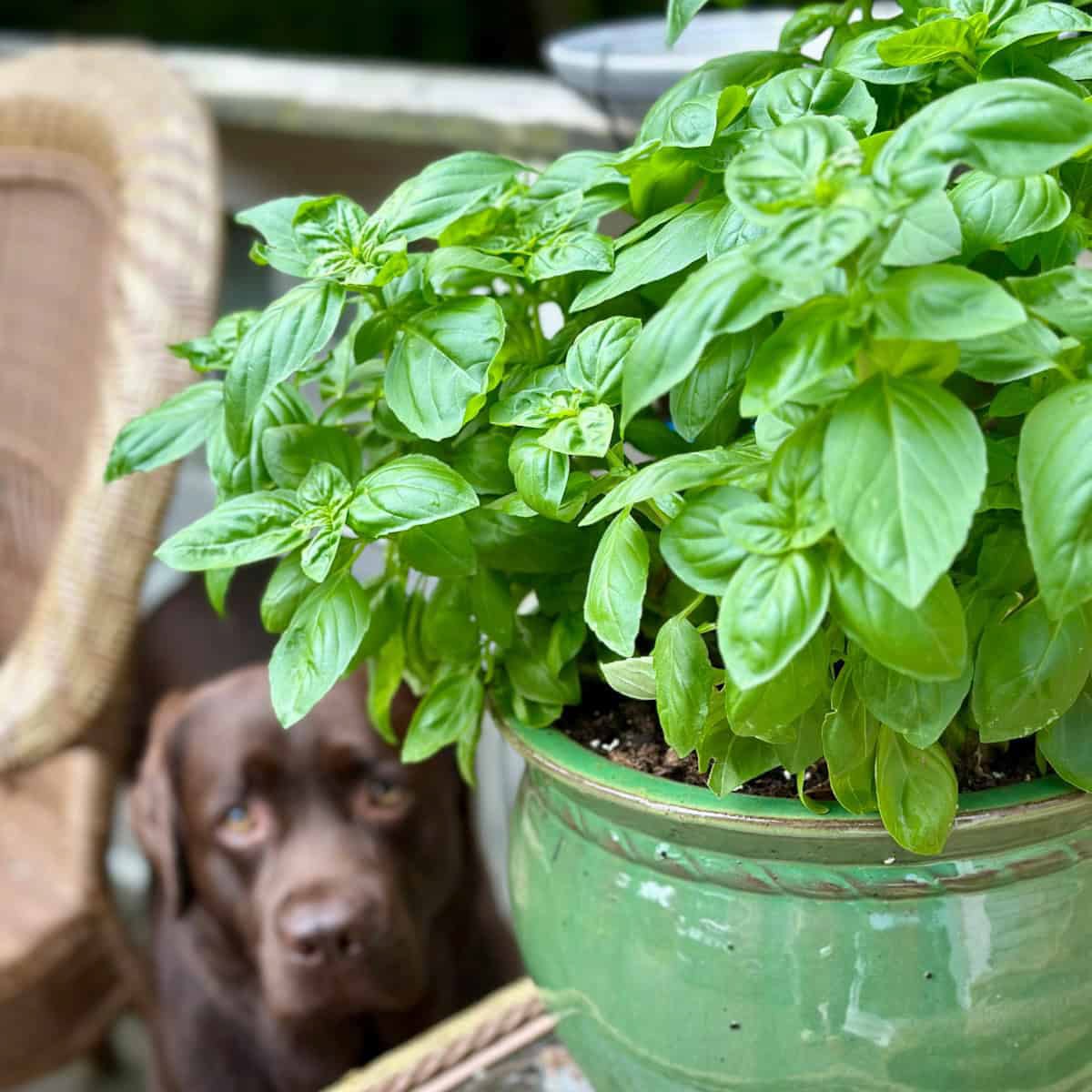
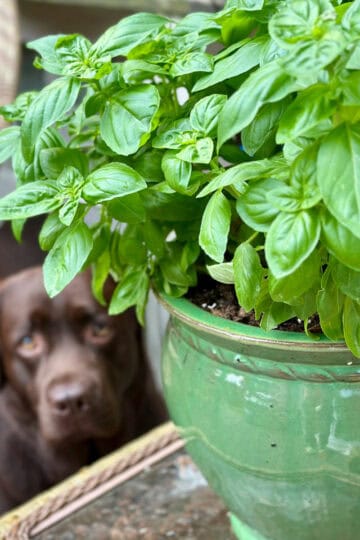
Yes, lavender pairs well with herbs like rosemary, thyme, and sage because they prefer similar growing conditions. Avoid herbs that need more water, like basil or parsley, as they can create too much moisture in the soil.

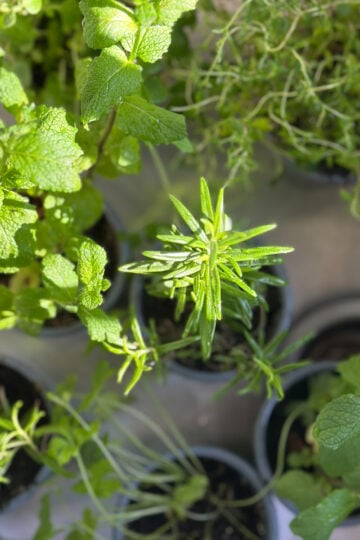
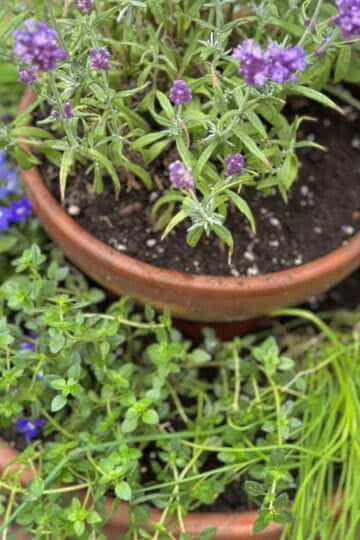
A lavender tree is beautiful on its own, but the right companion plants can turn it into something that feels layered, full, and thoughtfully put together.
The key is keeping things simple. Choose plants that thrive in the same dry, sunny conditions, give your lavender room to breathe, and let texture and movement do the work instead of overfilling the pot.
Once you get the balance right, it becomes one of those planters that just works, easy to care for, easy to refresh with the seasons, and always a little bit of a standout.
Happy planting, friends!