Spider Plant Care: An Easy Guide to Growing Healthy Spider Plants Indoors

For the best spider plant care, place it in bright, indirect light and water only when the top inch or two of soil feels dry. Choose a loose, well-draining soil mix and a pot with drainage holes so the roots never sit in water. Feed lightly once a month in spring and summer, keep it in average household temperatures, and raise humidity a bit if the leaf tips begin to brown.
Content may contain affiliate links. When you shop the links, we receive a small commission at no cost to you. Thanks for supporting my small business.
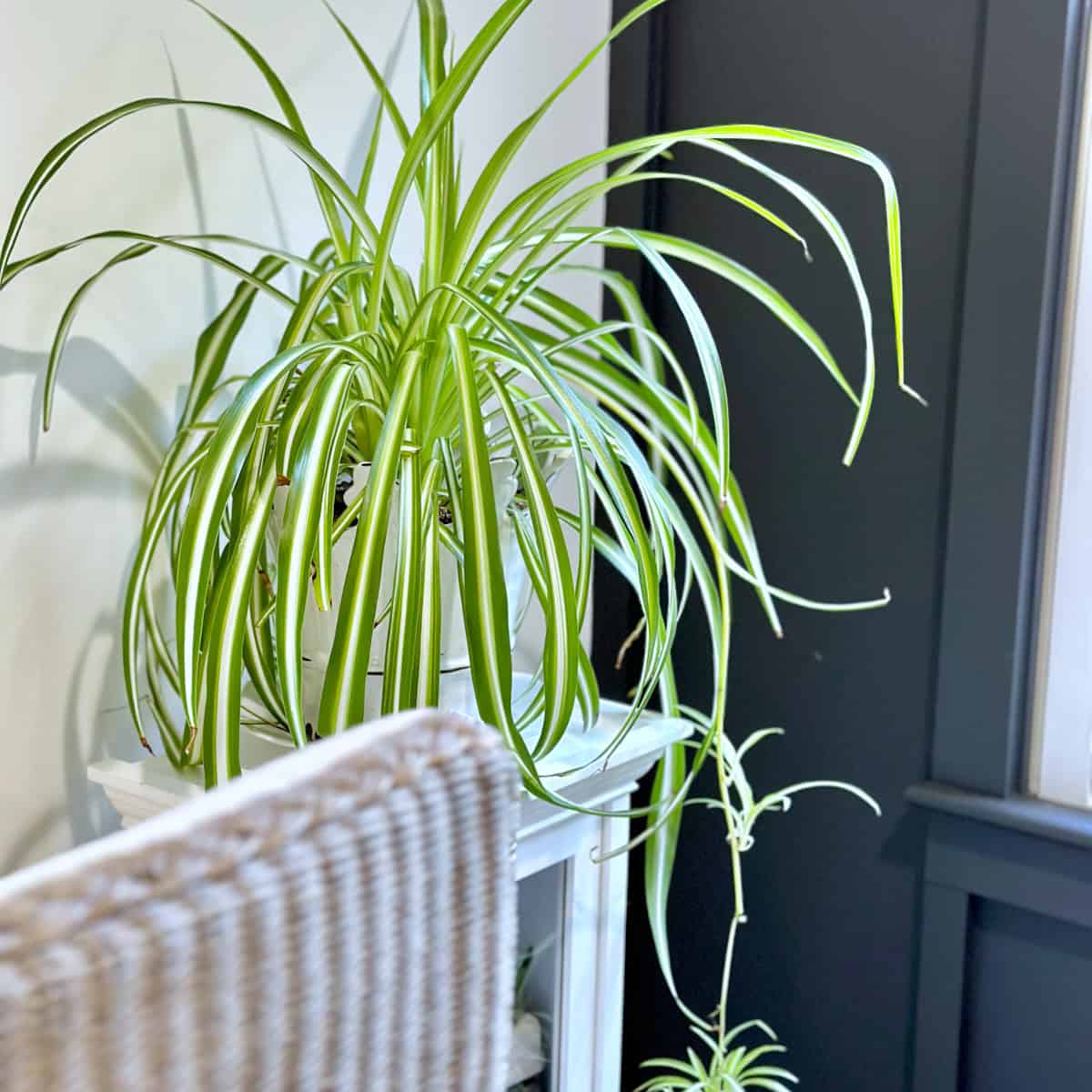
I've had spider plants in just about every corner of our home - perched on a sunny shelf, hanging in the kitchen window, even tucked into the bathroom where the light is just right. They're forgiving little plants that bounce back from missed waterings and reward you with baby spiderettes when they're happy. After growing them for years, here's the simple care routine that keeps mine lush and thriving year-round.
Jump to:
Spider plant quick facts
• Scientific name: Chlorophytum comosum
• Common names: Spider plant, airplane plant, ribbon plant
• Light: Bright, indirect sunlight
• Water: When top 1-2" of soil feels dry; avoid soggy soil
• Soil: Loose, well-draining potting mix
• Temperature: 60-80°F (15-27°C)
• Humidity: Moderate; increase if leaf tips brown
• Fertilizer: Monthly, spring-summer, diluted balanced formula
• Toxicity: Non-toxic to pets and people

Light and temperature
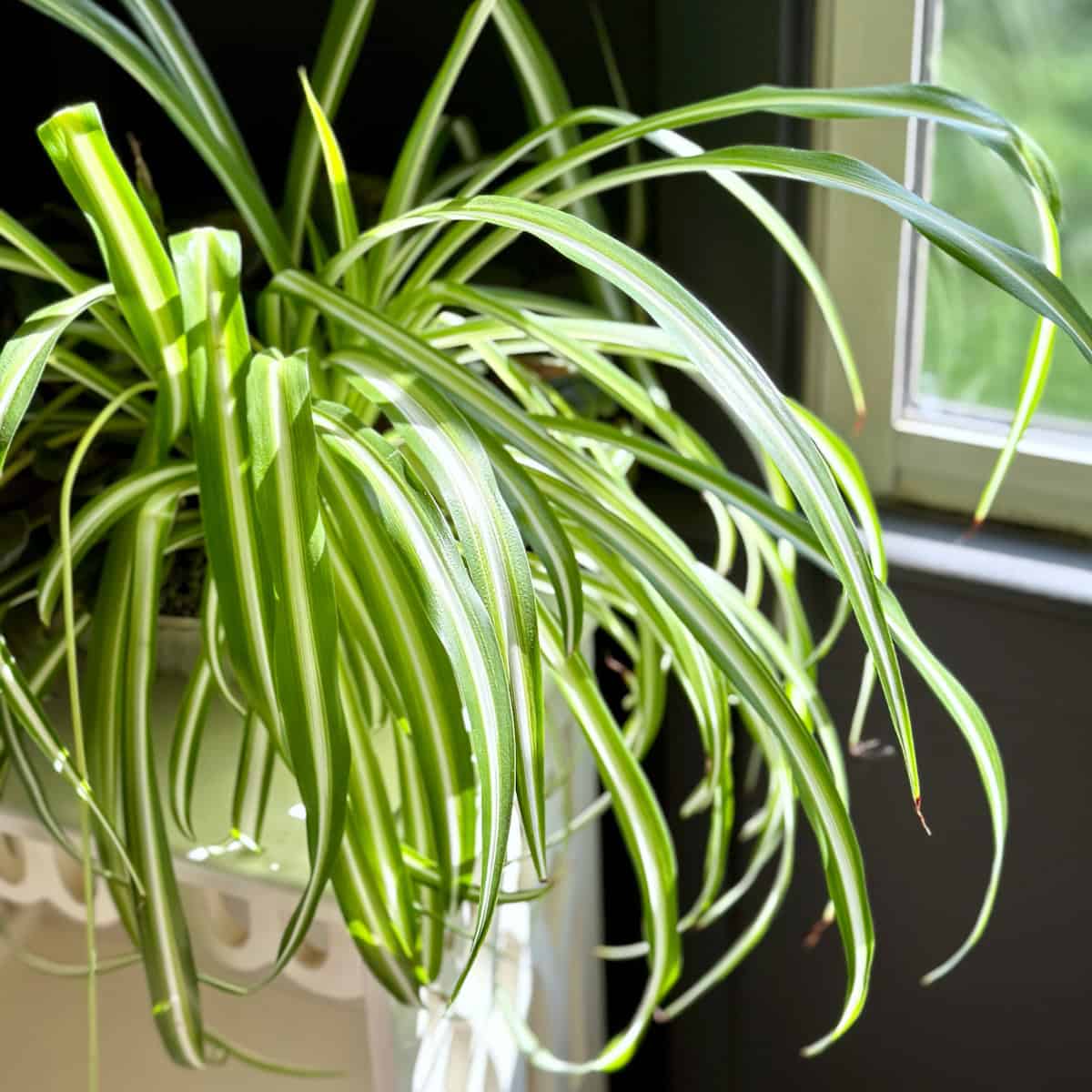
Spider plants do best in bright, indirect light. I keep one on a shelf near our kitchen window where it gets plenty of filtered light but never harsh sun. Direct sunlight can scorch the leaves, while low light slows their growth.
They like the same temperatures we do, anywhere from about 60 to 80 degrees. Mine seem happiest in the rooms we use most, where the temperature stays steady and there's a little humidity from everyday living.
Note: If you're looking for low-light plant options, be sure to visit my post on the best indoor plants that thrive in low light.
Watering spider plants
Most guides will tell you to check the soil before watering, and that is good advice if you are just getting to know your plant. Over time, though, you start to notice the signs for yourself. My spider plants let me know when they are thirsty. The leaves lose a bit of their perk and the color dulls slightly. When that happens, I water until it runs through the drainage holes, then let the soil dry again before the next drink.
Learning to read your plant's cues instead of watering on a strict schedule has made all the difference in how healthy my houseplants look. I have found that every plant and room is a little different, so letting them guide you works better than any routine.

Soil and potting your spider plant
Spider plants like soil that feels light and airy. A mix that drains well keeps the roots healthy and prevents soggy spots that lead to rot. I use a blend made for houseplants and sometimes add a little perlite for extra airflow. The right mix makes all the difference in how strong and full your plant grows.
Choose a pot with a drainage hole and one that is only slightly larger than the root ball. Spider plants prefer a snug fit, and too much extra soil around the roots can hold water longer than they like.

Repotting spider plants
Spider plants grow quickly, and before long their roots start to fill the pot. When you see roots circling the soil surface or poking out of the drainage holes, it is time to give the plant a little more room. I usually repot mine in spring when growth is strong. A pot that is just one size larger works best. Anything much bigger tends to hold too much moisture.
To repot, loosen the plant gently, trim any crowded or damaged roots, and set it into fresh, well-draining soil. Make sure the crown sits just below the rim of the pot so water does not pool at the base of the leaves. For a healthy root system and steady growth, I like to freshen the soil every year or two rather than waiting until the plant looks stressed.

Fertilizing spider plants
Spider plants do not need much feeding, but a little boost during their growing season helps them look their best. I like to use gentle, organic fertilizers made from everyday ingredients rather than heavy chemical mixes. A small dose once a month in spring and summer is plenty, avoid fertilizing in the winter. Too much fertilizer can make the leaf tips brown, so light and steady is better than strong and often.
Spider plants also enjoy a little natural nutrition from time to time. Used coffee grounds, when added sparingly to the soil or compost, can give them a small boost of nitrogen without overdoing it. I mix them in with other organic materials to keep the balance right.

Propagating spider plants
Spider plants make it easy to share the love. When they are happy, they send out long stems with tiny baby plants at the ends. Once the little ones have a few small roots, you can snip them from the main stem and start them in water or directly in soil.
I usually start mine in a small glass of water on the kitchen counter. It is an easy way to keep an eye on the roots as they grow. Not long ago, I gave a few of these baby plants to my daughter-in-law so she could start her own. It is one of the simplest ways to fill your home with more greenery or pass along a plant to someone else.
If you want to try rooting other kinds of houseplants the same way, water propagation is a simple and reliable method for many varieties.
Troubleshooting spider plant problems
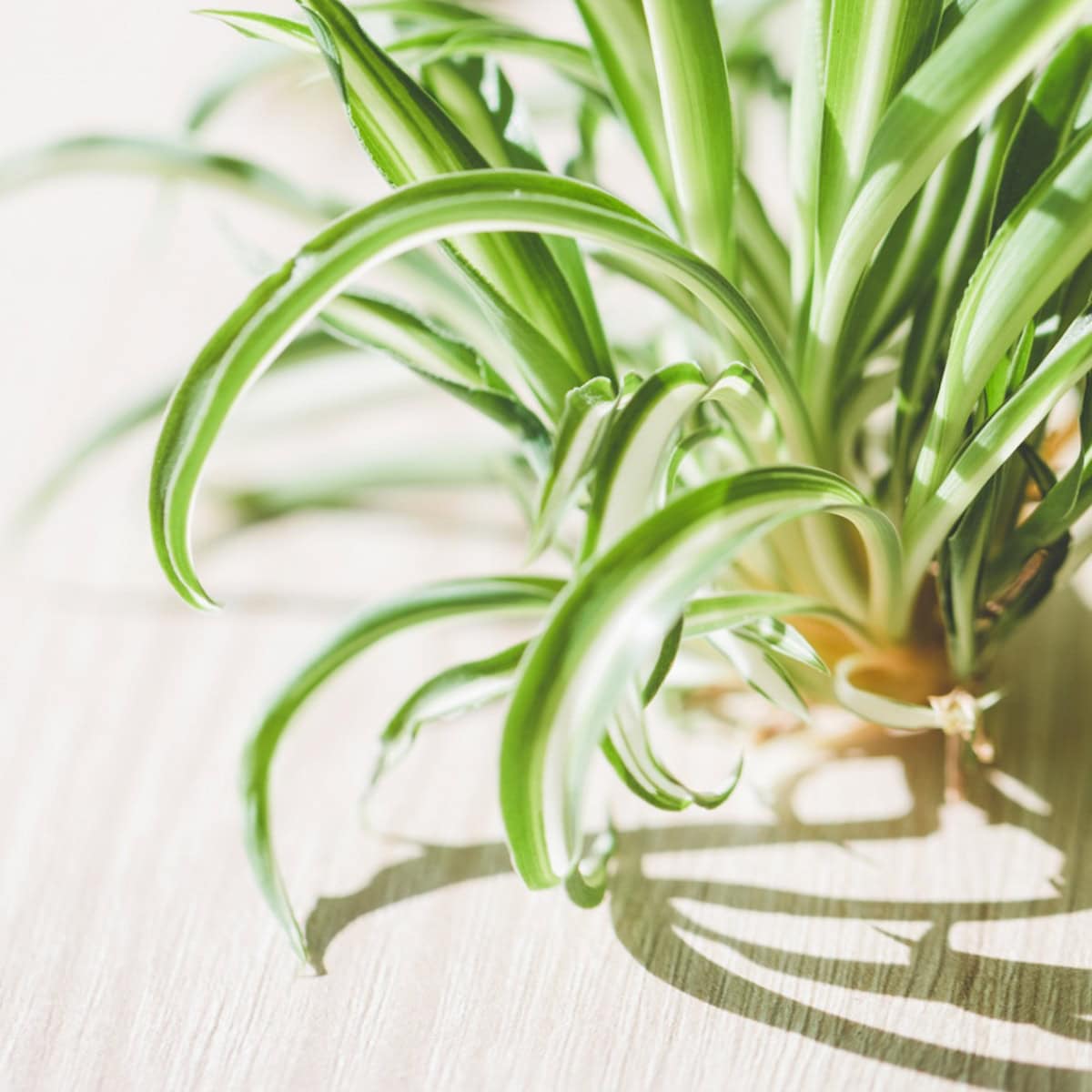
Even the easiest houseplants have moments when they look a little tired. The most common issue I see with spider plants is brown leaf tips. This often happens from fluoride or chlorine in tap water, or from air that is too dry. Using distilled or rainwater helps, and a light misting now and then can make a difference.
If you notice yellow leaves, the problem is usually too much water or soil that is holding moisture for too long. Let the soil dry out before watering again, and always make sure the pot drains well.
A quick trim of brown or yellow tips keeps the plant looking neat while it recovers.

Frequently asked questions
A bright room with indirect light is perfect. I like mine near a window where it gets plenty of light but not harsh sun. A bathroom or kitchen window works well too since the extra humidity keeps the leaves healthy.
Give it steady light, a light hand with watering, and well-draining soil. Keep it a little snug in its pot and feed it lightly in the warmer months. Spider plants thrive on consistency and do best when left to find their own rhythm.
Yes. Use clean scissors to trim just the brown part of the leaf, following its natural shape. Trimming makes the plant look fresh again and helps it direct energy to new growth.
You will see strong, upright leaves and new baby plants starting to form on long stems. A happy spider plant has bright color and grows steadily. When the leaves stand tall and you start to see new offshoots, you know it is content where it is.


There is a reason spider plants have never gone out of style. They bring a little energy to every corner, ask for very little in return, and multiply easily when they are happy. They are the kind of plant that makes you fall in love with growing things, even if you are new to it.
If you already have one, take a moment to notice how much it has grown. And if you are just starting out, a spider plant is one of the easiest ways to bring a bit of green into your home and enjoy the simple rhythm of caring for something that grows.
Keep growing, friends!