Common Indoor Plants That Are Easy to Grow at Home

Common indoor plants include pothos, snake plant, spider plant, ZZ plant, peace lily, philodendron, rubber plant, Chinese evergreen, dracaena, and monstera. These houseplants are considered common because they are widely sold, easy to care for, and adapt well to typical indoor light and watering habits. Most thrive in bright to medium indirect light with well-draining soil and infrequent watering, making them reliable choices for homes and apartments.

Plants are meant to add life to your home, not stress to your day. After growing houseplants for years through bright summers, dark winters, missed waterings, and the occasional total learning curve, I have learned that the best plants are the ones that quietly do their thing without demanding constant attention. I love experimenting and trying new varieties, but I also know most people just want plants that grow well in real homes with real light and real schedules.
These are the common indoor plants that are easy to grow at home because they are forgiving, widely available, and proven to do well outside of perfect greenhouse conditions. If you want plants that look good, stay healthy, and do not require constant second guessing, this list is for you.
Jump to:
- Popular questions about common indoor plants
- Why some plants are everywhere for a reason
- The 10 common indoor plants that do well with simple care
- Plants that fool beginners
- Where these plants look best (when light allows)
- How to keep common houseplants happy without overthinking it
- Troubleshooting common problems
- My go-to places for buying houseplants
- More plant care topics to explore
Popular questions about common indoor plants
The most common indoor houseplants are Pothos, Snake Plant, Spider Plant, and ZZ Plant. These plants show up everywhere because they are easy to find, forgiving, and thrive in a wide range of real home conditions.
Pothos, snake plants, spider plants, and ZZ plants are among the easiest common houseplants because they tolerate missed waterings, adapt to different light levels, and bounce back quickly from minor mistakes.
Yes, many popular houseplants help improve indoor air by filtering certain airborne pollutants and increasing humidity. While they are not a replacement for fresh air, they do contribute to a healthier indoor environment.
Most common houseplants prefer to dry slightly between waterings. A good rule is to check the soil with your finger and only water when the top inch feels dry. Overwatering is a more common problem than underwatering for most beginner-friendly plants.
Why some plants are everywhere for a reason
When you see the same plants over and over again at garden centers, grocery stores, and even big box shops, it is not by accident. "Common" usually means they are easy to grow, widely available, and proven to do well in normal living spaces. These are the plants that have stood the test of time because they forgive missed waterings, adapt to different light levels, and bounce back better than most.
It is also worth noting that plants grown in greenhouses live very pampered lives. Perfect light, warm temperatures, ideal humidity, and consistent watering. Once they come home with us, conditions change fast. The plants that continue to thrive through that transition are the true workhorses. Those are the ones worth focusing on, especially if your goal is success without stress vs real-life homes.

The 10 common indoor plants that do well with simple care
These are the houseplants that simply work. No fuss. No constant troubleshooting. Just steady, healthy growth.
Pothos
What it looks like: Trailing vines with heart-shaped leaves in shades of green, gold, or creamy white variegation.
Where it does well in real homes: Bookshelves, kitchens, bathrooms, corners, and anywhere with low to medium light.
How often you actually water it: About every 7 to 10 days, and even less in winter. It will forgive you if you forget.
How big it gets indoors: Vines can easily reach several feet long. You can keep it trimmed or let it trail.
Beginner friendly: Yes
My experience with Pothos: I have had the same pothos plants in my home for years, a whole family actually, and they ask for very little. They are easy to propagate in both water and soil, and they are always my go-to when I want something lush and beautiful without any fuss.

Snake Plant
What it looks like: Tall, upright sword-shaped leaves that look sculptural and strong.
Where it does well in real homes: Bedrooms, hallways, offices, dark corners, and anywhere you are not sure what will survive.
How often you actually water it: Every 2 to 4 weeks. It prefers dry soil more than constant moisture.
How big it gets indoors: Anywhere from 12 inches to several feet tall depending on the variety.
Beginner friendly: Very!
My experience: One day my husband came home with two snake plants after seeing something on Instagram about air quality, and suddenly they were living in our bedroom. They ask for absolutely nothing. I have never had an easier plant in my life. Every once in a while I'll notice them and think, huh, I really have not watered you in quite a while. By far the easiest real plant I have ever owned, and that is saying something.

Spider Plant
What it looks like: Arching green leaves often striped with white, plus babies that dangle from long stems.
Where it does well in real homes: Bright rooms, kitchens, laundry rooms, and near windows with indirect light.
How often you actually water it: Water spider plants once a week, slightly more often in bright light.
How big it gets indoors: About 12 to 18 inches wide, plus trailing babies.
Beginner friendly:Yes
My experience: I have had several spider plants over the years, and they have always been easy for me. Their leaves really do tell you what they need. I have one looking at me right now that is clearly asking to be repotted. And of course, the best part of spider plants is the babies. I never get tired of those little offshoots.

ZZ Plant
What it looks like: Glossy dark green leaves stacked neatly along thick upright stems.
Where it does well in real homes: Low light rooms, offices, bedrooms, and spaces where other plants struggle.
How often you actually water it: Every 3 to 4 weeks. It stores water in its roots and hates being overwatered.
How big it gets indoors: 2 to 4 feet tall over time.
Beginner friendly: Yes
My experience: I see ZZ plants everywhere, especially at places like Trader Joe's, and that alone tells you how tough they are. They are one of the few plants that truly thrive on neglect. Every ZZ plant I have cared for has been happiest when it was mostly left alone with occasional watering and decent light.

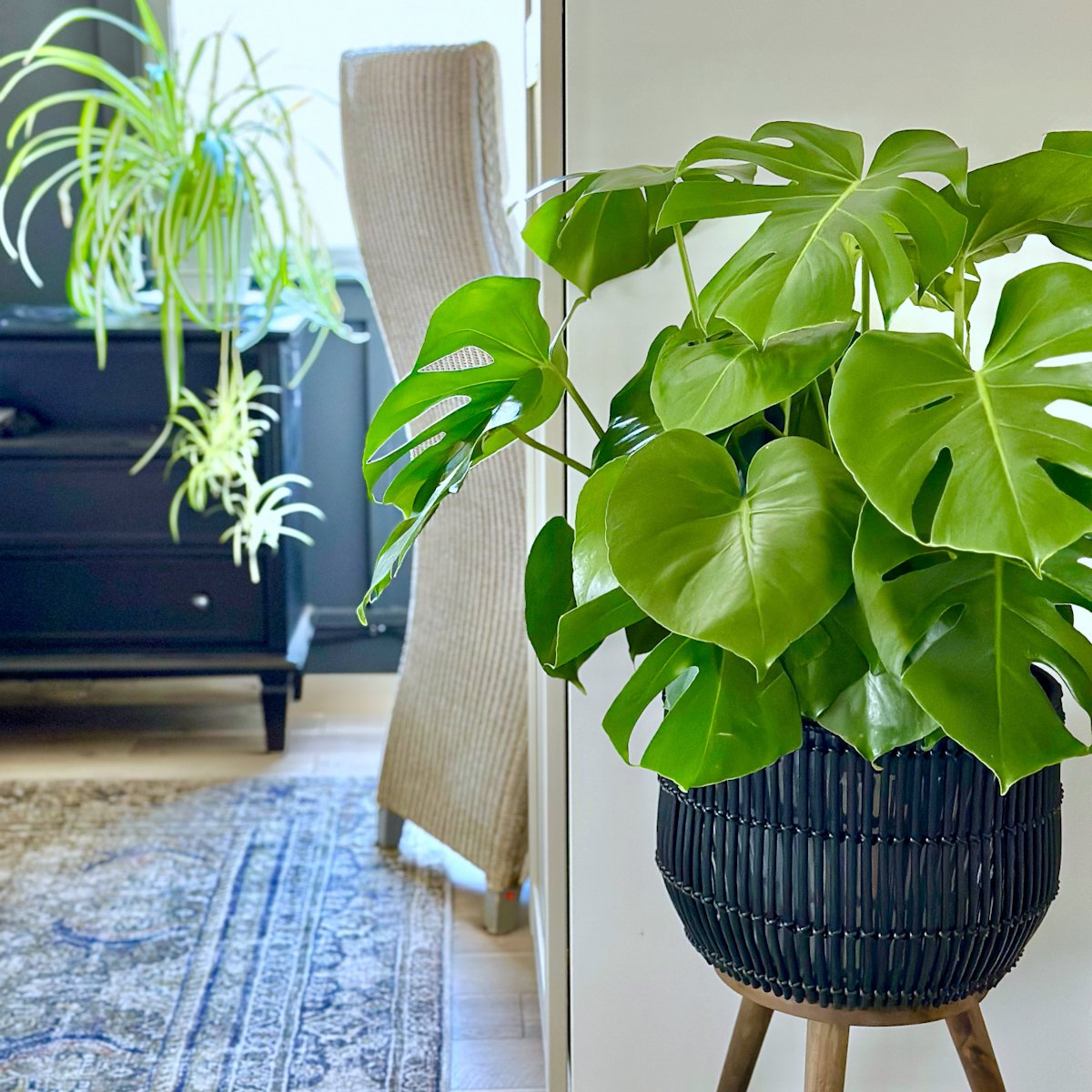
Monstera
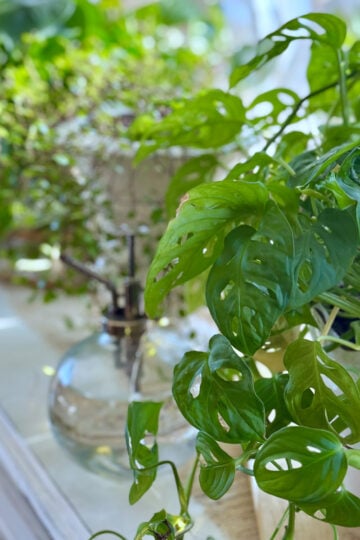
What it looks like: Large tropical leaves with natural splits and dramatic texture.
Where it does well in real homes: Living rooms, dining rooms, and bright corners with indirect light.
How often you actually water it: I water my monstera when the leaves start letting me know they need a drink, which usually ends up being about every 7 to 10 days. I always let the top few inches of soil dry first.
How big it gets indoors: 4 to 8 feet tall with time and space.
Beginner friendly:Yes
My experience: Monstera is one of my favorite plants, and I have several, both the larger varieties and the smaller, more trailing types. I have always found them very easy to care for. Their leaves really do let you know what they need, and watching those big new leaves slowly unfurl never gets old. Like many plants with large leaves Monstera loves fertilizer during the growing season. It is one of the most satisfying plants to grow in a home.
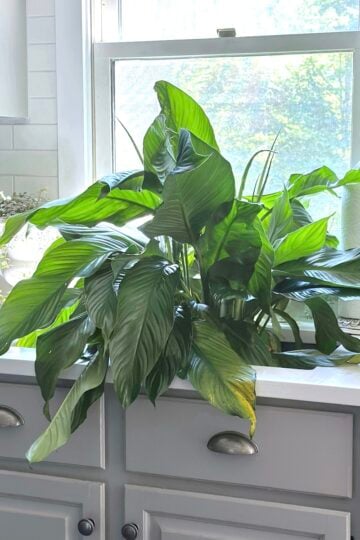
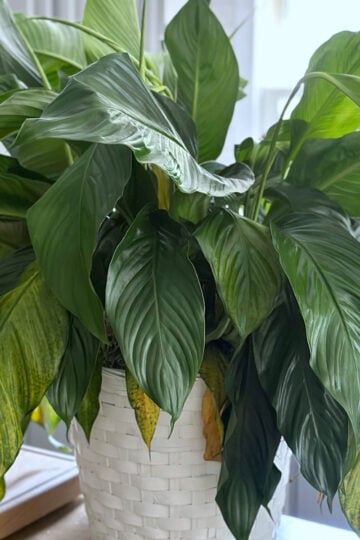
Peace Lily
What it looks like: Large shiny green leaves and white blooms that rise above the foliage.
Where it does well in real homes: Bedrooms, offices, low to medium light rooms.
How often you actually water it: Once a week. It tells you clearly when it is thirsty by drooping.
How big it gets indoors: 1 to 3 feet tall depending on the variety.
Beginner friendly:Yes
My experience: Peace lilies (Spathiphyllum)have always been easy for me, and I love their unique flowers. My favorite way to water them is to carry the whole plant right over to the kitchen sink and let the water run through until the soil is fully soaked. Peace lilies are very good at telling you when they are thirsty, and I have found they are happiest in lower to medium light where they stay steady and calm without drying out too fast.

Philodendron
What it looks like: Heart-shaped or elongated leaves, either trailing or upright depending on the type.
Where it does well in real homes: Shelves, plant stands, corners, and hanging planters.
How often you actually water it: Every 7 to 10 days once the top layer of soil dries.
How big it gets indoors: From compact to several feet long depending on the variety.
Beginner friendly: Yes
My experience: I have a beautiful green philodendron in my laundry room, which really says everything about how easy these plants are. There is very little natural light in that space, and I knew if I wanted a fresh, live plant in there, it would have to be a philodendron. It has handled that low-light spot with no complaints at all.

Rubber Plant
What it looks like: Tall, glossy leaves in deep green or burgundy tones.
Where it does well in real homes: Bright living rooms, sunny corners, near large windows.
How often you actually water it: About every 10 to 14 days. Let the soil dry slightly in between.
How big it gets indoors: 6 to 10 feet over time with proper light.
Beginner friendly: Yes, with a little attention to light
My experience: Rubber plants have always felt like one of those quiet, steady plants to me. They are not flashy, but they make a strong statement in a room with their big, glossy leaves. From what I have seen in real homes, they do best when they are left alone in a bright spot and watered when they actually need it. They are the kind of plant that rewards patience more than fussing.

Chinese Evergreen
What it looks like: Full, bushy leaves with green, silver, red, or pink patterns depending on the variety.
Where it does well in real homes: Low to medium light rooms, offices, bedrooms.
How often you actually water it: Every 10 to 14 days, allowing the soil to dry slightly between waterings.
How big it gets indoors: 1 to 3 feet tall and wide.
Beginner friendly:Yes
My experience: Chinese evergreens have always felt like one of those plants that just quietly do their job. They are not demanding, they do not wilt at the first missed watering, and they stay looking full and healthy with very little effort. Every one I have seen in real homes has been steady and dependable, which is exactly what most people want in an easy-care plant.

Cast Iron Plant
What it looks like: Long, deep green leaves that rise straight from the soil with a classic look.
Where it does well in real homes: Low light rooms, north-facing spaces, and anywhere you want a truly tough plant.
How often you actually water it: Every 2 to 3 weeks. It prefers to stay on the dry side.
How big it gets indoors: 2 to 3 feet tall and wide over time.
Beginner friendly: Yes
My experience: Cast iron plants truly live up to their name. They are one of those plants that just keep going no matter what you throw at them. Low light, missed waterings, and quiet corners do not seem to bother them at all. Every one I have seen has been tough, steady, and exactly what you want if you like your plants to mind their own business and look good doing it.

Plants that fool beginners
Just because a plant is popular does not mean it is easy. Some plants look like they should be simple, but they are much more sensitive once you bring them home. These are a few that often trip up beginners.
Fiddle Leaf Fig
Beautiful and dramatic, but not forgiving. They dislike changes in light, temperature, drafts, and watering routines. One wrong move and you may see leaf drop.
Calathea
Stunning large foliage, but they do like a little extra consistency. Calatheas prefer steady moisture, higher humidity, and are a bit picky about dry air and harsh water. When they are unhappy, they are not shy about showing it.
Maidenhair Fern
Delicate and pretty, but they dry out fast and do not tolerate missed waterings at all (ask me how I know!) Maiden Hair ferns require steady moisture and humidity to stay happy.
If you are just starting out with houseplants, it is much easier to build confidence with forgiving plants first and work up to these more sensitive ones later on.

Where these plants look best (when light allows)
• Near bright entryways with windows
• Living room corners that get steady indirect light
• Next to sofas and sectionals near windows
• Bright bedrooms with filtered light
• Home offices with natural daylight
Sunlight always dictates final placement, but once the light box is checked, these are the spots where big leafy plants truly shine. One large plant often works better than several small ones because it fills visual space without clutter. It anchors a room, softens hard lines, and gives you that finished, pulled-together look without needing to style a whole collection. room, and gives you that "something just works here" feeling without needing to style a whole collection.

How to keep common houseplants happy without overthinking it
Here is the honest truth. Most houseplants do not want perfection. They just want a human who notices them once in a while. If you can do that, you are already a good plant parent.
Light, in real-life terms
If you can comfortably sit in a room during the day without turning on a lamp, most common houseplants will be happy there. Bright, indirect light is the sweet spot. Too much sun fries. Too little sun just makes them nap. Plants like naps (don't we all ?) They just do not like to live there forever.
Watering without turning it into homework
Forget schedules. Your finger is the best tool you own. If the top couple inches of soil are dry, water. If they are still damp, walk away and feel very responsible about it. Keep in mind, most plant problems come from too much love, not neglect.
Humidity, but make it realistic
Yes, some plants love humidity. No, you do not need to turn your house into a tropical spa. Bathrooms and kitchens naturally help. Grouping plants together helps too. If a plant truly needs extra moisture, it will let you know with crispy edges.
Repotting without the drama
Plants do not need new pots every season. They actually like being a little snug. Repot when roots are escaping the bottom or the plant has completely stopped growing during spring or summer. Otherwise, let it settle in and get comfortable.
Your intuition gets better fast
The more plants you grow, the easier this all becomes. You start to recognize thirsty leaves, tired soil, and when a plant is just having an off week. There is no chart that replaces paying attention. And the good news is you are already doing that just by being here.
You are doing better than you think. And your plants agree.

How the seasons affect common houseplants
One thing that often surprises new plant owners is how much the seasons change indoor plant care. Even the easiest plants slow down and adjust as the light and air in your home change throughout the year.
Winter light drop
During fall and winter, the sun sits lower in the sky and daylight hours are shorter. Even windows that feel bright in summer can become low-light spaces. Most houseplants adjust just fine, but they will grow more slowly and may need a little less water.
Supplementing with grow lights
In winter, I often add a simple grow light to darker corners of my home, especially for plants that normally sit near bright windows in summer. You do not need anything fancy. Even basic grow lights can make a big difference in keeping plants healthy through the darker months and preventing that tired, stretched look.
Furnace dry air
Once the heat turns on, indoor air gets very dry. This is when you may notice crispy edges on leaves or soil drying out faster than usual. Grouping plants together, using a small humidifier, light misting, or placing plants in naturally humid rooms like kitchens and bathrooms can help.
Reduced growth in short-day months
It is completely normal for houseplants to pause their growth in late fall and winter. They are not struggling, they are resting. This is not the time to push growth with heavy feeding or frequent repotting.
Why watering schedules change seasonally
Because plants grow more slowly in winter and evaporation is different, they need less frequent watering. A plant that needed water every week in summer may only need it every two or three weeks in winter. Always check the soil rather than the calendar.
Seasonal shifts are not a problem. They are just part of growing plants in real homes. Once you expect them, everything feels much easier to manage.

Troubleshooting common problems
If you grow houseplants long enough, you will eventually see a yellow leaf, a little drooping, or some leaf drop. It happens to everyone, even to experienced plant keepers. The good news is that most of these changes are normal and usually easy to correct once you understand what the plant is telling you.
Yellow leaves
This is almost always a watering issue. Too much water is the usual culprit, not too little. If the soil stays wet for days, roots cannot breathe and leaves turn yellow. Let the soil dry a bit more between waterings and make sure your pot has drainage. One yellow leaf once in a while is also just part of life. Do not spiral over a single leaf.
Drooping leaves
Most of the time, drooping simply means the plant is thirsty. Give it a good, thorough drink and check back the next day. If the soil is already wet and it is still droopy, pause on watering and let it dry a bit. Plants like balance, not constant attention.
Brown edges
Crispy edges usually point to dry air or inconsistent watering. Plants like calatheas, peace lilies, and banana plants show this first. More consistent watering goes a long way, and in very dry homes, grouping plants together or using a small humidifier can help.
Leaf drop after moving a plant
This is completely normal and freaks everyone out the first time. Plants get attached to their spot. When you move them, they sometimes drop a few leaves in protest. Give it time. Most settle in within a few weeks and start growing again like nothing ever happened.
Root rot in simple terms
Root rot happens when roots sit in wet soil for too long. The soil may smell sour, stems feel soft, and the plant declines quickly. The fix is simple but important. Take the plant out of the pot, trim away any black or mushy roots, repot in fresh well-draining soil, and water more carefully going forward. Less water. More patience.
When a plant really just needs a new pot
Sometimes a plant is not sick. It is cramped. If you see roots coming out of drainage holes, water running straight through the pot, or growth that completely stalls during spring and summer, it is usually time to size up. Go up just one pot size, use fresh soil, and let the plant breathe. Most respond with a noticeable growth burst within a few weeks.
Natural fertilizing for slow or pale growth
If leaves look smaller than usual, pale, or growth has stalled for months, your plant may simply be hungry. Big leaf plants use a lot of energy to grow. During spring and summer, gentle feeding helps. Worm castings, compost tea, diluted fish emulsion, or other natural boosters are perfect. Less is more here. Light, steady feeding beats heavy doses every time.
Most plant problems are not emergencies. They are small course corrections. A little light adjustment, a little water adjustment, and a little time usually fixes things. Even the best-behaved plants have their moments.

My go-to places for buying houseplants
I'm not fussy about where I buy plants, but I am picky about what I bring home. You can find great plants in lots of places if you know what to look for and what to skip.
Local nurseries
This is always my first stop when I want the healthiest plants and the best selection. The plants are usually better cared for, you can ask real questions, and you will often find varieties you never see anywhere else. It is also much easier to check for pests, root health, and overall plant condition in person.
Big box stores
These can be great for budget friendly basics like pothos, snake plants, spider plants, and peace lilies. Just give the plant a quick once-over before buying. I always check the soil for sogginess, look under the leaves for pests, and gently slide the plant out of the pot to peek at the roots if possible.
Online sellers
If you are hunting for something specific, online shops and specialty plant sellers can be wonderful. The upside is convenience and variety. The downside is you cannot see the plant before it arrives. Read reviews carefully, check shipping policies, and expect some minor stress on arrival. Most plants bounce back beautifully with a little patience.
What I always check before buying
I look for firm stems, clean leaves, no visible pests, and soil that feels damp but not soaked. A plant does not need to be perfect. It just needs to be healthy at the core.
Why root health matters more than perfect leaves
A plant with a slightly torn leaf can recover. A plant with rotting or severely bound roots will struggle no matter how pretty it looks on top. Healthy roots mean future growth.
Transport shock and why patience matters
When you bring a plant home, it is completely normal for it to pause, sulk, or even drop a leaf or two. A change in light, temperature, and humidity is a big deal for a plant. Give it a few weeks to settle in before you start moving it around or changing your care routine. Most plants just need time to adjust.


At the end of the day, houseplants are meant to add life and happiness to your home, not stress to your to-do list. You do not need a jungle, a perfect watering routine, or a green thumb you were born with. You just need one good plant and a little curiosity. Start with one that feels manageable, place it where you will see it often, and simply pay attention. Over time, you will learn its rhythm, its quirks, and what it needs from you. Thriving plants come from observation, not perfection, and that is something every single one of us can do.
You got this!