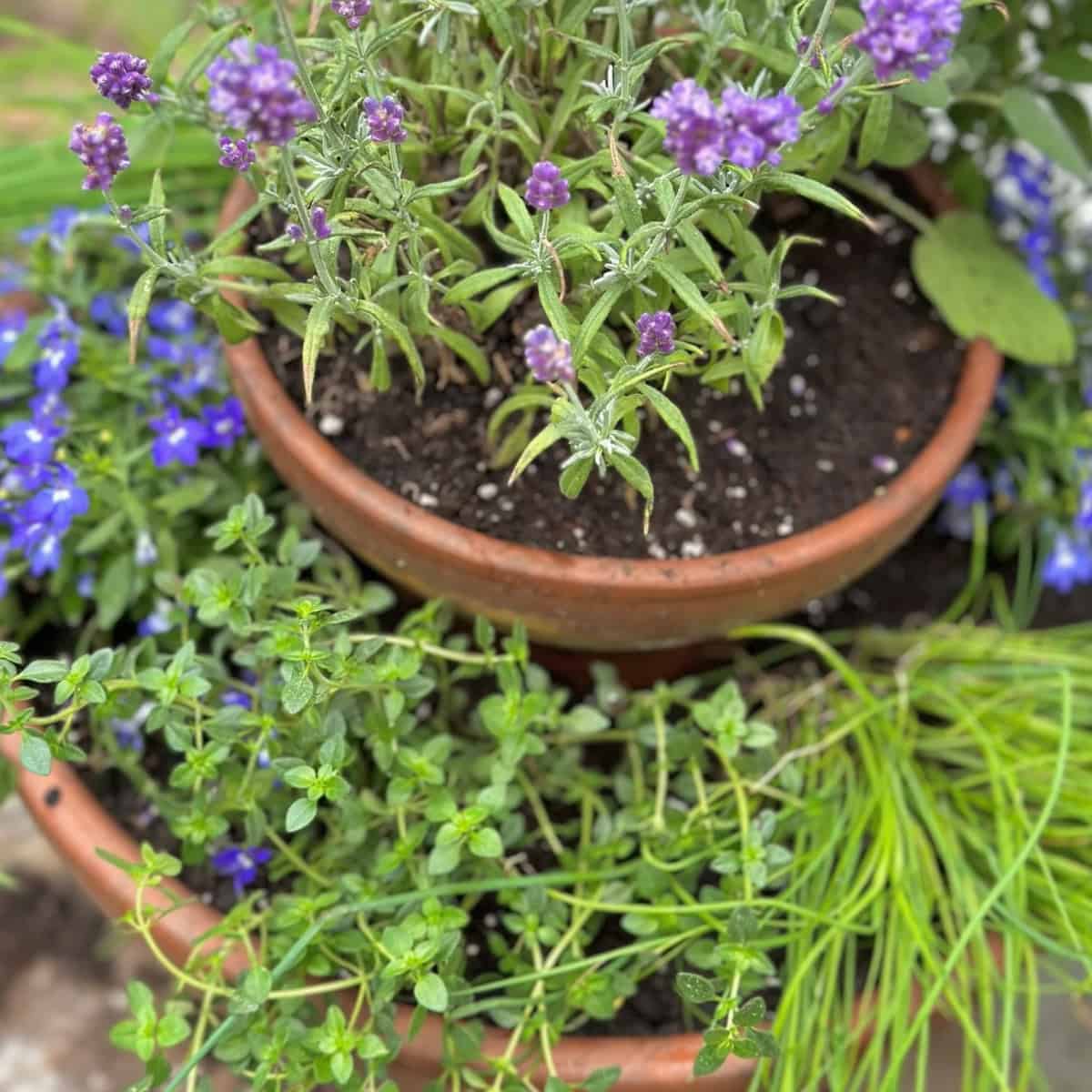
Herb Planter in Pots: How to Make a Simple Two-Tier Design

A tiered herb planter is a simple way to grow fresh herbs in pots while saving space. This two-tier design uses stacked clay pots to create a layered herb garden that's perfect for patios, decks, or small outdoor areas. It's easy to put together, beginner-friendly, and can be filled with your favorite herbs and seasonal flowers.
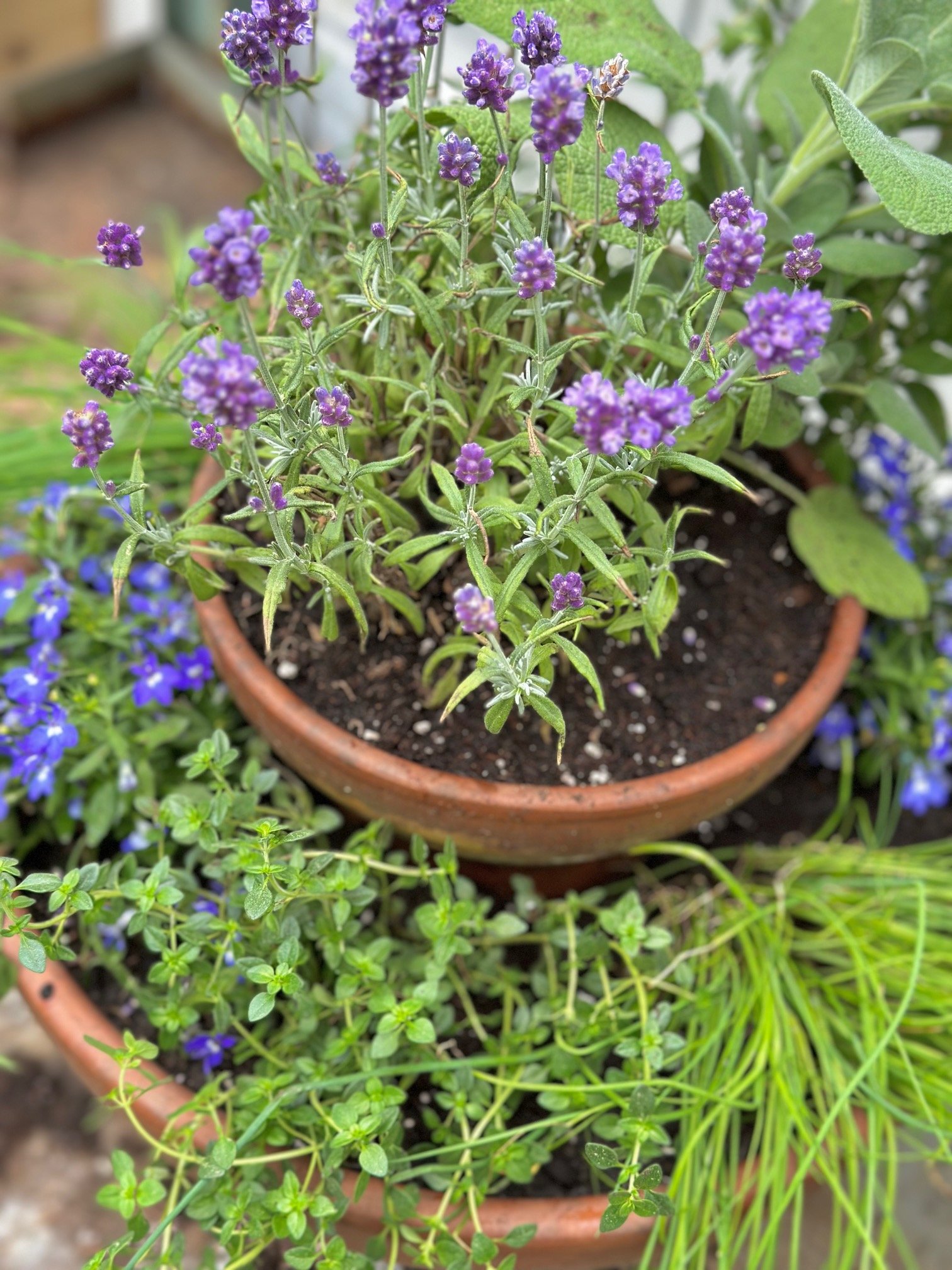
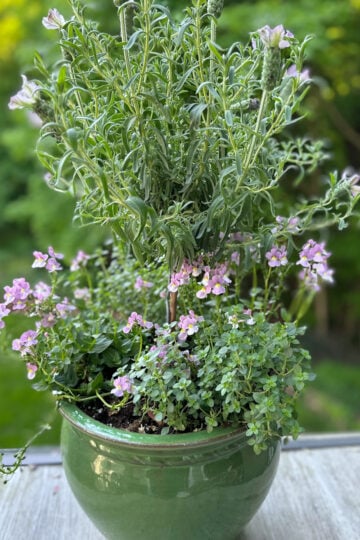
This tiered herb planter is one of my favorite ways to grow herbs in pots, especially when space is limited. It's a simple two-tier design made with stacked pots that creates a full, layered herb garden without taking up much room on a patio or deck.
I've planted this herb planter for the past two years, and it somehow gets more fun each time. It adds a soft, pretty touch to an outdoor space, and I love mixing herbs with a few flowers for color.
There's something really satisfying about growing your own herbs. You get fresh flavor right outside your door, save money on store-bought herbs, and get to enjoy the process as everything fills in and grows. Stepping outside to snip a little basil or mint for a recipe never gets old.
At a Glance: Herb Planter
_______________________
- Project type: DIY herb planter
- Design: Two-tier, stacked pot planter
- Best for: Small spaces, patios, decks, and container gardening
- Skill level: Beginner-friendly
- Time to complete: About 30-45 minutes
- Materials: Two clay or ceramic pots, potting mix, herbs, optional flowers
- Sun needs: Full sun (about 6 hours daily)
- Watering: When the top inch of soil feels dry
Why you'll love it:
Easy to customize with your favorite herbs and flowers
Creates a full herb garden in pots using minimal space
Adds height and visual interest with a tiered design
Summarize and Save this content on:
Jump to:
- At a Glance: Herb Planter
- What is a tiered herb planter
- Choosing the right pots for your tiered herb planter
- Best soil for a herb planter
- How to construct a tiered herb planter
- Planting your two-tiered herb planter
- Herbs that are perfect for two-tiered planter
- How to create a two-tiered herb planter
- Care and maintenance of your herb planter
- Frequently asked questions
- While harvesting from your herb planter, try these herb-forward recipes
What is a tiered herb planter
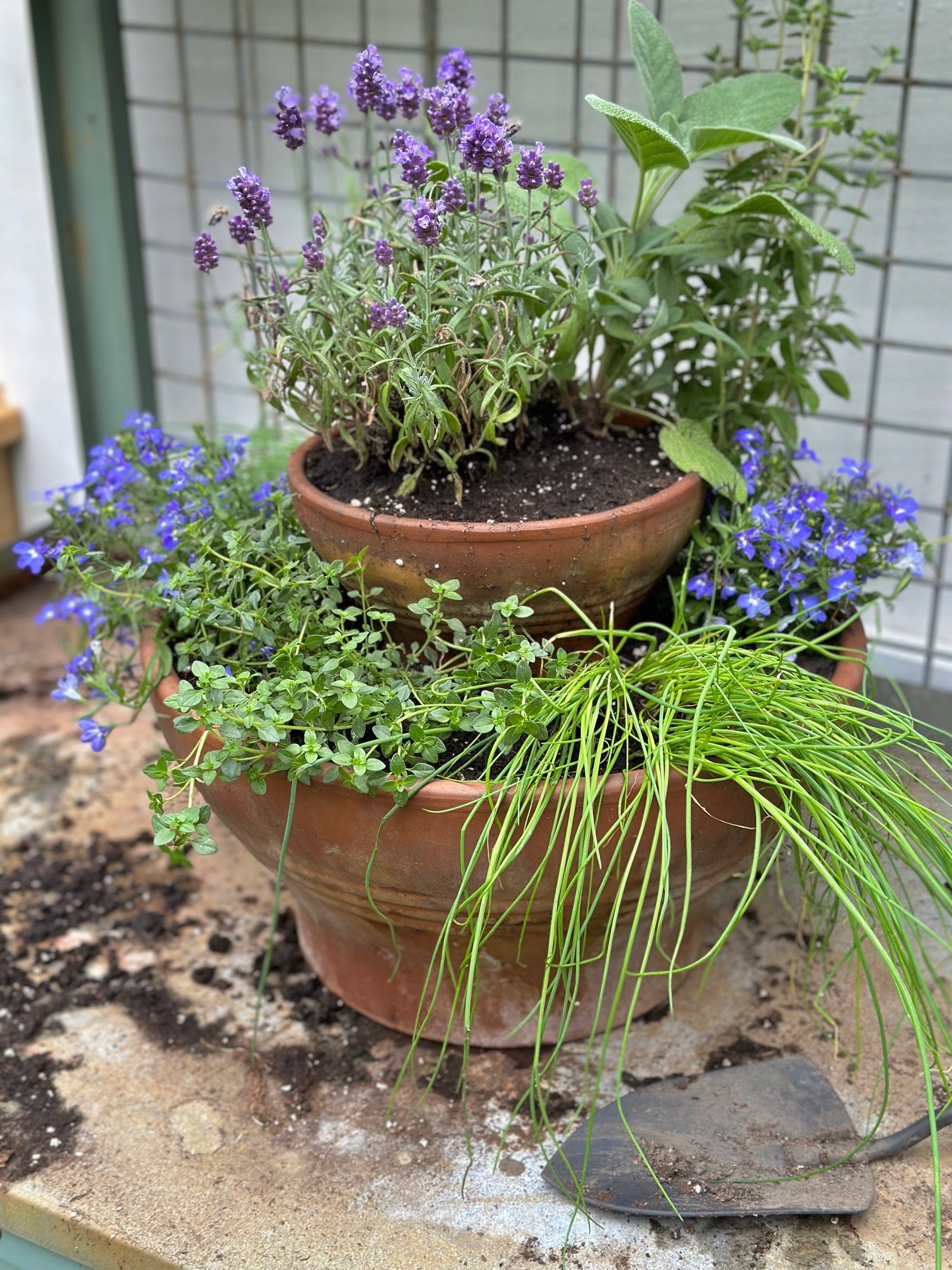
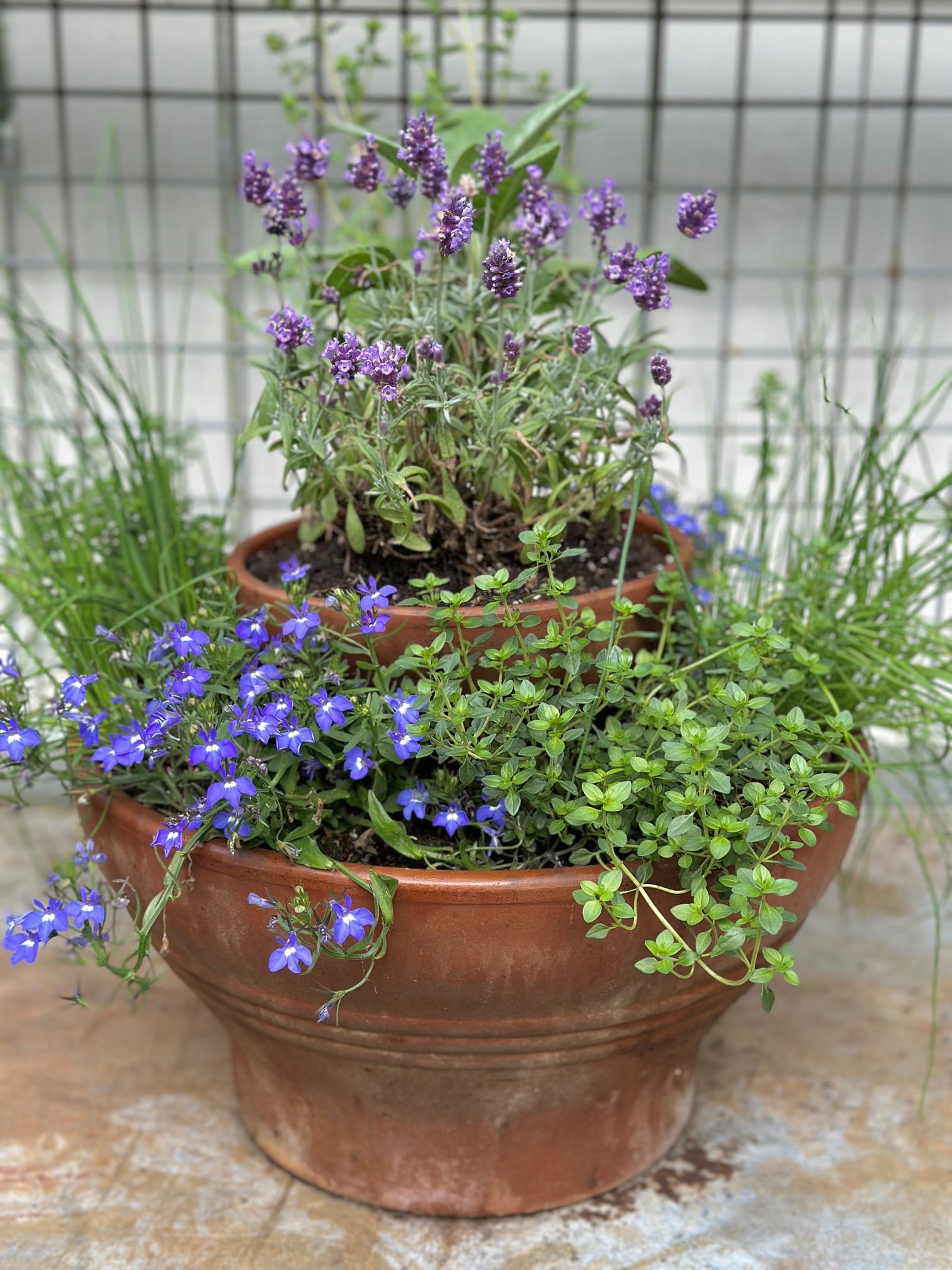
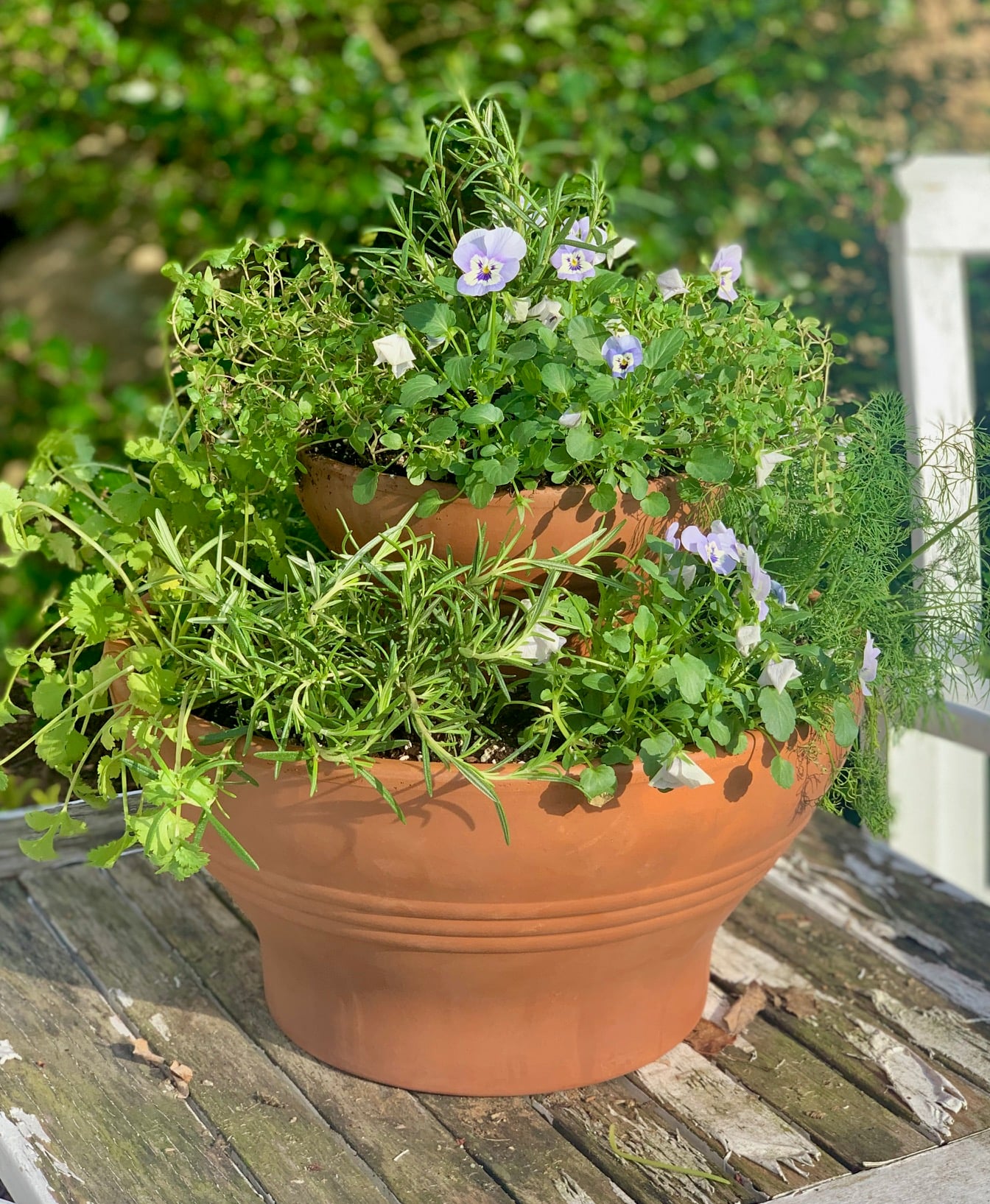
This tiered herb planter is a simple two-tier design made with stacked clay pots, a larger pot on the bottom and a smaller one set on top. It creates a layered herb garden in pots, giving you plenty of space to grow a mix of herbs and even a few flowers without taking up much room.
I've found this type of herb planter to be especially practical for patios and small outdoor spaces. You get the feel of a full herb garden, but everything is contained in one spot and easy to manage. It also adds a nice bit of height and visual interest, which makes it feel a little more special than a single pot.
If you've been looking at different herb planters or thinking about starting a small herb garden, this is an easy place to start. I'll walk you through how to set it up and what's worked well for me so you can create your own.
Choosing the right pots for your tiered herb planter
The success of your herb planter really starts with the pots you choose. The right size and style will make planting easier and help your herbs thrive.
Material matters
Clay or ceramic pots are my go-to for this type of herb planter. They're sturdy, look beautiful, and help regulate moisture, which is especially helpful when you're growing herbs in pots.
Style and shape
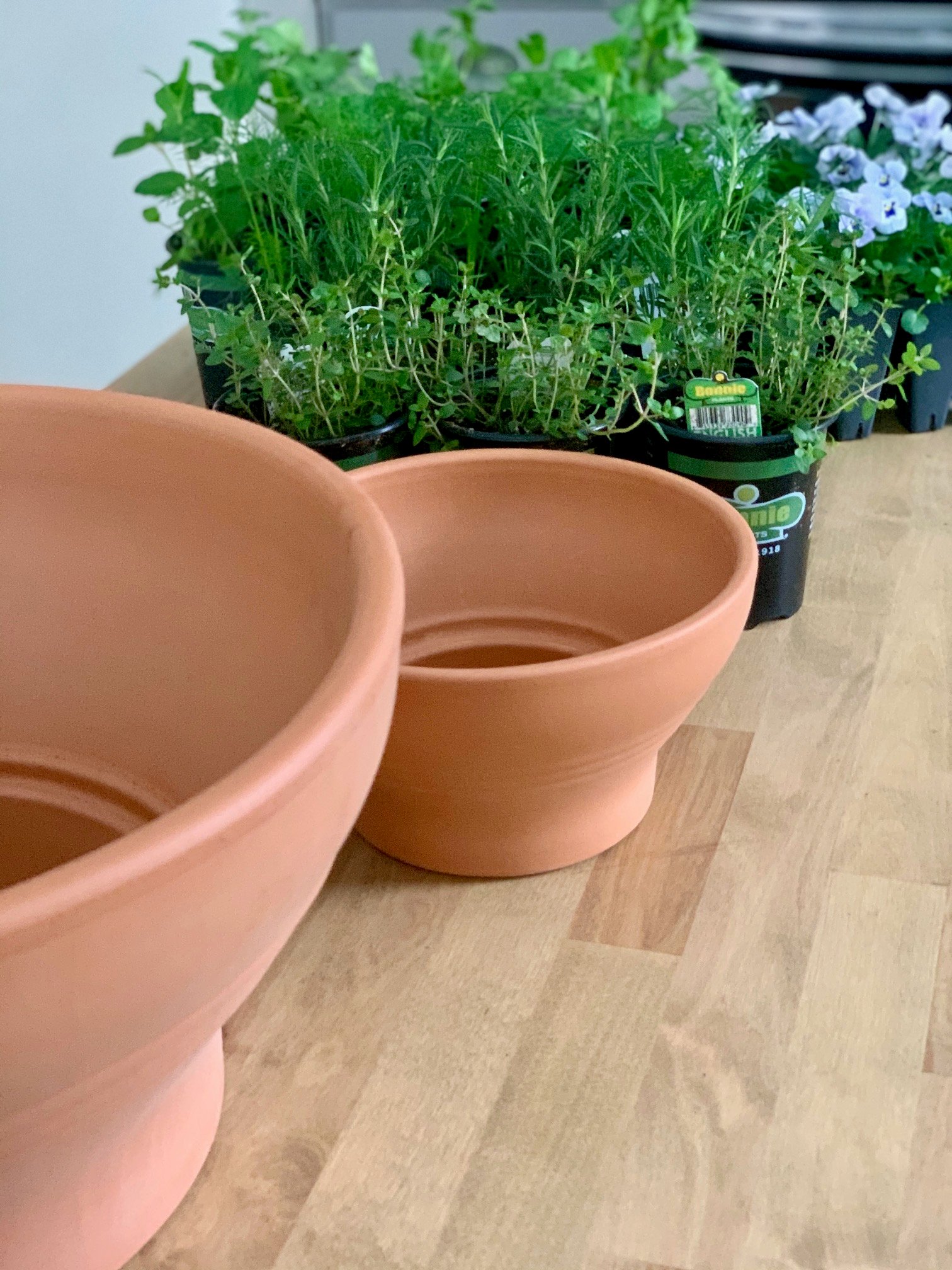
For a tiered herb planter, using matching pots keeps the overall look clean and cohesive. I've had the best results with bowl-style pots that are wider than they are tall. These shallow shapes give herbs enough room to spread without holding too much excess soil.
Sizing it right
Make sure your bottom pot is large enough to comfortably hold the smaller pot with space around the edges. I like to leave at least 4 inches of room all the way around. This gives you enough planting space for herbs and a few flowers in the lower tier, helping create that full, layered look.
Don't forget drainage
Good drainage is essential for any herb planter. Both pots should have drainage holes so water can flow through easily. Without them, the soil can become too wet, which most herbs won't tolerate. If needed, you can drill holes yourself, but it's easiest to start with pots that already have them.
Aesthetics count
Since this herb planter will likely sit on a patio or near your home, it's worth choosing pots you really like. Whether you prefer a simple, natural clay look or something glazed and decorative, matching pots help create a polished look that works in almost any space.
Take your time with this step. The pots you choose set the foundation for your herb garden in pots, both in how it grows and how it looks.
Best soil for a herb planter
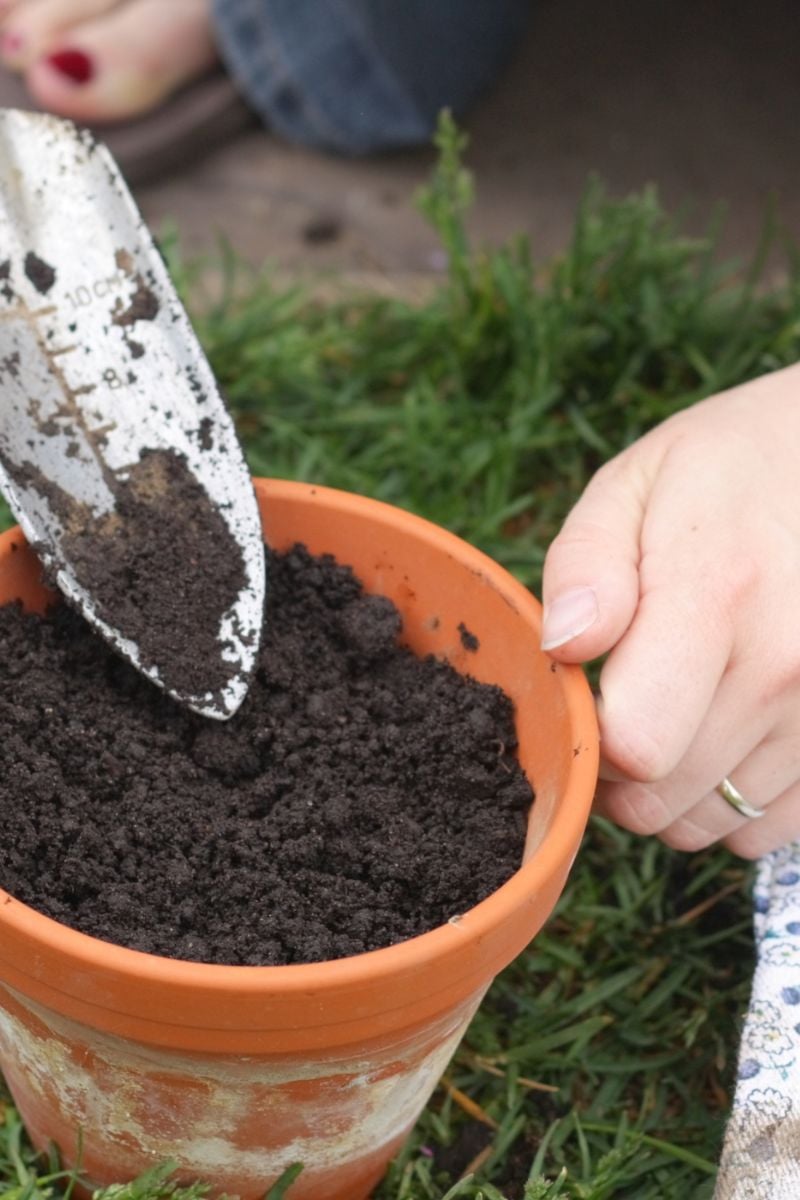
The right soil makes a big difference in how well your herb planter performs. Since you're creating an herb garden in pots, you'll want a high-quality potting mix that's lightweight and designed specifically for containers.
Look for mixes that include perlite or vermiculite. These help improve drainage and keep the soil from becoming too compact.
Why soil quality matters
Your potting mix should strike a balance between draining well and holding onto nutrients. A good mix will:
- allow excess water to drain quickly
- retain enough moisture for your herbs to stay hydrated
- hold onto nutrients so plants can access them over time
Avoid using garden soil in your herb planter. It's too heavy for containers and can compact easily, which makes it harder for roots to grow and can lead to poor drainage.
Simple tip for better growth
Mixing in a small handful of compost can give your herbs an extra boost. It adds nutrients and helps support healthy, steady growth, especially early in the season.
Pro Tip: Consider adding a handful of compost to your potting mix. It'll give your herbs an extra nutrient boost to get them off to a strong start.
How to construct a tiered herb planter
Building this tiered herb planter is simple and comes together quickly using two stacked pots.
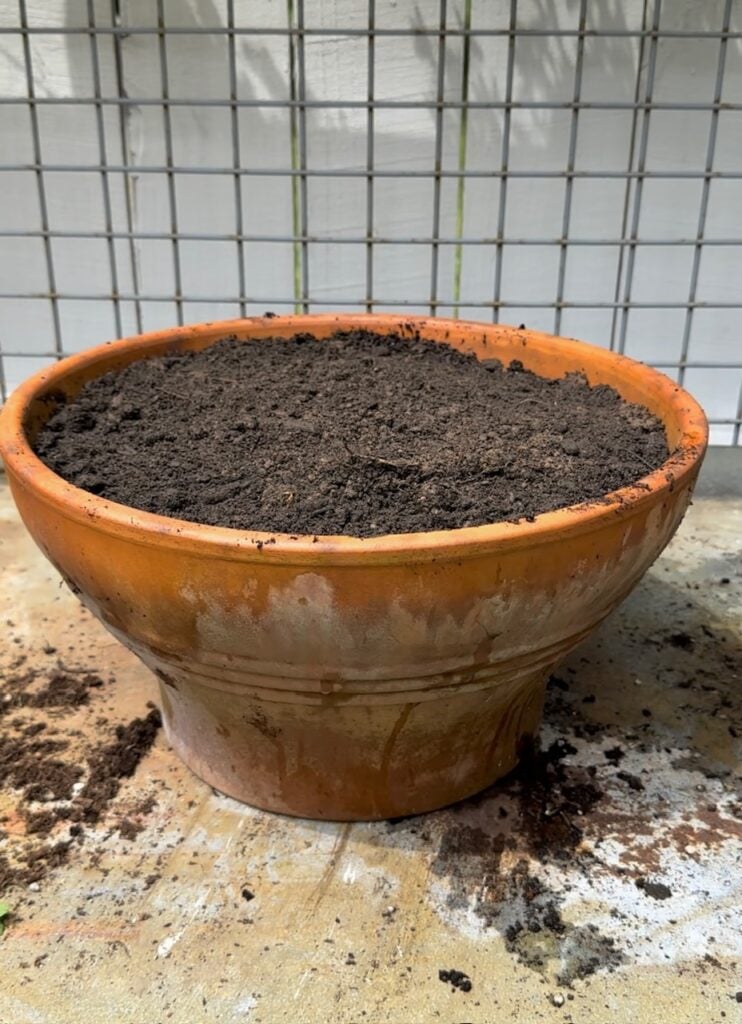
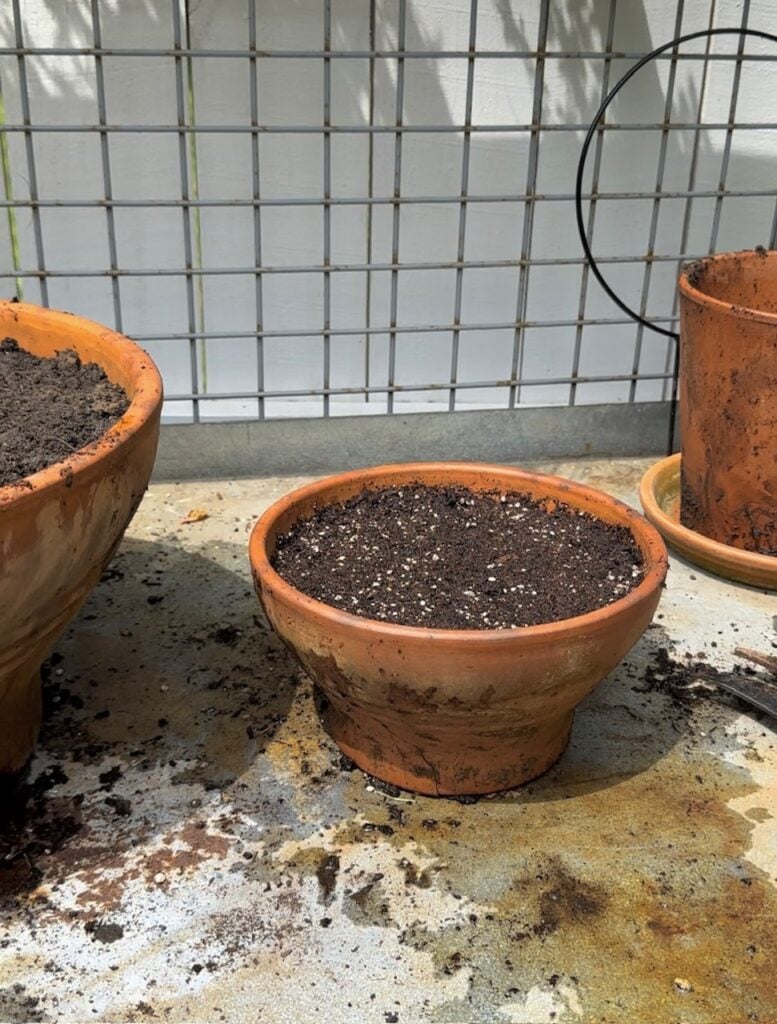
For most setups, you can place the smaller pot directly on top of the soil in the larger pot. Once the bottom pot is partially filled and the soil is gently flattened, set the smaller pot in the center. This method works especially well with shallow, bowl-style pots.
If you're using taller pots, you may need to sink the bottom of the top pot slightly into the soil of the larger pot. This helps stabilize the structure and gives you a bit more planting depth in the lower tier.
Whichever method you use, make sure the top pot is centered and level. A balanced setup not only looks better but also helps with proper drainage and even watering throughout your herb planter.

Planting your two-tiered herb planter
Now that you've got your pots set up, it's time for the fun part - planting! Let's talk about choosing your plants and how to arrange them for the best look and growth.
Choosing herbs and flowers
When it comes to picking plants for your tiered planter, you want to think about both what you'll use in the kitchen and what will look great. Here are some ideas:
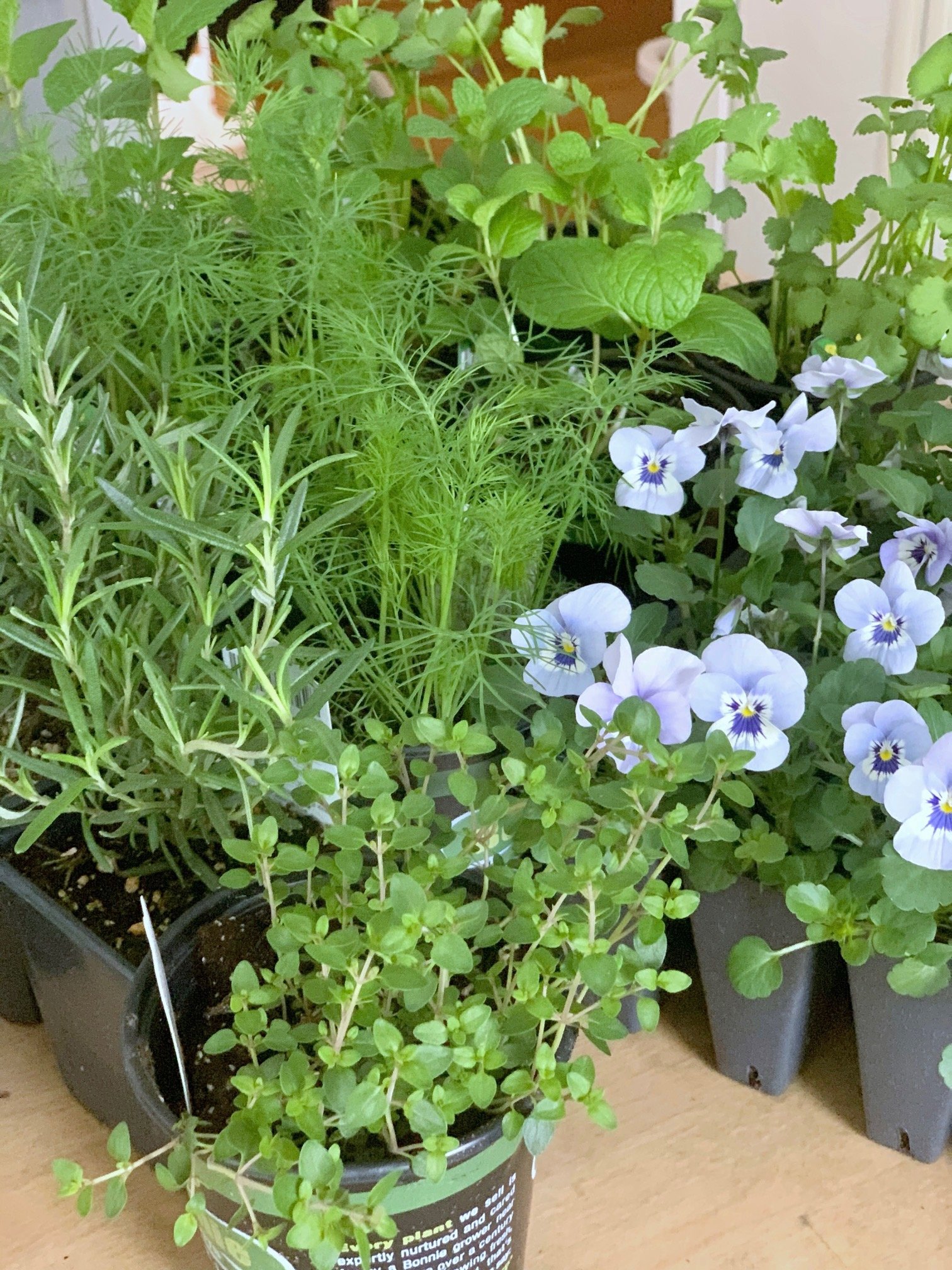
For herbs, you can't go wrong with classics like basil, thyme, rosemary, lavender, oregano, and mint. I especially love using cascading herbs like thyme - they look amazing spilling over the edges of the pots. Try to choose herbs with smaller, dainty leaves. They tend to look better in this type of planter than herbs with large leaves.
Don't forget to add some flowers for color! I like to mix in small annual flowering plants. Last year, I used pansies, and this year I'm trying lobelia. They add a nice pop of color among the green herbs.
More container ideas to try
If you love this look, I also share how I style other herb planters using the same simple approach.
→ See my lavender tree planter guide
Herbs that are perfect for two-tiered planter
| Herb | Growth Habit |
|---|---|
| Thyme | Cascading |
| Oregano | Mounding/Cascading |
| Creeping Rosemary | Cascading |
| Compact Lavender | Mounding |
| Chives | Upright |
| Parsley | Mounding |
| Mint | Spreading |
| Compact Basil | Mounding |
| Compact Sage | Mounding |
| Marjoram | Mounding |
| Lemon Balm | Mounding |
| Chamomile | Mounding |
| Savory | Upright |
| Compact Dill | Upright |
| Compact Fennel | Upright |
| Corsican Mint | Low-growing |
| Garlic Chives | Upright |
| Dwarf Curry Plant | Mounding |
| Compact Rosemary | Upright |
Planting techniques
When you're ready to plant, start with the bottom tier. I like to put taller plants towards the back and let cascading herbs hang over the edges. Mix up your herbs and flowers for a varied look.
For the top tier, use a similar planting pattern. You might want to put a slightly taller plant in the center as a focal point.
Here's a tip: repeat some of the plants for a cohesive look. For example, you might put three lobelias and two thyme plants, positioned on opposite sides of the planter.
Now, here's the secret to getting that lush, full look: ignore the suggested planting spacing on the labels. For this planter, you want to cram the plants in pretty tightly. It might seem like too much at first, but trust me, it'll look great. Just remember to prune and harvest regularly as the plants grow. This will keep them healthy and prevent overcrowding.
How to create a two-tiered herb planter
Materials needed:
- 2 round clay or ceramic pots (one larger, one smaller - I used at 14" diameter for the bottom and a 9" for the smaller one)
- High-quality potting mix
- Assorted herb plants
- Annual flowers (optional)
Steps:
- Choose Your Pots
Select two round, shallow pots of the same style. The larger pot should be wide enough to accommodate the smaller pot plus at least 4 inches of space around it.
- Prepare for Drainage
Ensure both pots have drainage holes. Place a layer of small rocks or pottery shards in the bottom of each pot to improve drainage.
- Fill the Bottom Pot
Add potting mix to the larger pot, filling it about ⅔ full. Flatten and lightly compact the soil.
- Fill the Top Pot
Add potting mix to the smaller pot, leaving about an inch of space at the top.
- Position the Top Pot
Place the smaller pot in the center of the larger pot, on top of the soil. Make sure it's level and stable.
- Add More Soil
Fill in around the smaller pot with more potting mix. The soil level should be about an inch below the rim of the larger pot.
- Plant the Bottom Tier
Plant the Bottom Tier Start planting herbs and flowers around the edge of the larger pot. Place taller plants towards the back and cascading herbs near the edges.
- Plant the Top Tier
Add plants to the top pot, following a similar pattern to the bottom tier.
- Plant the Top Tier
Add plants to the top pot, following a similar pattern to the bottom tier.
- Final Touches
Once all plants are in place, add a bit more soil if needed to cover any exposed roots. Water thoroughly.
- Maintenance
Place your planter in a sunny spot. Water regularly, and don't forget to harvest and prune your herbs to encourage bushy growth.
The key to a lush look is to plant more densely than you normally would. With regular care, your two-tiered herb planter will provide fresh herbs and beauty all season long!

Care and maintenance of your herb planter
Sunlight requirements
Finding the right sunny spot: Your herb planter will thrive in a spot that gets at least 6 hours of direct sunlight daily. South-facing locations are often ideal. If you're placing it on a patio or deck, make sure it's not shaded by overhangs or nearby structures.
Managing light conditions: If full sun isn't available, many herbs can adapt to partial shade. However, you might notice slower growth or less intense flavors. Rotate your planter occasionally to ensure all sides get equal light exposure.
Watering needs
Proper watering techniques: Water your herbs when the top inch of soil feels dry to the touch. Water deeply, allowing it to drain through the bottom. It's best to water in the morning, giving leaves time to dry before evening to prevent fungal issues.
Avoiding overwatering: Overwatering is a common mistake. Always check the soil moisture before watering. If in doubt, it's better to underwater slightly than to overwater. Good drainage is crucial, so make sure those drainage holes aren't blocked.
Fertilizing and pruning
Fertilizing: Feed your herbs with a balanced, water-soluble fertilizer every 4-6 weeks during the growing season. Use half the recommended strength to avoid overly leafy growth that can reduce flavor intensity.
Pruning: Regular pruning encourages bushier growth and prevents flowering, which can change the herb's flavor. Pinch off the top sets of leaves regularly, and harvest from the outside of the plant inward.
Seasonal care instructions
Spring: Start with fresh potting soil and new plants. Begin fertilizing as growth picks up.
Summer: Water more frequently during hot spells. Harvest regularly to encourage continued growth.
Fall: Reduce watering and stop fertilizing as growth slows. Bring tender herbs indoors if frost threatens.
Winter: For outdoor planters, protect roots from freezing by wrapping the container or moving it to a sheltered spot. For indoor herbs, provide extra light and reduce watering.
Remember, each herb might have slightly different care needs, so it's worth researching the specific requirements of the varieties you're growing. With proper care, your tiered herb planter will provide you with fresh herbs and beauty throughout the seasons!
Frequently asked questions
For the best arrangement, place taller herbs like basil plants towards the back sections of each tier. Put smaller plants and trailing herbs like thyme near the outer edge. This creates a beautiful, layered look and ensures all plants get enough sun.
Most herbs thrive with 6-8 hours of sun daily. Place your planter in a sunny outdoor space that receives plenty of direct sunlight. If you're using it as an indoor herb planter, a kitchen windowsill that gets lots of natural light can be a great place.
In the first year, while your herbs are establishing, make sure they get enough water without overwatering. Check the soil daily - when the top inch feels dry, it's time to water. The best way to water is deeply but less frequently, allowing the soil to dry slightly between waterings.
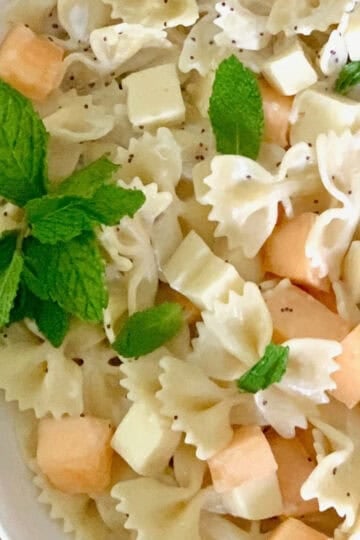
While harvesting from your herb planter, try these herb-forward recipes

Creating a tiered herb planter is a simple and rewarding way to grow fresh herbs at home, especially if you're working with a patio or small outdoor space. This two-tier design makes it easy to create a full herb garden in pots while adding height and visual interest.
Whether you're just getting started or have been gardening for years, this herb planter is an easy project that brings both beauty and function to your space. With the right care, it will continue to fill in and thrive, giving you fresh herbs for cooking all season long.
Happy planting!