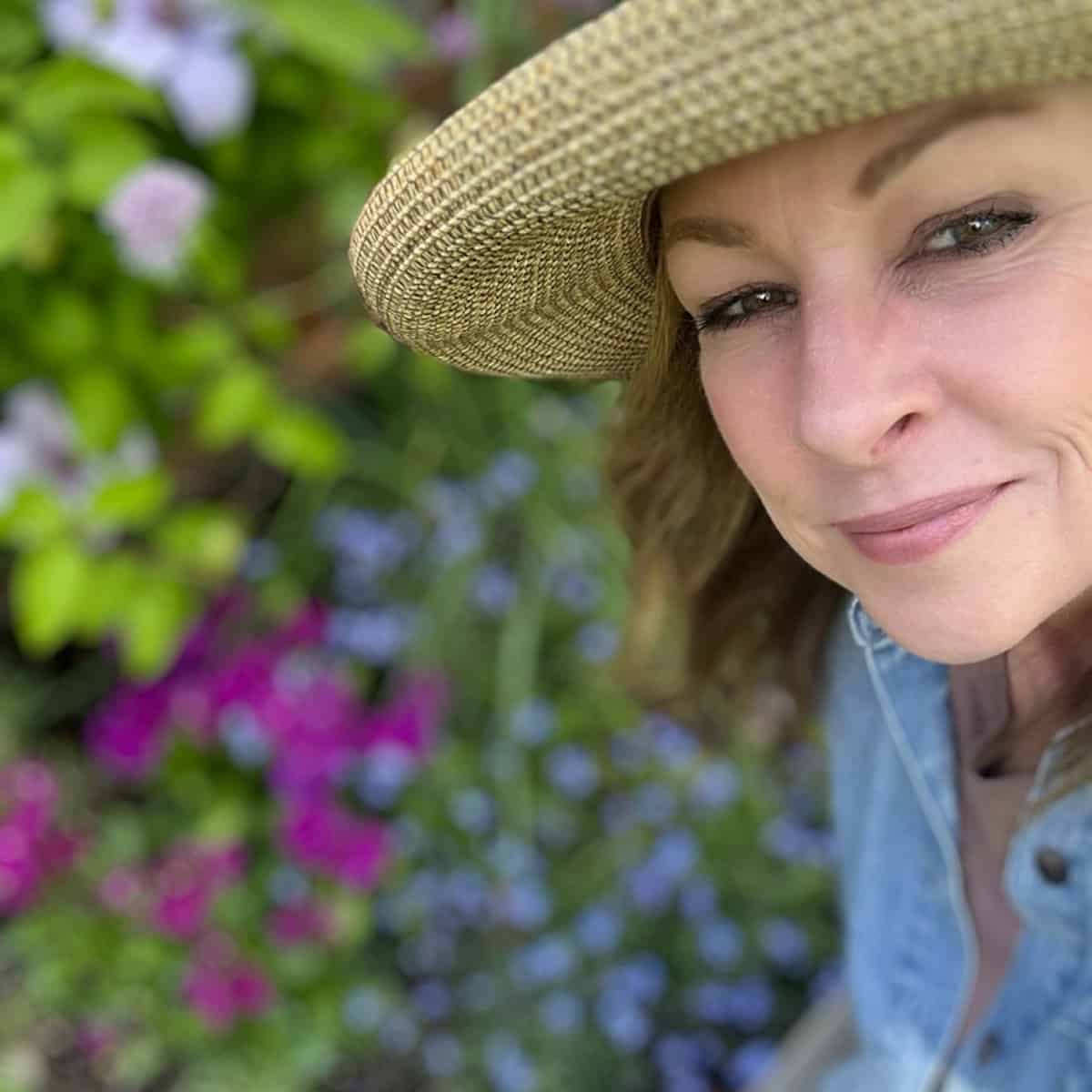
Flowers in Raised Beds: Why I Always Add Them to My Garden

Adding flowers in raised beds is one of the simplest ways to make a garden feel fuller, more colorful, and more alive. In my own raised herb beds, flowers add beauty, attract pollinators, bring early season color, and create a space that feels both productive and inviting.
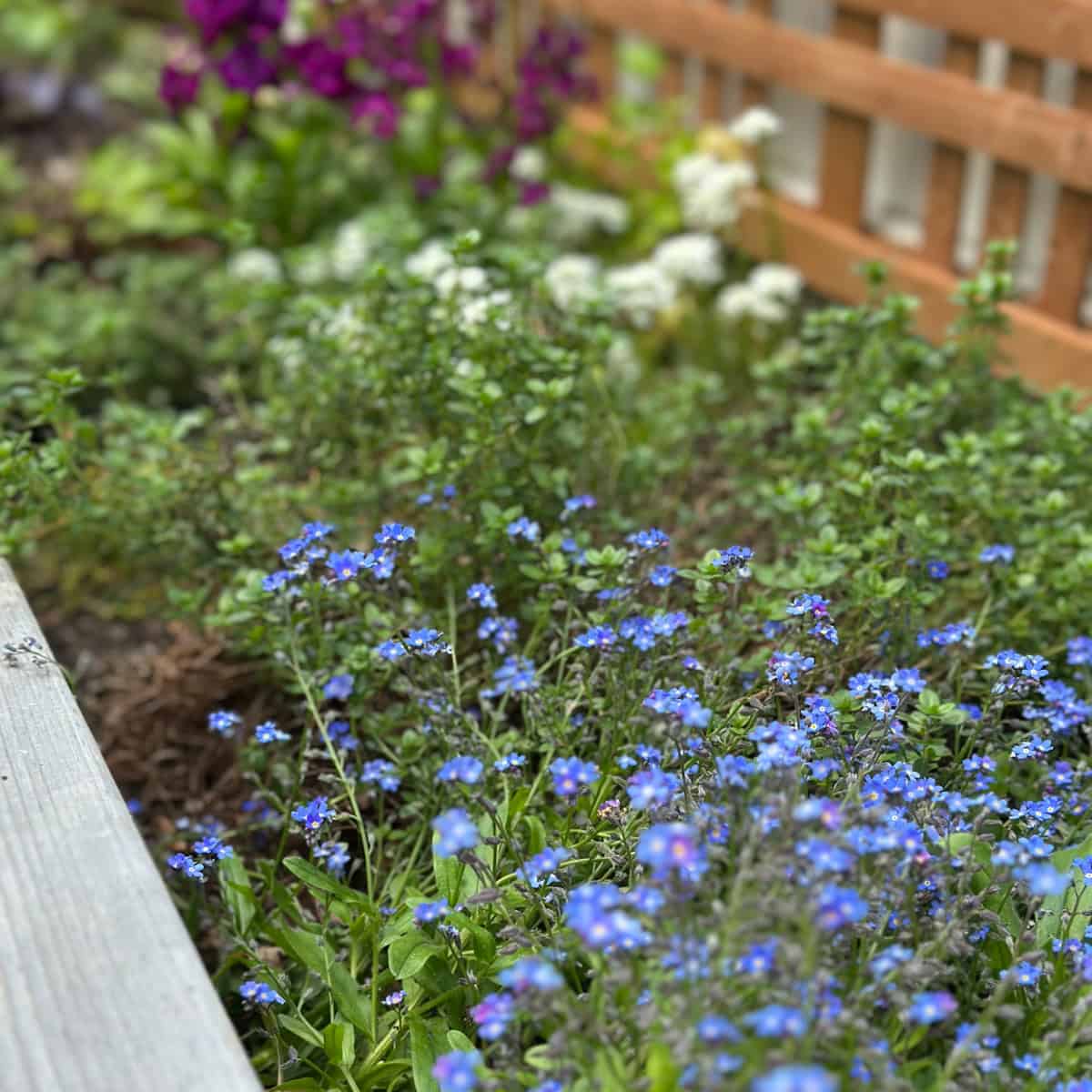
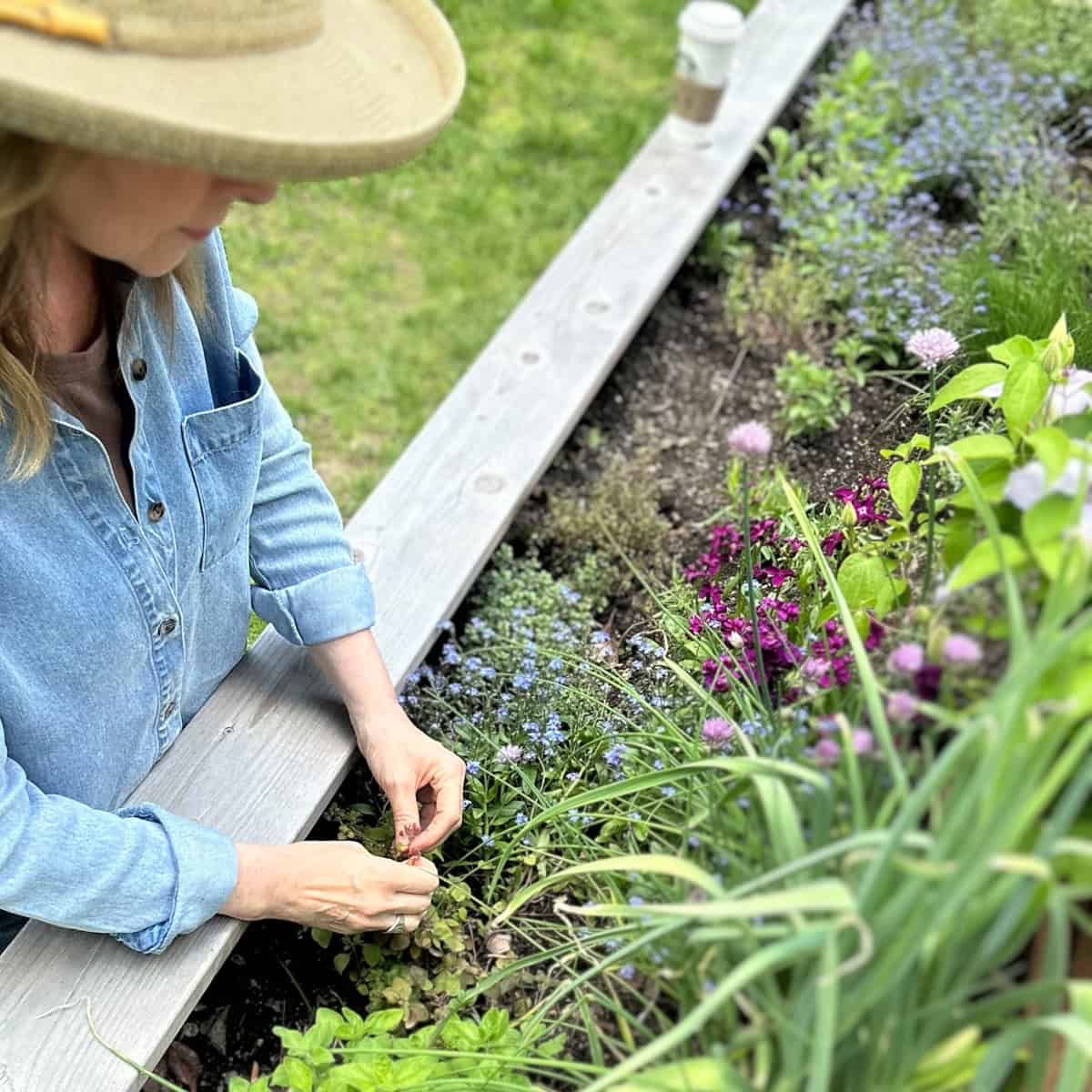
One of my favorite parts of my New England garden is my herb bed. It is a long, 16-foot raised bed filled with herbs I grow for cooking, crafting, and everyday use in the kitchen. But over the years I have learned that an herb garden with flowers is far more beautiful than one planted with herbs alone.
Many herbs eventually produce lovely blooms, and I truly enjoy those flowering herbs when they appear later in the summer. But early in the season the garden can look a little sparse. That is why I always tuck a few flowers into the bed each year. Some are perennials that return every spring and feel like old friends in the garden. Others are annuals that I add simply because they catch my eye at the garden center. Together they fill the space with early color and life. My raised bed garden may begin as a practical place for cooking herbs and garden crafts, but with flowers mixed in it becomes something more. It becomes a place that feeds my soul as much as my kitchen.
Tip: Flowers in raised beds are not just for herb gardens. They also work beautifully in vegetable beds, where they can attract pollinators and soften rows of tomatoes, peppers, lettuce, and cucumbers.
At a Glance: Flowers in Raised Beds
_______________________
- Best For: Herb gardens, vegetable beds, and mixed raised bed gardens
- Main Benefits: More color, pollinators, texture, and seasonal beauty
- Great Flower Choices: Zinnias, calendula, nasturtiums, alyssum, stock, salvia, dianthus Works With: Herbs, tomatoes, peppers, lettuce, cucumbers, and more
- Best Feature: Turns practical garden beds into beautiful, lively spaces
- Pollinator Friendly: Helps attract bees, butterflies, and beneficial insects
- Seasonal Bonus: Adds blooms before many herbs and vegetables flower
- Style: Productive garden meets cottage garden charm
- Overall Feel: Beautiful, useful, and full of life
Summarize and Save this content on:
Jump to:
- At a Glance: Flowers in Raised Beds
- Why add flowers in raised beds?
- My favorite flowers in raised beds
- Why raised beds need flowers early in the season
- Why flowers in raised beds feel more beautiful and lively
- Flowers also bring pollinators to an herb garden
- Best perennial flowers for raised beds
- Easy annual flowers for raised beds
- How I choose flowers for my raised beds each year
- Herbs that produce beautiful flowers too
- Frequently asked questions
- More herb garden planning guides to explore
Why add flowers in raised beds?
Adding flowers in raised beds is one of the easiest ways to make a garden feel more beautiful, balanced, and full of life. While raised beds are often planted with vegetables, herbs, or practical crops, flowers bring in the softer touches that make the space feel truly special.
Flowers add early color before many edible plants begin to bloom, help attract bees, butterflies, and other pollinators, and create movement and texture throughout the bed. Taller flowers can add height, trailing flowers can soften the edges, and bright blooms help break up all the green foliage.
They are also incredibly useful. Pollinators drawn in by flowers often visit nearby herbs and vegetables as well, helping support a healthier and more active garden overall.
For me, flowers in raised beds make the garden feel less like rows of plants and more like a place you want to spend time in.
My favorite flowers in raised beds
- Zinnias
- Nasturtiums
- Calendula
- Alyssum
- Stock
- Dianthus
- Salvia
- Coneflower
- Forget-me-nots
Adding flowers is one of my favorite ways to bring an herb garden to life. If you're just getting started, you can browse all of my herb garden guides in one place to help you plan, plant, and pull everything together.
Why raised beds need flowers early in the season
One thing I have noticed over the years is that many herbs do not flower until later in the growing season. Plants like basil, oregano, thyme, rosemary and sage eventually produce beautiful blooms, but those flowers often arrive in mid to late summer after the plants have had time to mature.
Earlier in the season, herb beds tend to be filled with fresh green foliage but very few blooms. The plants are healthy and growing, yet the garden can look a little simple at first glance.
That is where flowers make such a difference. Tucking a few flowering plants among the herbs helps fill those visual gaps while the herbs are still developing. A handful of blooms adds color, texture, and movement to the bed, giving the garden a fuller and more lively feel even in the early weeks of the growing season.
Why flowers in raised beds feel more beautiful and lively
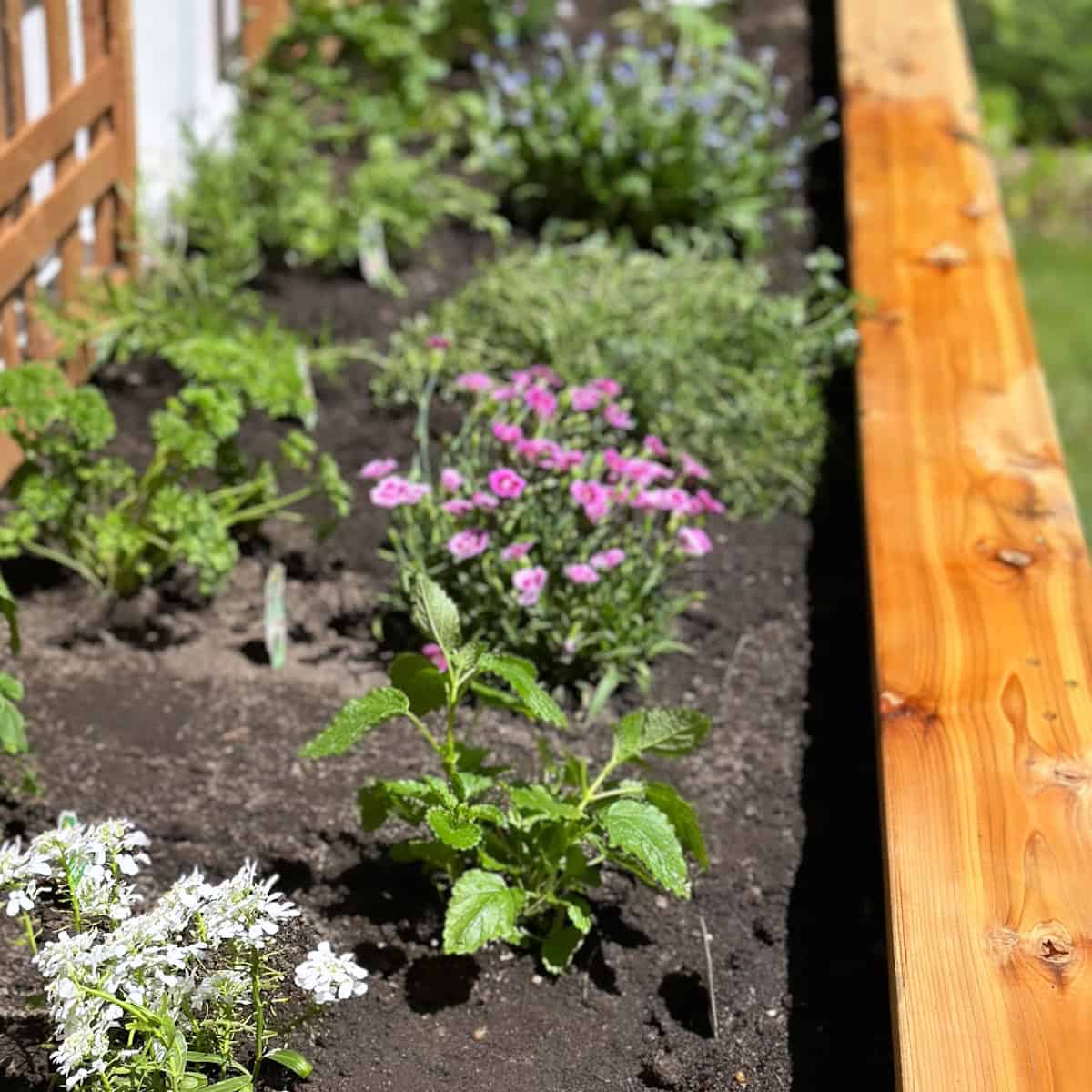
One of the biggest reasons I love creating an herb garden with flowers is the way it changes the overall feel of the space. Herbs are wonderful plants, but most of them stay fairly low and share similar shades of green or silvery foliage. When flowers are added, the garden suddenly feels brighter, fuller, and more alive.
Flowers also help create a sense of layering. Some blooms stay low and weave around the herbs, while others add height and draw the eye upward. That variation makes the garden feel fuller and more visually interesting.
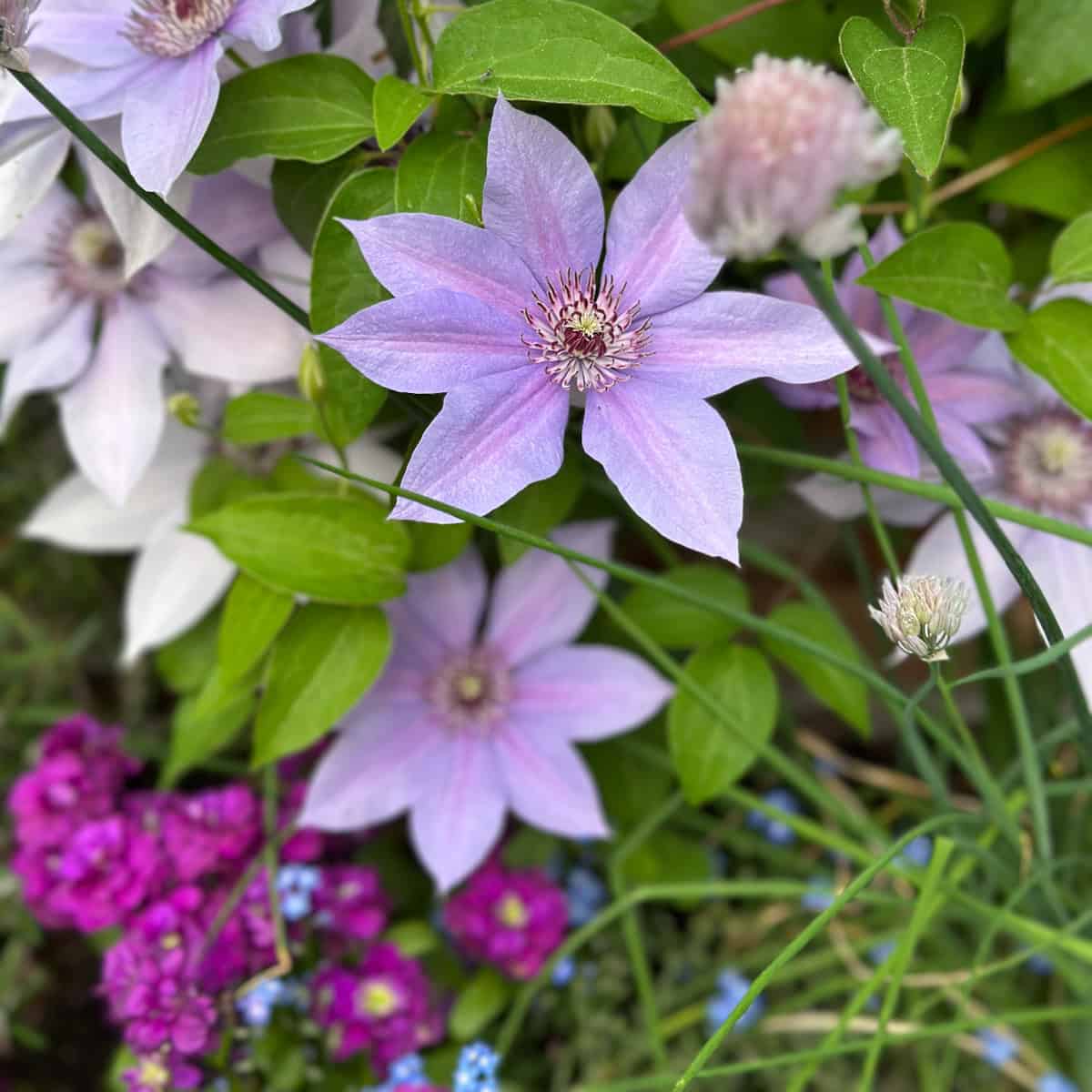
At the back of my herb garden, I have a clematis growing on the trellis. Every spring I look forward to those big, beautiful blooms opening above the herbs. They add height and create a soft backdrop for the rest of the bed.
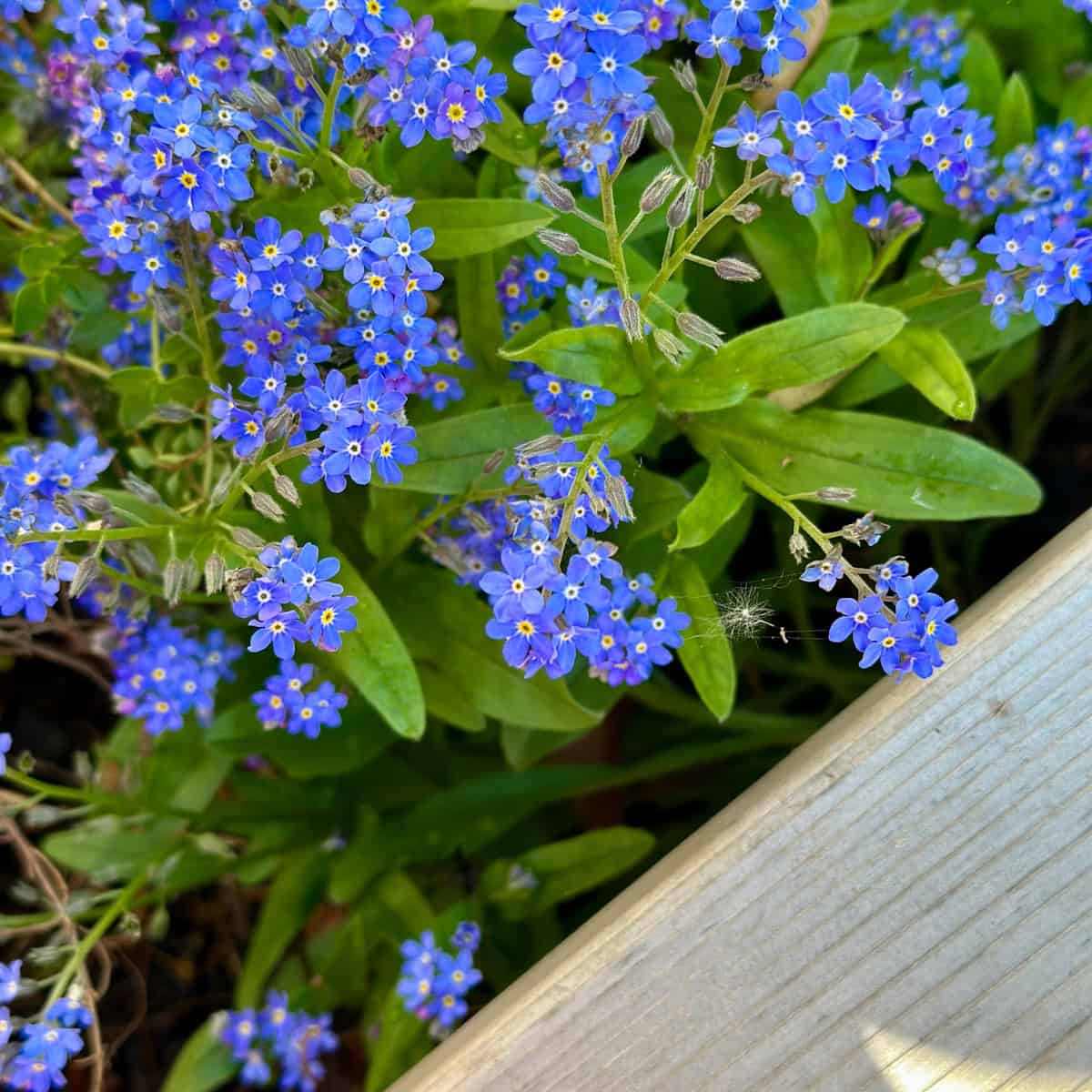
Closer to the front, I have a few perennial flowers that return every year. My forget-me-nots are small and blue and seem to spread a little more each season, which I honestly do not mind at all. I also have white candytuft and dianthus planted among the herbs. These have become some of my perennial mainstays and give the garden early color each spring.
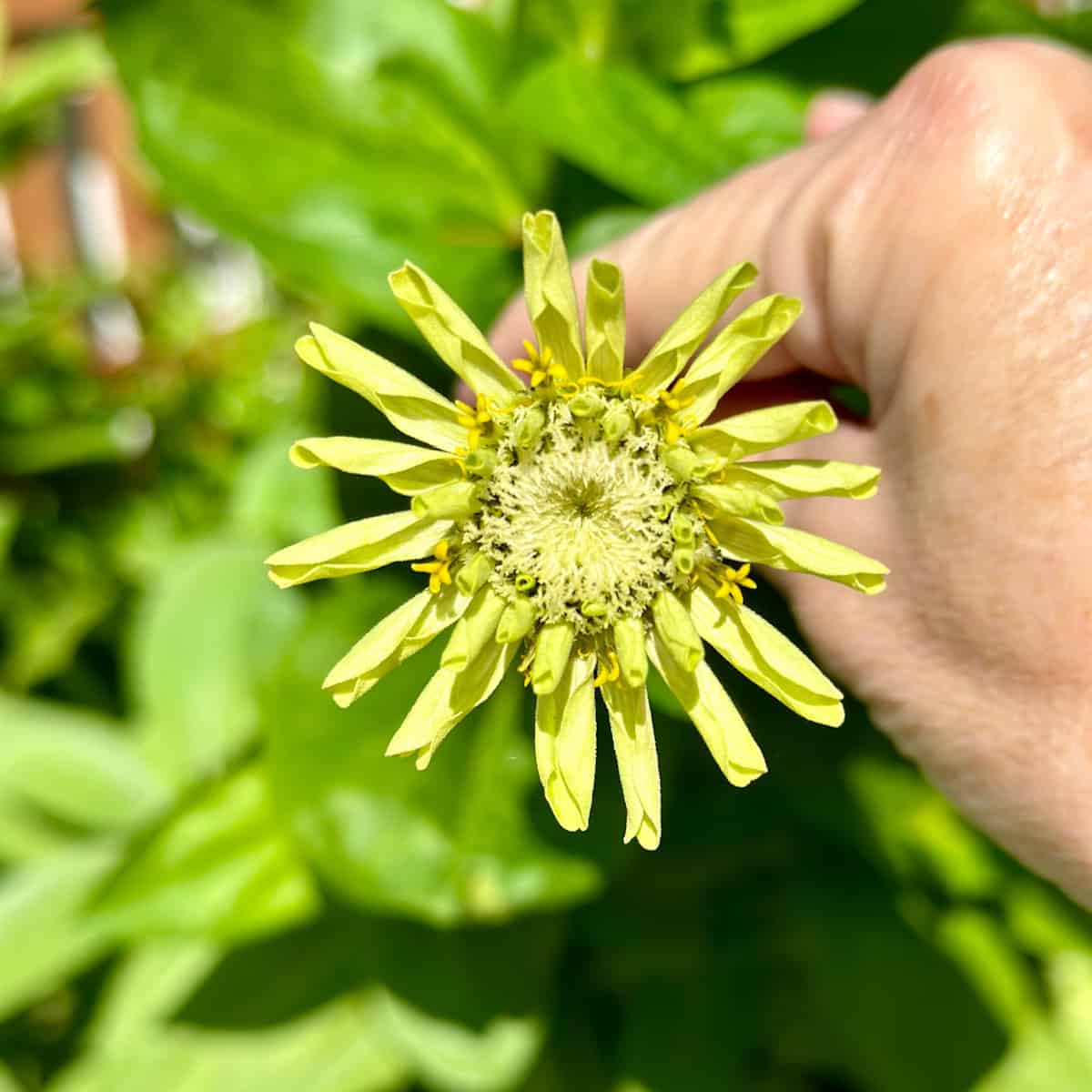
Then I fill in the remaining spaces with annuals. Some years I plant stock (Matthiola incana) because I love the soft blooms tucked among the herbs. I also scatter zinnia seeds here and there. By summer they pop up throughout the bed and add cheerful color among the basil, rosemary, and sage.
All together these flowers create a garden that feels layered and lively. The mix of herbs and blooms adds color, texture, and height variation that makes the space far more beautiful than herbs alone.
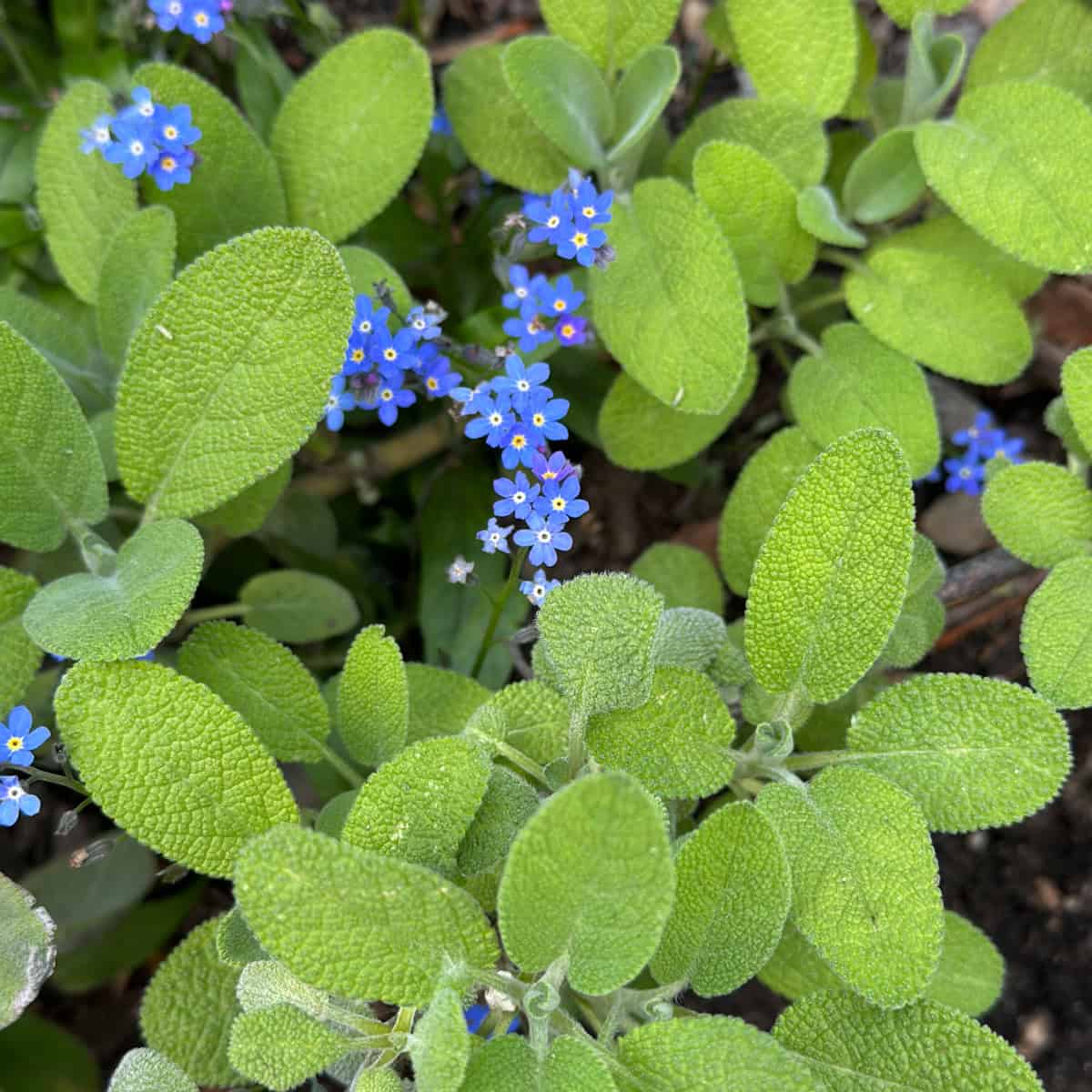
Flowers also bring pollinators to an herb garden
Another benefit of creating an herb garden with flowers is the way it attracts pollinators. While I originally started adding flowers simply because they made the garden prettier, I quickly noticed how many bees, butterflies, and other beneficial insects began visiting the space.
Flowers naturally draw pollinators into the garden. Bees move from bloom to bloom collecting nectar and pollen, butterflies drift through the bed on warm days, and other helpful insects begin to appear as well. Once these visitors discover the flowers, they tend to return regularly.
When herbs like basil, oregano, thyme, and sage eventually begin to bloom later in the summer, those same pollinators are already nearby and happy to visit the herb flowers too.
I also keep a small butterfly bath in my herb garden. It is a shallow dish filled with water and a few stones so butterflies have a place to land and drink. It adds another little element of life to the garden and makes the space feel even more welcoming to pollinators.
Between the herbs, the flowers, and a bit of water for visiting insects, the garden becomes a lively place filled with movement and activity throughout the growing season.
If you've been wanting to grow your own herbs but aren't sure where to start, I break it all down in a simple, beginner-friendly way so you can get going with confidence.
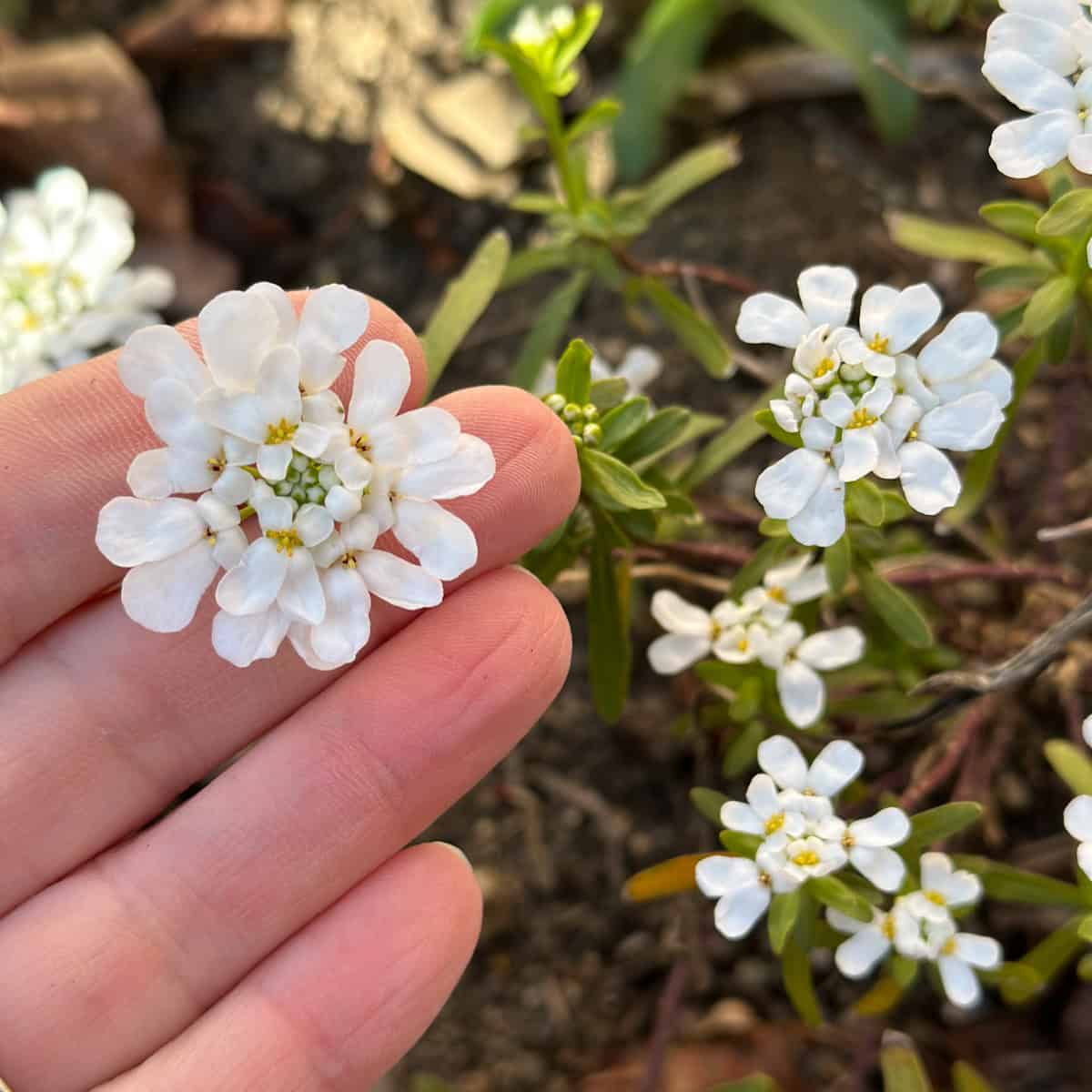

Best perennial flowers for raised beds
Perennial flowers are a wonderful way to give an herb garden a sense of long-term structure. While annual flowers can be added each year for color, perennials return season after season and slowly become part of the character of the garden.
Some perennial flowers blend beautifully with herbs because they share a similar cottage garden feel and attract pollinators as well.
Clematis
Clematis is one of my favorite perennial flowers in the herb garden. Mine grows along the trellis at the back of the bed, and every spring I look forward to those big, beautiful blooms appearing above the herbs. It adds height and creates a lovely backdrop for the rest of the garden.
Salvia
Salvia produces tall spikes of flowers that bees absolutely love. The upright blooms add vertical interest among lower growing herbs.
Echinacea (Coneflower)
Echinacea brings soft color and a relaxed garden feel. Its daisy-like flowers mix nicely with herbs and provide nectar for pollinators throughout the summer.
Catmint
Catmint has soft gray-green foliage and airy purple flowers that blend naturally with many herbs. It has a relaxed, flowing habit that looks especially nice spilling around the edges of beds.
Lavender
Lavender is technically an herb, but it deserves a mention here because of how beautiful it is in the garden. Its fragrant purple blooms attract bees and add both structure and color to herb beds. In many gardens, lavender acts as both a culinary herb and an ornamental flowering plant.
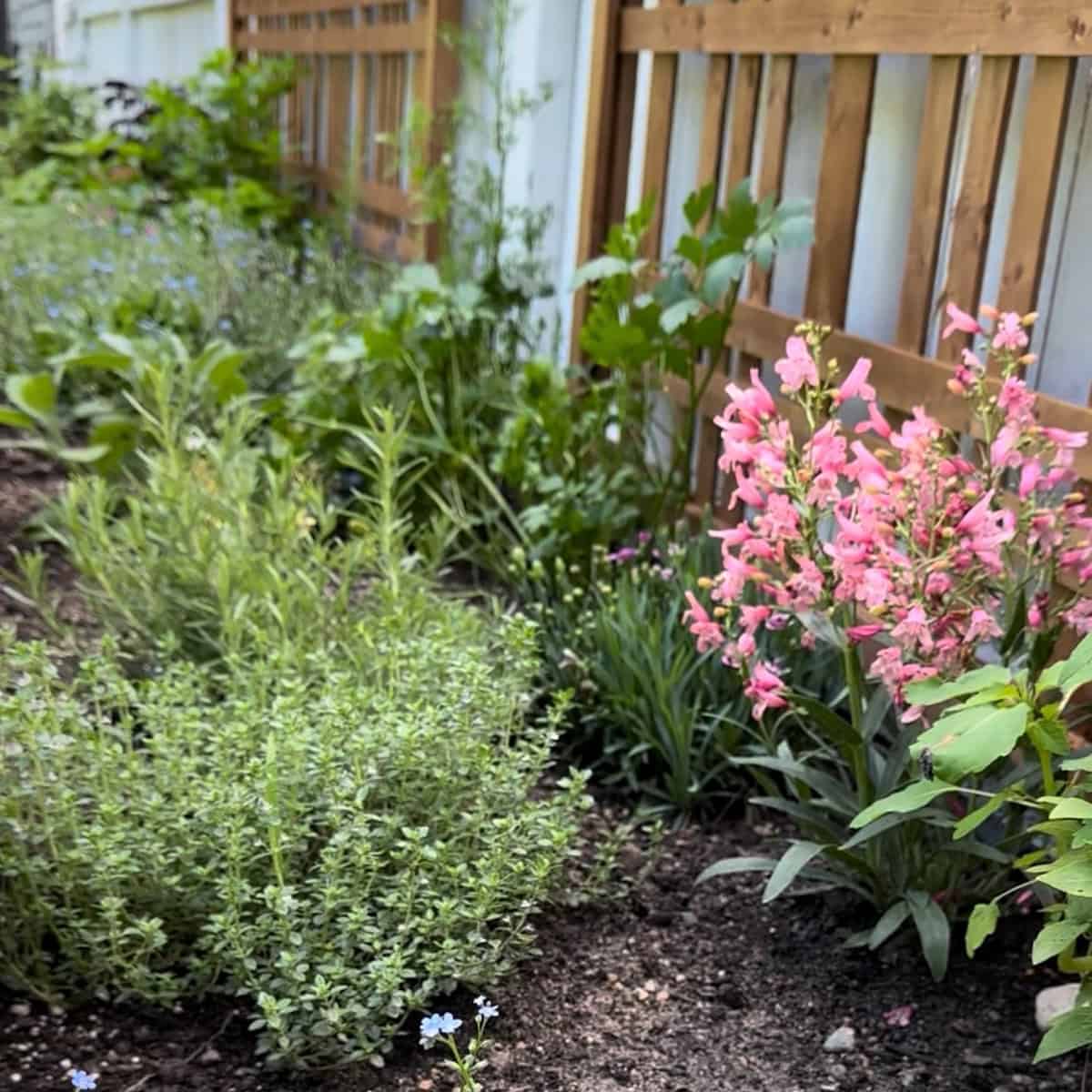
Easy annual flowers for raised beds
Annual flowers are one of the easiest ways to add color to an herb garden each year. Because they only last for one growing season, they give you the freedom to experiment and change the look of the garden whenever you like.
Some years I plant specific flowers, and other years I simply choose whatever catches my eye at the garden center.
A few annuals that work especially well among herbs include:
Zinnias
Zinnias are one of my favorite flowers to scatter through the herb bed. I often grow them from seed, and they pop up throughout the garden adding cheerful color all summer.
Stock
Stock has soft, romantic blooms that look beautiful tucked between herbs. I planted it in my herb garden last year for the first time and loved the look.
Nasturtiums
Nasturtiums are wonderful in herb gardens because both the leaves and flowers are edible which is perfect for my blossom butter recipe. Their trailing habit also works nicely spilling around herbs.
Calendula
Calendula produces bright, cheerful flowers and has long been associated with herb gardens. The petals are also edible and can be used in teas and simple herbal preparations.
Sweet Alyssum
Alyssum stays low to the ground and forms soft little mounds of tiny flowers. It works especially well around herbs like thyme or oregano.
Lobelia
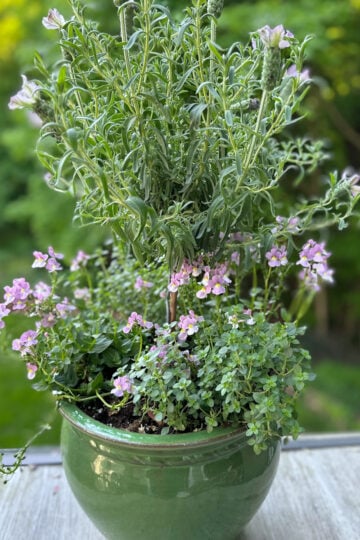
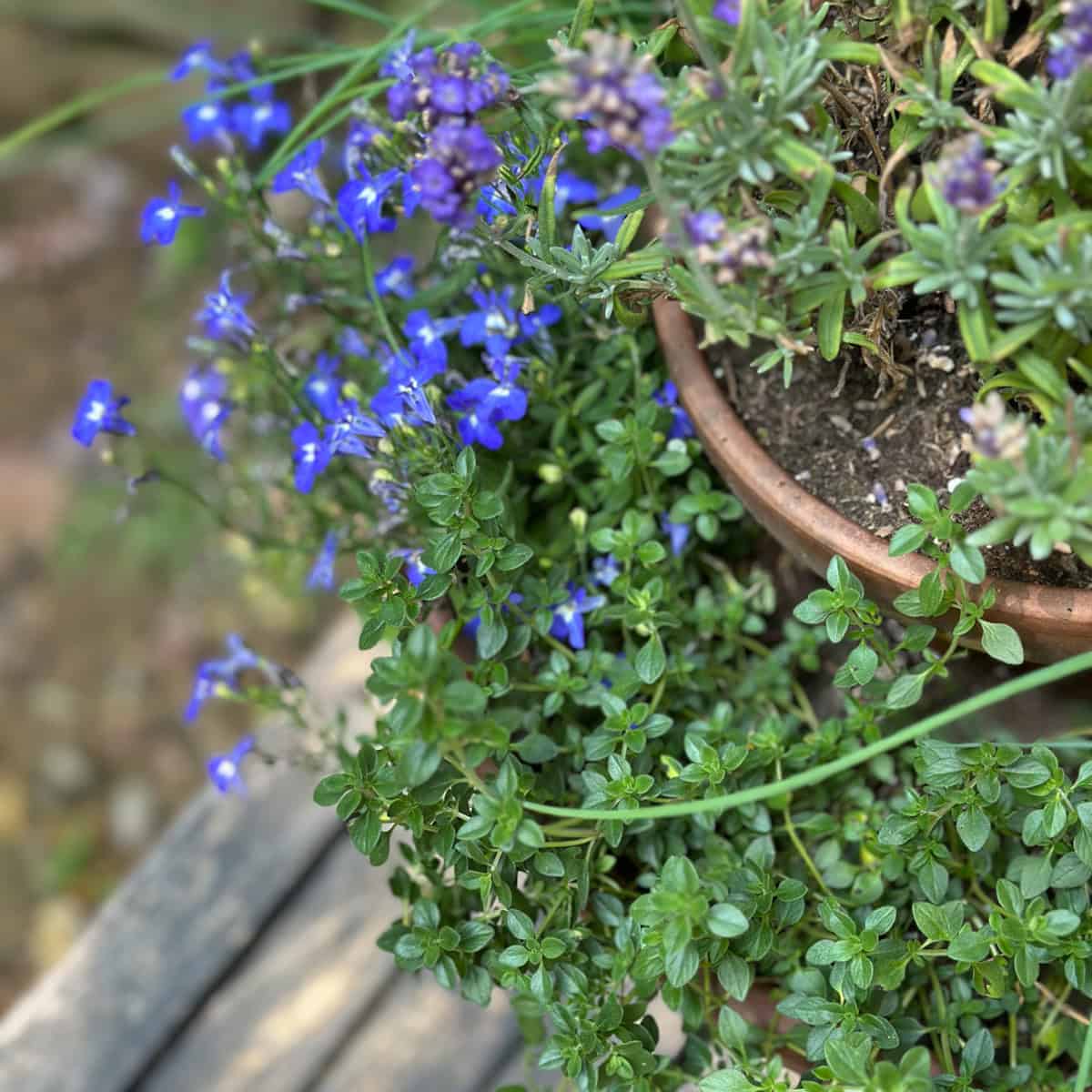
Lobelia is another favorite of mine, especially in containers. I often tuck it into my two-tiered herb planter where the delicate blue flowers spill softly around the herbs. It adds beautiful color and movement to herb pots.
Tip: Add Flowers to Herb Containers Too: Adding flowers to herb containers is just as lovely as mixing them into garden beds. Even a small planter can feel fuller and more vibrant when a few blooms are tucked in alongside basil, thyme, or parsley. I like doing this with my herb planters as well. A trailing or compact flower tucked among the herbs softens the edges of the container and adds a little burst of color. Lobelia is one I return to often because the delicate blue flowers spill beautifully around the herbs and make the whole planter feel more alive. Flowers also help containers feel more layered and interesting. Herbs tend to stay fairly low and leafy, so adding a small flowering plant introduces a different shape and texture. The result is a container that feels less like a pot of herbs and more like a tiny garden. If you grow herbs in containers, try tucking in one or two flowers the next time you plant them. It is a simple way to add color, attract bees and butterflies to your garden, and make your herb pots look even more charming.
How I choose flowers for my raised beds each year
Over the years I have developed a fairly relaxed approach to choosing flowers for my herb garden. Some years I plan things out a bit, but other times I simply choose flowers that catch my eye at the garden center. The goal is always the same, to create an herb garden with flowers that feels colorful, natural, and enjoyable to spend time in.
A mix of planning and spontaneity
Sometimes I head to the garden center with a general idea of what I want to plant. Other times I simply wander the aisles and see what speaks to me.
Last year, for example, I planted stock in the herb garden for the first time because I had never grown it before. The blooms were so pretty tucked among the herbs that I will probably add them again.
Gardening for me is part planning and part spontaneity, and the herb bed reflects that.
Flowers that bloom for a long time
One thing I do try to pay attention to is how long a flower blooms. Because herbs themselves often flower later in the summer, I like choosing flowers that will produce blooms for a long stretch of the season.
Plants that flower repeatedly or for many weeks help keep the herb garden looking lively rather than fading after just a short burst of color.
Growing a few flowers from seed
I also like growing some flowers from seed and scattering them throughout the herb bed. Zinnias are perfect for this. I often sprinkle a few seeds here and there and let them grow wherever they land.
By summer, bright blooms start popping up among the mint, oregano, and thyme, which always makes the garden feel cheerful and a little unexpected.
Letting perennials slowly fill in
Over time, some perennial flowers have naturally become part of the garden as well. My forget-me-nots spread a little more each year, and honestly I do not mind at all.
Seeing those familiar blooms return each spring is one of my favorite parts of the garden.
My favorite garden color palette
Color also plays a big role in what I choose. I tend to gravitate toward soft shades of pink, blue, purple, and white.
Those colors blend beautifully with the greens and silvery foliage of herbs and create the calm, cottage-style garden feel that I love.
In the end, the mix of returning perennials, a few annual flowers, and the occasional packet of seeds helps create a garden that feels relaxed, colorful, and a little different every year.
Herbs that produce beautiful flowers too
Of course, many herbs eventually produce beautiful flowers of their own. While I enjoy adding flowers throughout the garden for early color, some of the loveliest blooms in my herb bed actually come from the herbs themselves later in the season.
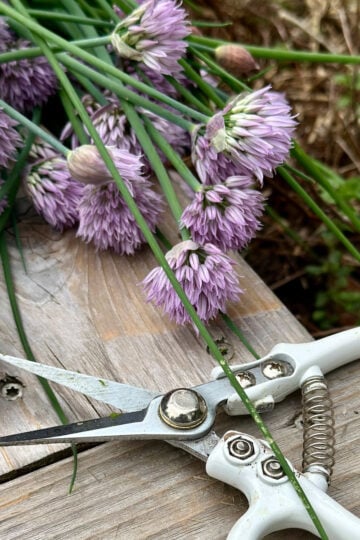
Chives are often one of the first herbs to flower in my garden. Their round purple blossoms rise above the green leaves and add a soft pop of color. They are also loved by bees.
Oregano produces delicate clusters of small flowers that attract pollinators all summer long. I always enjoy seeing the plant covered in blooms, and if you have ever noticed oregano flowering in the garden, you know how many bees it brings in.
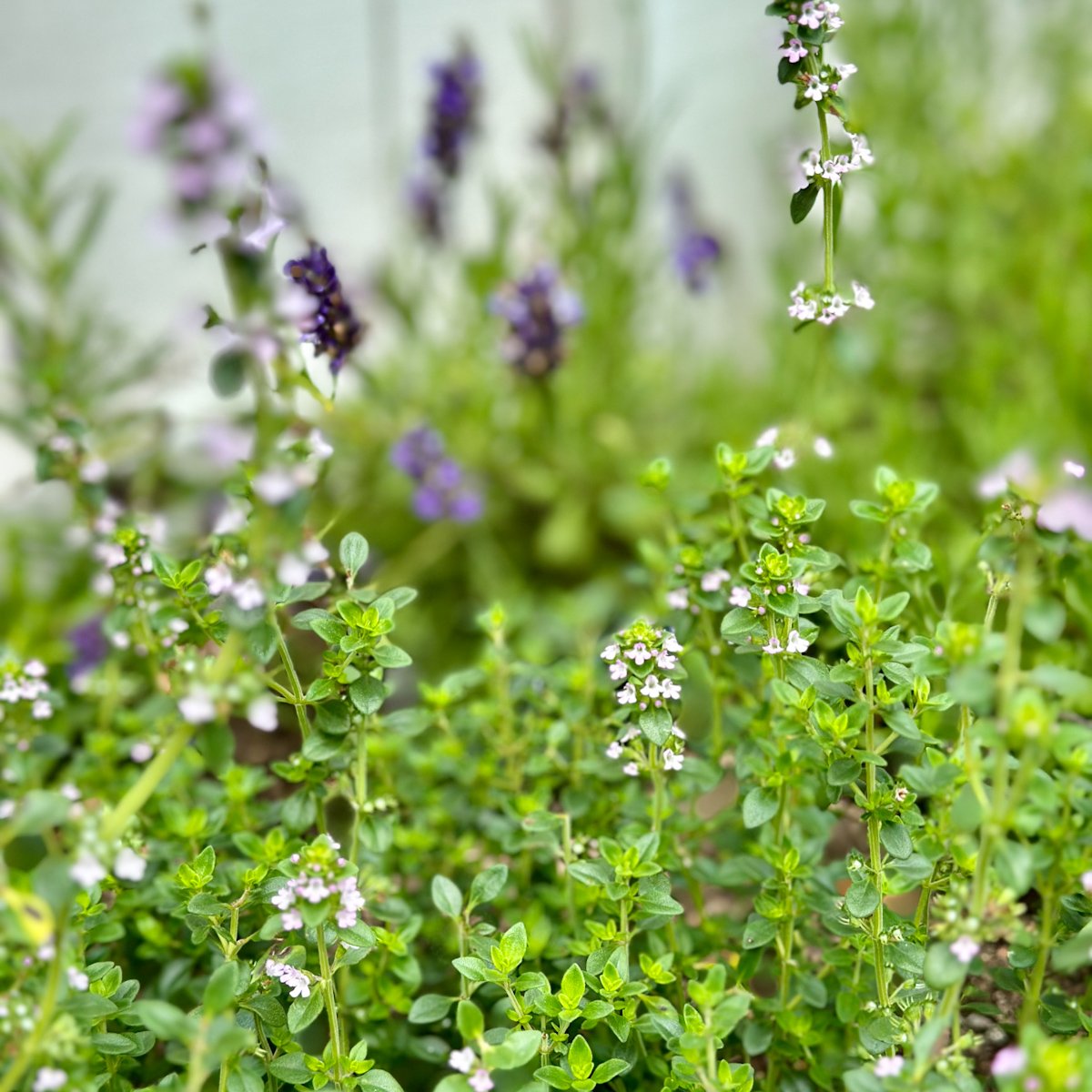
Thyme may be a small herb, but its flowers are surprisingly pretty. When the plants begin blooming, the tiny blossoms create a soft blanket of color across the garden. I often let some of my thyme flower before I harvest and cut fresh thyme for the kitchen and love to use flowering thyme in my thyme infused honey.
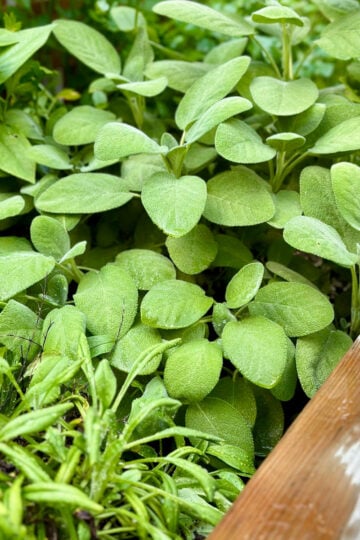
Sage produces tall spikes of purple-blue flowers that add height and movement to the herb bed. When sage blooms, it becomes one of the most noticeable plants in the garden.
Rosemary also produces delicate flowers, usually in shades of pale blue, lavender, or white. When rosemary begins to bloom, the small flowers dot the evergreen foliage and attract bees almost immediately. It is always a treat to see rosemary flowering in the garden, especially since the plant already adds such wonderful fragrance and structure to the herb bed.
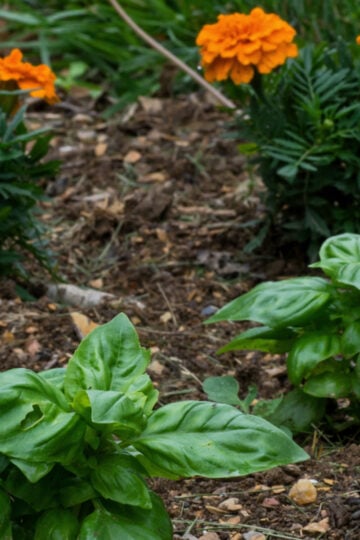
Basil flowers later in the season, sending up delicate white or pale purple blossoms. While many gardeners pinch them off to encourage more leaf growth, the blooms themselves are quite lovely. You can easily spot the moment when basil begins to flower, and the bees certainly notice too.
Mint also produces pretty flowers once the plants mature. Depending on the variety, the blooms appear in soft shades of purple or pink and quickly attract bees and butterflies. If you have ever noticed mint flowering in the garden, you know how lively the plants become when pollinators arrive.
By late summer, the herb garden begins to look completely different than it did in spring. What started as a bed of leafy green plants slowly fills with flowers, pollinators, and movement, which is another reason I enjoy mixing herbs and flowers together in the first place.
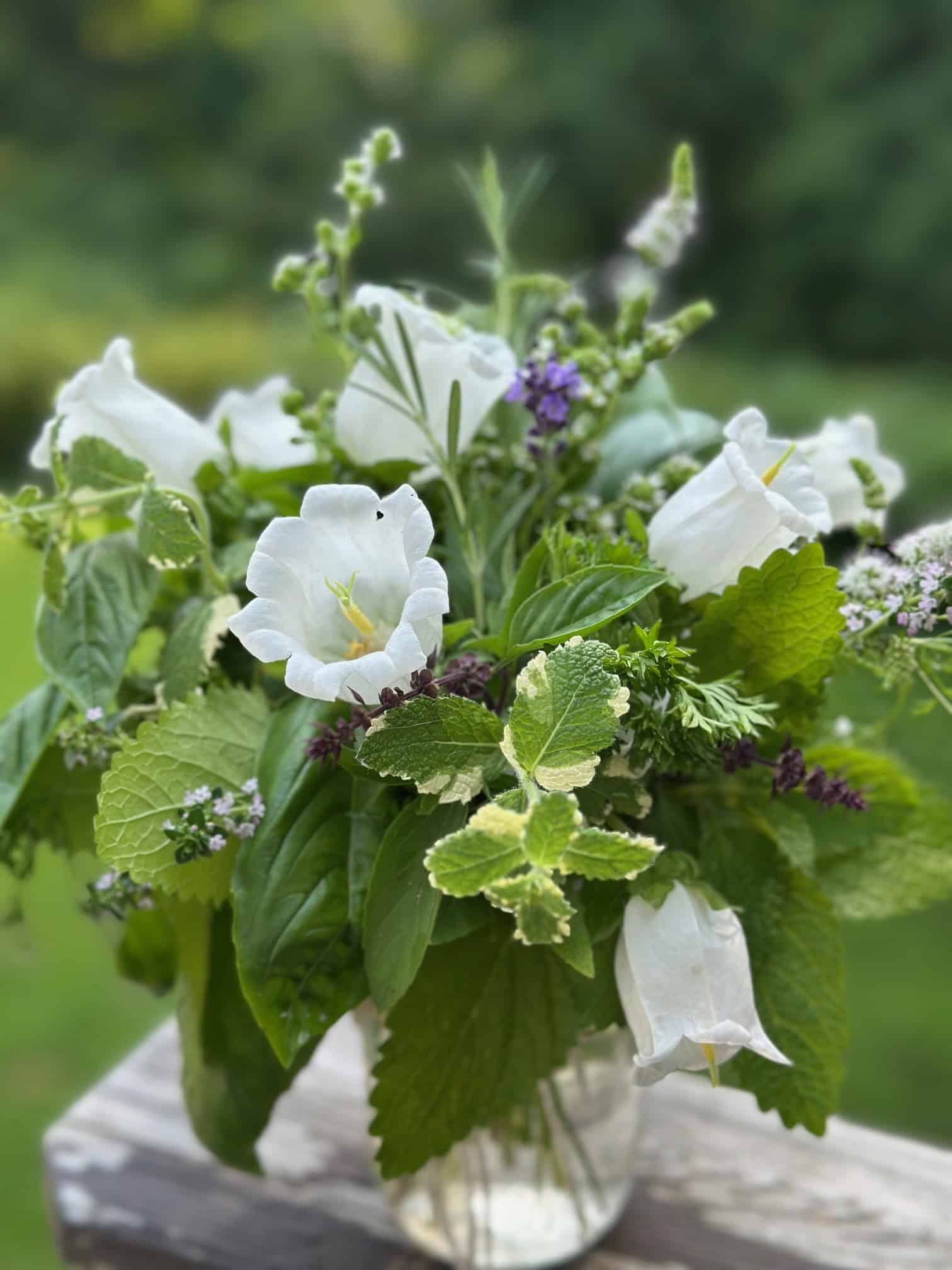
A Tip for Using Flowering Herbs from the Garden: One thing I especially love about letting some of my herbs flower is that the blooms are not just beautiful in the garden. I use them in several little projects throughout the season as well. When I harvest herbs for homemade gifts, I often include flowering stems in my herb gift jars because they add such a pretty, natural touch. The flowers also work beautifully when making a simple fresh herb garland, where the blooms add color and texture alongside the fragrant leaves. Flowering herbs are also lovely in the house. I frequently snip a few stems and tuck them into small flower arrangements using herbs and garden flowers, which gives bouquets a soft, garden-inspired look. Letting a few herbs bloom means you not only enjoy them in the garden, but you can also bring that beauty indoors or share it with others.
Frequently asked questions
Some of the best flowers in raised beds include zinnias, calendula, nasturtiums, alyssum, marigolds, salvia, stock, dianthus, and cosmos. These flowers add color, attract pollinators, and grow well alongside herbs and vegetables.
Flowers add beauty, soften the look of raised beds, and help attract bees, butterflies, and other beneficial insects. They can also bring early color to the garden before many vegetables and herbs begin to bloom.
Yes, many flowers grow beautifully alongside vegetables in raised beds. Flowers can help attract pollinators to crops like tomatoes, cucumbers, squash, and peppers while making the garden feel more colorful and inviting.
Absolutely! Flowers pair especially well with herbs because they attract pollinators and add color among the green foliage. Popular combinations include basil with zinnias, thyme with alyssum, parsley with calendula, and lavender with salvia.
More herb garden planning guides to explore
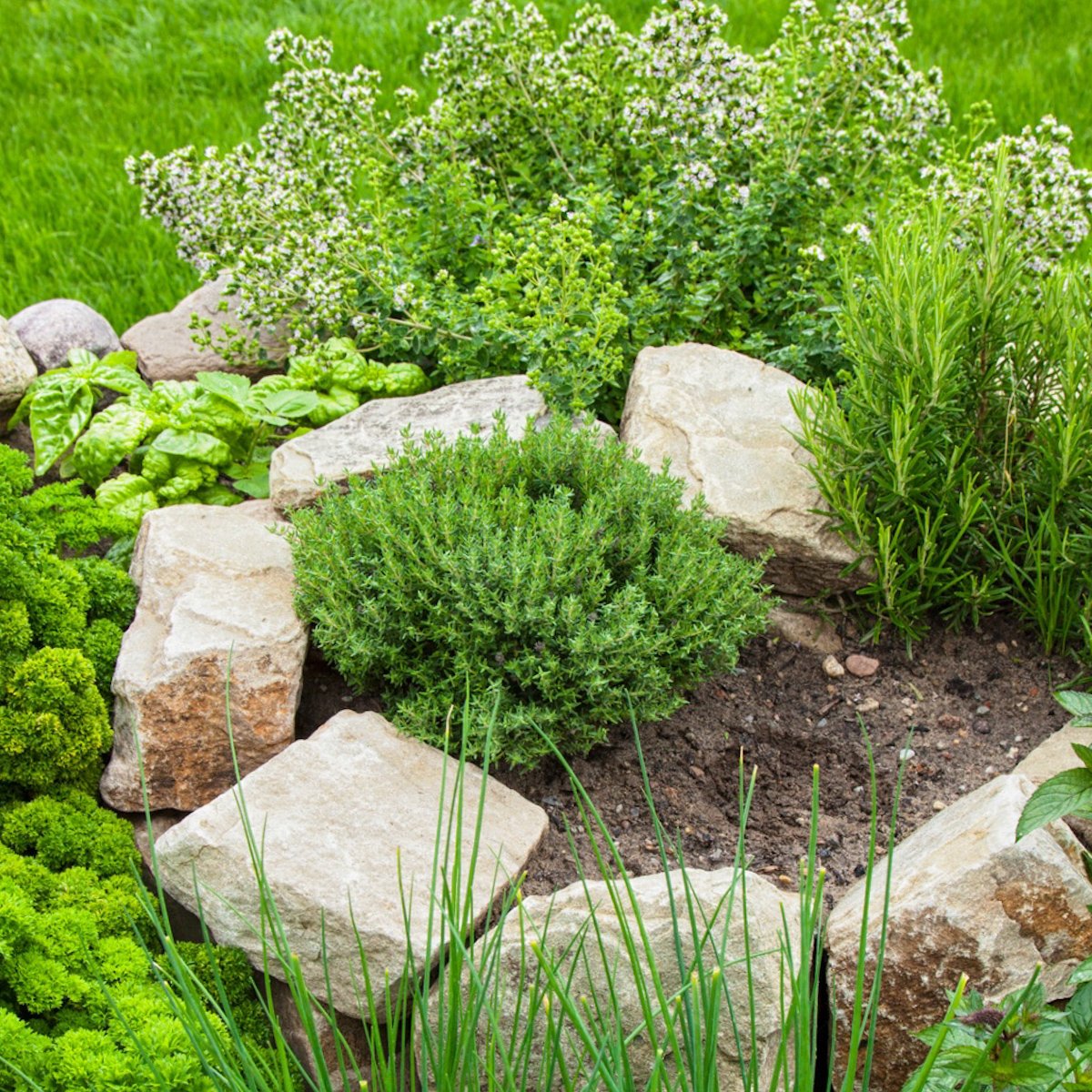
At the end of the day, my herb garden is meant to be useful. It is where I grow the herbs I cook with, the herbs I use for simple crafts, and the herbs that often end up in little gifts for friends and family.
But it is also a space where I love to spend time.
Adding flowers is what transforms the garden from something purely practical into something that feels vibrant and welcoming. The blooms bring color, texture, pollinators, and a sense of life to the bed long before many herbs begin flowering on their own.
For me, creating an herb garden with flowers makes the space feel fuller and more joyful. It becomes more than just a place to harvest ingredients. It becomes a garden that feeds the soul as much as the kitchen.
If you are planting an herb garden or a vegetable garden this season, consider leaving a little room for flowers too. You may be surprised at how much beauty they bring to the space.
Happy gardening, friends!